Joe Staley’s 49ers legacy: A Hall of Fame career led by skill and versatility
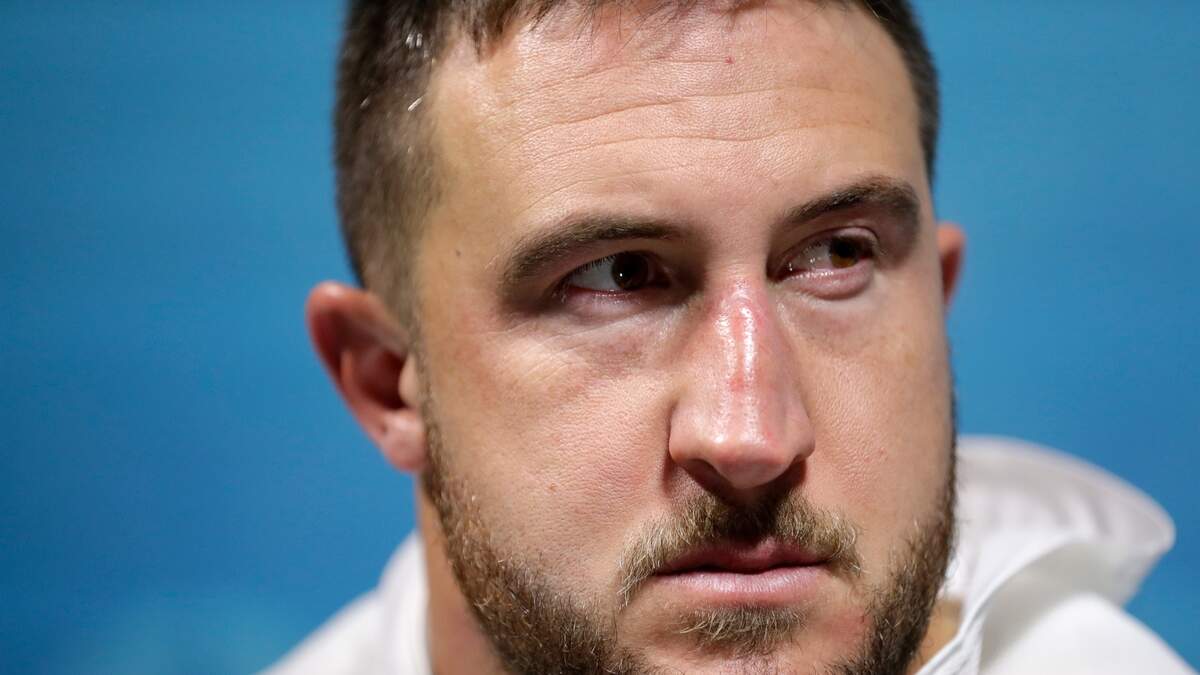
Joe Staley’s career will go down as one of the most important in 49ers franchise history. He’s the best offensive lineman the team has ever had, which is saying something given all the success it enjoyed in the 1980s and 90s.
But what Staley represented is harder to quantify than other 49ers icons. His numbers can’t be pitted against others at his position like Jerry Rice as a receiver. Staley didn’t touch the ball every snap like Joe Montana or Steve Young. There is no highlight reel of huge hits like imposing safety Ronnie Lott, or counting stats like Frank Gore as he ascends up the all-time rushing list.
Staley’s impact on the 49ers is about culture, steadiness, adaptability and leadership. Staley was a bedrock player who survived six head coaches. Left tackle is one of the most important positions on the field and Staley fit every system he was in thanks to his athletic ability and renowned work ethic. He was named to six Pro Bowls and the NFL’s All-Decade team for the 2010s.
Ask coach Kyle Shanahan, general manager John Lynch or Staley’s recent teammates and they will cite his presence on the field and behind the scenes as key to the team’s recent rebound from subpar seasons to the Super Bowl.
“I was with Joe for three years and he’s as good of a player and warrior and person as any player I’ve ever been around and I love the guy,” Shanahann said.
“One of my favorite things about Joe,” George Kittle said, “he embodies absolutely everything about football I think football should be about.”
February’s Super Bowl marked the second time Staley was an important player on a 49ers rise from the basement to title contention. It also happened during Jim Harbaugh’s tenure. The team went 6-10 in 2010, then went to three straight conference title games and the first of Staley’s two Super Bowl appearances. Harbaugh recently said Staley was the best offensive lineman he ever coached.
Which is why Staley’s retirement over the weekend was an important moment for one of the NFL’s staple franchises. It meant the 49ers lost one of the few players since the turn of the century who survived the highest peaks and lowest valleys.
Staley’s 13-year career can be comprised of a series of moments that illustrated his impact. He was a team-first player who prized winning above all else, which was key in San Francisco’s cultural shift under the Shanahan and Lynch regime.
Staley’s former teammates will tell you — whether it’s Kittle tearing up at the idea he’ll never line up next to Staley again, or Mike McGlinchey idolizing Staley before he even got to college — Staley’s impact won’t be easily replaced, which explains the massive outpouring from fans and Staley’s tears over a Zoom conference call with reporters this week.
The block
Alex Smith’s go-ahead touchdown run late in the epic victory over the New Orleans Saints after the 2011 season featured Staley’s most memorable individual effort. He sprinted out of his stance up the left sideline and cut down a defensive back 16 yards downfield, allowing Smith a lane for the go-ahead score on a third-and-7 bootleg.
“I thought it was like a tight end that pulled,” Kittle said this week. “Because that dude was moving at first and then I saw it was an offensive lineman. And then I was like, holy cow, that’s incredible. I appreciate it more now knowing Joe and his mindset when it comes to football.”
Staley was flying, particularly for a 320-pound lineman pumping his arms and legs as forcefully as he could. The block didn’t seal the game for the 49ers, of course. That was done by Vernon Davis’ dramatic catch a few minutes later after the Saints took back the lead. But the win wouldn’t have been possible without Smith’s touchdown, which required Staley cutting down the defender.
It was San Francisco’s first postseason victory since 2002 and the first for Staley, Gore, Patrick Willis, Justin Smith and the rest of that beloved roster from earlier this decade.
“When I saw him throw the block, I remember thinking, man, is that legal?” Willis said this week. “Are they going to throw a flag? Because I always felt like, for some reason, we’d always be the ones to get the flag and we don’t end up capitalizing. And lo and behold, it was a perfect block, and when Alex scored, my gosh, I was so excited for multiple reasons.”
Staley during his retirement news conference recognized the importance of the play but noted it wasn’t among his personal favorites.
“That one gets the most play because it was probably the most memorable as far as the moment, it being our first playoff game we had a long time, the way the game went,” Staley said. “But really that was just a play of me running and almost missing the block and kind of tripping a dude.
“My favorite plays are like the plays that no one would ever recognize. They were like me and Mike Iupati pulled up a three-technique (defensive tackle) and took them off like seven yards off the ball and dumped them on the ground. Plays like that or when you’re in a two-minute drill and you have a seven-step drop on the pass protection and you’re going against a really great player like Khalil Mack and holding up and being able to give the quarterback time in the pocket. Those are my favorite plays because I think that being an offensive lineman is about really doing your job at an exceptionally high level.”
The friendships
Across the country at William Penn Charter, a high school in Philadelphia, tight end Mike McGlinchey was coming off his sophomore season as the 49ers made their dramatic playoff run. The next year he would be convinced by a slew of prominent college programs that his football future would be along the offensive line.
One of the most important conversations McGlinchey had came on a recruiting visit to Notre Dame, where he met with Irish strength coach Paul Longo, who served in the same role at Central Michigan in 2006.
Longo told McGlinchey he reminded him of a former tight end turned offensive lineman he worked with: Staley, who played at Central Michigan in ‘06 before the 49ers made him a first-round draft choice in 2007.
A year after Staley’s famous block against the Saints, McGlinchey began idolizing Staley, hoping he could follow his example from college to the NFL.
“I told my high school equipment manager that I wanted to wear 74 after searching him and searching all these videos of him,” McGlinchey said. “(I) became an avid watcher of the “Joe Show” back then. And just tried to follow a path that he had set and every interview, everything that I saw was that this guy Joe Staley was the best in the world at what he did, but he was an even better teammate and leader on his team too. That was always somebody that I wanted to model my game after.”
What McGlinchey didn’t know is he would become teammates with Staley and eventually close friends. The 49ers took McGlinchey ninth overall in the 2018 draft hoping McGlinchey could bookend the offensive line opposite the 11-year veteran and perhaps replace Staley once he retired.
“The first time I had ever had contact with him, I remember on draft night, he was one of the first texts that I got and responded,” McGlinchey said. “You know, ‘Congratulations. Great job in your career thus far, but it’s time to get to work. Welcome to the Niners.’ And at the end of it was ‘Joe Staley.’
“I kind of had a little panic attack,” McGlinchey continued. “I showed my brother, I showed my mom and dad. All that kind of stuff of how cool that moment was for me. And then the next day, you kind of felt his personality for the first time when I walked into the cafeteria for the first time and he made everybody stand up and give me a standing ovation to kind of mess with me. And it was smooth sailing ever since.”
Staley’s self deprecation is a significant aspect of his humor. So knowing McGlinchey idolized him dating back to high school created an awkward dynamic.
The two became fast friends because they were so similar, but there were also key differences that drew them together. Staley is 10 years older and willing to make people uncomfortable. McGlinchey was a rookie that had to mind what he said.
Staley could joke around and poke fun at McGlinchey because McGlinchey was more buttoned up. McGlinchey sounds like a television analyst in interviews and Staley would often crack about how McGlinchey talks like a politician during scrums with reporters.
The first time Staley visited McGlinchey’s house after the 2018 draft he tried making fun of the fact McGlinchey had a No. 74 jersey from high school hanging on a wall. This was before Staley knew McGlinchey idolized him for years and he was the reason he wore the number.
“I was just giving him crap, not even understanding, not even knowing. I was like, ‘Oh, look at that. You’ve got your hero in the house now. You wore my jersey number when you were in high school,’” Staley said.
“He was like, ‘Yeah, I was nervous for you to see that.’ I was like, ‘Oh wait, you’re serious.’ ... So, I didn’t understand all that stuff, I didn’t know all that stuff. As you get older in the league, you understand that you’ve been around in the NFL and there’s not a lot of guys in the NFL that would choose an offensive lineman to be their favorite player, but Mike is one of them because Mike’s a weird guy.”
Staley and McGlinchey’s relationship grew into one of the strongest on the roster. Not only because Staley saw himself in McGlinchey off the field -- a young player in the Bay Area who grew up on another side of the country -- but because they played the same position. It was Staley’s leadership skills that helped McGlinchey acclimate quickly, embodying the positive influence Staley’s example had on the rest of the roster.
Before McGlinchey’s first season, the 49ers had joint training camp practices in Houston against the Texans before a preseason game. McGlinchey found himself lined up against three-time Defensive Player of the Year J.J. Watt, who was ready to give the rookie the what-for.
“I remember getting flattened on the first drill that we did by J.J.,” McGlinchey said. “Joe comes over and he says to me, dead serious, ‘It can’t get any worse than that, so you might as well cut it loose and stop thinking about it the rest of the day.’ And that was kind of the first ever in-game lesson that I ever found from Joe.”
Staley had a similar impact on Kittle during his ingratiation period into the NFL, long before Kittle would blossom into an All-Pro tight end. Kittle avoided Staley during his first OTAs because Staley was intimidating, Kittle said. Until Staley approached him and offered a succinct message to give him a jolt of confidence.
“He just completely out of the blue came up and put his hand around me and was just like, ‘Hey, you know if you don’t screw this up you could actually be a decent football player. So just keep your head on straight.’ And that was the whole conversation. I probably won’t ever forget that one,” Kittle said.
The legacy
The sad truth about Staley’s career is he never achieved his ultimate goal in football: win the Super Bowl. He told The Bee after falling to the Chiefs in February a championship would mean more to him than the paychecks (he made $84 million in salary during his career) or any individual accolades.
“A Super Bowl is the best thing you can do as a professional athlete,” Staley said. “Yeah it sucks. It really does. I mean, it sucks to not be able to win that. I’ve watched since I was 5 years old, watching Super Bowls, and just the joy that it brings to players and being able to hoist that trophy up in the air.
“I’m just kind of reflecting on the journey that it took to get there and how meaningful that would have been for me and everybody on the football team. There are so many different people that deserve that over the years, but it wasn’t in the cards. I gave everything I had to the game of football. I definitely don’t leave my head hung in that respect. I think I did everything I could do, but it just didn’t happen for whatever reasons. Just didn’t happen for me, didn’t happen for us. That’s frustrating but it’s not something that will torment me for the rest of my life.”
What Staley can take solace in is the impact he had on others that play his position. Of course his influence on McGlinchey will likely be the most pronounced because they were teammates.
But other offensive linemen learning the game could also learn from Staley because of the constant adjustments he was forced to make throughout his career. He entered the league in an entirely different era, when linemen were required to be 320-pound behemoths in power running schemes like Harbaugh’s.
Later, Staley had to change his body, lose weight and maintain his athleticism for zone blocking schemes used by Chip Kelly and Shanahan.
“Joe has really played in two generations of football. And to make himself the best in the world at both stops, is nothing short of impressive,” McGlinchey said. “To be the guy that generations of offensive linemen look to learn how to do things the right way on film, in real life, that’s somebody to me that’s a Hall of Famer. He affected 15 years’ worth of offensive linemen.”
Staley wrapped up 40-minute video conference this week with tears in his eyes as he got choked up in the finality of the moment. A long, fruitful career was over.
“I’m going to miss it,” he said. “I’m going to miss football a lot. I love football a ton.”