
Sacramento-area millennials are putting off homeownership
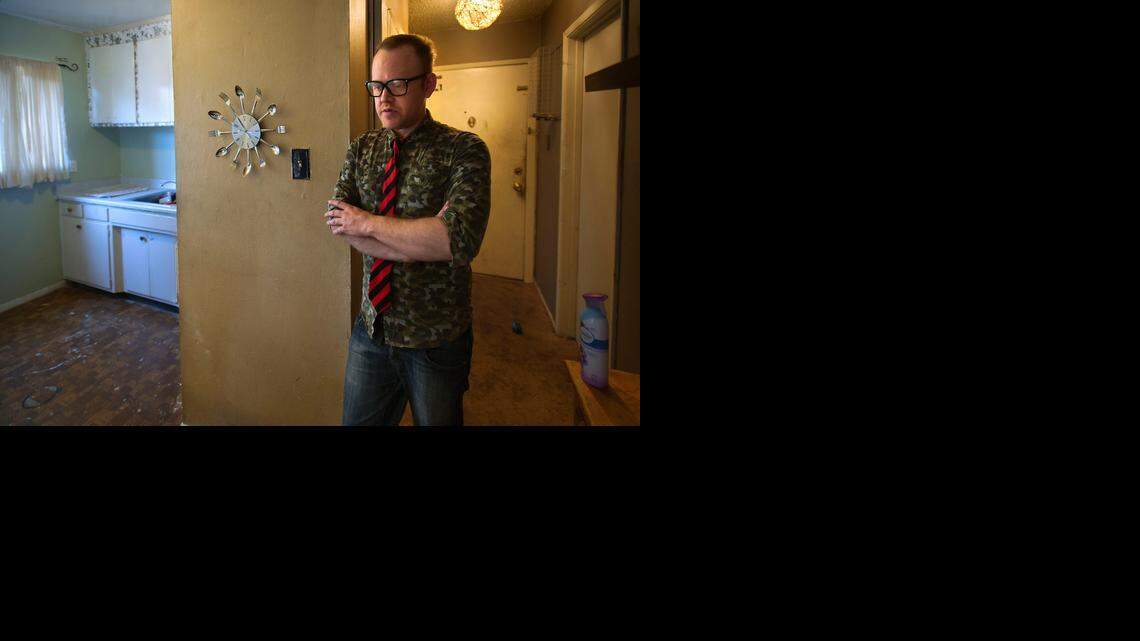
An urban rental loft has replaced a mortgaged suburban bungalow as the home of choice for thousands of the Sacramento region’s most successful millennials.
These millennials – born after 1980 and earning above $40,000 a year – have reached the age and income level where they could afford to buy a home. But most aren’t doing it.
Some say they don’t want to give up the ability to move at a moment’s notice. Others don’t want to trade downtown action for suburban stability. A few want to buy but can’t outmaneuver investors who are paying cash for starter homes. Many haven’t started a family and see no pressing need for extra space.
“Homeownership to me means I’m committed, and I’m just not ready to make that leap yet,” said Emilie Cameron, 32, a communications professional who rents in midtown Sacramento. “Maybe someday, but definitely not in the foreseeable future.”
This is new. A generation ago, in 1980, about 70 percent of the region’s householders under 35 who earned more than the equivalent of $40,000 in current dollars owned a home, the latest census figures show. By 2013, that figure had fallen to 47 percent.
The trend of fewer young homeowners is playing out across the state, and it is exacerbated by the economy. There are hundreds of thousands of Sacramentans under 35 who do not have the financial option of buying a home. Unemployment and underemployment remain rife among millennials.
“It seems like it was more doable back in the day when you could afford a home with a full-time minimum-wage job and live above the poverty line,” said college-age Sacramento renter and musician Spencer Hoffman.
As a result of choice and necessity, entire communities are now largely devoid of young homeowners.
The city of Davis, for instance, was once known as a great place for young families to buy a home and raise children. In 1980, almost 30 percent of Davis homeowners were under 35. By 2013, that number had fallen to 4 percent, census figures show.
The city of Folsom, like Davis, is widely regarded as having some of the best schools in the region. But only 7 percent of Folsom homeowners are under 35, down from 17 percent in 1980.
Granite Bay, the region’s wealthiest locale, once attracted some of the region’s successful, young up-and-comers. In 1990, about 9 percent of its homeowners were under 35. By 2013, that number had fallen to 1 percent.
“Mobility is freedom,” said Laura Braden, 33, senior director of communications for the Sacramento Kings. “I don’t aspire to have a 12,000-square-foot home in Granite Bay with gutters to clean and a yard.”
Like many other millennials, Braden also doesn’t aspire to have children, nor is she married.
“I don’t want to spend Saturdays at soccer,” she said. “I don’t want to spend my precious vacation time at Disneyland.”
Experiences, not possessions
Marriage and children are closely tied to homeownership, several experts said. Married families often seek stability and space. Unmarried, childless young adults often place more value on flexibility and living close to excitement.
For many millennials, “a new household starts later in life,” said Skylar Olsen, a senior economist with real estate tracking firm Zillow.com. Falling homeownership among millennials is partly due to “the delay of major life events that precipitate homeownership. It’s more of finding a firm life partner or having kids.”
Census figures bear that out. Millennials are waiting much longer to get married and often spend years living with a partner without tying the knot.
In 1980, 53 percent of Sacramento County women in their 20s were married, census figures show. By 2013, that figure had fallen to 26 percent.
The birthrate among Sacramento County women in their 20s fell about 17 percent during the last 15 years, state figures show.
“While I may be almost 33 and, yes, not married and no children, I’m still figuring out my future,” Cameron said.
Not getting married, putting off having children, not buying a car – it all confirms recent studies showing that millennials prefer to spend their money on experiences like travel, food and nightlife instead of on “stuff.”
Cameron and others talked at length about the advantages of having extra cash, instead of spending too much on a mortgage.
“I have control over my disposable income,” Cameron said. “If the water main breaks or the roof collapses, I know that the landlord will have to fix it and it won’t be out of my pocket, so I can afford to buy those tickets to the Kings game, or go to TBD (a local music festival).”
Cash competition
The economy plays a role, too, in the decision of many local millennials to keep renting.
Owning a home today requires at least a two- or three-year commitment, unless millennials are willing to become a landlord or take a loss on their purchase, several real estate experts said.
But several millennials said the volatile Sacramento economy and the fluctuations in home prices over the last decade create worries that owning a home will leave them stuck in one place for a long time.
Others are hampered by problems lingering from the housing bust.
Dale Rodgers, 31, wants to buy a home in Oak Park. He has enough cash for a 20 percent down payment. But every time he finds a home he likes, an investor swoops in and plops down cash.
“(Sellers) are more apt to go with someone who can write a check for $80,000,” he said. “At that price range, they disappear.”
Rodgers has a degree in global finance from New York University. He had a well-paying job and a nice pad in midtown Manhattan – and hated every minute of the rat race.
So he moved to Sacramento to pursue a career as an artist. He rents a one-bedroom apartment near Broadway and spends about $650 a month on rent. He could buy a two-bedroom home in Oak Park and spend less than that each month on a mortgage. But sellers want the convenience and security that comes from cash.
“A cash buyer says, ‘I can close in five days,’ ” said Joan Dunn of Better Homes and Gardens Real Estate, Rodgers’ agent.
It also remains hard for some millennials – even those with a good income – to obtain financing to buy a home. Many of them don’t have lengthy credit histories or large savings accounts for a down payment.
“In the past, you could fairly easily get a low down-payment loan for a first-time buyer,” said Michael Onstead, who runs the new-home division in the Sacramento region for Coldwell Banker, a real estate group. “That’s coming back, but qualifying is a lot tougher than it used to be.”
Urban, not suburban
No generation is uniform in its preferences; a minority of successful, young Sacramentans have bought homes in the last few years.
They largely stick close to the urban core. Twenty percent or more of homeowners in downtown Sacramento, North Natomas, West Sacramento and the Anatolia development in Rancho Cordova are under 35, census figures show.
“I don’t think I could live in a place that is very suburban,” said midtown owner Jessica Ho, 27. Her home, she said, is on the “one block that is the closest I could get to Los Angeles or San Francisco.”
Ho, a legislative consultant for the Department of Social Services, lives in a 660-square-foot loft on L Street. She considers the home an investment and is confident that she could rent it out quickly if a new job took her elsewhere.
“It doesn’t really tie you down,” she said. “It builds your wealth.”
Communications professional Aaron McLear lives several blocks away with his wife and infant son. They bought their home in 2012, when McLear was 34.
“Living in an apartment wasn’t working for us,” he said “We were looking to start a family. We wanted to have our own place.”
McLear, a former spokesman for Gov. Arnold Schwarzenegger, said homeownership is important to him, but not as important as living in the central city.
“We just think the suburbs lack personality and character,” he said. “There’s really no right or wrong. We were fortunate to make that investment. Whether it’s renting or buying, there is nowhere else I would like to live than midtown.”
Real estate professionals said they are not yet too worried about the trend of fewer millennials choosing to own homes. They hope that millennials will eventually decide to settle down and buy a house, even if they wait a little longer than their parents did.
“I think it will take care of itself,” Onstead said.
If so, millennials are cutting it to the wire. The homeownership rate among the oldest California millennials – those age 33 to 35 – earning more than $40,000 in 2013 was about 35 percent below the rate for the same age group in 1980, census figures show.
Call The Bee’s Phillip Reese, (916) 321-1137.
FEWER YOUNG HOMEOWNERS
30 The percentage of Davis homeowners under 35 in 1980
4 The percentage in 2013
17 The percentage of Folsom homeowners under 35 in 1980
7 The percentage in 2013
9 The percentage of Granite Bay homeowners under 35 in 1990
1 The percentage in 2013
This story was originally published January 3, 2015 at 4:34 PM.