
Auction house decides not to sell Japanese internment artifacts
Responding to a national outcry that began in Sacramento, a New Jersey auction house has decided not to sell off about 450 Japanese internment camp items.
“There is an essential discussion to be had about the sale of historical items that are a legacy of man's inhumanity to man,” said Miriam Tucker, managing partner of Rago Arts and Auction Center, in a statement released Wednesday evening. “It extends beyond what is legal. It is something auction houses, galleries and dealers are faced with regularly. We hope this controversy will be the beginning of a discourse on this issue.”
The items up for auction were late author and historian Allen H. Eaton’s collection of artwork and crafts collected in the camps, and photos of internees, Tucker said. The auction house has not disclosed the seller’s identity, but said he inherited the items from Eaton’s daughter and was not in a position to donate them.
“We have always wanted to see this property where it could do the most good for history,” Tucker said.
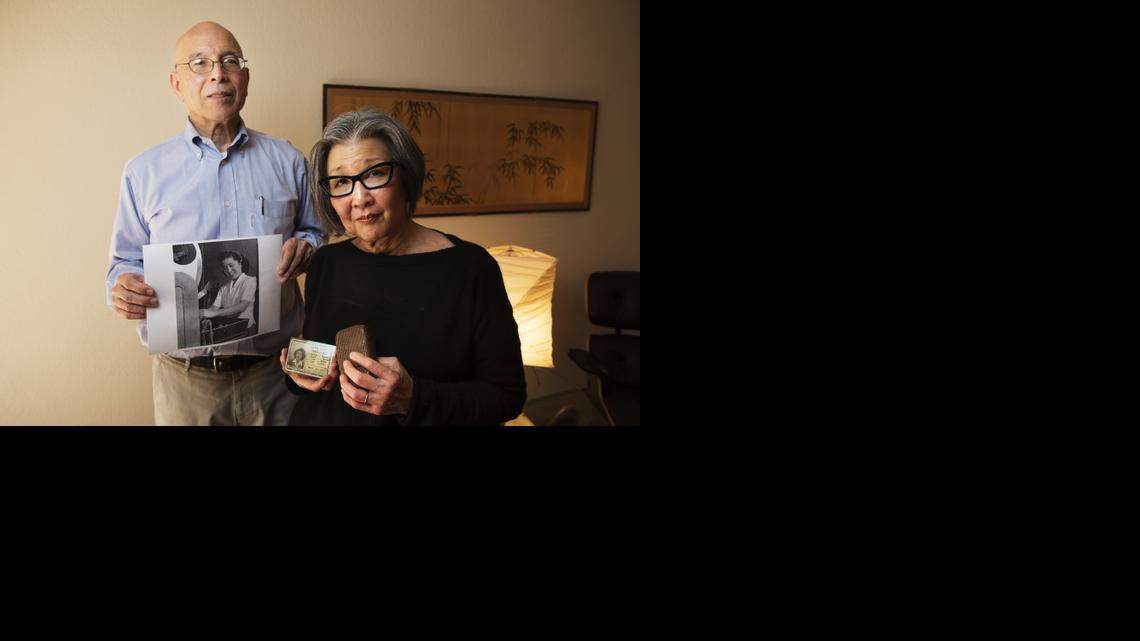
After reading about the pending sale in a March New York Times article, Sacramentans Yoshinori “Toso” Himel and his wife, Barbara Takei, looked at the lots on Rago’s website and found a photo of Himel’s mother, whose family was split when her father and 120,000 other Japanese Americans were incarcerated at 10 remote relocation camps after the Dec. 7, 1941, Japanese bombing of Pearl Harbor.
The couple said they were outraged that items and photos born of suffering were for sale. They launched a national campaign to protest the auction, including a Facebook group that had 5,481 likes as of Wednesday evening.
Rago’s decision to pull the Japanese American incarceration art, mementos and photos “is huge,” Barbara Takei said Wednesday. “Starting here in Sacramento, people all working together found their voice, and Rago responded. We are very pleased.”
Takei announced that actor and human rights activist George Takei, who portrayed Hikaru Sulu on the television series “Star Trek,” has now entered negotiations with Rago, the current owner of the collection and Japanese American museums to find the right home for the camp art.
“We bought the time we need,” Barbara Takei said. The well-respected Japanese American museum on the site of the Heart Mountain incarceration camp in Wyoming, where just over 14,000 Japanese Americans were locked up between 1942 and 1945, has made a cash offer, she said.
Many of the items in the collection were made by people interned at Heart Mountain.
“For us, there could be no better resolution than for a suitable museum, foundation or member/members of the Japanese American community with the means to preserve this collection to come forward and secure it for education, display and research,” Tucker said.
Call The Bee’s Stephen Magagnini, (916) 321-1072.
This story was originally published April 15, 2015 at 6:24 PM with the headline "Auction house decides not to sell Japanese internment artifacts."