
Debate flies over airplane seat assignments, religion
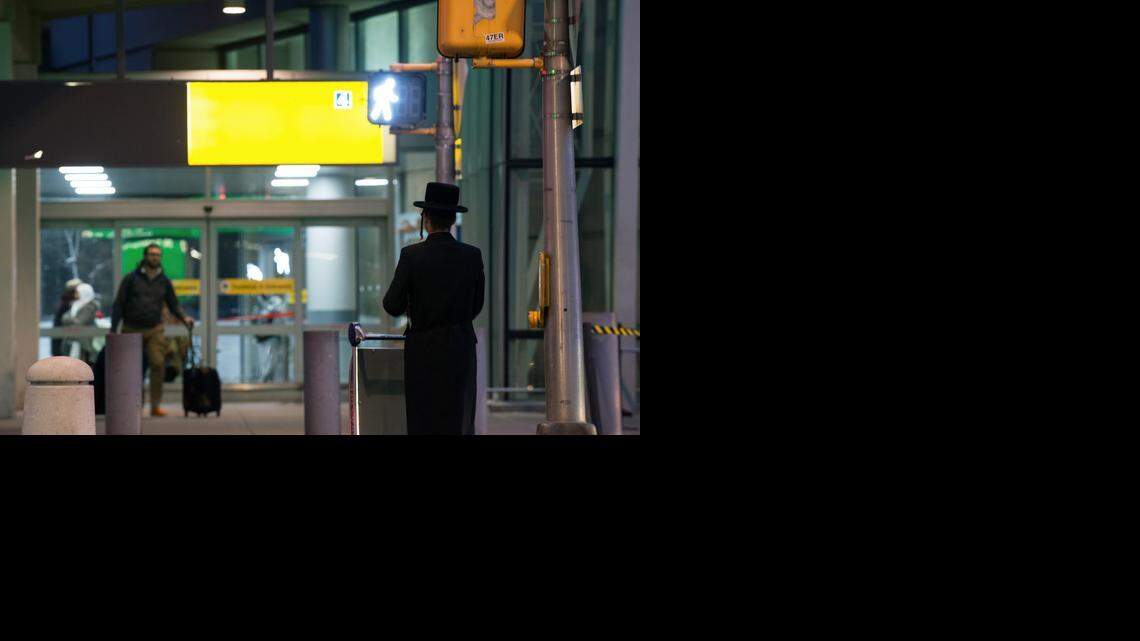
Francesca Hogi, 40, had settled into her aisle seat for the flight from New York to London when the man assigned to the adjoining window seat arrived and refused to sit down. He said his religion prevented him from sitting beside a woman who was not his wife. Irritated but eager to get underway, she eventually agreed to move.
Laura Heywood, 42, had a similar experience while traveling from San Diego to London via New York. She was in a middle seat – her husband had the aisle – when the man with the window seat in the same row asked if the couple would switch positions. Heywood, offended by the notion that her sex made her an unacceptable seatmate, refused.
“I wasn’t rude, but I found the reason to be sexist, so I was direct,” she said.
A growing number of airline passengers, particularly on trips between the United States and Israel, are sharing stories of conflicts between ultra-Orthodox Jewish men trying to follow their faith and women just hoping to sit down. Several flights from New York to Israel over the last year have been delayed or disrupted over the issue, and with social media spreading outrage and debate, the disputes have spawned a protest initiative, an online petition and a spoof safety video from a Jewish magazine suggesting a full-body safety vest (“Yes, it’s kosher!”) to protect ultra-Orthodox men from women seated next to them on airplanes.
Some passengers say they have found the seat-change requests simply surprising or confusing. But in many cases, the issue has exposed and amplified tensions between different strains of Judaism.
Jeremy Newberger, 41, a documentary filmmaker who witnessed an episode on a Delta flight from New York to Israel, was among several Jewish passengers who were offended.
“I grew up Conservative, and I’m sympathetic to Orthodox Jews,” he said. “But this Hasid came on, looking very uncomfortable, and wouldn’t even talk to the woman, and there was 5 to 8 minutes of ‘What’s going to happen?’ before the woman acquiesced and said, ‘I’ll move.’ It felt like he was being a yutz.”
Representatives of the ultra-Orthodox insist that the behavior is anomalous and rare.
“I think that the phenomenon is nowhere near as prevalent as some media reports have made it seem,” said Rabbi Avi Shafran, director of public affairs at Agudath Israel of America, which represents the ultra-Orthodox community.
But multiple travelers, scholars and the airlines themselves say the phenomenon is real. The number of episodes appears to be increasing as ultra-Orthodox communities grow in number and confidence, but also as other passengers, for reasons of comfort as well as politics, push back.
“It’s very common,” said Rabbi Yehudah Mirsky, an associate professor of Judaic studies at Brandeis University. “Multiculturalism creates a moral language where a group can say, ‘You have to respect my values.’”
Anat Hoffman, the executive director of the Israel Religious Action Center, which has started a campaign urging women not to give up their seats, said, “I have 100 stories.”
Airlines, and flight attendants, are often caught in the middle.
Most airlines had little to say about the situation, other than to agree that a variety of passengers make a variety of requests when traveling, and that carriers try to accommodate them.
Some passengers are sympathetic. Hamilton Morris, a 27-year-old journalist from Brooklyn, said he agreed to give up his seat on a US Airways flight from Los Angeles to Newark via Chicago because it seemed like the considerate thing to do.
Other passengers, like Andrew Roffe, a 31-year-old writer based in Los Angeles, said he and a friend wound up debating the ethics of the situation after Roffe described his experience on a United Airlines flight to Chicago. When they started to board, he said, an ultra-Orthodox man stood in the aisle, refusing to move and delaying the departure for 15 to 20 minutes until another passenger volunteered to switch seats.
“My buddy who is Orthodox was saying this is a traditional thing – he doesn’t want to be tempted when his wife wasn’t there. And I said, ‘Are you kidding?’ This was just some woman flying to work or home and minding her own business.”
This story was originally published April 9, 2015 at 7:30 PM with the headline "Debate flies over airplane seat assignments, religion."