
Portland had the guts to find safe sites for its homeless. Does Sacramento? | Opinion
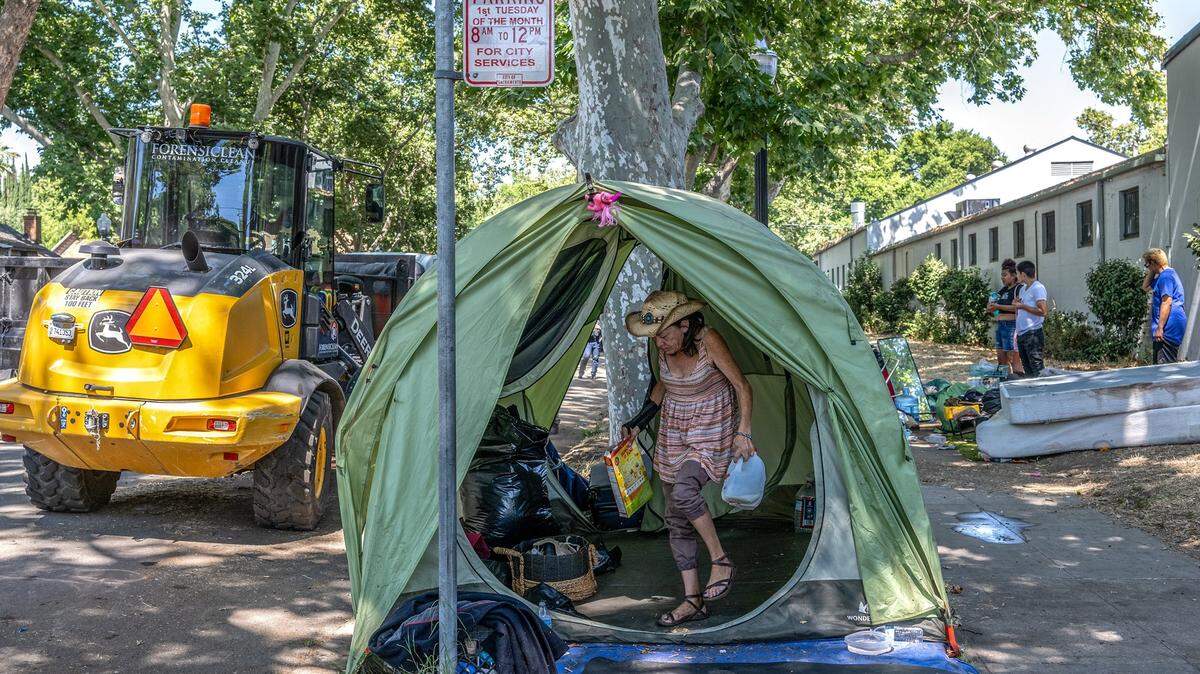
For Sacramentans, the next step in better managing the homeless crisis may mean establishing managed encampment sites known as Safe Ground.
One may be located near you soon.
The Sacramento City Council on Tuesday night will wade into some dangerous political territory. It will consider a proposal by Mayor Darrell Steinberg to delegate the responsibility to find and establish new Safe Ground locations — geographically dispersed — to City Manager Howard Chan.
There is reason to believe that a cleaner, safer, more organized Sacramento is on the horizon if the City Council musters the political will to say yes and for Chan to get to work. A similar transition to a more managed homeless population is a little further along in the city of Portland. There, the goal is to end the all-too-familiar scene of street encampments by next year and to move all homeless into different managed environments, both indoors and outdoors.
In Portland, City Commissioner Dan Ryan was that city’s Howard Chan. He was tasked to establish six “Safe Rest Villages” last year. He established seven.
“This has been headwind work from minute one,” Ryan, 61, said in a recent interview. “It is not a time for politicians to pose. You have to serve as if you don’t care about your next election.”
Portland, unlike Sacramento, has had a “strong-elected” form of government. The four city commissioners have the same duties as our city council, and additional management duties as well. While setting up Portland’s Safe Rest system, Ryan at the time also led the city’s housing bureau. (Portland voters earlier this year did a dramatic change in city governance, tripling the City Council and centralizing more authority under the city manager.)
In an emergency declaration on March 16, 2022, Portland Mayor Ted Wheeler delegated to Ryan the job of establishing managed homeless sites throughout the city. Safe Rest villages is similar to the “Tiny Home” concept in Sacramento; the small, individual, electrified units occupy city-owned land in Portland with typically a 1,000-foot buffer between the village and an adjacent neighborhood.
The villages have created about 350 transitional opportunities for a county homeless population estimated at 6,297 in a recent survey. A similar survey found 9,930 homeless residents in Sacramento County; given that Portland’s Multnomah County has half the population as Sacramento, Portland is dealing with a proportionately greater homeless challenge.
For Ryan, this issue is downright personal: In 2014, he lost a brother on Portland’s streets, another homeless person dying of an overdose.
“Heroin was the drug at the time he was using,” Ryan said of his brother, Mark Timothy Ryan. “His motivation was to make enough money to take the drugs. That is the crisis we have on our streets. The problem has only escalated.”
Ryan has fought for Safe Villages, a new concept in a county that has emphasized larger shelter facilities, as a step off the streets that some homeless are more comfortable with. But establishing these sites in neighborhoods was not easy.
As he surveyed for possible locations, “it is important that things are kept quiet as you are digging,” he said. “You just make a phone call about a site, next thing you know it is leaked to the press and you have neighbors up in arms.” Two possible sites, he said, “were killed before I could finish a sentence on whether it was a good idea.”
Is there universal support in Portland for this? Of course not. But with these managed homeless sites now part of Portland’s fabric, the neighborhoods appear to have adjusted. “There are some very good stories that a year later, there is a very different tone in those neighborhoods,” Ryan said.
These efforts, while both political and social service breakthroughs, only put a dent in the overall homeless numbers. Like Sacramento, Portland leaders see their best short-term option now is to establish what Sacramento refers to as managed Safe Ground encampments. Last November, Mayor Wheeler and the Commissioners voted to establish six encampments sufficiently sized to manage the remainder of the city’s unhoused population, each site up to 250 residents. The first site was identified in March.
The outreach process is where some previous attempts in Sacramento have broken down. A painful instance was when City Councilwoman Katie Valenzuela in January 2022 explored the possibility of opening a Safe Ground site in the parking lot at Sutter’s Landing Park. Neighborhood resistance led to Valenzuela to retreat from the idea. A recall effort advanced and then died, but the homeless issue promises to be front and center in her bid for re-election next year.
The Sutter’s landing site meets some key criteria for Portland’s Ryan — public land with a buffer space between the managed safe site and the existing neighborhood. Both populations, from Ryan’s experience, appreciate some space from the other.
If Sacramento cannot tolerate Safe Ground sites at places such as the Sutter’s Landing parking lot — or at least give it a try — we might as well surrender to worsening chaos. As a downtown resident, I live a block away from an existing site. It has proven to be an asset to the neighborhood and city for its orderliness and security.
While calls for action and the frustration are growing in Sacramento, any effective, greater response must include more shelter space.
Portland has made some tough decisions in pursuit of getting its downtown back along with other troubled neighborhoods. It has a plan to do so in increments. The City Council last month adopted a daytime ban on encampments on public property. As the city establishes more and more Safe Ground managed encampment sites, Ryan said, it will be able to enforce the ban. A federal court ruling limits law enforcement’s ability to remove homeless residents from public property without an alternative.
Will Sacramento take a key step toward our own comprehensive plan with a shelter strategy emphasizing Safe Ground in the short term?
We will find out Tuesday afternoon at City Hall.
“If you are going to be a public servant during a homeless crisis that you have in Portland and Sacramento, you have to be willing to stand up for what is needed and know that you are going to take a lot of punches,” Ryan said. “You have to focus on creating these services and know that it is absolutely necessary to move out of this humanitarian crisis.”
BEHIND THE STORY
MOREWhat are editorials, and who writes them?
Editorials represent the collective opinion of The Sacramento Bee Editorial Board.
They do not reflect the individual opinions of board members or the views of Bee reporters in the news section. Bee reporters do not participate in editorial board deliberations or weigh in on board decisions. The same rules apply to our sister publications, The Modesto Bee, Fresno Bee, Merced Sun-Star and San Luis Obispo Tribune.
In Sacramento, our board includes Bee Executive Editor Colleen McCain Nelson, McClatchy California Opinion Editor Marcos Breton, opinion writers Robin Epley, Tom Philp, LeBron Antonio Hill and op-ed editor Hannah Holzer.
In Fresno and Merced, the board includes Central Valley Executive Editor Don Blount, Senior Editor Christopher Kirkpatrick, Opinion Editor Juan Esparza Loera, and opinion writer Tad Weber.
In Modesto, the board includes Senior Editor Carlos Virgen and in San Luis Obispo, it includes Opinion Editor Stephanie Finucane.
We base our opinions on reporting by our colleagues in the news section, and our own reporting and interviews. Our members attend public meetings, call people and follow-up on story ideas from readers just as news reporters do. Unlike objective reporters, we share our judgments and state clearly what we think should happen based on our knowledge.
Read more by clicking the arrow in the upper right.
Tell us what you think
You may or may not agree with our perspective. We believe disagreement is healthy and necessary for a functioning democracy. If you would like to share your own views on events important to the Sacramento region, you may write a letter to the editor (150 words or less) using this form, or email an op-ed (650-750 words) to opinion@sacbee.com. Due to a high volume of submissions, we are not able to publish everything we receive.
Support The Sacramento Bee
These conversations are important for our community. Keep the conversation going by supporting The Sacramento Bee. Subscribe here.
This story was originally published July 31, 2023 at 5:00 AM.