
Op Images: Stunning view of Folsom Lake provided harsh perspective of California’s drought
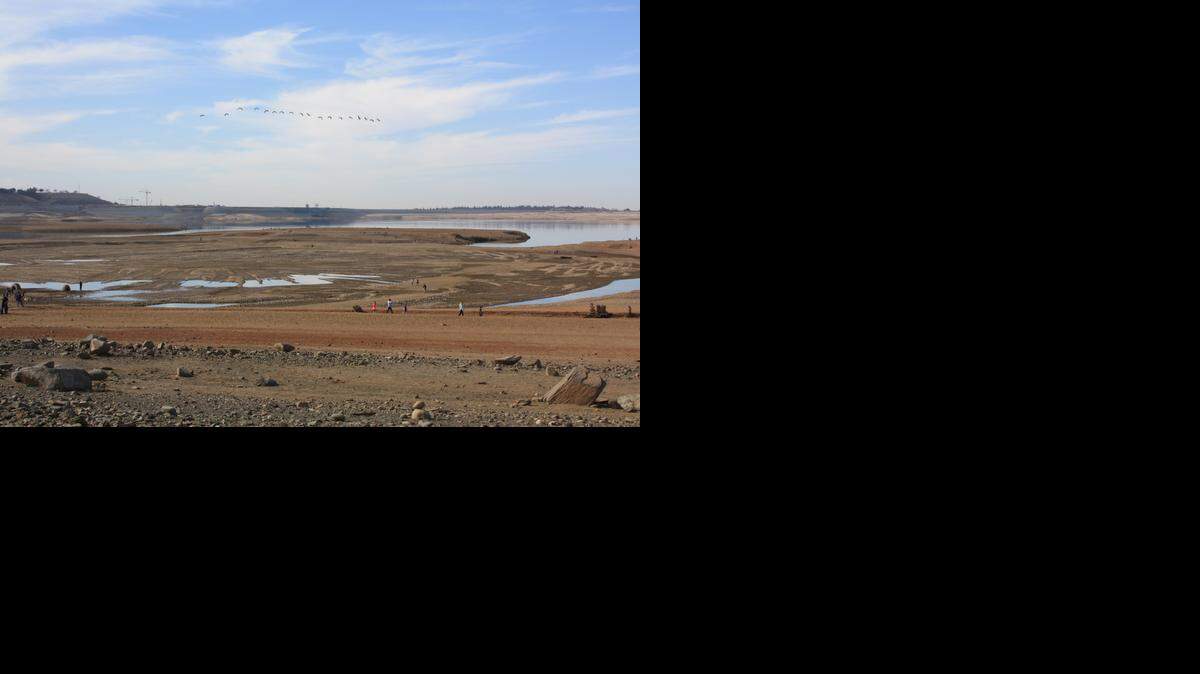
California’s drought really didn’t have an impact on me until last January when my wife, Linda, and I went to Folsom Lake to take our dog for a walk.
Sure, I had seen that the American River was low when driving across the Watt Avenue Bridge. But from the confines of my car, I’d steal a quick glance, notice the exposed shoreline, and turn my focus back to the road. It was kind of like reading about the drought in the newspaper, but when you turn your faucet on and the water flows, you turn your attention to brushing your teeth. It’s just another drought; it’ll end soon.
We were headed to Brown’s Ravine Recreation Area, and so were many others. Cars had parked all along Green Valley Road and up Sophia Parkway. What’s the big deal, I thought. Why are so many people out here? It was a sunny Sunday afternoon with a little nip in the air – a good day for walk. I just didn’t realize the magnitude of the spectacle that hundreds had come to witness.
We finally found a place to park, put the dog on her leash and walked toward Brown’s Ravine. Hikers, bikers, couples and families were making their way toward the lake. Someone had set up a table to sell bottled water. We crossed Green Valley Road and hiked up and over a small ridge. The view of Folsom reservoir was stunning. Jaw-dropping. Apocalyptic, in a strange way. The lake was gone.
That’s when I understood what more than two years of drought looked like. The sight of the dry lake bed stretching out for hundreds of yards boggled the mind. Tree stumps, boulders and rocks normally covered by more than 900,000 acre-feet of water lay exposed. The water level had dropped about 100 feet. The reservoir was at about 20 percent of capacity. And seeing the front of Folsom dam in the distance gave me an eerie feeling.
We spent a couple of hours walking out toward the water’s edge, finding old bottles, crushed beer cans, nails and other objects that had been submerged for years. You could see the base of former structures that stood long before Folsom Dam was built in 1955. Huge mounds of rocks, 30 or 40 feet high, oddly stood out near the water’s edge. We speculated they must have been tailings from mines long ago.
I left Brown’s Ravine with a different view on the drought and California’s constant struggle over water. Several months after the day trip to Folsom Lake, I began to report and write about the state’s water policy for The Bee’s editorial board, which has given me a broader perspective about this valuable resource. I used to think that I didn’t waste water. Now, I ask myself: Do I do enough to conserve water and use it efficiently?
This story was originally published January 2, 2015 at 4:00 PM with the headline "Op Images: Stunning view of Folsom Lake provided harsh perspective of California’s drought."