A bad LSAT prep course can waste weeks before you realize it is not helping.
That matters when nearly 50% of test-takers sit for the LSAT more than once. Some courses are built around live classes. Others focus on self-paced video lessons, practice tests, analytics, or a more personalized study plan.
I reviewed the most popular LSAT prep options to see what each one actually does well. This guide breaks down the best courses for different study styles, so you can find the one that makes the most sense for your score goals.
What Is the Best LSAT Prep Course for You?
- Need a full plan? Start with Blueprint.
- Need live classes? Look at Kaplan.
- Need something simple and budget-friendly? Try Magoosh.
- Need better help after missed questions? Check LSATMax.
- Need a traditional classroom setup? Consider Princeton Review.
- Need more targeted practice? Look into 7Sage.
| Best LSAT Prep Courses | ||
 |
| READ REVIEW |
 |
| READ REVIEW |
 |
| READ REVIEW |
1. Blueprint LSAT Prep: Best for a Full LSAT Study Plan

Blueprint in three words: packed but organized.
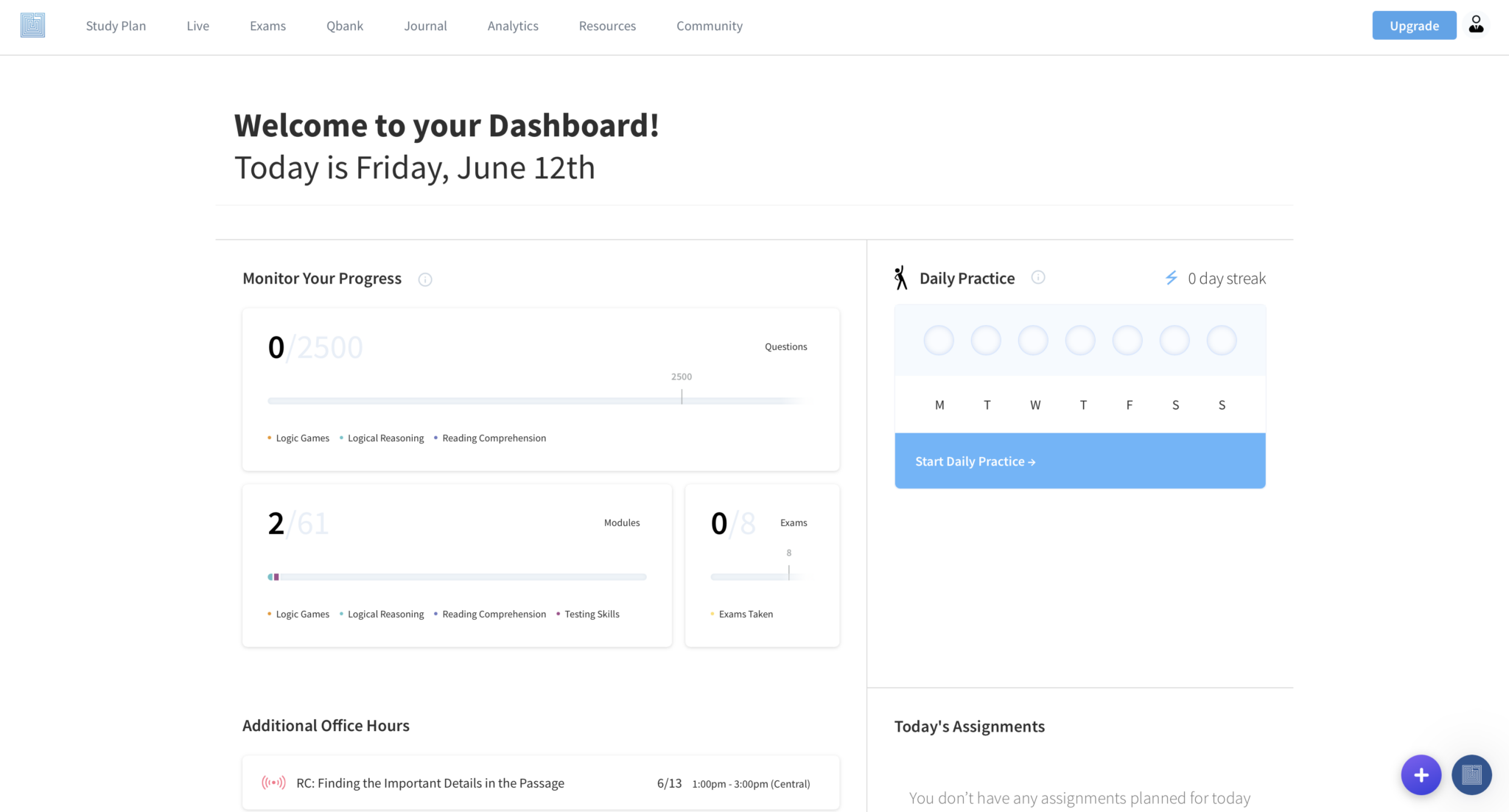
I have clicked through plenty of LSAT courses, and Blueprint was one of the quickest to figure out. Within a few minutes, I set my LSAT Study Plan, moved one study day, and watched the rest of the week adjust automatically.
This is not a light review course. At the top of my student dashboard, I had tabs for a large Qbank, Live classes, official exams, analytics, and extra support options. But how clean the layout was kept everything from turning into a mess.
What I Used Inside Blueprint
- LSAT Study Plan: I moved one study day, and the rest of the calendar adjusted without leaving overdue work everywhere.
- Performance Analytics: After a question set, I could sort my results by timing and question type to see where I was moving too slowly.
- Interactive Learning Modules: The conditional-reasoning lesson walked through the logic visually instead of relying on static slides.
- Qbank: Includes 7,000+ real LSAT questions for targeted practice.
- LawHub Exams: Includes all 59 official exams, with 16 full-length tests that add Blueprint analytics and explanations.
- Built-In Notes: I could save quick takeaways beside the material without keeping another document open.
Pros
✅ The calendar adjusts when the week changes.
✅ The analytics made slower question types easy to catch.
✅ Lessons, questions, and exams all live in one dashboard.
✅ The visual modules broke up harder topics.
Cons
❌ Almost everything happens on a screen.
❌ Printed materials are limited.
❌ The plan options take a minute to sort through.
My Take on Blueprint
Blueprint was the easiest platform for me to picture sticking with for a full study plan. The calendar handled a lot of the annoying planning work, and the analytics made it clear where I was losing time. It is very screen-heavy, but the digital tools are the reason it works.
Blueprint LSAT
2. Kaplan LSAT Prep:Best for Live LSAT Classes

Kaplan gave me more of a traditional classroom vibe, and that is where it works best. It earns its spot for anyone who needs an actual class to show up for. I opened one of the Live Online sessions and liked that the instructor could stay focused on the main Logical Reasoning question while smaller questions were answered in the chat.
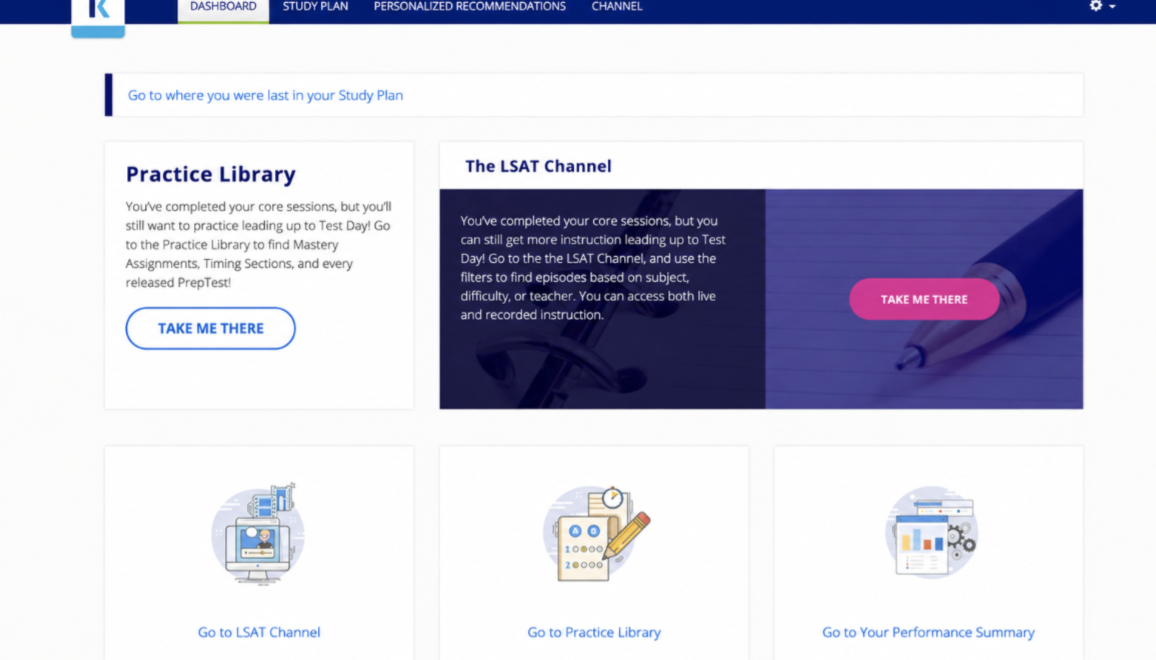
The platform has a lot inside it, so the LSAT Channel and Personalized Study Calendar took a minute to sort through. Still, the live classes are one of the main reasons I would choose Kaplan.
The Kaplan Tools That Earn Their Spot
- Live Online Classes: The instructor could stay on the main explanation while chat support cleared up smaller questions.
- LSAT Channel: I could open another walkthrough later instead of waiting for the next class.
- Personalized Study Calendar: Keeps the next assignment visible without making me map everything out myself.
- Official LSAC Questions: Includes nearly 6,000 released questions with detailed explanations.
- Interactive Hints: Gave me quick feedback while working through a question.
- Instructor Access: Even the On-Demand course includes a team of LSAT instructors for extra questions.
Pros
✅ The live classes felt more active than a basic lecture.
✅ I could use the LSAT Channel between class sessions.
✅ The question bank has plenty of official practice.
✅ Instructor help is still available with the On-Demand course.
Cons
❌ The dashboard took me a minute to sort through.
❌ There is a lot of material to dig through at first.
❌ Larger live classes leave less room for a long one-on-one back-and-forth.
Is Kaplan Worth It?
Kaplan is a strong pick if self-paced prep usually turns into random practice sets. The dashboard took me a minute to sort through, but the Live Online classes and LSAT Channel give the course a clear path to follow.
Kaplan LSAT
3. Magoosh LSAT Prep: Best for Budget and Flexibility
Magoosh keeps things pretty simple, which works in its favor. You are not getting live classes or a super polished dashboard, but the self-paced setup covers the things I would actually use without adding a bunch of extras. It is also one of the more budget-friendly full options on this list.

What Using Magoosh Was Actually Like
- Video Explanations: After missing a practice question, I opened the walkthrough and could see why the wrong answer looked believable, not only why the correct answer worked. The explanations were detailed enough to clear things up without turning every review into another long lesson.
- Notes and Bookmarks: I saved a note beside the explanation and bookmarked the part I wanted to revisit. That kept everything in the same place without forcing me to open another document.
- Study Schedules: The one- to six-month checklists were easy to scan, although the shorter plans obviously pack more into each week.
- Timed Practice Tests: The screen uses the official LSAT interface, so timed practice looks closer to the real test.
- Question Bank: Magoosh includes 6,000+ official LSAT questions, so I could keep drilling with real material without bouncing between different sites.
Pros
✅ Easy to figure out quickly.
✅ Video explanations go beyond a basic answer key.
✅ Notes and bookmarks keep review organized.
✅ One of the more budget-friendly full prep options.
Cons
❌ No live-class setup.
❌ Tutor help happens through email, so answers are not instant.
❌ LawHub Advantage comes with a separate fee.
Is Magoosh a Good Fit?
Magoosh makes sense if you want affordable self-paced prep without a bunch of extras. The dashboard is basic, but the video explanations, notes, and study schedules cover the parts I would actually use.
Magoosh LSAT
4. LSATMax: Best for On-Demand AI Tutoring

LSATMax has one pretty niche feature working in its favor. The course leans heavily on tutoring, but the Solomon AI option caught my attention fast.
It is less of a full start-to-finish prep system and more of a way to get better feedback while you study. That makes it a more specific pick, but it also gives LSATMax a clear reason to be here.
What Stood Out Inside LSATMax
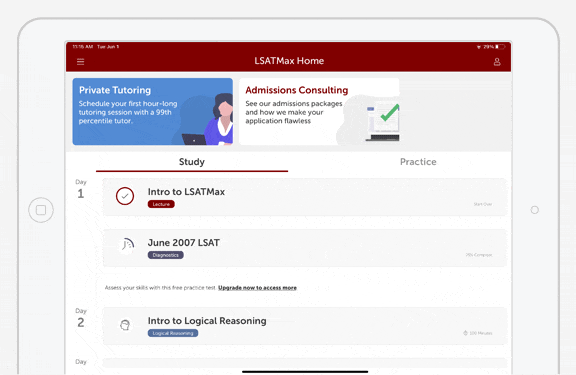
- Solomon AI: Pulling up a missed PrepTest question was straightforward. The breakdown traced where the logic went off and why the wrong answer looked convincing, which was much more useful than a basic answer key.
- Question Post-Mortems: The feedback read more like tutor notes than a standard explanation. It pointed out the trap in the question and what to watch for the next time it showed up.
- Logical Reasoning Feedback: This was the most detailed part. Scope shifts, flaw patterns, and necessary-versus-sufficient reasoning were called out directly instead of getting buried under broad tips.
- Reading Comprehension Support: This side was noticeably thinner. The rollout is still in progress, so Solomon is much stronger for Logical Reasoning right now.
- 24/7 Access: The tool can stay open while working through questions, so there is no need to save a confusing problem for office hours or schedule a full tutoring session.
Pros
✅ The question-by-question breakdowns go deeper than a basic answer key.
✅ Solomon is available without scheduling a tutoring session.
✅ The Logical Reasoning help gets very specific.
✅ Private tutoring is still there when AI help is not enough.
Cons
❌ The current setup leans more toward feedback than a full course experience.
❌ Full Reading Comprehension support for Solomon is still rolling out.
❌ The product lineup takes a minute to untangle.
Where LSATMax Fits
LSATMax makes the most sense if missed questions are the part that keeps slowing you down. Solomon AI gives you a more detailed explanation right when you need it, but the setup is more tutoring-focused than a full start-to-finish prep course.
LSATMax
5. Princeton Review LSAT: Best for Classroom Fans

Princeton Review gave me the closest thing to a real classroom experience. I joined one of the live sessions and watched the instructor work through questions on the spot while students asked follow-ups. The back-and-forth made it easier to stay locked in than clicking through lessons alone.
This is a heavier course. There are live classes, recorded lessons, official PrepTests, drills, and a pretty detailed Course Manual. That works if you want a full class setup, but it may be more than you need for a lighter review.
What Testing Princeton Review Was Actually Like
- Live Online Classes: I joined a session while the instructor worked through questions in real time. Students could ask follow-ups as the lesson moved, so the class had more of an actual classroom rhythm than a recorded lecture.
- Official PrepTests: I opened the practice side and liked that the drills stayed tied to real LSAT material. The course includes more than 90 official PrepTests through LawHub Advantage, so the practice did not feel watered down or random.
- Flexible Attendance: If I missed a lesson, I could jump into another live class covering the same topic instead of trying to catch up alone. That helps with the occasional busy week, although it may still be hard to keep up with if work changes constantly.
- LSAT Dashboard: The dashboard keeps lessons, drills, tests, and progress tracking in one place. There is a lot packed into the course, but I did not have to dig through separate pages to get back into practice after class.
- Course Manual eBook: The written material is detailed and textbook-heavy. It gives you plenty to review alongside the lessons, but long reading sections may start to drag if that is not how you like to study.
- 170+ Courses: The regular 170+ option includes 65 hours of live instruction, while the Immersion plan goes up to 130 hours plus 56 hours of workshops. That is a lot of class time, so these plans make the most sense if you are ready for a real commitment.
Pros
✅ The live sessions have a real classroom feel.
✅ Follow-up questions get answered while the lesson is happening.
✅ Flexible Attendance makes a missed class easier to fix.
✅ LawHub Advantage includes 90+ official PrepTests.
Cons
❌ The course leans heavily on reading and direct instruction.
❌ The larger plans take a lot of time.
❌ A constantly changing schedule could still make live classes hard to follow.
Who Is Princeton Review Best For?
Princeton Review makes sense if a real class helps you stay focused. The live sessions have more back-and-forth than a basic lecture, and the make-up option helps if one week gets off track. Just know that the bigger plans come with a lot of material and class time.
Princeton Review
6. 7Sage: Best for Self-Paced Learners on a Budget

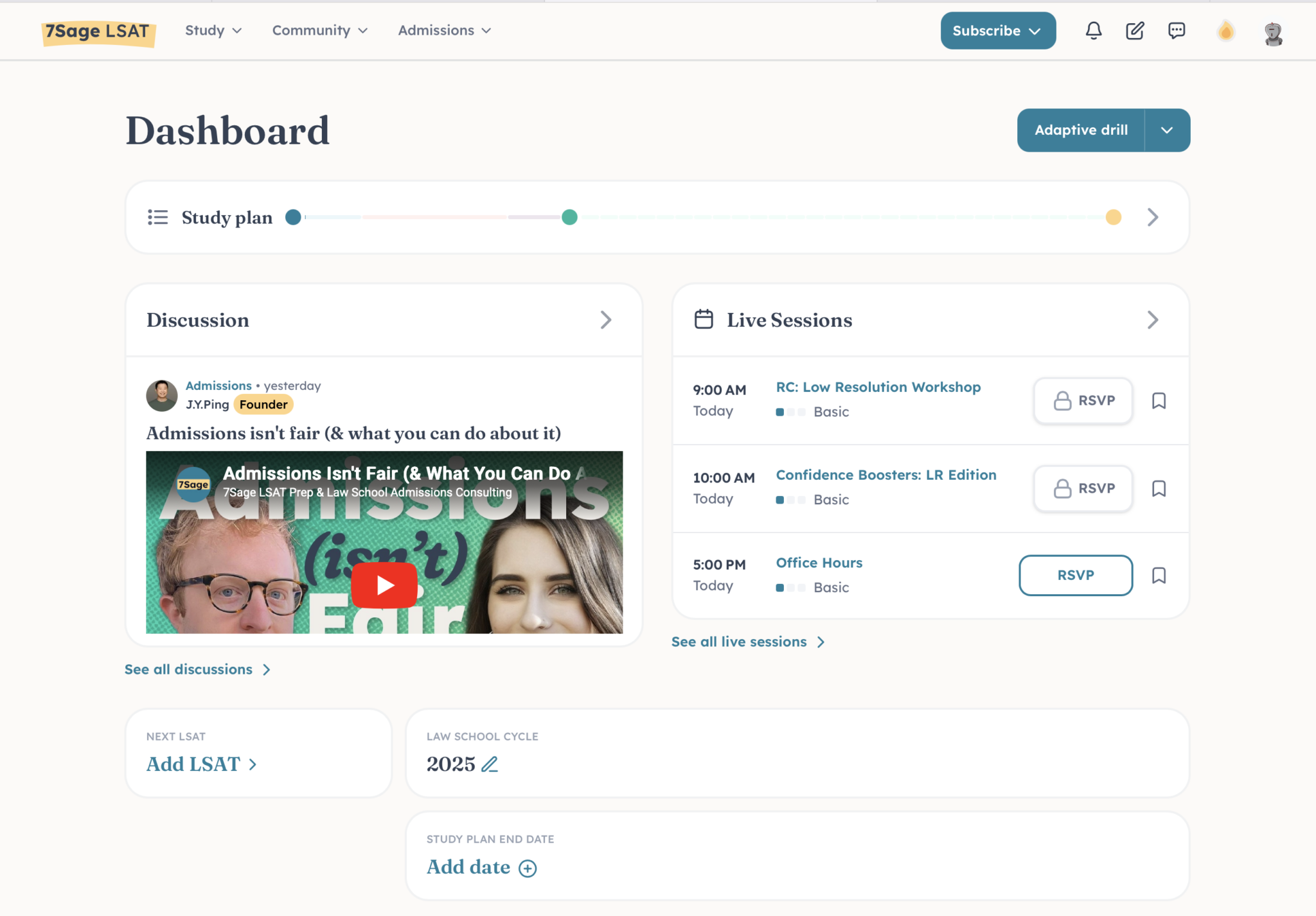
7Sage was not the sleekest platform I tested. I definitely wished it had more of the clean, modern look I saw with some of the other courses. But once I got into the practice side, I understood why people use it.
The Smart Drills were the part that pulled me in. I could check my analytics, see which question types kept tripping me up, and build another set around those weak spots. The practice stays tied to official LSAT questions, so it never felt like I was working through random filler. Still, 7Sage may not be the best fit if you need a more polished dashboard or a lot of live support.
What Testing 7Sage Was Actually Like
- Smart Drills: After checking which question types needed more work, I could build another set around those weaker areas instead of clicking through random practice. That made the next step easy to figure out.
- Performance Analytics: The results made repeat mistakes easier to catch. I could see where the same types of questions kept showing up instead of treating every missed question like a separate issue.
- Adaptive Study Scheduler: The scheduler maps out the study plan around the timeline. It is not flashy, but it gives the self-paced setup more direction than a loose library of lessons and questions.
- Question Explanations: Every official LSAT question comes with an explanation, so I could stay inside the same platform when something did not click. The course is clearly built for people who spend a lot of time drilling and reviewing mistakes.
- AI Coach: The AI Coach sits inside every plan, but the usage limits change between Core, Live, and Coach. That part was not especially clear at a glance when I compared the options.
- Plan Comparison: Core already includes the main self-paced tools. Live adds daily classes, weekly proctored tests, recordings, office hours, and Ask a Tutor. Coach adds a dedicated coach and accountability emails. There is a lot to sort through, but the differences make more sense once you break them down that way.
Pros
✅ Smart Drills make weaker question types easy to target.
✅ The analytics helped me catch repeat mistakes.
✅ Core already includes the main self-paced tools.
✅ Every official LSAT question comes with an explanation.
Cons
❌ The interface looks pretty plain.
❌ The plan page takes a minute to sort through.
❌ AI Coach limits are not obvious at a glance.
Where 7Sage Fits
7Sage makes sense if most of your studying will come down to drilling questions and reviewing mistakes. I wanted a sleeker platform, but Smart Drills and Performance Analytics kept the practice focused without making me build every set myself.
7Sage
Other LSAT Prep Options
The courses below did not need full reviews because they are lighter options or make more sense for a specific type of prep. They may still be worth checking out if you already know what you need.
- AlphaScore: A straightforward self-paced course without a long list of extras.
- TestMasters: A more traditional option for anyone who prefers scheduled classes.
- Mometrix: Better suited as a supplement for extra review and practice questions.
How to Narrow Down Your Options
- Decide whether you need a schedule. Blueprint maps out the week, while Magoosh keeps self-paced prep simple.
- Be honest about live classes. Kaplan and Princeton Review make more sense if showing up to a class helps you stay consistent.
- Look closely at the practice tools. 7Sage works well when drilling and reviewing mistakes will take up most of your study time.
- Think about what happens after a missed question. LSATMax is worth a look if basic answer explanations usually leave you confused.
- Check the fine print. Compare access length, LawHub Advantage fees, and score-guarantee rules before paying.
How I Reviewed the LSAT Prep Courses
I spent time inside each platform and tested the parts students would actually use, including lessons, study plans, drills, analytics, practice tests, and support tools. I paid attention to how quickly I could find my way around, what helped during practice, and what started getting annoying once I clicked deeper into the course.
My Final Take
There is no single LSAT prep course that makes sense for everyone. Blueprint covers the most ground in one dashboard, while Kaplan and Princeton Review lean more heavily on live classes. Magoosh keeps self-paced prep simple and budget-friendly. 7Sage is strongest for targeted drills, and LSATMax has a more specific lane with on-demand feedback after missed questions.
The best choice comes down to what usually gets in the way when you study: planning the week, staying accountable, finding realistic practice, or figuring out why a question went wrong.
| Best LSAT Prep Courses | ||
|
| READ REVIEW |
|
| READ REVIEW |
|
| READ REVIEW |
FAQs
An LSAT prep course can be worth it if you need help staying on track or want clear explanations after missed questions. Students who are already close to their target score may be fine with self-study. A higher LSAT score can also improve your chances of receiving merit aid, so the right course may pay off beyond test day.
Most students should plan to study for around three to six months. Your timeline depends on your starting score, target score, and weekly availability. Taking a diagnostic test first can help you decide how much prep time you actually need.
Look for official practice questions, detailed answer explanations, full-length practice exams, and a study plan that fits your schedule. The current LSAT includes two scored Logical Reasoning sections and one scored Reading Comprehension section, so avoid outdated courses that still center their lessons around logic games.
Blueprint is the best overall LSAT prep course for many students because it combines video lessons, realistic practice questions, study planning tools, and live class options in one platform. However, the right choice depends on whether you need a full course, a lower-cost monthly option, or more instructor support.
Retaking the LSAT is very common. LSAC reports that 49.1% of test takers took the exam more than once during the 2024–25 testing year. Students who retake the LSAT for a second time within the same testing year improve their scores by 2 to 3 points on average.