Rural Elk Grove residents fight proposed housing project, change to general plan
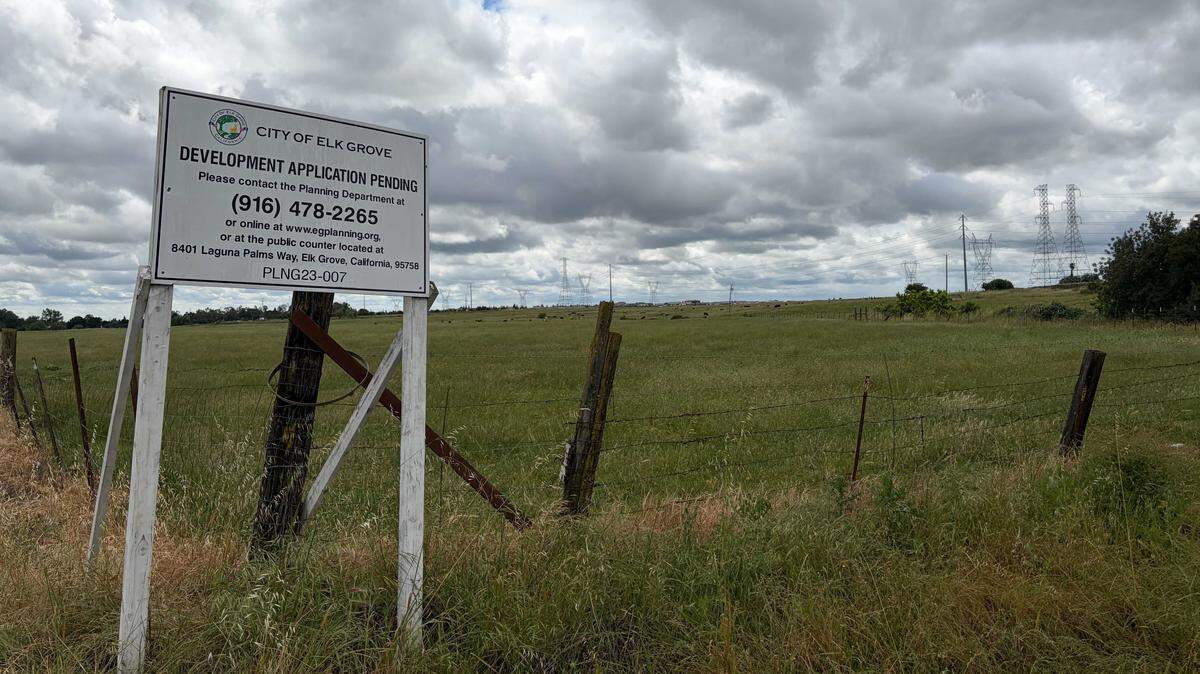
Driving through eastern Elk Grove, signs welcome people to the city’s “hidden gem”: its rural community.
The road has no curbs, gutters or sidewalks. The homes and businesses have no public sewer or water. New residential lots must be two acres or more in size. Small farms with livestock are allowed and encouraged.
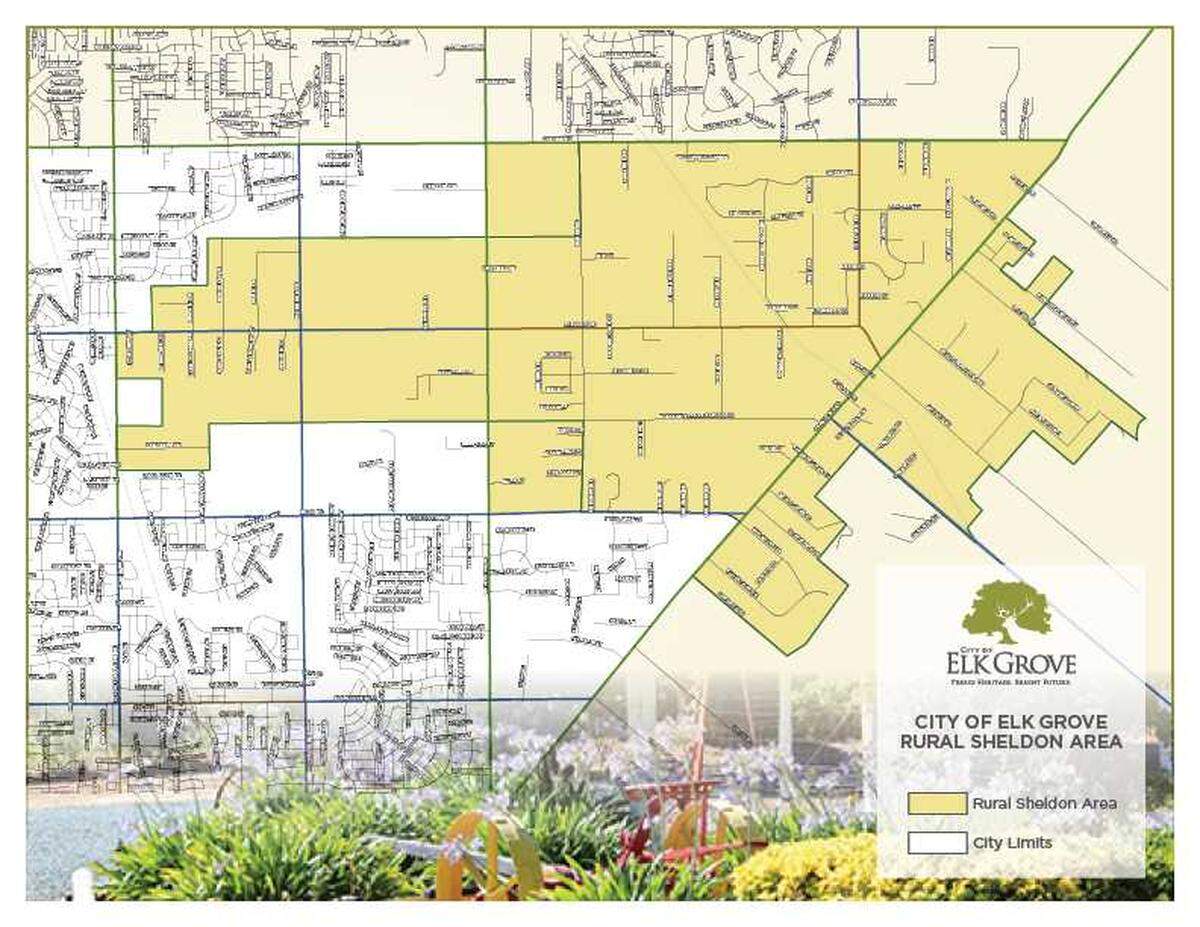
Elk Grove’s general plan designates approximately 5,265 acres as rural land, lacking urban and suburban infrastructure as a policy of “protecting rural character.”
“As new development occurs, preserving and enhancing this rural lifestyle and heritage is a priority for the community,” the city’s general plan reads.
But a proposed project of up to 499 senior living homes in the rural community threatens the future of this way of life, residents say.
The Summer Villas project, proposed to be located on an undeveloped parcel of land southeast of the Sheldon Road and Waterman Road intersection, seeks to change the city’s general plan to remove the site from the rural area and allow the construction of higher-density housing.
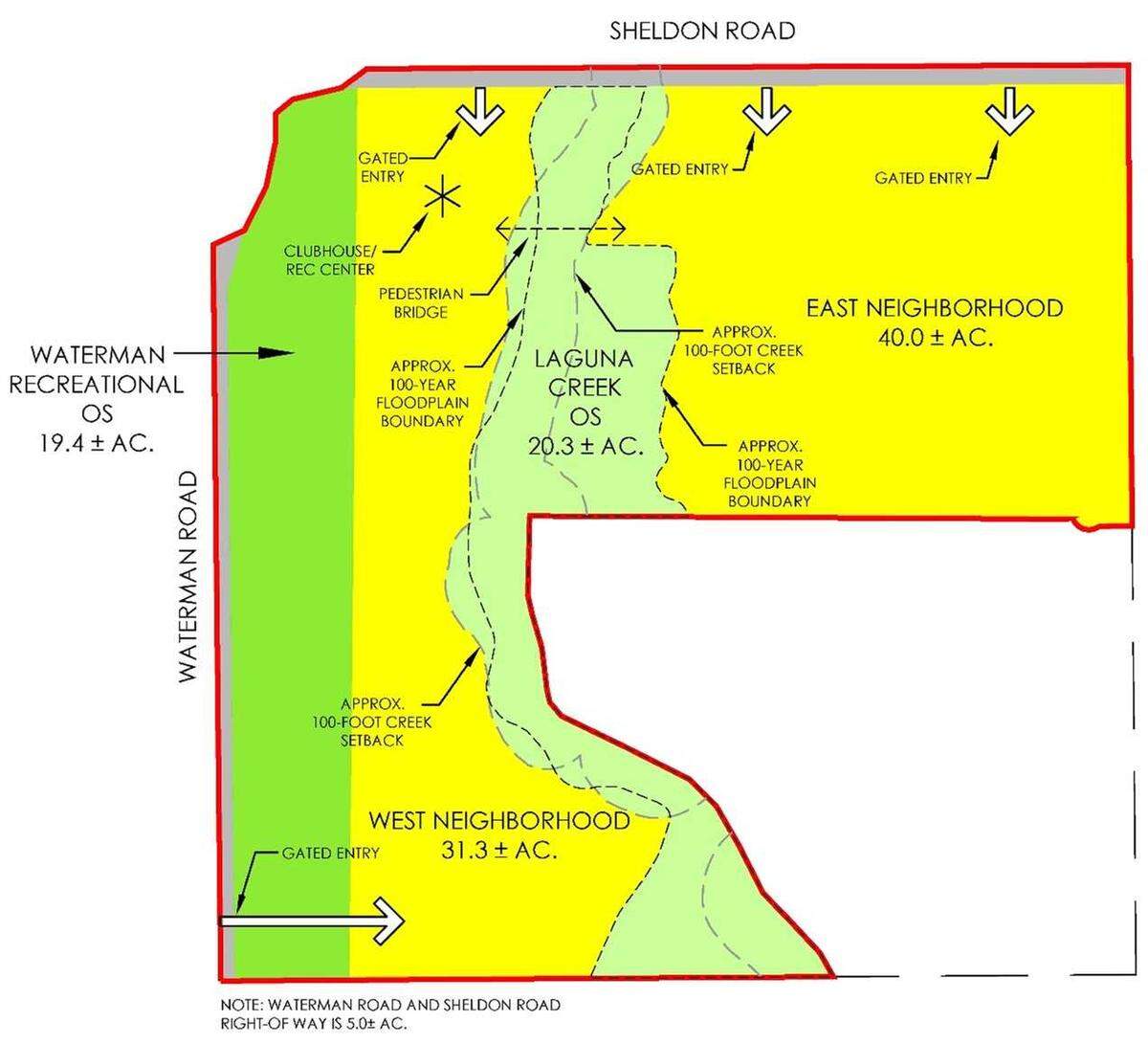
The project would be located on 115.9 acres, with a maximum of 349 homes located in an eastern neighborhood spanning about 40 acres and 150 homes in a western neighborhood on 31.3 acres, according to the draft environmental impact report on the project.
Additionally, 39.7 acres are designated for open space, some for the development of recreational amenities and some to contain a floodplain located on the property, as well as protect wildlife that live there. A pedestrian bridge is planned to connect the two neighborhoods, and a clubhouse would be located on the property.
George Murphey, former planning commissioner for the city of Elk Grove and interim chair of the Sheldon Community Association, said he has spent his career “defending the rural area” and will continue to do so with the Summer Villas project.
He said the project is not compatible with local farms and worries what changing the general plan would mean for the future of rural Elk Grove.
“What else will happen, if this is allowed?” Murphey said.
Resident Matthew Arnold has lived on a farm in rural Elk Grove for years, saying he has poured “blood, sweat and tears” into his land and that the rural area is unique in its position in the city and invaluable to the rest of Elk Grove. He provides meat from his farm to local restaurants, he said, because he has the ability to farm in the city.
“I put food on people’s plates from Elk Grove,” Arnold said. “We have a good thing going.”
But Arnold said the core of the rural area could change if the Summer Villas project were approved.
Although the city’s general plan states that it does not limit a sewer or water agency from constructing lines through to the rural area in order to serve other areas, county water and sewer services would require construction in the rural area to serve the retirement community.
The city may also decide to change the structure of the rural roads to accommodate for more traffic, he said.
Wild animals that live on the land currently would be without a home, “scared for their lives,” and the watershed would be strained and cause drainage issues, Arnold said. He also worried the value of his home would go down if the rural area regulations changed.
Arnold also said there would be no services or stores in the area for potential residents of Summer Villas to walk to, something he said many seniors would want as driving becomes inaccessible to them.
“I’m not against housing,” Arnold said. “It’s just the wrong place to do it…That land is protected for a reason.”

While Murphey said he does not oppose adding housing to Elk Grove — and doesn’t identify with the “not in my backyard” crowd of housing opposers — he said he opposes large-scale housing being added to the rural area.
“This is not a NIMBY issue,” Murphey said. “This is a community issue, a general plan issue.”
Kendra Schmidt, a rural Elk Grove resident whose home is near the proposed Summer Villas development, said she was under the impression that the city “cherished” the rural community. If the project passes, she said, she would consider moving.
“It doesn’t belong here,” she said, saying that newer developments south of the rural area have already put a strain on roads in the area, and this development would exacerbate that.
Eileen Conwell, a resident of rural Elk Grove, said she opposes the project because of the change it would bring to the community.
Conwell is president of the Greater Sheldon Road Estates Homeowner Association, a group founded in 1989 that works to protect rural Elk Grove “from the encroachment of urbanization,” she said.
That includes protecting the rural area from the Summer Villas project, Conwell said.
She said groups and residents opposing the project were in an “anticipating holding pattern” as they waited for city staff to release the final environmental impact report.
Kyra Killingsworth, a senior planner for the city of Elk Grove, said staff were still reviewing the draft environmental impact report, released in September, and no hearing date had been set.
While Conwell said the city has been listening to the concerns of rural residents, she hopes that translates into the project not moving forward and the general plan not being changed.
“We think the community has to win,” Conwell said.
Once the final environmental impact report is released, a Planning Commission hearing will be scheduled. The commission’s recommendation will then go before the City Council, which will decide whether to approve the project.
According to the Sacramento County Assessor’s Office, the land was purchased by Sheldon Business Park Ltd. in 2022. Developer Bryan Wilson did not respond to requests for comment.
Arnold said he hopes the city “doesn’t erase the rurals” by approving the housing project.
“You’re going to have a lot of people leave,” Arnold said. “It’ll never be the same.”