
‘Our time is now’: How the California Museum is honoring Chinese American history
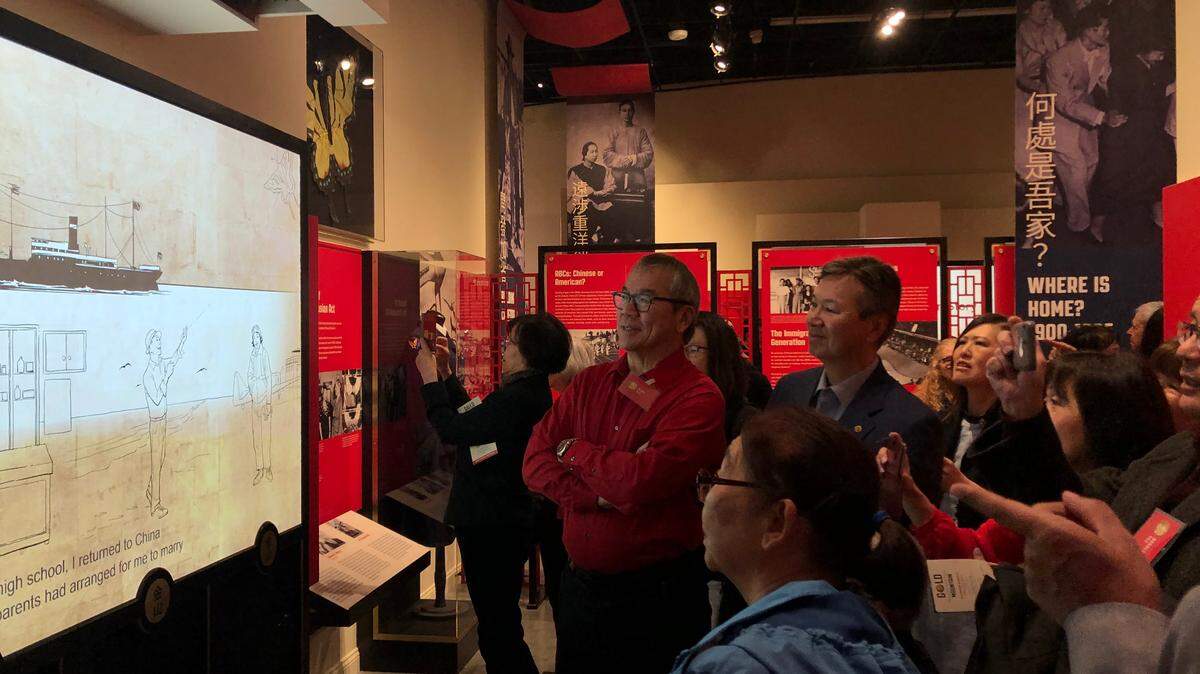
A long-term installation on Chinese American history in California dating to the Gold Rush period is now open to the public at the California Museum in Sacramento.
The exhibit, which began Sunday, lays out the history since the 1840s through a display of historical artifacts, photographs, interactive video stations and activities.
The exhibit is very important to teach our community, others and our children about the history, said state Sen. Richard Pan, D-Sacramento, at the grand opening. Pan is the first Asian American to represent Sacramento in the California Senate.
“We have waited long enough,” Pan said. “Our time is now, and it is important that Chinese Americans and all Asian and Pacific Islanders have the opportunity to play leadership roles in this state and this country.”
Lisa Ling, Sacramento native and journalist, said in a welcome address that it is an exciting moment for her.
“To be able to learn about the sacrifices the Chinese people made to stay, the hurdles and their accomplishments is something that I am deeply proud of,” she said.
“I can’t help but think to myself, I wish that little Lisa could have the opportunity to experience this when she was a little girl, but little Lisa will be able to experience it now and for that I am truly grateful,” she added, referring to her daughter, who was in attendance.
Ling is among Sacramento locals featured in the exhibit along with Dong Sai-Fat, who later adopted the name Frank and owned the popular downtown restaurant Frank Fat’s, and Henry Yee, who began a chiropractic and herbalist business downtown at the site now known as Yee Dental Care.
Franklin Yee, Henry Yee’s son, was at Sunday’s exhibit premiere. Henry Yee, originally from Toishan, China, settled in Sacramento in 1908. Within 10 years he went from not speaking English to getting bachelor’s and master’s degrees in civil engineering at the University of Michigan in 1921 and 1923. He returned to U.S. in 1929 and couldn’t find a job as an engineer, but later opened his business on J Street.
Yee said his father was probably one of the immigrants who helped created the “American dream.”
“This exhibit truly brings out all the diversity of all the different Chinese immigrant families who have to fight hard against discrimination to get where they are today,” he said. “Inscribed on the walls of the state Capitol are the words ‘bring me men to match my mountains.’ I think that my father was one of those men.”
Asked if his father would have been happy about the exhibit, Yee said he would be “smiling in his grave.”
Violetta Sit Terpeluk, a Granite Bay resident and first-generation immigrant from Hong Kong, said the exhibition is eye-opening and educational, and she has never been to one like it.
“I want them (my children) to know my heritage, so this will be a great educational opportunity for them,” she said.
The role of Chinese Californians in building the transcontinental railroad is well-known, but their other contributions in shaping the state over the last 175 years are often overlooked, said Amanda Meeker, the museum’s executive director.
“This exhibit highlights their unsung role in the state’s past and present while revealing connections to current issues of race, nationalism and civil rights,” Meeker said.
The exhibit covers six themed sections in its exploration of the Chinese American experience from the Gold Rush to now. It displays contributions not only to the transcontinental railroad to its completion in 1869, but also to the state’s agriculture, fishing and manufacturing. It also features how Chinese Californians fought racist laws, including the Chinese Exclusion Act of 1882, a federal law that barred immigration from Chinese laborers, as well as the incarceration of Chinese immigrants at the Angel Island Immigration Station from 1910 to 1940.
A free admission day will be offered Saturday at California Museum, as well as Sacramento’s other museums.