
Lockdown silver linings: For a Sacramento family, baby chickens bring meaning, solace
Things are pretty feral in my house these days. My husband’s job tethers him to something of a normal schedule where things unfold at set times for a reason. The world I inhabit with our three kids is different.
When lockdown started last month, I spent half a day devising a color-coded chart. It brought order to our lives with such ingenious activities as “reading,” “chores” and “outdoor time.”
“Exciting!” my 13-year-old son said sarcastically. The schedule lasted a day.
Now I’m just winging it. Since quarantine, my kids have: ironed a mountain of crumpled napkins; memorized the lyrics to Hotel California; filled out the census and researched topics including honeybees, clouds and how to raise chickens.
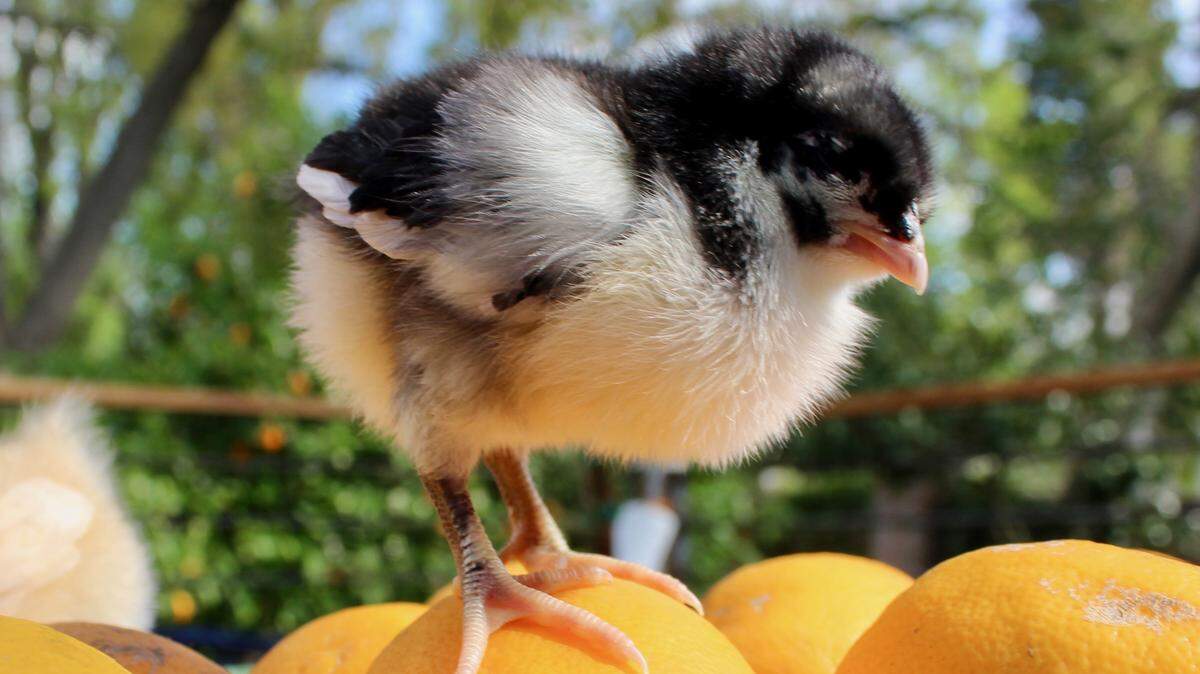
That last one – chickens – morphed from research to reality last week as we welcomed four baby chicks into our home. I’ve been toying with the idea of getting chickens for a while, but with all the caretaking, feeding and pooping, it just never seemed worth it.
Quarantine has redefined “worth it.” The mental shorthand we all use to gauge risks and rewards is turned on its head. Hugging my sister or supermarket shopping? Too risky. Raising chickens? Definitely worth it.
Little did I realize that in getting chicks I’d be joining a national craze. Chick sales are up by as much as 300 percent in some places, and as I called around to local feed stores, the common refrain was “If you want chicks, come early and stand in line.”
All over the country there’s been a run on chicks – same as there’s a run on flour, yeast, toilet paper and hand sanitizer. Perhaps in our collective isolation we seek comfort in cleanliness and coziness.
‘You better get down here, they’re almost gone’
Chicks arrive at regional feed stores in places like Orangevale, Carmichael, Citrus Heights and Auburn from hatcheries, overnighted via the U.S. Postal Service. Western Feed and Supply in midtown Sacramento gets their deliveries on Thursdays.
I walked in as the store opened. I didn’t have to say a word for the clerk to guess why I was there.
“Put your name here,” he said, handing me a clipboard with a piece of paper that already had other names and numbers. “I’ll text when the mailman gets here,” he said. Two hours later, he called breathlessly: “You better get down here, they’re almost gone.”
I drove the 15 blocks in about three minutes flat, in time to get the remaining chicks.
“There’s a pretty high mortality rate,” the clerk said as the kids and I mulled the number to get.
Feeling slightly weird for betting one would die, we picked four – only to later learn we are allowed just three chicks under city of Sacramento zoning rules. (Please don’t tell the city, or my kids.)
Can you keep a pet chicken and still eat chicken for dinner?
Our four friends – two Buff Orpingtons, a Barred Rock and an Australorp – live in an old dog crate affixed with a heat lamp. As they grow, so does my appetite for all facts chicken.
Imagine my delight in stumbling across a backyard chicken census online. It’s overseen by Maurice Pitesky, a veterinarian and epidemiologist at the UC Davis School of Veterinary Medicine-Cooperative Extension.
Pitesky’s best guess is there are about 100,000 backyard flocks in California. Sacramento probably has about 11 percent of them, making ours the third-highest backyard chicken region in the state, behind Los Angeles and San Francisco.
I learned that it’s not just backyard chickens that are increasingly popular – it’s chickens everywhere: on commercial farms by the tens of thousands, in the grocer’s freezer and in pretty much every country. Chicken is the most-eaten meat in the U.S. Between 250 million to 300 million commercially grown chickens are raised here in California. That’s about eight chickens per person.
Thus, the Venn diagram that represents “animals kept as pets” and “animals we eat” lands uniquely on chickens. Which raises some issues.
For example, there’s the question articulated by my 15-year-old daughter as we sat down to dinner the other night: “We’re not really going to keep eating chicken, right?”
Then there’s a question related to health: Speaking with chicken experts, I came to see that my own four chicks are the loose equivalent of unvaccinated children. Fine as long as they don’t get sick, a danger to millions of other birds if they do.
“We don’t like all these people getting into backyard birds,” Bill Mattos, president of the California Poultry Federation, told me. “People start out trying to grow their own eggs and find out it’s not so much fun. Instead of trying to get rid of them properly, people turn them loose and they develop a disease. That’s what scares the commercial industry.”
Add “learn about bio security” to the list of things I need to know as a new backyard bird owner. (There are many websites on how to keep chickens healthy, including this one from the USDA).
Community By Instinct
As we’ve bonded with our chicks, I’ve wondered if the chick craze is being driven by people like me, with newfound time on their hands.
I ask the poultry experts now in my Rolodex. The consensus is that some folks want meat and eggs in their backyard in case there’s a food shortage – a variant on the hording theme, though this isn’t exactly logical if you consider it’s about half a year until chicks lay eggs.
Then there are the wanna-be backyard farmers – a category that’s been sharply on the rise for years, especially in places where there’s a strong farm-to-fork movement like Sacramento. Poultry, being compact and inexpensive (compared to, say, a cow), is a way to scratch the farmer itch.
There’s also the boredom purchase, which, for the sake of chickens everywhere we hope is a very tiny slice of the pie.
But I think there is yet another reason driving chick demand during COVID-19, and I speak from personal experience. It has to do with meaning, purpose and connectedness.
My bet is that, like me, people are feeling a bit lonely for connection to the outside world. I can’t see friends unless it’s from a rolled-down car window, let alone visit my own mother. So the prospect of being able to have new life inside our house – life that’s warm, fuzzy and unfolding in a new way every day – that seemed more than inviting. It felt essential.
I sat cross-legged on the floor recently next to the dog-crate-turned-brooder. I watched one of the yellow chicks slowly close her eyes under the heat of the lamp and doze, wobbling slightly on toothpick legs. I found myself thinking that in “normal” times I would not be observing this for as long, nor as closely. A gray chick hops and leans into her yellow roommate.
I know they are sharing heat by instinct. But I wonder, too, if their survival depends on the comfort of their community. I know mine does.