
At 96 years old, a World War II vet and round-the-world sailer rooted in Sacramento
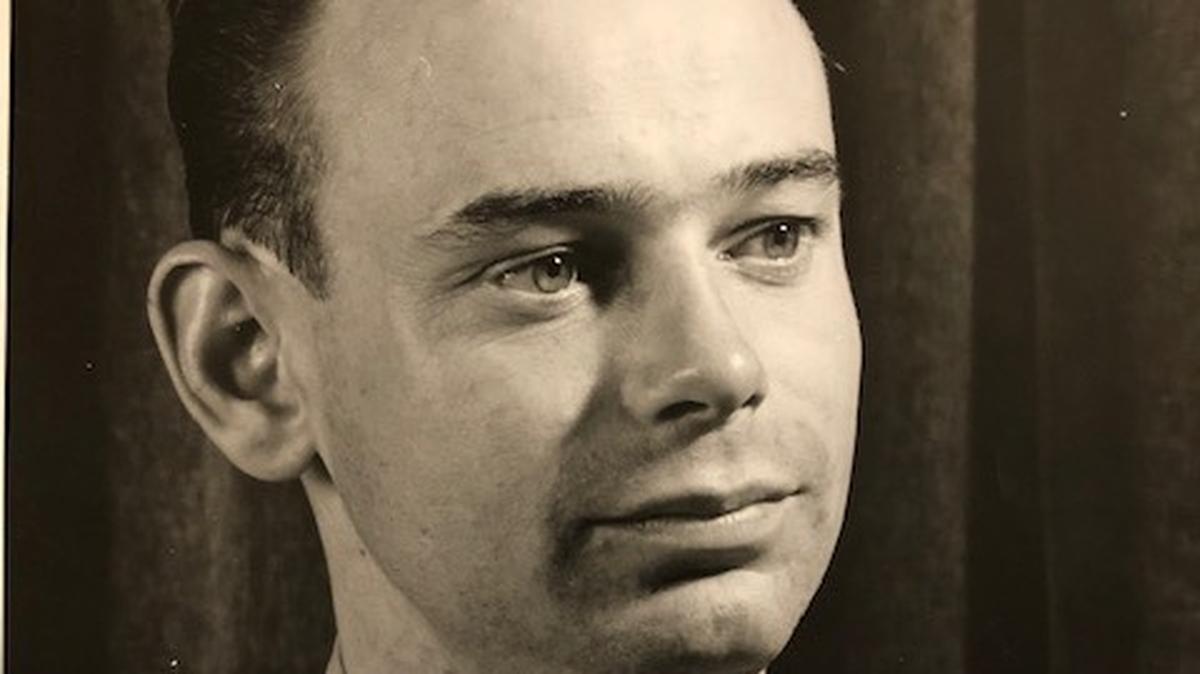
You may have seen David Clark play the clarinet or piano at Evan’s Kitchen in East Sacramento. He’s a common sight in the Sacramento area; at 96 years old, he still drives and he still bikes up to 10 miles three or four days a week along the American River Parkway.
But his humble presence belies the adventurous life that brought him through World War II and multiple attempts at sailing around the world.
Born in 1924 in Alameda, Clark grew up during the height of the Great Depression, where spending 5 cents on a phone call wasn’t feasible. Clark was sent to eastern Oregon to live with his aunt and uncle because of the economic struggles his parents faced. His aunt and uncle, who were born 10 years after the Civil War, shaped his outlook on life, pushed him to be the best in school and to seek adventure.
Clark was a petite child and teenager, making sports like football slightly out of reach. So he turned to Alpine skiing. Little did he know at the time that this sport would pave the path for him in the U.S. Army and allow him to meet his hero.
At just 19 years old, Clark was drafted amid World War II. He trained with ski troops for mountain warfare with the 10th Mountain Division. Mountain warfare training consisted of skiing and rock climbing.
“I was all excited to join because everyone else was. Put it this way, on Thursday, I was being drafted and I couldn’t wait to be in the Army. On Friday, I got in. On Saturday, I could not wait to get out of the Army,” Clark recalled. “We went into basic training (Camp Roberts, in central California) having no idea what we were doing.”
Once he was transferred to Camp Hale in Colorado, Clark fibbed about having experience teaching skiing. He wanted to be placed in the Mountain Training Group because his hero, Austrian Hall of Famer and world-renowned skier and instructor Friedl Pfeifer, was placed there.
“My friend, Cliff told me Friedl was over in the barracks eating breakfast with the coach of the Dartmouth ski team,” Clark said. “I rushed over there, stuck out my hand and said, ‘Hi, I’m David Clark.’ He said, ‘Get lost kid!’ Over the next five years, I never talked to him again. Never again for the rest of my life.”
The realities of war were unlike anything Clark could have imagined. He wasn’t prepared for what he’d see and live through. Clark said he always expected the man next to him to die and not himself. Everyone thought that way. In one case, the guy next to him did die, and Clark survived.
After a year of training in the U.S., Clark was sent to a little village in Italy in 1944. He was there for two months without combat. One night, Clark said, he was walking up a long hill with 120 men to replace Company H. A company in the Army is typically made of three platoons. As they walked, they saw headlights come their way. The headlights belonged to 10 weapon carrier trucks, carrying trunks filled with American bodies. It was then that Clark realized those were the men he was replacing.
“Most of us stood by the road and threw up,” Clark said. “All of us wanted to turn around and quit, but none of us could. You don’t quit in the U.S. Army. You keep going.”
While overseas, his first lieutenant took him and two other privates to Washington, D.C., where he had a friend who worked for the government but lived on a sailboat. Clark told himself if he survived the war, he’d get himself a boat.
Ten years after getting his boat, he finally paid it off. He did so by working several different jobs after the war. He worked at a ski resort as an instructor, taught rock climbing, and as a park ranger in Yosemite National Park, where he rescued lost travelers. He was also a middle school teacher and made $3,000 a year. As the son of a music teacher, Clark inherited his father’s musical talent with the clarinet and piano, which he would play in the future at ports around the world.
The adventures, stories and perseverance didn’t stop once Clark returned home from war. He didn’t want to settle for little trips in his boat, he wanted to sail around the world. Clark ventured on three trips before he fulfilled his desire. His first trip in 1991 didn’t count toward the record because he traveled from Florida to New Zealand with his wife, Lynda. For this trip, Clark used a sextant to aide in celestial navigation. During his second trip, Clark lost his boat in the Indian Ocean and was rescued by a livestock ship carrying 40,000 sheep.
“I was a lousy sailor. I made every mistake there was to be made until I had no more to make. I’m sure I even made some up,” he said.
Upon his second return, he wrote the Guinness Book of Records asking who held the title of oldest man to sail solo around the world. They replied telling him they didn’t have a category for that, but they knew that the oldest man to have done so was an Englishman named Tom Blackwell at age 68.
Clark took it upon himself to break that record. On December 5, 1999, he set off in Mollie Millar, a boat named after his mother, for his third and final trip. Clark crashed his boat in Cape Cod, South Africa, but was able to buy a new boat, Mickey, thanks to donations from some of his 200 sponsors and his $500 a month Social Security check, and he continued his journey.
Two years and two days later, after stopping at ports and playing his clarinet, Clark sailed into Ft. Lauderdale, Florida, and reunited with his wife Lynda and friends. He was 77 years old.
Although he wasn’t able to get into the Guinness Book of Records, he is a member of the Joshua Slocum Society — an organization that has been disbanded since 2011, but that honored and recognized the brave individuals who conquered this solo epic voyage. You can read full detailed accounts of his journey in his two self-published books, “The Real Old Man and the Sea: A True Story” and “The Adventurer: The Epic Story of the World Record Holder David Clark. … The Oldest Solo Sailor to Circumnavigate the Globe.”
It’s as unlikely a course as any that has led to Sacramento. From a slight young man to a spry older man, just don’t tell Clark he has a can-do attitude. It doesn’t exist.
He has made sure to live his life to the absolute fullest, living out his philosophy: “I don’t believe in the words can or can’t,’‘ he said. ‘‘Really, it’s a matter of will or won’t.”