
Canes, talking watches and more: Group offers tool kit for the visually impaired
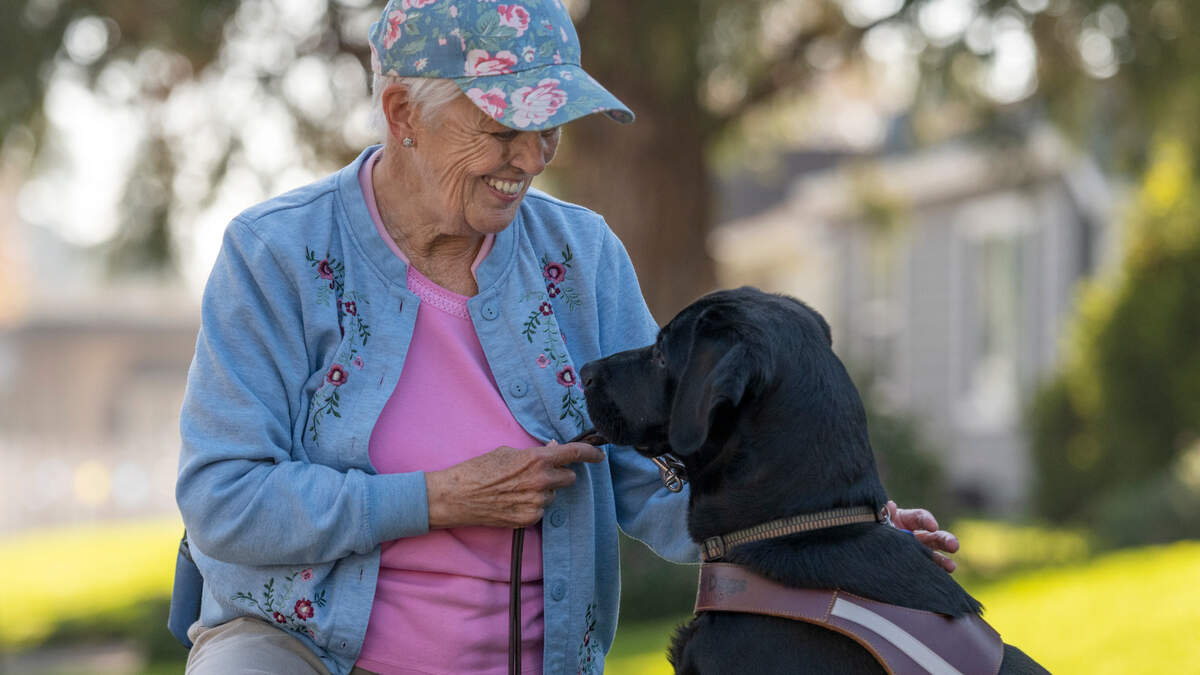
Jackie Young is blind in one eye, with just a slice of vision remaining in the other. Young has glaucoma and gave up driving years ago when her vision began to worsen. But she wasn’t willing to stay at home, and she never quit her daily walks.
“I get out,” Young said. “I walk the neighborhood, the parks … a little bit of the trail.” All told, she covers at least 4 miles every day. And she credits Society for the Blind with helping her stay safe and independent.
“Being taught to use the cane — that was one of the biggest things for me,” Young. said. “That cane has saved me from falling over a big cement block that was unexpectedly in the middle of the sidewalk.”
The long white cane is one of several assistive tools included in Society for the Blind’s “Senior Safe At Home Kits.” As part of this year’s Book of Dreams, the organization is asking readers of The Sacramento Bee for $5,800 to cover the cost of 50 kits for blind and low-vision individuals like Young who are 55 and older.
“The pandemic has done a couple of things and one is that individuals are recognizing sooner that they need help because of their vision loss,” said Shari Roeseler, executive director of Society for the Blind. But while demand has increased, she said, the pandemic has also made it harder to provide clients with in-person training.
“That’s where these Senior Safe At Home kits become critical,” Roeseler said. “We get on the phone with them when they get their kits and we go through what the items are and how they can use them.”
“The items that are part of the kit are things we have been purchasing and delivering to our clients in the senior program for many years,” added Shane Snyder, the group’s director of programs.
In addition to the long white cane, each kit includes a liquid level indicator, a device that clips onto a drinking glass or mug and beeps an alert when it’s time to stop pouring.
“When you lose vision, suddenly pouring a cup of coffee can become a hazardous task,” Snyder said.
The kits also include a talking watch key chain and digital recorder. The talking watch is a simple device that announces the time at the push of a button. The digital recorder has many uses, including storing phone numbers, appointments, to-do lists and recipes.
“These are recorders with tactile controls, so you don’t need to see to be able to use them,” said Snyder.
Also included are bump dots and a signature guide. Bump dots are tactile markers that can be attached to phones, keyboards and various appliances helping a user find the “start” button on the microwave or washing machine. The signature guide is a plastic template the size of a credit card with a rectangular cut-out in the middle. The guide can be attached to the signature line on documents or checks, creating a confined space in which to sign your name.
Society for the Blind had to suspend many of its in-person services during the pandemic, but they’re hoping to resume them in 2022. That includes the group’s eight-day retreats, where seniors learn independent living skills. The participants prepare their lunches as part of the class and then eat them. They learn how to chop vegetables without cutting themselves and how to fill a measuring cup without making a mess.
“There are a lot of people that are blind that feel they can’t go on in living, they can’t go on having a normal life,” said Young. “They feel unsafe being out in public. And this is where Society for the Blind comes in and teaches you how to be proactive for yourself, how to be safe, how to interact with the public.”
Pre-pandemic, seniors would also have monthly outings, excursions into the community where they could practice their skills while engaging in educational and recreational activities. They attended concerts, visited museums or went on riverboat cruises. In the fall, they’d take trips to the pumpkin patch and to Apple Hill.
“You’re being shown things that will help you through life,” Young said. “Like if you’re looking for something on the table, just don’t swoop your hand down — you’re going to knock things over. You’re taught to go low and slow, go along the table slowly with the back of your hand .... You’re learning to use your other senses.”
Young lives in an independent senior apartment community. She does her own laundry and fixes her own breakfast.
She can do her own shopping when she needs to, but she doesn’t cook much — lunch and dinner are served down the hall in the apartment’s dining room. She’s learned to navigate the bus system and take the light rail. And she’s learned to walk safely, both with a cane and, these days, with the help of a guide dog.
“I’m very independent,” Young said. “My attitude is, keep going forward. There is a solution for anything. I don’t ever say, ‘I can’t.’ I say, ‘How can I do this?’”

How you can help
For more than three decades, The Bee has asked readers to provide a gentle lift to Sacramento organizations helping the needy during the holiday season. Last year, more than $200,000 was raised to help 32 community organizations. To help in this year’s Book of Dreams campaign, you can make a donation at: sacbee.com/bookofdreams