
The Plant Lady: Consider fire-resistant flowers to protect your home from disaster
With the forecast for more frequent and aggressive fires in California, it is important to mitigate the risks to your home as much as possible.
Creating a defensible space around your house is one way to do so. Depending on fire risks, defensible space can be as little as 10 feet, up to a distance of 100 feet from your house and structures. A good way to view it is as concentric rings. The first ring 5 to 10 feet from the house is the most important and should have minimal flammable material. Some people may choose to just have gravel or cement.
The next ring (roughly 10 to 30 feet) can consist of low-growing, high-water content plants which are widely spaced. Furthest out from a structure will be large trees and shrubs. Of course these vary, depending on whether in an urban environment or a rural area due to fuel proximity.
Some landscaping practices to create a fire-safe area are common sense. The prime example – reduce combustible fuel. Avoid piles of leaves and compost close to structures, rake up as many dry needles and leaves as possible, keep an open area between plants, and irrigate to minimize dry foliage. Additionally, prune trees and shrubs on an annual basis to remove excessive growth and dead limbs.
Adding hardscape to a landscape should also be considered. Pathways consisting of fireproof materials such as brick, gravel, cement or even crushed granite act as a fire break. In fire-prone areas, avoid using bark for pathways. Thought also needs to be given to material used between plants. In the “Combustibility of Landscape Mulches” study done in 2004 by the University of Nevada Cooperative Extension, mulched wood chips fared the best compared against rubber mulch and shredded cedar. However, wood chips can still smolder and burn. If being used in an area where mulching is desired for weed suppression and/or soil water retention, then compost is ideal.
A few plants that are to be avoided in a defensible space are: pines, cypress (Italian in particular), junipers, palms, rosemary, eucalyptus, Acacia, black sage, bamboo and pampas grass. These plants have traits which make them either a greater risk to burn and/or they create debris at a greater rate compared to other plants. In general, avoid plants that have narrow leaves/needles, high oil content, bark that sheds from the tree and weak limbs.
As an example of the above plants, eucalyptus is a nonnative, weak-limbed tree from Australia. Beyond shedding copious amounts of flammable leaves, they also shed bark and small limbs on a regular basis. The oils in all parts of the plant make them a significant fire risk.
If your landscaping consists of pampas grass, consider removing and replacing with a more fire-resistant plant. Pampas grass is a tall grass that creates a lot of dry, flammable material. In general, large grasses planted close together can be problematic in a defensible space. However, low-growing native grasses – such as Carex – can act as a fire break.
If you live in the foothills or mountains, having pines and evergreens around is a blessing and a curse. The downside – these plants tend to be some of the most fire prone. To minimize risk, remove low branches from trees (termed “skirting”), as these limbs act as a fuel ladder. Also remove plants from under trees, as these similarly act as a fire ladder. Understory shrubs should be kept at a distance of 10 to 15 feet from the canopy of large trees. Ideally all trees will be a good distance away from structures, but if unavoidable ensure that limbs are not overhanging buildings or chimneys. Also, clean your gutters on a regular basis, as these act as a sink for combustible debris.
No plant is fireproof, but there are numerous which are more fire-resistant than others. Below are a few that should be considered for use in a defensible space. For a more comprehensive list, look at firesafesdcounty.org. This list is from San Diego County but the material is relevant throughout California.
Fire-resistant plants
If you are in a climate that allows them, succulents are ideal. These plants contain large amounts of water that can help prevent sparks or flames from spreading. Various aloes, agave, Bulbine, cacti and certain groundcovers (such as sedums) are good choices.
Many California natives are on the list of fire-resistant plants. These include Mahonia, Glavezia, snowberry, Ceanothus, Ribes, Mimulus, and toyon. However, these plants should still be pruned and thinned yearly. Even fire-resistant plant debris dries out and becomes a combustible fuel. Some nonnative plants that are considered more “fire-wise” are Coreopsis, Penstemon and Pittosporum.
Vines instead of shrubs should be used to create privacy screens. Shrubs create large volumes of flammable material, and when planted touching each other they help spread flames and embers. Trumpet vine, California native grape and the potato vine are good options.
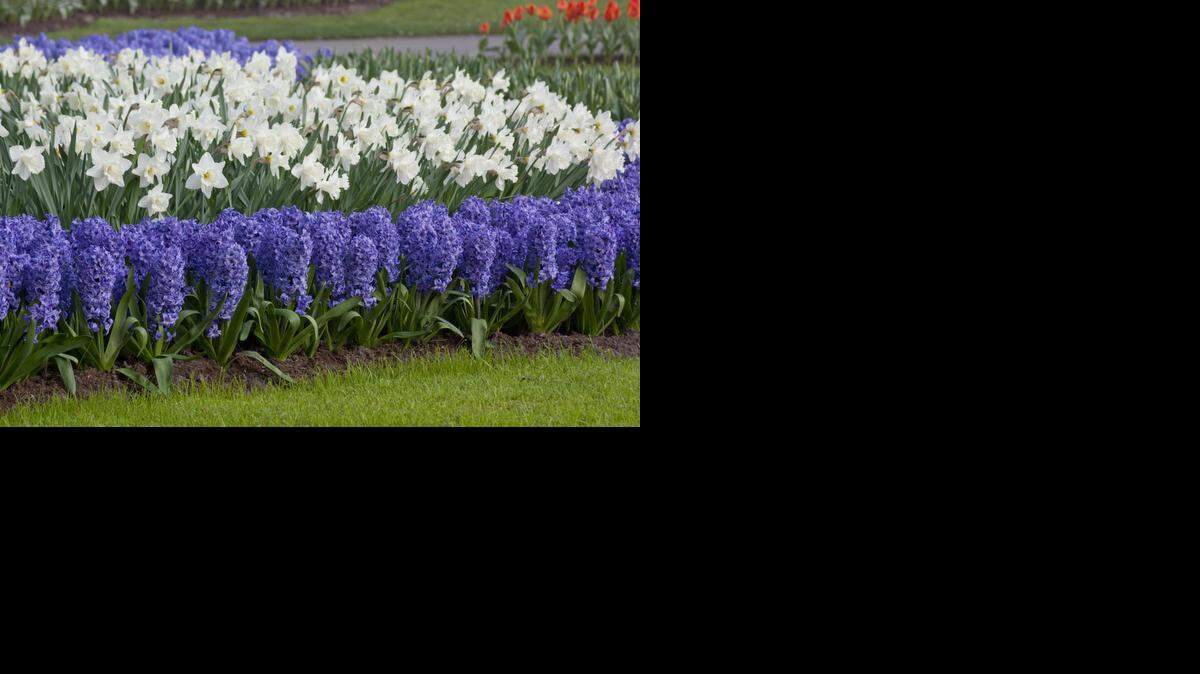
Seasonal bulbs are a great choice to populate a defensible space close to the house. Their high moisture content and low height makes them ideal as a fire-safe plant. Regardless, do make sure to clean up the brown foliage. Daffodils, hyacinth, Amaryllis belladonna and irises are a few good choices.