
Stanley Tucci Shares His Best Italy Travel Tips — Here’s What First-Timers Should Know
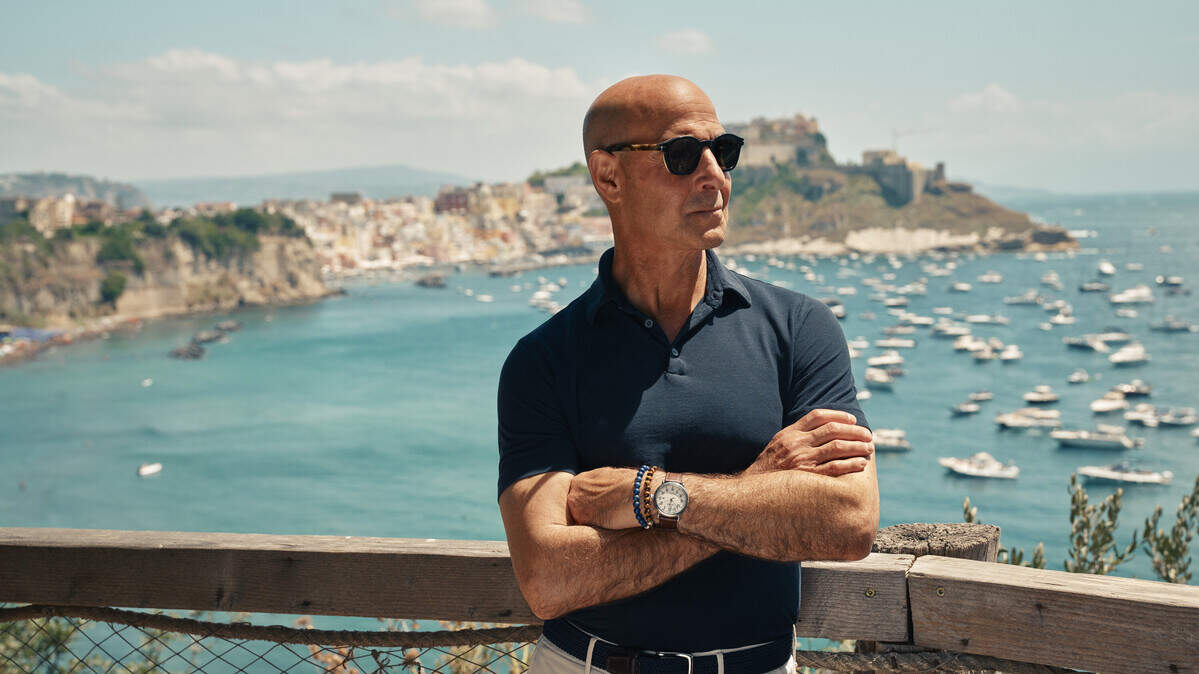
Planning a trip to Italy means wading through thousands of “must-see” lists, viral restaurant reviews and conflicting advice about which cities deserve your time. Stanley Tucci — the actor whose Italian heritage and on-camera obsession with the country’s food have made him a de facto travel authority — has a simpler starting point: skip the obvious itinerary, eat where locals eat and don’t try to cram everything into one trip.
His recommendations, shared in interviews and his shows, have become a go-to playbook for first-time visitors trying to plan a trip that feels less like a checklist.
Why Stanley Tucci Is Synonymous With Italy
Both of Tucci’s parents are of Italian descent, with family lineages originating in the Calabria region of southern Italy. His paternal grandparents came from the village of Marzi in the province of Cosenza, and his maternal family hails from Cittanova in the province of Reggio Calabria. Tucci’s first direct exposure to the country came when he was 11, when his family relocated to Florence for a year.
He has written extensively about that heritage in cookbooks like “The Tucci Table” and the memoir “Taste: My Life Through Food,” which detail how the traditional cooking of his Calabrian mother and grandparents shaped his life. He also hosts the culinary travel shows “Stanley Tucci: Searching for Italy” and “Tucci in Italy.”
Why Tucci Says to Start at a Local Market
Tucci’s first piece of advice for travelers anywhere — not just Italy — is to head straight to a farmers market.
“A market tells you how important food is or isn’t to the people there. It exposes the soul of a place,” Tucci said in a 2025 interview with Travel + Leisure. “Farmers markets in particular are a way of understanding the people who live in any given place. Not only the produce or products that are sold, but how fresh are they, and where are those products from? Are the majority locally sourced or imported? What are the vendors like that are selling them? Who is shopping there?”
Which Italian Cities Tucci Recommends
For travelers hoping to get a true taste of Italian cuisine and culture, Tucci recommends Milan “for its progressiveness and elegance and proximity to the lakes and mountains, as well as its risotto, osso buco, polenta, and the like. Rome without question for its grandeur and for the four ubiquitous pastas—alla matriciana, cacio pepe, carbonara, and alla gricia—not to mention the artichokes,” he told Travel + Leisure.
He also suggested “Palermo and Naples for the madness of them both, the pizza, eggplant parmigiana, and the seafood. [And] Florence for the cultural richness of the city and the simplicity of the food, like the bistecca fiorentina and ribollita.”
His top timing tip: “Do your best to go off-season to avoid the crowds, especially in Venice, Florence, and Rome. And eat where the locals eat!”
How to Get Around — and Where to Stay
Tucci told Fodor’s in 2022 that the car-versus-train choice depends on where you’re headed. “Sometimes having a car is a great thing, except when you’re going to visit Florence, you don’t want to have a car. You can’t drive anywhere,” he said. But, he added, “it’s really nice to be able to drive and just stop off at little towns or little rest stops along the way, or take a circuitous route somewhere, go to a little hilltop town, that’s great.”
The trains, he said, are “really wonderful because it’s very relaxing. The countryside is gorgeous.”
His hotel shortlist includes the Mandarin in Milan; the Gritti Palace and the Danieli in Venice; and the Ferragamo Hotel Lungarno in Florence. “I dream about it all the time,” he said of the Florence property. “I’ve stayed there a couple of times and I literally never wanted to leave.”
His broader advice for any itinerary: “Don’t try to do too much in one trip.”
What Not to Do in Italy
Tucci has one firm rule for visitors at the dinner table — respect local conventions.
“Don’t ask for cheese on your own spaghetti alle vongole. Let the cheese thing go. I think that’s key,” he told Fodor’s. “And I think, most Italians will speak English, but it’s always nice to make a vague attempt at least a few words of the language of the country that you’re in.”
This article was created by content specialists using various tools, including AI.
This story was originally published June 8, 2026 at 12:42 PM.
.jpeg)