
Sacramento Valley farms struggling as coronavirus closes restaurants, chokes supply chain
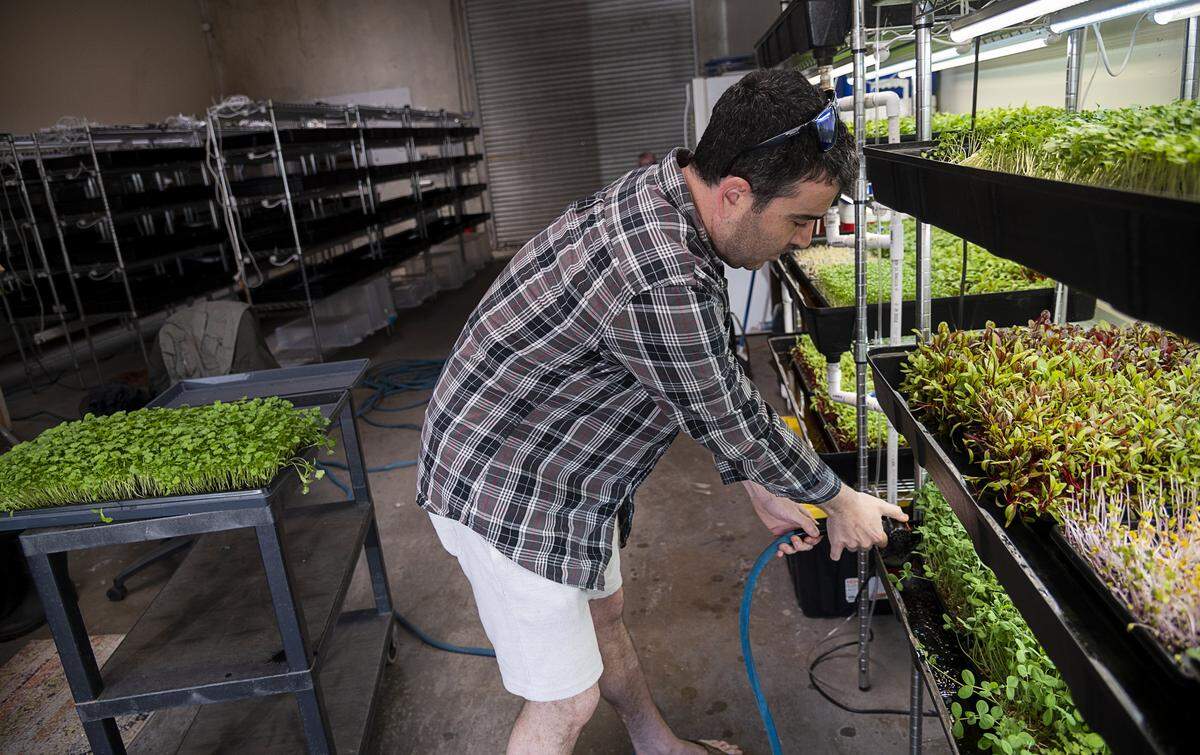
Matt and Stephanie Weber’s microgreen farm, Sacramento Sprouting Co., was thriving. Revenue was growing steadily by about 5 percent per month, and leafy greens like frills mustard and mitsuba topped dishes at downtown Sacramento’s fine dining restaurants.
The farm, which is the couple’s sole source of income, now makes $200 worth of sales per week. Shutdowns and health concerns have sunk Sacramento Sprouting Co.’s revenue to just 10 percent of what it was before the coronavirus pandemic.
“Every day is, like, two weeks long. I check the news in the morning and at night and I still don’t have a clearer picture of what’s happening,” Matt Weber said. “At this point, I’m more worried about our personal lives than the business. How do we pay for rent or health insurance or car loans?”
A statewide directive for restaurants to offer takeout- and delivery-only to limit the coronavirus’ spread has put significant financial pressure on Sacramento-area eateries, hundreds of which may close as a result. And while losing the experience of dining out is more visually striking, both ends of the farm-to-fork pipeline are bleeding.
The Webers started growing microgreens in a 100-square-foot greenhouse in Matt’s father’s backyard as he battled pancreatic cancer. A cook at Kru Contemporary Japanese Cuisine found them on Instagram, and Sacramento Sprouting Co. was born.
As restaurants like Binchoyaki, The Kitchen and Ella Dining Room & Bar became clients and Produce Express began distributing the Webers’ microgreens as far as Reno, Sacramento Sprouting Co. expanded to a 1,200-square-foot North Highlands warehouse. The Webers were selling anywhere from 40 to 70 pounds of microgreens wholesale per week plus another five pounds at the Midtown Farmers Market, Matt Weber said.
The Webers had planned to establish an LLC for Sacramento Sprouting Co. in 2020 but hadn’t yet done so, Matt Weber said. Their status as independent contractors makes them, like many other low-output farmers (or food photographers or informal caterers), ineligible for the Small Business Administration’s easily forgivable Paycheck Protection Program loans.
SBA disaster relief loans also specifically excluded all agriculture businesses other than cooperatives, nurseries or those in aquaculture, asking them to instead take out USDA loans with standard interest rates. Though Secretary of Agriculture Sonny Perdue announced Friday that U.S. farms will receive $19 billion in financial aid, it’s unclear if any of that money would benefit independent farms like Sacramento Sprouting Co.
“Independent contractors are really kind of left out in the dark right now,” Matt Weber said. “There’s a lot of people that make this town really good, and they might soon be broke.”
Microgreens’ short growth cycles — 21 days at most — present a silver lining, Matt Weber said. Sacramento Sprouting Co. emptied out most of its remaining inventory with a St. Patrick’s Day delivery and doesn’t need to plant more until the market recovers. Farmers who grow heartier fruits and vegetables, meanwhile, are scrambling to figure out how to offload their products, said Certified Farmers’ Markets of Sacramento County coordinator Dan Best.
Small-scale farmers often can’t sell directly to supermarkets because their outputs fall short of what stores need and prices can’t compete with larger, streamlined agricultural producers. Yet with restaurants needing less and distributors adjusting accordingly, many rely more on local farmers markets, which Best said have seen declining sales as well.
“What (farmers) actually need is to be able to have an outlet and a home for their goods. They can’t eat 25 acres of goods with their families,” Best said. “We’re dealing with perishables. A week later, you’re going to have nothing to sell. You can’t put it back on a shelf and wait for things to reopen.”
California wineries suffering
That’s even true for wine. Matchbook Wines had planned on 15 percent growth in 2020 and grew grapes accordingly, co-owner John Giguiere said. Those 2019 vintage grapes will eventually need to move to make way for the 2020 crop and some — particularly the more sensitive whites — might be sold off as distilling material, which Giguiere said nets about 20 percent of what a finished wine would earn.
Headquartered in Zamora, a Yolo County town of fewer than 100 people, Matchbook’s wines retail from $12 to $25 per bottle — expensive enough to fit on many restaurant menus, cheap enough to sell well in grocery stores. And while the restaurant sales that typically make up 35 percent of Matchbook’s revenue have tanked and tasting room sales no longer add another 2.5 percent, Giguiere said grocery sales are up 40 to 50 percent as shoppers nationwide load up on alcohol to cope with the stress of the pandemic.
Those grocery sales and a strong first quarter give Giguiere hope Matchbook can break even this year — a profit is pretty much out of the question — and avoid layoffs. Others won’t be so lucky. Jon Moramarco, the managing partner of wine consulting firm bw166, estimates American wineries and wine grape growers will lose nearly $6 billion over the next year, with those producing less than 5,000 cases especially hard-hit.
“There’s a lot of farms that are having to look at their whole planting plan and having to adapt and modify how much they grow,” Giguiere said. “That’s really tough for a lot of farms, especially those that are not as (economically) diversified as us right now.”
Community Supported Agriculture boxes, for farms with established programs before the pandemic, have been a lifeline. Growers at CSA-focused Terra Firma Farm in Winters told Civil Eats they’ve never had so many people sign up for boxes in such a short period of time, while 105-acre Eatwell farm in Dixon saw a 50 percent uptick in CSA sales.
Some like Full Belly Farm and Riverdog Farm, both in Guinda, are selling CSA bundles through the restaurants they supply, and Produce Express began offering local residents “consumer boxes” last month.
Riverdog Farm was selling about 30 percent of its 80-plus crops at farmer’s markets and another 30 percent through CSAs before the pandemic, with the remaining 40 percent going directly to wholesalers or restaurants, according to co-owner Trini Campbell. CSAs now make up 80 percent of Riverdog’s sales, Campbell said.
“It has morphed into something that’s supporting the farm,” Campbell said. “We’ve been able to deal with logistics and figure out how to allocate the products we’re already growing to the CSAs, and we’ve been able to keep all of our employees throughout the process.”
Business owners of all stripes have been stymied by not knowing when social distancing regulations will end. But the gradual recovery Gov. Gavin Newsom outlined last week would particularly cast a pall over farmers’ summer plans, when a wide range of crops including squash, stone fruit and tomatoes normally go to market.
Good, fortuitous planners will have planted fewer crops in late February and early March in anticipation of weak demand stemming from the pandemic. Others that harvest a full load will try to sell at sparsely populated markets with all customers spaced six feet apart, Best said.
“Those plants are going to be coming off starting in May, and when that happens you’re going to have a whole bunch of farmers looking for a home to sell their stuff,” Best said. “And if we’re still in the state of preventative regulation that we’re in now, we’re going to have a problem ... if you’re a grower that has 20 different types of vegetables, it’s very difficult to try to space them so that everybody’s six feet apart.”
This story was originally published April 21, 2020 at 5:00 AM.