
Apple Hill thrived during 2020. But 2021 has been difficult for a very different reason
Chris Delfino is farm-strong at 61, with a toothy smile, quick tongue and roots that make him a natural choice for president of the Apple Hill Growers Association. The co-owner of Delfino Farms, Joan’s Apple Bakery, Edio Vineyards and Henrietta Stitch Hard Cider with his four adult children, Delfino grew up with Apple Hill after his parents Edio and Joan co-founded the organization in 1964.
As terrible as 2020 was for so many food- and tourism-based businesses, it was the best year Delfino could recall for Apple Hill. Itching for travel after a pandemic-locked-in spring and slightly relaxed summer, he said people flooded the trove of foothill wineries and farms tucked away off Highway 50 in El Dorado County in fall.
“They came like I’d never seen before. I’ve been part of it since 1964, since I was 4 years old, and I’ve never seen … the amount of people come up like last year,” Delfino said. “They wanted to go somewhere. They couldn’t go to concerts, they couldn’t go to sporting events, they couldn’t go anywhere, but they could go to Apple Hill. And they did.”
Yet as the rest of California roared back to life in 2021, Apple Hill ate a mean right hook from Mother Nature. The Caldor Fire destroyed 347 square miles of El Dorado County from August through October, and while the direct damage to Apple Hill’s farms could have been worse, poor air quality from the Caldor fire and northern Dixie Fire kept people inside through the start of prime visitation season.
“People would joke to each other, ‘Hey, at least we’re not wearing masks for a virus anymore. We’re wearing them for the smoke,’” Ponderosa Ridge A Bed & Breakfast owner Bonnie Kelley said.
Apple Hill’s charm comes from its sense of timelessness, but the last two years have brought significant change. As fruit sales give way to Christmas trees over the next week, growers are looking to the future, hoping the next generation’s investment will be as strong as the last.
What is Apple Hill?
Apple Hill started as a 16-farm collective around the town of Camino about 7 miles east of Placerville, though some families have been growing there consistently since the 1860s. Sloping hills and elevation around 3,000 feet create prime apple-growing conditions: temperatures cool off at night, and a long growing season allows fruit to mature slowly on the trees.
In the 57 years since founding, it’s become a community and a tourist destination. Apple Hill comprises a small sliver of El Dorado County but accounts for 40% of the county’s agricultural production value, according to a 2018 economic study.
Pink Ladys, Gravensteins and other apples were the main drivers behind the $29 million in agricultural revenue generated that year, though wine grapes were worth $3.1 million and Christmas trees another $2.1 million.
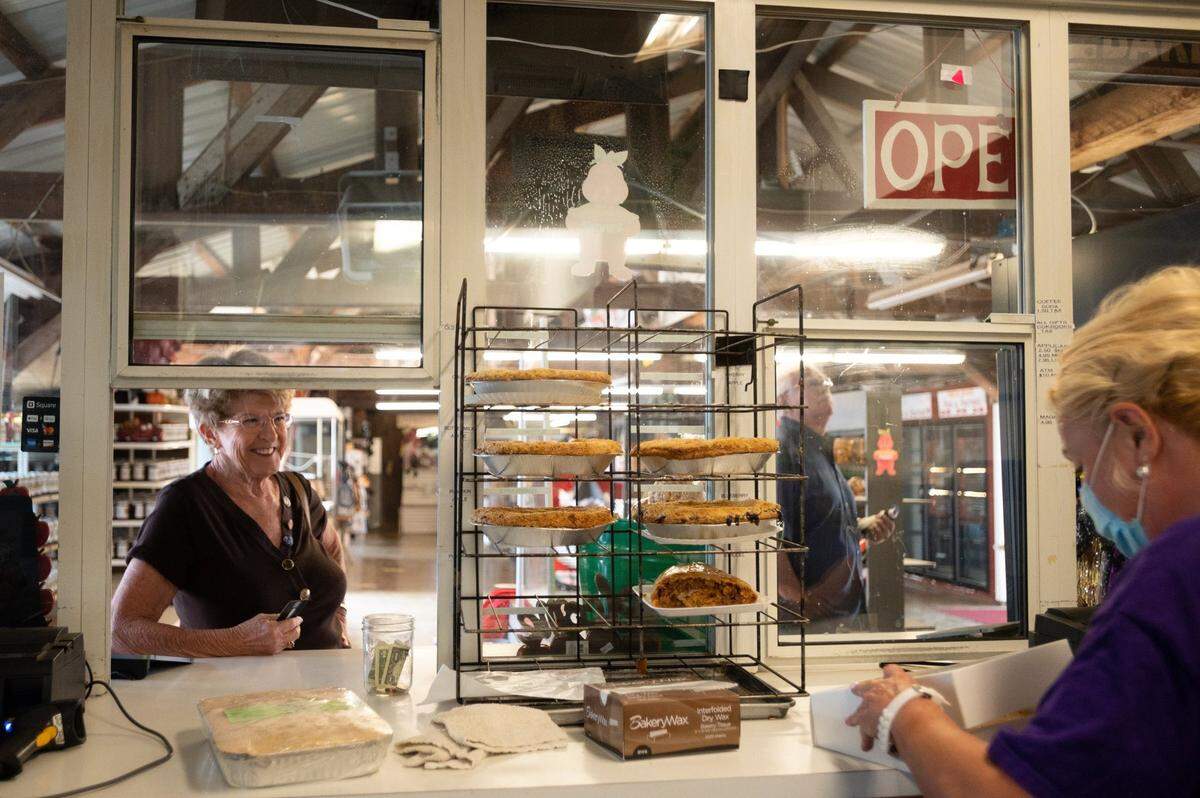
Apple Hill Growers Association bylaws require all fruit for sale to be produced within the community — you can sell your neighbor’s apples, but not Del Monte’s. Visitors also contributed $31 million to the local economy at businesses such as hotels, restaurants, gas stations and wineries in 2018.
The Growers Association estimates 1.3 million people visit Apple Hill from September to December in a typical year, though blueberries, blackberries and lavender start drawing out-of-towners in June. Most come from the six-county Sacramento region, especially at the season’s bookends — 75% in June, 81% in November and 89% in December.
“It has changed dramatically,” Delfino said. “My father, he said ‘my dream is to not be (only) the month of October anymore’ … It’s gone from five weeks in the fall to literally expanding out to half a year.”
Why did Apple Hill do well during 2020?
Had Apple Hill been built to rely on far-off tourists, its economy would have suffered the way Old Sacramento’s did during the pandemic. But Apple Hill revolves around local visitors’ day trips into the countryside, a huge boon as business travel tanked and quarter-full flights landed at the Sacramento airport.
COVID-19 gripped the world in March, as farmers were tending to their crops but well before harvest. By mid-May and then again in early September, El Dorado County’s infection rates were low enough to permit indoor dining, and people were more comfortable venturing out than in the first couple of pandemic months.
But the saving grace can’t be overstated: People don’t go to Apple Hill to sit inside. Dazzling fall foliage, scenic hillsides and crisp autumn air have been central to the experience since it began, and most businesses already had robust outdoor seating when the pandemic hit. Spacing tables 6 feet apart? No problem when your property is measured in acres, not square feet.
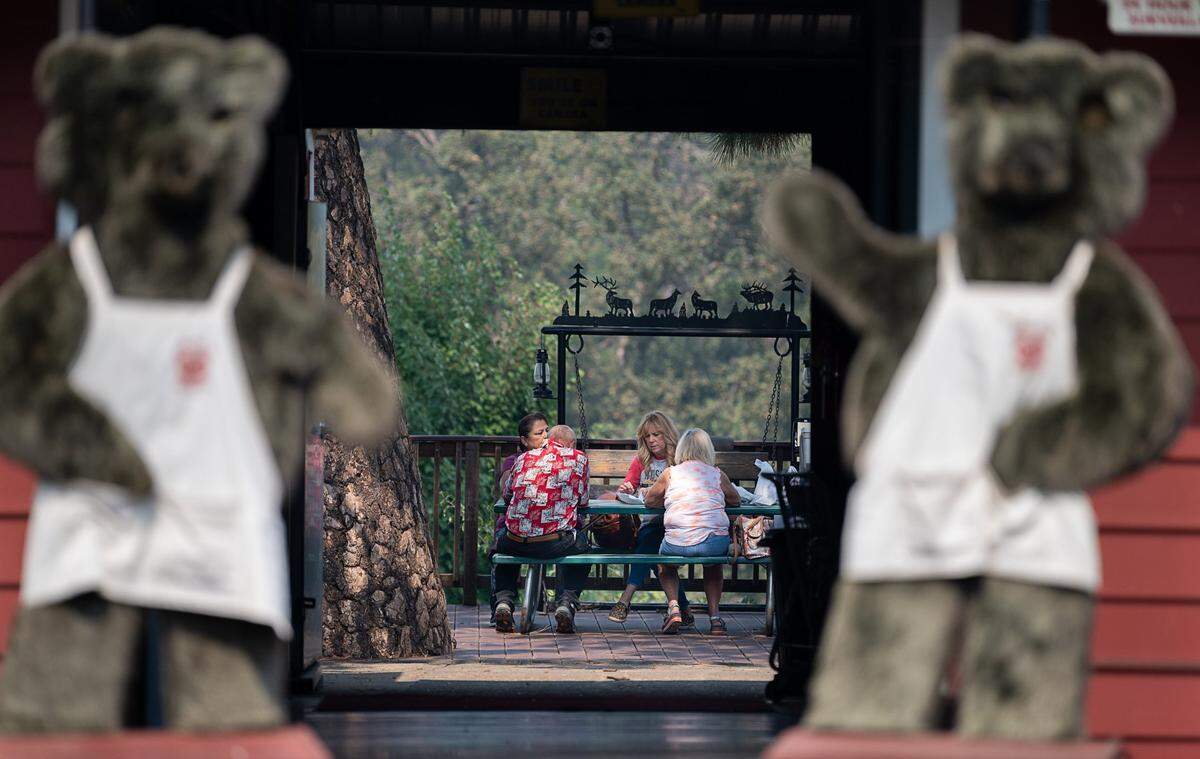
August and September weekends are busy in Apple Hill every year; in 2020, summer weekdays were bustling as well, Rainbow Orchards co-owner Christa Campbell said.
“Where could people go? All summer long, they hadn’t been to (water parks) or Disneyland. There were no sports, kids weren’t in school and nobody was working (in offices), so the weekday business was tremendous because everybody could just come when they wanted,” Campbell said.
With Madroña Vineyards wine only available for curbside pickup during the first two months of California’s stay-at-home order, co-owner Maggie Bush began buying additional picnic tables. By the time the winery reopened in May, it had a game plan to minimize contact between guests and employees.
Tastings would be selected all at once as flights, rather than having customers sidle up to the bar to pick wines one-by-one using the same glass. Madroña staff recorded one-minute explainers on each wine, which customers could view on their smartphones in lieu of a conversation with the host. Fresh butcher paper was laid over well-spaced tables following each party, ensuring a sanitary surface that was easy to clean up.
“It worked wonderfully,” Bush said. “I’d say 99-to-1, people preferred this style of tasting to the bar.”
Where there’s fire, there’s smoke
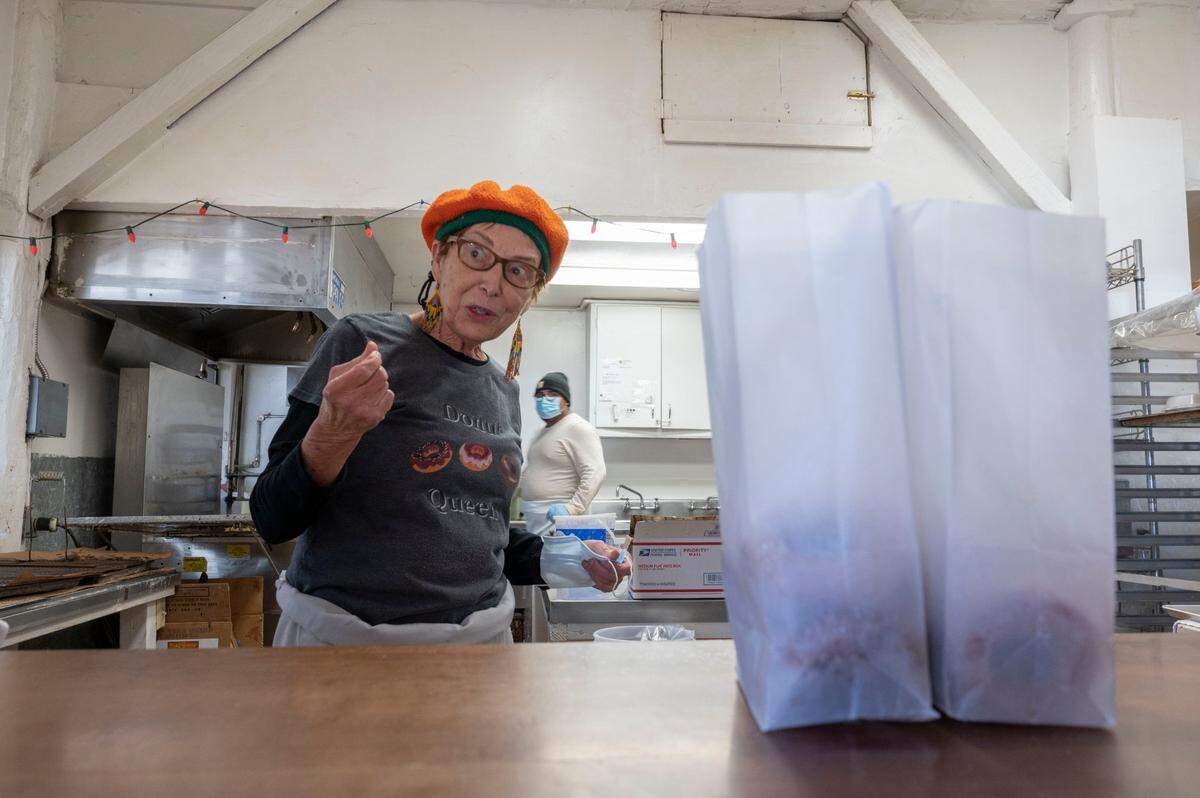
“Reserved parking for Donut Queen” reads the sign above Rainbow Orchards’ closest spot. That would be for Campbell, dressed last week in a fuzzy pumpkin hat, leggings with halved apples, rainbow Keens and earrings and a “Donut Queen” T-shirt, of which she owns six.
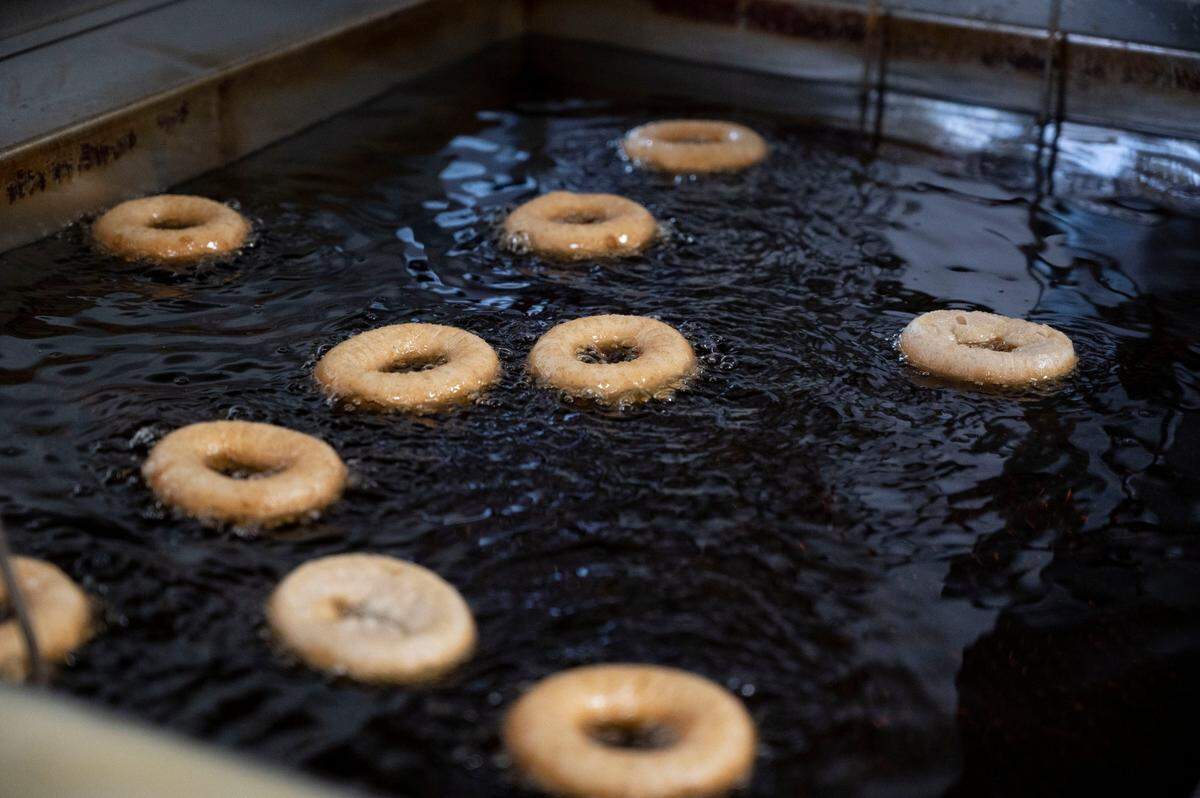
No Apple Hill vendor is as beloved as Campbell, who bought the property with her husband “Farmer Tom” Heflin in 1977. They’re known for their sugar-coated apple cider doughnuts, cut and fried upon ordering, but also sell pies, cobblers and hard cider out of an open-door barn, with barbecue and wine tastings out back on weekends.
Rainbow Orchards learned about crowd control in 2020, enforcing the county’s mask mandate and devising lanes based on customers’ orders to keep the constant weekend rush from piling up. In 2021, too-large crowds were the least of their problems.
The Caldor Fire started 20 miles southeast of Camino on Aug. 14 and wasn’t fully contained until Oct. 21. Wind blew it away from Apple Hill, to the misfortune of residents in other parts of rural El Dorado County, but smoke and the even-larger Dixie Fire still choked the air as the AQI rose above 1,000 some days.
That meant next to no tourism during a couple of the busiest months of the year. It also meant farmworkers worked in N95 masks with smoke-stung eyes. Sometimes, even that wasn’t safe and they had to let fruit rot.
Rainbow Orchards secured agricultural permits to access their crops in evacuation zones but couldn’t manage more than a minimal harvest of nectarine trees — not that they had the customer base for anything else at that time, Campbell said. Madroña Vineyards left about a third of their grapes on the vines, Bush said.
“You could hardly even be in the winery because the smoke would just seep in. It was awful,” Bush said. “ We didn’t lose anything, no vineyards burned, so we had it better than many people. But even so, you have the impact of the smoke.”
California wineries have become reluctantly familiar with smoke taint over the last decade. Delicate grapes can have their flavors warped by days or weeks of poor air quality, giving the wine a flavor some have described as similar to licking an ashtray.
Delfino doesn’t think Edio will suffer much smoke taint; the winery’s albariño grapes had already been picked by the time the Caldor Fire began, he said. Bush isn’t so sure about Madroña. Smoke taint can’t be tasted until fermentation; they’ll just have to wait and see how bad it is.
What’s ahead?
Highway 50 construction continued to snarl traffic around Camino, but Apple Hill visitors came back strong once the smoke cleared. Rainbow Orchards will stay open for another week as people begin cutting down their own Christmas trees at Apple Hill farms, Campbell said. Still, the loss of tourism and fruit from the fires put business in a hole to start the fall.
Long-term, Delfino worries about the next generation of land stewards. The average American farmer is 58 years old, according to 2017 census data, and many longtime Apple Hill growers are getting up there in years, with no clear heir apparent.
That’s not the case at Delfino Farms, formerly known as Kids Inc., where each of Chris’ children has carved out a leadership role making wine, baked goods and cider or running the farm. A smattering of millennials have returned to farms such as Pine-O-Mine and Grandpa Cellars as well. But more broadly, future success needs more young bodies while tenured minds are still around.
“We need the next generation to come in and take over,” Delfino said. “The youth needs to come in and learn from these people. Yes, all the schooling in the world is very important, and it’s changing dramatically. But they should listen to some of the older guys here on certain things they need to know in the field.”
That next generation will increasingly need to cope with climate change, particularly record wildfires and unseasonal temperatures. Late spring frosts kill crops, including apple blossoms. There’s wine and berries and stone fruit and Christmas trees, but one fruit is still core to Apple Hill’s identity. What if ecological changes make it harder to grow?
Like most people, farmers are tired from the last two years and hoping for brighter, easier days ahead.
“Just a little bit easing up of stress,” Bush said when asked what she wanted for 2022. “You just feel like you’re getting one challenge after another, and it would be nice to just have normalcy once in a while.”
This story was originally published November 26, 2021 at 5:00 AM.