
Soberly delicious: How mocktails and nonalcoholic drinks are sweeping Sacramento bars
Probiotic Punch, a new cocktail at R Street Corridor hot spot Bottle & Barlow, is a deliciously acidic refresher. A bartender shakes Seedlip Garden 108, orgeat syrup, pineapple and lime juices, apple cider vinegar and Cock-’N-Bull ginger beer, then pours it over a Collins glass of ice and garnishes with a dehydrated lemon wheel.
All it’s missing is alcohol.
The punch is part of Bottle & Barlow’s mocktail menu, along with virgin takes on margaritas, gimlets and other typically intoxicating cocktails.
Mocktails and other nonalcoholic drinks have recently become better and more popular in Sacramento, following a national trend. No longer are teetotalers stuck with O’Douls and Shirley Temples; smart bartenders are accounting for the sober and sober-curious these days.
“They’re getting something that is similar to a cocktail. It just doesn’t have the burn, doesn’t have the intoxication, doesn’t have the fermentation,” Bottle & Barlow bar manager Kyle Rioux said. “People are accounting for their health and their sobriety a lot more these days, and I think bars are making a very admirable effort to not leave those people out of the conversation or take away their seat at the table.”
‘Near beer’ thrives among athletes
Fleet Feet, of all places, is a testament to that. The runner’s paradise started in a dilapidated Sacramento Victorian 45 years ago and now boasts 186 stores nationwide. Currently based in North Carolina, it chose the midtown Sacramento store (along with those in Austin, Texas, and Delray Beach, Fla.) to start selling Athletic Brewing Co. beer, which is 0.5% alcohol by volume, in September.
Sacramento remains Fleet Feet’s highest-volume location, vice president of business development Ben Cooke said, and was an easy choice to test “near beer” in a cooler by the register. One running group that met and finished at the 2311 J St. store normally attracted about 20 people; that number increased to 100 when the club switched to SacYard Community Tap House, which has occasionally carried Athletic Brewing among its 20-some beers on tap.
Beer is part of running culture, Cooke said, but some athletes struggle to justify the empty calories or weakened next-day state. The three Athletic beers Fleet Feet sells — Upscale Dawn golden ale, Run Wild IPA and Cerveza Atletica Mexican lager — are 50 to 70 calories per can, about half to one-third of a normal beer’s worth. They’re a little hoppier than expected and not quite as filling but otherwise resemble a traditional craft beer in taste, look and mouthfeel.
“It has a youthful, fresh, sporty vibe, and you don’t compromise significantly on taste,” Cooke said. “We’re not thinking it’s going to be our No. 1 sales category going forward, but it’s in the sphere of a runner’s experience and something that runners enjoy and one thing that we can bring into that lifestyle as product offering.”
A block away from Fleet Feet sits Ro Sham Beaux, the low- and no-ABV wine bar opened during the pandemic by Henry and Simon de Vere White. It also carries Aurora Elixirs hemp drinks, Casamara Club amaro sodas and Dram Apothecary flavored CBD sparkling waters.
On the mocktail side, Seedlip has been a game-changer, Rioux said. The 4-year-old, London-based company uses botanicals such as peas, blood oranges and acorns to make its nonalcoholic distilled spirits the same way as other distilleries do — macerating, distilling, filtering and blending — but stops short of fermentation.
The result is floral, fragrant beverages with artful labels featuring botanicals interlaced around woodland critters. Some mimic known liquors like gin, while others have their own unique flavor. Rioux compared Seedlip mocktails to Impossible Burgers — eat it right after real meat and you’ll notice a slight difference, but for vegetarians, it’s the innovation closest to the real thing so far.
Quitting drinking
From taste-testing mocktails to Dry January to cutting out booze entirely, an increasing number of young adults are sobering up. More than 65% of millennials are bored by heavy-drinking culture, according to an American Addiction Centers survey titled “Generation Dry” released earlier this fall. Members of Gen Z, raised with the online awareness that drunken mistakes can be seen instantaneously, consume 20% less alcohol than millennials did at their age, per a 2017 Berenberg Research report.
The pandemic may have also played a role. Some people binged out of stress, boredom or addiction despite a lack of open bars and house parties; others re-evaluated their relationship with alcohol and began abstaining, as Wine Enthusiast reported. Food/beverage data analysis firm Tastewise found web searches for nonalcoholic wines were up 333% in January 2021 compared to January 2020.
At Bottle & Barlow, the drink of choice for owner Anthony Giannotti’s fiancée, Rioux said, is the Peach Destroyer, a summer porch-ready combination of Seedlip Grove 42, ginger syrup, peach bitters, lemon juice and rosewater topped with a mint sprig.
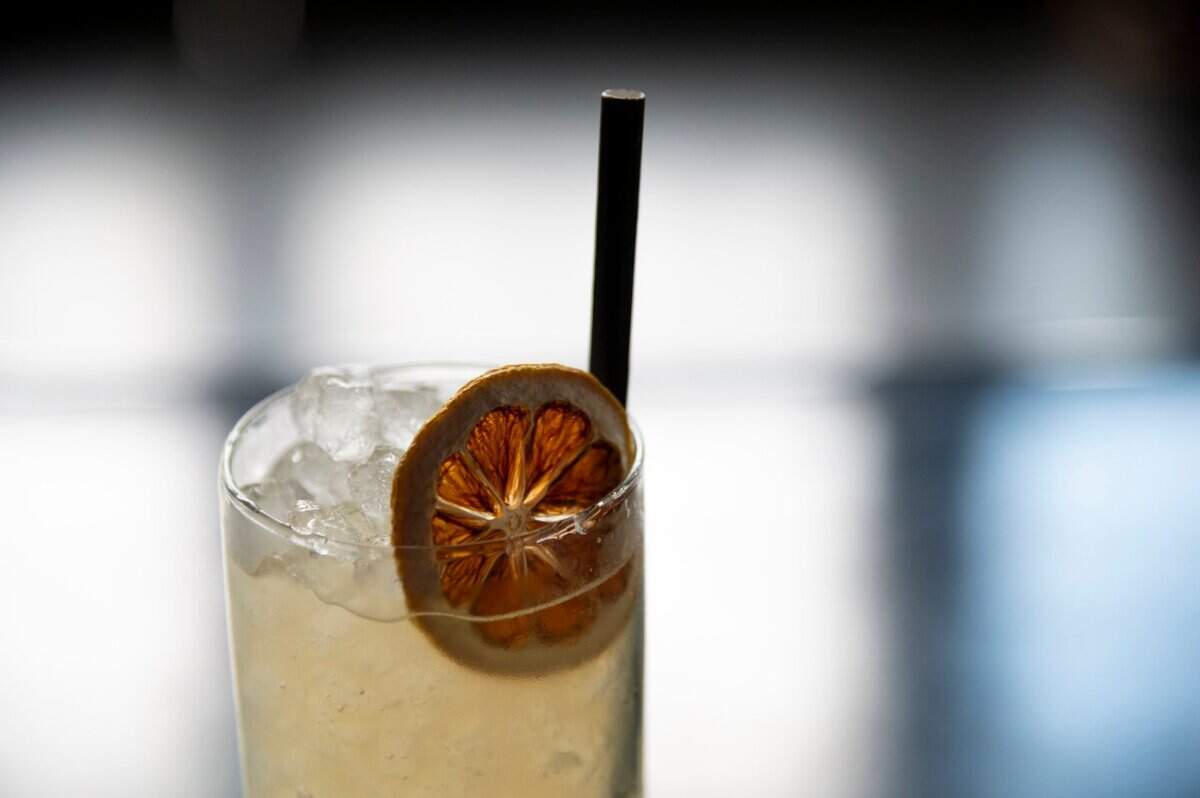
The concept of mocktails isn’t all that new to Sacramento. Midtown restaurant and bar LowBrau gave sober drivers free “nojitos” around Christmas 2014, and then-Bee dining critic Carla Meyer published a roundup of her eight favorites on New Year’s Day in 2017, hoping to help others keep their resolutions.
But full mocktail menus, as seen at restaurants and bars such as The House of Authentic Ingredients (THAI), Ella Dining Room & Bar and Mas Taco Bar, represent a cultural shift. Bottle & Barlow, which also sells bottles of Lagunitas Brewing’s nonalcoholic Hoppy Refresher, introduced its first non-alcoholic menu last fall, and Rioux added his own take after moving from Los Angeles in May.
Kombucha trend
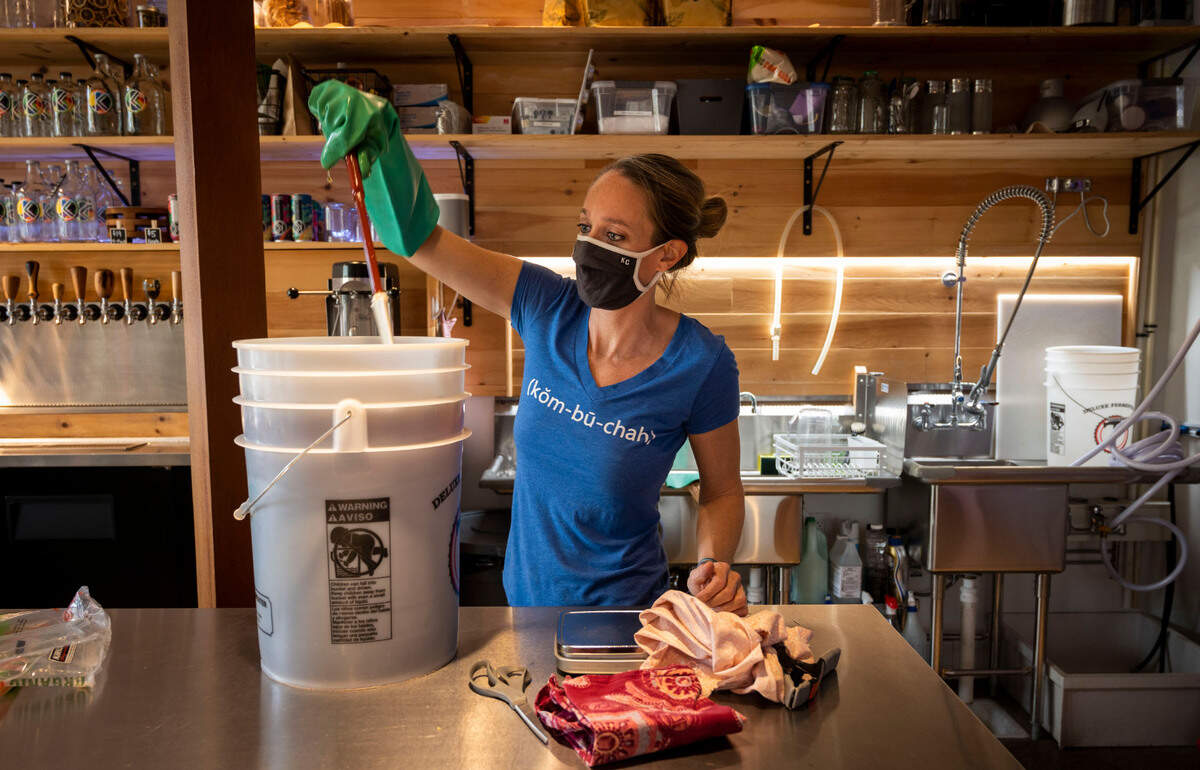
Democratization of high-end nonalcoholic drinks has been part of the process, as illustrated at casually hip KC Kombucha. Opened by couple Courtney Edwards and Kevin O’Toole at 3326 Broadway in 2019, the North Oak Park kombucha bar feels like a micro-micro-brewery — fermentation tanks in plain sight of the register, locally-made crafts for sale at the bar and just a few tables inside and on the sidewalk.
Like all fermented products, kombucha has a small amount of residual alcohol. Edwards, the brewer, keeps KC Kombucha’s ABV under the 0.5% required by law to avoid excise taxes (it’s worth noting Congresswoman Doris Matsui, who represents Sacramento, co-signed a bill last week to increase that threshold to 1.25%).
And just like other fermented food and drinks, kombucha is full of gut-friendly probiotics. A glass has about one-third of a beer’s calories. KC Kombucha sources local, often organic ingredients such as persimmons for a seasonal “persinnamon” flavor and Meyer lemons for the anti-inflammatory lemon ginger cayenne. If those sound a bit adventurous, a bartender recommended kombucha newbies start with apple pie or the top seller, blueberry mint.
KC Kombucha started selling to one of O’Toole’s co-workers as he opened Idle Beer Works in Lodi in 2016 and can now be found on tap at around 20 area bars, restaurants and coffee shops. O’Toole and Edwards drink alcohol but took a break after a long Halloween weekend. Instead, they’d have a glass of kombucha in lieu of an evening cocktail. Their 7-year-old daughter joined in, too.
“It’s a nice replacement. When you want to take a break or when you’re not drinking, you can go to a brewery and find us on tap. You can grab something fun and sparkly and still be social,” Edwards said.
Most people still order boozy drinks at a bar with alcohol, of course. Bottle & Barlow sold just 40 mocktails over the final two weeks of October, fewer than three a day.
But the point isn’t how many mocktails Bottle & Barlow makes, Rioux said. It’s the fact that they can make them.
“We didn’t create a mocktail menu to create an additional revenue stream. We created a mocktail menu because ... we want to be a bridge in the community,” Rioux said. “This isn’t just a place to come and get drunk. This is a place for relationships, and everybody is invited to the table, so we needed to have something for everybody that could sit at the table.”
This story was originally published November 12, 2021 at 5:00 AM.