
America’s caviar capital: Here’s how an unlikely export found a home in Sacramento County
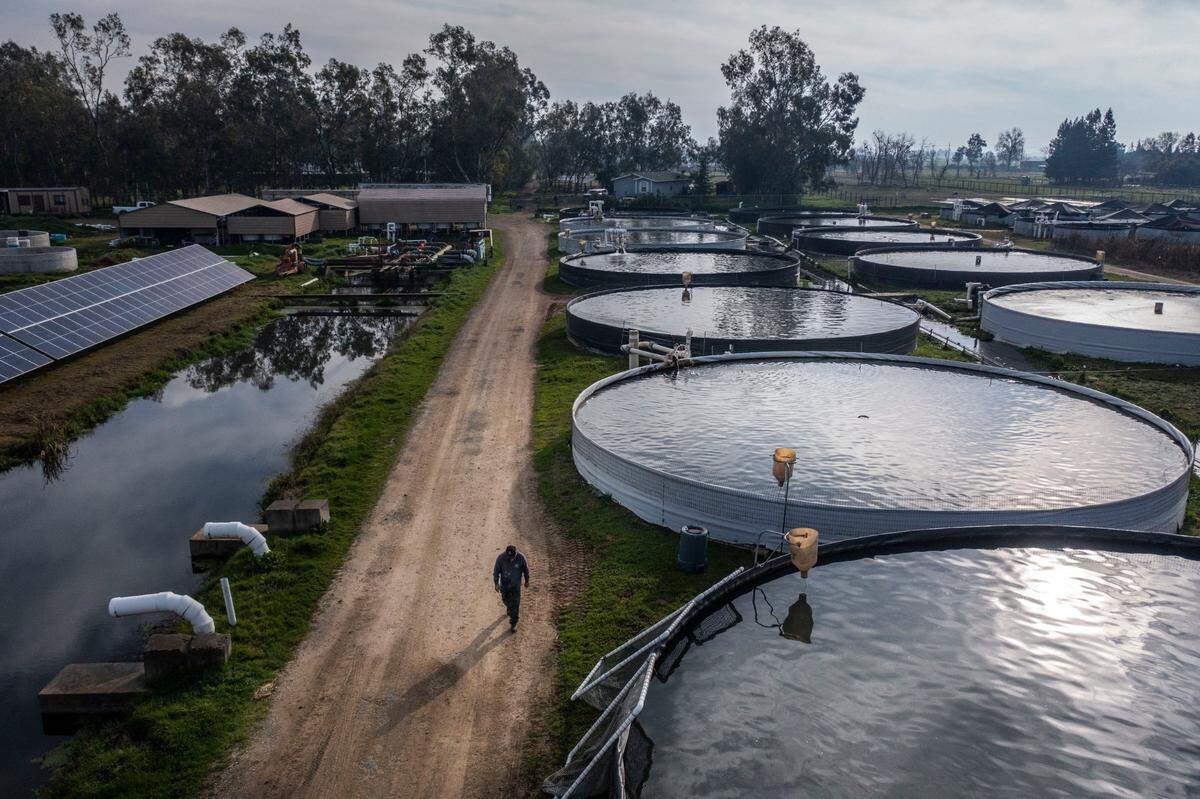
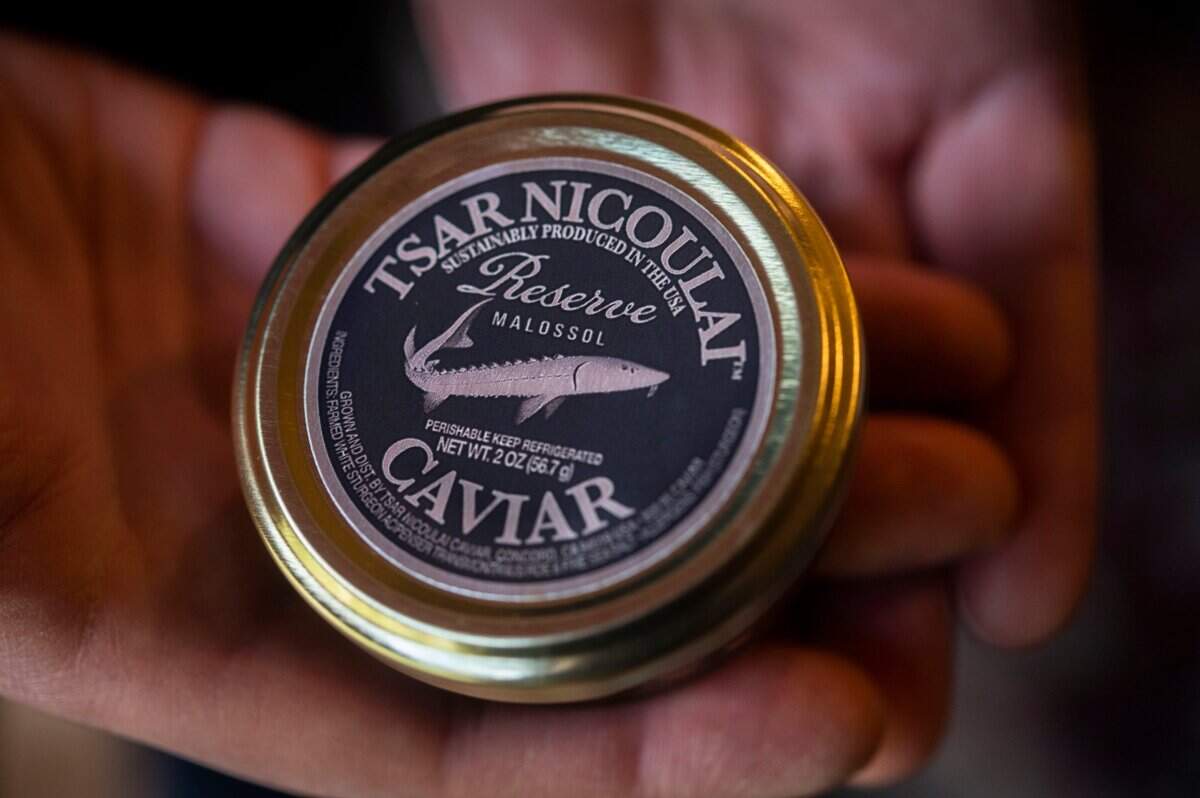
Large fins lazily slap the sides of Tsar Nicoulai Caviar’s above-ground tanks in Wilton, just outside of Elk Grove. White sturgeon circle below the surface, their ovaries carrying precious gems destined for fine dining.
Regularly topping 5 feet long and 200 pounds, white sturgeon are the United States’ largest freshwater fish. Yet the females’ tiny black eggs are the real moneymakers once extracted, smoked, aged and packaged in labels that read “caviar.”
An estimated 80% of the United States’ domestic caviar production comes from Sacramento County. Local companies such as Tsar Nicoulai, The Fishery in Galt and Sterling Caviar in Elverta supply the country’s best restaurants.
U.S.-farmed sturgeon production exploded between 2010-18. Farms went from producing 200 metric tons per year to 1,166 tons of the fish. As a result, the U.S. now produces 18 metric tons of caviar. Sterling Caviar, the largest U.S. producer, saw its client list double over the last year, owner Eugene Fernandez said.
Those in the rapidly-growing industry know Sacramento County farms turn out the country’s best sturgeon thanks to their proximity to the Sacramento-San Joaquin Delta and a world-class agricultural research university. Many diners may associate the product with older, more stuffy tastes and not realize its rise in culinary circles as something that can be served, say, on a potato chip.
Caviar doesn’t yet seem synonymous with farm-to-fork to Sacramento eaters, many of whom don’t know the domestic capital is right in their backyard. That day is coming, though, said Tsar Nicoulai president Ali Bolourchi.
“One day, Sacramento will be to caviar what Napa is to wine,” Bolourchi said. “I think Sacramento, in 10 years, will be a destination (for caviar). It’ll represent some of the most sustainable, most local reflections.”
Special circumstances
Domestic caviar farming’s roots begin at UC Davis in 1979, when the Iran Hostage Crisis and President Jimmy Carter’s subsequent trade sanctions cut off a major caviar producer from American clients.
Sensing a gulf in the market, Mansion Flats shellfish processors Mats and Dafne Engstrom contacted UC Davis aquaculture professor Serge Doroshov, who defected from the Soviet Union the year prior.
Doroshov began studying the reproductive physiology and broodstock development of white sturgeon, then oversaw UC Davis’ first white sturgeon spawning in 1980 and the first spawning by a California commercial farm the following year. Known as the father of sturgeon aquaculture in North America until his death in 2020, Doroshov went on to publish the first comprehensive white sturgeon hatchery manual, helping the industry become independent from wild broodstock by 1994.
The Engstroms set up their first sturgeon farm in 1983, the same year as Sterling Caviar (then known as Stolt Sea Farm) and a year before Tsar Nicoulai. The Fishery, which owner Ken Beer started as a catfish farm in 1975, began raising sturgeon around that time as well.
“Caviar farming came from Sacramento. How crazy does that sound?” Bolourchi said. “All the work that’s being done all over the world, a lot of it was done over the research and development at UC Davis.”
At that time, most of the world’s caviar came from wild sturgeon in the Caspian Sea. The de facto fishing practice was to catch, cut out the roe sack and throw the fish back into the water to die. Overfishing became rampant when the Soviet Union collapsed, and the sturgeon population of the world’s largest saltwater lake became critically endangered as a result.
The Convention on International Trade in Endangered Species (CITES) and U.S. Fish & Wildlife Service put trade embargoes in place in the late 1990s, cutting off American customers from sellers in Russia, Iran, Azerbaijan, Turkmenistan and Kazakhstan. China rose as the dominant exporting power and now produces 83% of all caviar sold worldwide, according to a 2018 European Market Observatory for Fisheries and Aquaculture Products report.
Sturgeon fishing was similarly banned in California in 1917, but restoration efforts had them swimming in West Coast waterways again — including the Delta — by the time the Engstroms contacted Doroshov. Today, California anglers can catch and keep up to one fully-grown white sturgeon per day and three per year.
How it’s made
Charles Darwin famously called sturgeon and their cousins “living fossils,” and it’s easy to see why. White sturgeon got their name from the underbelly and meat color; the rest is black, aside from rows of armor-like protruding scales called scutes.
“It’s like a dinosaur of fish. It’s so prehistoric-looking,” Tsar Nicoulai biologist Hana Wilms said. “But an easier description is just that they look like sharks. The way that they move and the way that they interact with their environment is so unique to other fish ... they’re just much more sentient beings.”
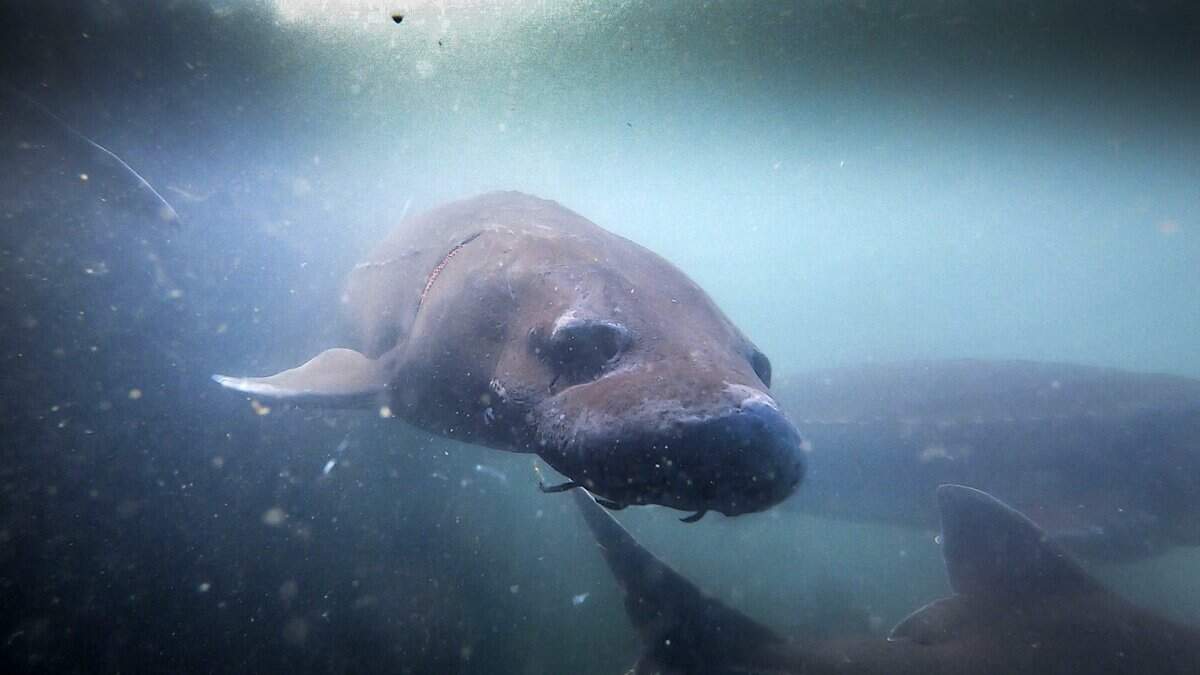
At farms such as Sterling Caviar and Tsar Nicoulai, a broodstock of sturgeon produce offspring in an on-site hatchery. Fish are raised in separate tanks based on age, with fresh water constantly running through. They’re fed a fishmeal designed to mimic what they would eat in the Delta.
Caviar farmers can’t identify their sturgeons’ sexes until they’re 3 or 4 years old, and those that sell meat keep growing the males for a few more years before killing them with a stun gun and knife. Tsar Nicoulai males are then sent to an on-site smokehouse to be turned into smoked sturgeon and sturgeon pâté; Sterling Caviar sells sturgeon meat to wholesale customers such as restaurants, airlines and cruise lines, as well as Sunh Fish in Sacramento and RW Seafood in Rocklin.
The females are ready for harvest between 6 to 10 years old, roughly 15 years earlier than they would die in the wild. They can carry as many as 300,000 eggs, resembling a giant black sheet across the internal organs, which are separated by workers based on color, size and quality via a mesh screen. Most farms harvest the roe themselves; The Fishery, which sells a variety of live fish to Asian restaurants and markets, sends female white sturgeon to nearby processing facilities.
The roe are salt-cured, then washed, packed in tins and aged for two to four months in super-cold refrigerators. Female fish, meanwhile, join the males for butchering, unless we’re talking about California Caviar Company’s no-kill farm in Elk Grove, where staff coax eggs out through intensive massage.
With spaced curing and aging processes, as well as temperature and light controls, Sacramento County farmers can supply fresh commercial caviar year-round for anywhere between $55-$400 per ounce, depending on grade.
Chinese caviar is considerably cheaper and more plentiful, and has flooded U.S. markets as a result. But it also carries a much greater carbon footprint, and some Chinese producers extend their caviar’s shelf life with preservatives banned in the U.S. such as Borax, The Washington Post reported.
The carbon footprint is lower with locals, and the Bolourchis — Ali’s father Mark bought Tsar Nicoulai in 2015 — have made significant efforts to close the loop. An on-site solar field helps cool water before it flows into the tanks, and the nutrient-rich wastewater feeds fields of hyacinths and a greenhouse growing butter lettuce, sold at Whole Foods under the Bare Root Produce label.
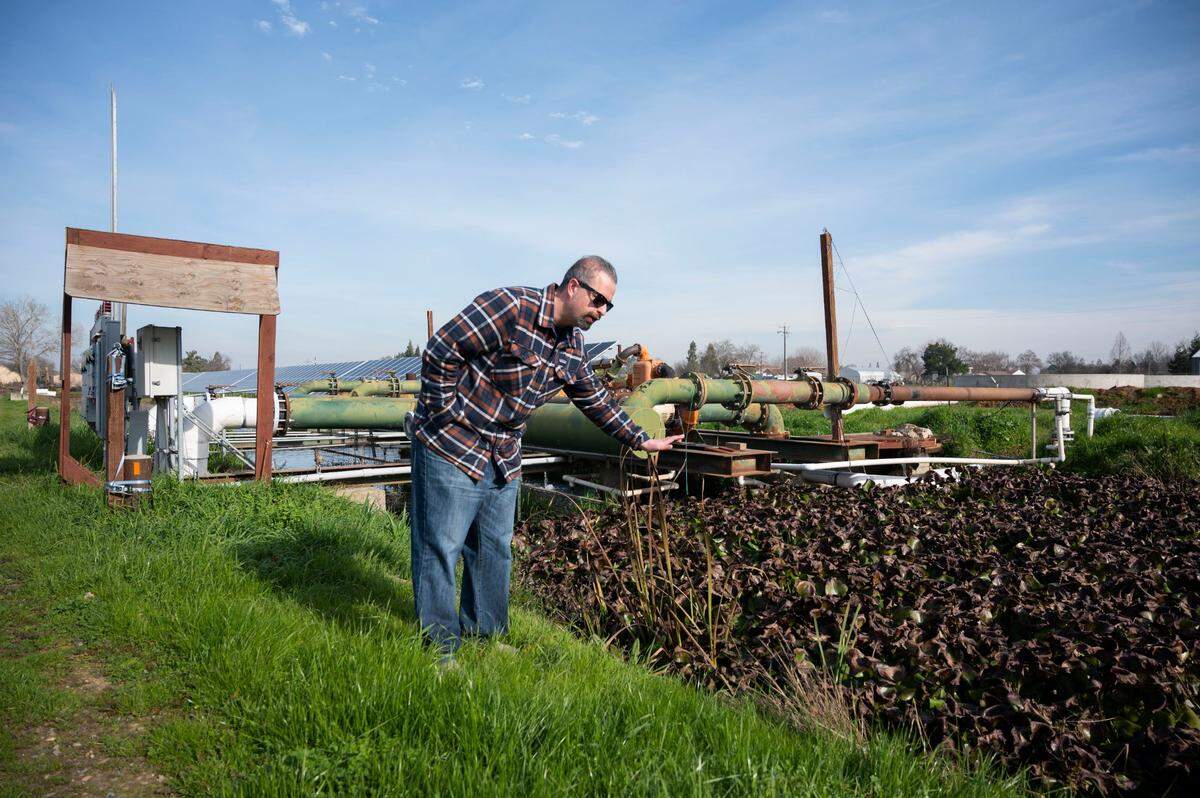
That wastewater will one day flow to another mini-greenhouse, where Tsar Nicoulai will grow microgreens to serve atop caviar and sturgeon at its cafe in San Francisco’s Ferry Building Marketplace. Sterling Caviar uses excess water from its farms in Elverta, Wilton, Elk Grove and Ione to create artificial wetlands.
That relationship between UC Davis and area farmers remains ongoing, too. University researchers are studying how 24 tanks of Sterling sturgeon respond to different feed combinations. The results will have the greatest impact at Sacramento-area operations, of course, where most of the nation’s sturgeon farming takes place.
How’s the taste?
Caviar’s inherent grandiosity means shoppers can find these name-brand Sacramento County products at some of the United States’ premier restaurants.
Guests at San Francisco’s Benu, ranked No. 28 among The World’s 50 Best Restaurants, nibble on Sterling Caviar; Tsar Nicoulai’s favorite client is Quince, Michael Tusk’s three-star restaurant in San Francisco, which uses sturgeon meat, skin and even spinal fluid in addition to eggs.
The taste of caviar varies based on region, like wine, as well as the type of sturgeon. White sturgeon caviar from Sacramento County tends to be buttery, with a clean, reserved fish oil taste similar to high-end sashimi.
Mulvaney’s B&L serves half- or full-ounce Tsar Nicoulai caviar portions alongside housemade Yukon Gold potato chips and hard-boiled eggs with capers, minced red onions and crème fraîche. Other places offer blinis (mini Slavic pancakes) or simply the mother-of-pearl spoons used to serve the delicate eggs.
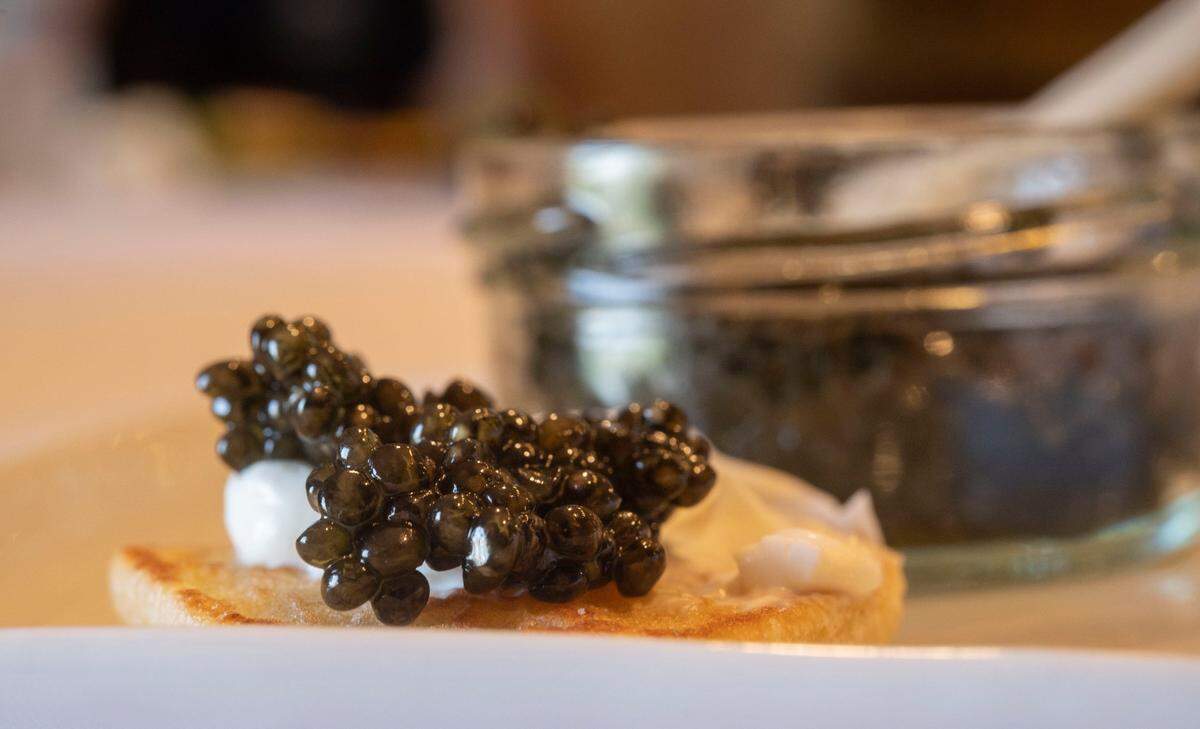
“It tastes elegant,” Mulvaney’s B&L executive chef Kevin Ritchie said. “It’s opulent. It’s not something you’re eating every day, and nor should you. They’re special and should be treated as such.”
The thick sturgeon meat — its texture is somewhat similar to pork — undergoes more of a transformation. Mulvaney’s B&L cures sturgeon in brown sugar, fennel and maybe some whiskey, then cold-smokes it.
Though the midtown Sacramento restaurant’s menu rotates frequently, the smoked sturgeon was last served with roasted beets, chicory, Greek yogurt and a tarragon vinaigrette, a dish which Ritchie said comprised about 40% of salad orders at the time.
Drama and scandal
Sturgeon and caviar made up $16.9 million of Sacramento County’s $20.2 million aquaculture industry in 2017, according to the most recent U.S. Department of Agriculture Census. With that much money moving around such an in-demand product, there’s bound to be drama.
The Engstroms incorporated Tsar Nicoulai into their company, California Estate Osetra, in 1998 and served as CEO (Mats) and COO (Dafne) until 2009, when they were fired. They resigned from Tsar Nicoulai’s board shortly after and successfully sued for breach of contract for $1.3 million, an amount that swelled to $2.5 million as of last summer due to interest.
Then, last year, local newspapers brought two scandals to light.
The first story was about Passmore Caviar, the superstar Sloughhouse operation with a logo that multiple chefs tattooed on their bodies. The San Francisco Chronicle reported it was importing caviar from overseas and passing it off as locally-produced goodness. The second involved Sterling Caviar. The lawyer for a woman suing California State Treasurer Fiona Ma for sexual harassment said Fernandez stayed with Ma and her aides in taxpayer-funded lodging, allegedly serving them caviar. Records obtained by The Sacramento Bee show he was copied on emails with Ma around the same time related to a potential tax break for Sterling that would be administered by her office, but which the company ultimately did not apply for.”
The latter story mattered in the political world; the former sent shockwaves through the Sacramento and Bay Area fine dining spheres. Yet Ritchie said it hurt Passmore Caviar more than the restaurants they served.
Mulvaney’s B&L used to buy Passmore Caviar about once a week for more than a decade. The day the Passmore story broke, Ritchie called Tsar Nicoulai and opened an account with them instead.
“The good thing is, we live with three (other) caviar farms within 50 miles,” Ritchie said. “We’re right here in the middle of it, and we had other options.”
Marketing struggles
Margaret Schroeder founded Crave Sacramento, the consumer-focused marketing arm of the California Restaurant Association’s Sacramento chapter. She first heard about Sacramento caviar while dining at Per Se, Thomas Keller’s three-Michelin-starred restaurant in New York City.
“I consider myself a super-foodie, I’ve been in the restaurant industry for more than 20 years, and I didn’t even know,” Schroeder said. “I had to go all the way to New York to find out caviar happens here in Sacramento.”
As a result of that trip, Schroeder and Crave Sacramento hosted the city’s first Celebrate Caviar Week in July 2019. Chefs went all-out to highlight the local ingredient at various price points, from $500 caviar omakase at Kru Contemporary Japanese Cuisine to $15 Hook & Ladder Manufacturing Co. appetizers featuring the sturgeon eggs.
Both ends of the spectrum are important. Restaurants such as Allora, Camden Spit & Larder and Ella Dining Room & Bar’s high-end caviar service present the delicate ingredient as-is, and help Sacramento’s dining scene gain legitimacy among bigger fish. Many Sacramentans are also turned off by such presentation, and might only go for this imposing ingredient in a more casual, inexpensive light, Schroeder said.
“For so many people, caviar is .... for an older generation. It’s a little stuffy and pretentious, with caviar service and the mother-of-pearl spoon and all the accompaniments,” Schroeder said. “But once you see caviar served on a potato chip or fries, you can get exposed to it in a friendlier way that’s more approachable and can get introduced to how delicious it is.”
There was no Celebrate Caviar Week in 2020 due to the pandemic, then again in 2021 because of the restaurant labor shortage and fallout from the Passmore Caviar exposé, Schroeder said. With a new full-time job as executive director of the Amador Vintners Association, she’s debating whether or not to organize another go-round this year.
There’s still a ways to go in marketing Sacramento County as a caviar destination; businesses such as California Caviar Company and The Caviar Co., for example, emphasize their Sausalito and San Francisco business offices while the actual farms are 100 miles northeast. That doesn’t happen with Napa wineries.
But chefs know greater Sacramento as the to-go place for excellent domestic caviar. And eaters with the means should get acquainted too, Ritchie said.
“It’s something everybody should try,” Ritchie said. “It’s ethically raised right here in Sacramento (County), and it’s not something so far out there that one shouldn’t try it. I think everybody should try caviar at least once.”
This story was updated on Jan. 21 to correct information about a lawsuit against California State Treasurer Fiona Ma., noting the allegation regarding Sterling Caviar was made by the plaintiff’s attorney, but not included in the lawsuit. And on Jan. 30 to clarify the attribution to a San Francisco Chronicle story about Passmore Caviar.
This story was originally published January 21, 2022 at 5:00 AM.
CORRECTION: This story was changed to correct the specifics and sources related to Sterling Caviar’s association with California State Treasurer Fiona Ma.