
Why did outdoor dining tents disappear from Capitol Avenue in Sacramento? What we know
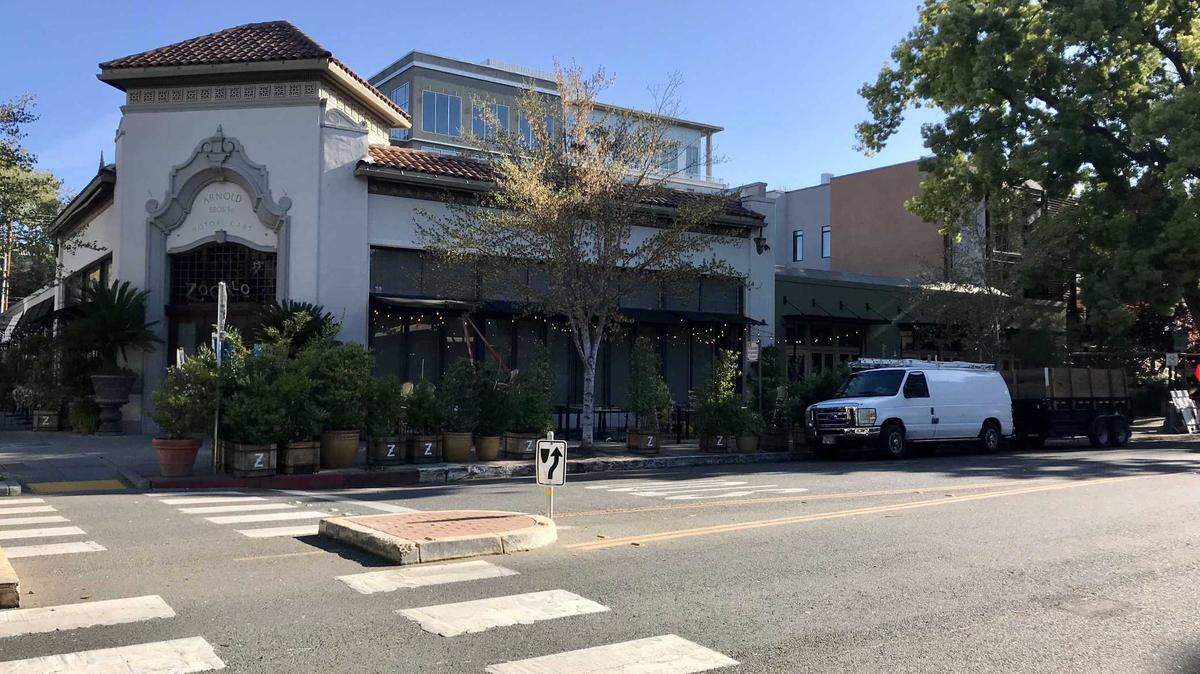
Diners and passersby may have noticed a sudden shift on a popular strip of Capitol Avenue in midtown Sacramento, where large tents and parklets had overtaken a chunk of the street for nearly two years.
This kind of outdoor dining was a saving grace for many Sacramento restaurants throughout the pandemic. When indoor dining became unsafe, the city allowed them to bring the dining room outside by expanding onto sidewalks, private parking lots and streets.
On the stretch of Capitol Avenue near 18th Street, that came down this week.
The Handle District in midtown Sacramento has been home to one of the city’s most noticeable outdoor dining setups, with enormous, circus-like tents stretching over Zocalo and Fieldwork Brewing tables across the road.
Seann Rooney, who represents local businesses in the district, said restaurants on Capitol Avenue took down the tents on Thursday morning.
Rooney, executive director of the district, said in a statement that taking down the tents is a temporary measure for now, but was unable to fully disclose further plans.
The City of Sacramento is requiring all parklets to come down by June 2022, when the temporary outdoor dining program sunsets. City officials first gave restaurants the green light in May 2020 to set up tables on sidewalks outside of their restaurants in order to promote social distancing.
“In essence, we felt it was a good transition period between the tent format of the street closure and the parklet format for the street closure that we’re pursuing currently,” Rooney said in a phone interview.
City staff plan to present the Sacramento City Council with a permanent parklet plan in June, city spokesperson Jennifer Singer said. Permanent structures might look more like The Rind’s wood patio and less like orange barriers surrounding streetside tables.
Rooney said that several details need to be looked at before a more permanent parklet fixture can be created, and the tents made it harder to do so.
He said he envisions the future parklets to be on the edge of the street, rather than the middle, to better accommodate bikers and pedestrians.
From the R Street Corridor to Downtown Commons to Pangaea Bier Cafe and Gunther’s Ice Cream’s shared space in Curtis Park, shut-down streets helped people enjoy themselves and businesses stay afloat during the worst of the pandemic. The city also chipped in up to $3,000 per parklet through a grant program.
But they were never meant to last. Permits for parklets were first approved on a temporary basis and then extended in June 2021 for another year as a quick solution for the immediate problem of closed dining rooms.
The rapid permitting process bypassed some traditional outdoor features such as railings and fencing, using signs and road barricades instead. With dining rooms back open now, the city will want those boxes checked.
The Bee reached out to City Councilwoman Katie Valenzuela, who represents downtown and midtown, for comment but did not receive a response by time of publication.
Cities across California have acted similarly. Roseville forced restaurants to remove their downtown outdoor dining setups prior to Thanksgiving, Pleasanton did the same in January and Paso Robles did so in February.
Fortunately for restaurateurs, there’s a bit of relief coming. The Sacramento City Council voted in October to dedicate $2 million of a $61.7 million federal relief package toward making restaurants’ outdoor dining setups permanent. As of June 2021, 122 restaurants citywide had temporary parklet permits.
This story was originally published March 25, 2022 at 2:58 PM.