
Why sidewalk restaurant dining in Sacramento may be here to stay
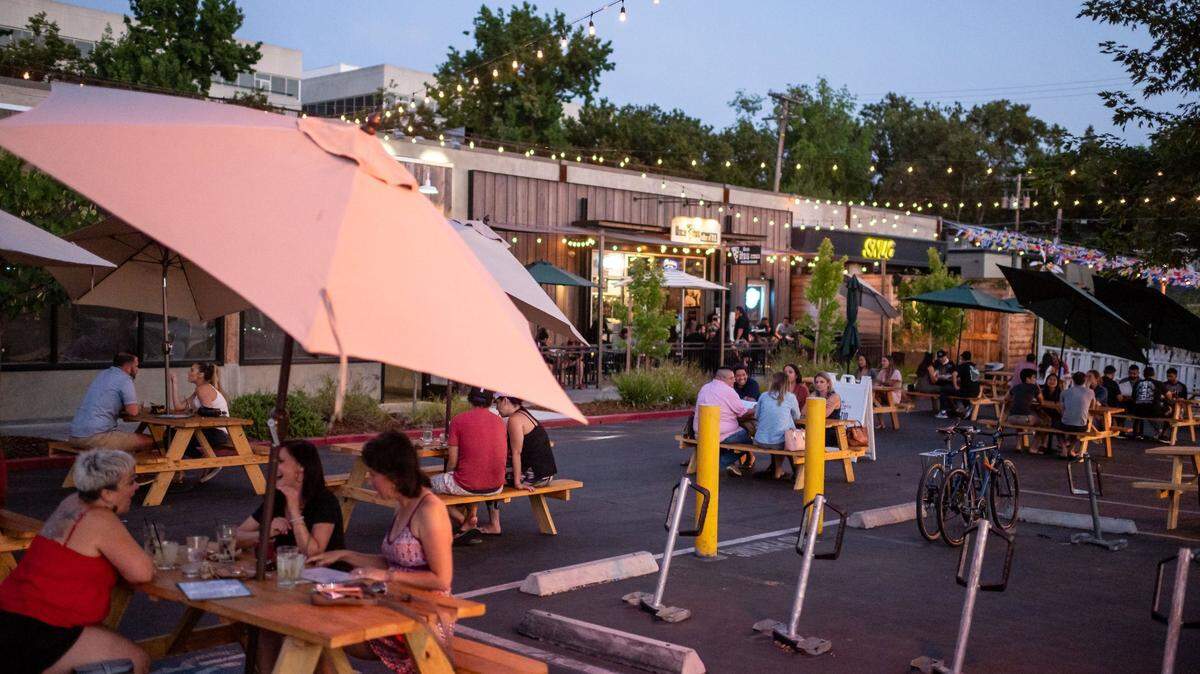
California’s capital city is suddenly on the cusp of becoming a full-on, full-time outdoor dining city – a la Paris or Rome or Rio – and it has the coronavirus pandemic to thank for it.
One year after agreeing to temporarily allow restaurants to put tables on sidewalks, in parking lots and even in streets to keep businesses alive during COVID-19 indoor-dining ban, Sacramento officials this week plan to extend those allowances another year, until June 2022.
By then, officials say they plan to come up with rules for a permanent “outdoor dining program” that covers design and operations standards.
Sacramento’s “al fresco” dining push is similar to efforts up and down the state this summer, as state and local officials hurry to turn a COVID-19 emergency moment into a permanent part of the culinary landscape.
“It’s a no-brainer for a city that loves the outdoors,” Mayor Darrell Steinberg said. “We showed how outdoor dining enlivens our business corridors. This is something that needs to be a permanent feature of Sacramento and its restaurant scene.”
The city plan, if approved Tuesday by the City Council, is to allow restaurants, many struggling financially, another year of breathing room via temporary outdoor business permits. Meanwhile, the city will work with restaurants and business associations on a permanent outdoor dining program to be implemented next year.
It’s a big leap for Sacramento, a city that has been historically slow to take advantage of the old world pleasures of outdoor dining despite its warm weather suited to open air lifestyles. Until the mid-1990s, the city essentially banned outdoor or patio dining, partly on the belief that it was unsanitary and would block sidewalks. Since then, pushed by restaurateurs, the city has increasingly embraced outdoor dining.
COVID has acted as a steroid for that change. Steinberg and others called the surge in outdoor dining one of the few silver linings to come out of a difficult year for businesses and workers under the pandemic cloud.
“It sparked imaginations and inspired new thinking on how to use outdoor spaces,” said Emily Baime Michaels, head of the Midtown Association. “It’s part of our culture.”
How restaurants planned outdoor seating
In total, 122 eateries in the city of Sacramento – and many more in the county and surrounding cities – have taken advantage of the temporary allowances put in place last year for outdoor dining.
Restaurants devised make-shift outdoor dining areas, often with little more than basic 2x4 wooden enclosures and picnic benches, as well as orange plastic traffic barricades to keep pedestrians separated from cars when forced to walk off the sidewalk and into the street past restaurants that commandeered the sidewalk.
“You had no choice. It was a matter of survival,” said restaurateur Randy Paragary. “We had to get tables out there if we were going to stay in business.”
The region’s al fresco dining epicenter is midtown Sacramento, where 35 restaurants currently offer outdoor dining, Michaels of the Midtown Association reported.
In some cases, entire blocks have been closed to traffic 24/7 – such as 20th Street between J and K streets and R Street between 14th and 15th streets, allowing beer gardens, cafes, farmers markets and music in the street.
Paragary said restaurateurs on the 1400 block of R Street are hearing positive reviews from patrons and would like to keep the block permanently closed to traffic.
The changes come with potential conflicts and safety concerns, as well as business operations issues for restaurants.
Outdoor dining requires servers to trek longer distances with plates of food, sometimes through the same doors customers use.
Outdoor alcohol sales is an issue as well. The state Alcoholic Beverage Control this month said it will allow restaurants to serve alcohol on their current outdoor “footprint” until the end of the year. An urgency bill in the legislature, SB 314, would allow that practice to continue permanently. That bill appears to be popular, but has drawn debate.
“When the dust settles after the pandemic, many of our local businesses will be one step away from bankruptcy, and easing these restrictions will be critical to their success after the pandemic and beyond,” the California Travel Association wrote to the legislature in support. But the California Alcohol Policy Alliance calls the bill “dangerous deregulation for the sake of corporate profits ... masquerading as phony (COVID-19) emergency management.”
Challenges of sidewalk dining
Perhaps more of a concern: Not all sidewalks are of equal width, and the American with Disabilities Act requires adequate sidewalk space for people with disabilities, including people in wheelchairs. That could be a limiting factor for restaurants fronted by narrow sidewalks.
To deal with that, city officials said they will draw up more formal rules and designs for what they call “parklets,” which would be restaurant or cafe seating areas built in the existing parking lane in streets. Officials said they are unsure where those types of outdoor dining areas are appropriate.
Business owners are concerned, as well, about outdoor construction cost requirements and potential city fees. Michaels said restaurants don’t want the city to turn outdoor dining into a financial pit. “Yes, let’s make it more permanent. But don’t make fees and construction costs a burden.”
Paragary recently opened one of the city’s most stylish sidewalk dining areas at the new Cafe Bernardo on Capitol Avenue at 28th street. The outdoor area, designed before COVID-19 hit, includes teak booths and pre-plumbed underground heating, and cost about $40,000.
Paragary said the price, which is high for outdoor dining, was worth it because the outdoor area essentially is “a second dining room,” albeit one whose popularity waxes and wanes with the weather.
“Our customers are telling us that is where they want to sit,” he said. “When weather is nice, even before COVID, people tend to prefer outdoor tables.
That will change later this week, when temperatures are expected to soar above 100 degrees, he said. “This stretch of 100-plus temperatures, nobody is going to sit outside.”
This story was originally published June 15, 2021 at 5:00 AM.