This fish is back on the menu after a three-year hiatus. Here’s where, and why
After three consecutive years of being off restaurant menus, one of the most prized local fish is finally swimming its way back to market, and chefs are hooked.
Wild California King salmon, also known as Chinook, is the largest of the Pacific salmon, and one of the most desirable varieties. It’s treasured for its buttery texture and rich flavor, which come from the fish’s high natural oil and omega-3 content.
Climatic conditions impact the success of salmon runs, causing regulatory agencies to enforce occasional closures to protect the fish from endangerment. So when the salmon runs are sufficiently robust to allow fishers to harvest them, chefs snap them up.
Anthony Ferrari of Ferrari Fisheries in West Sacramento has sold two batches locally to restaurants and consumers so far. Personally, although he mainly only fishes for black and rock cod, his father, Lou Ferrari, who continues to fish at age 85, has been pulling in the salmon from his fishery in Fort Bragg.
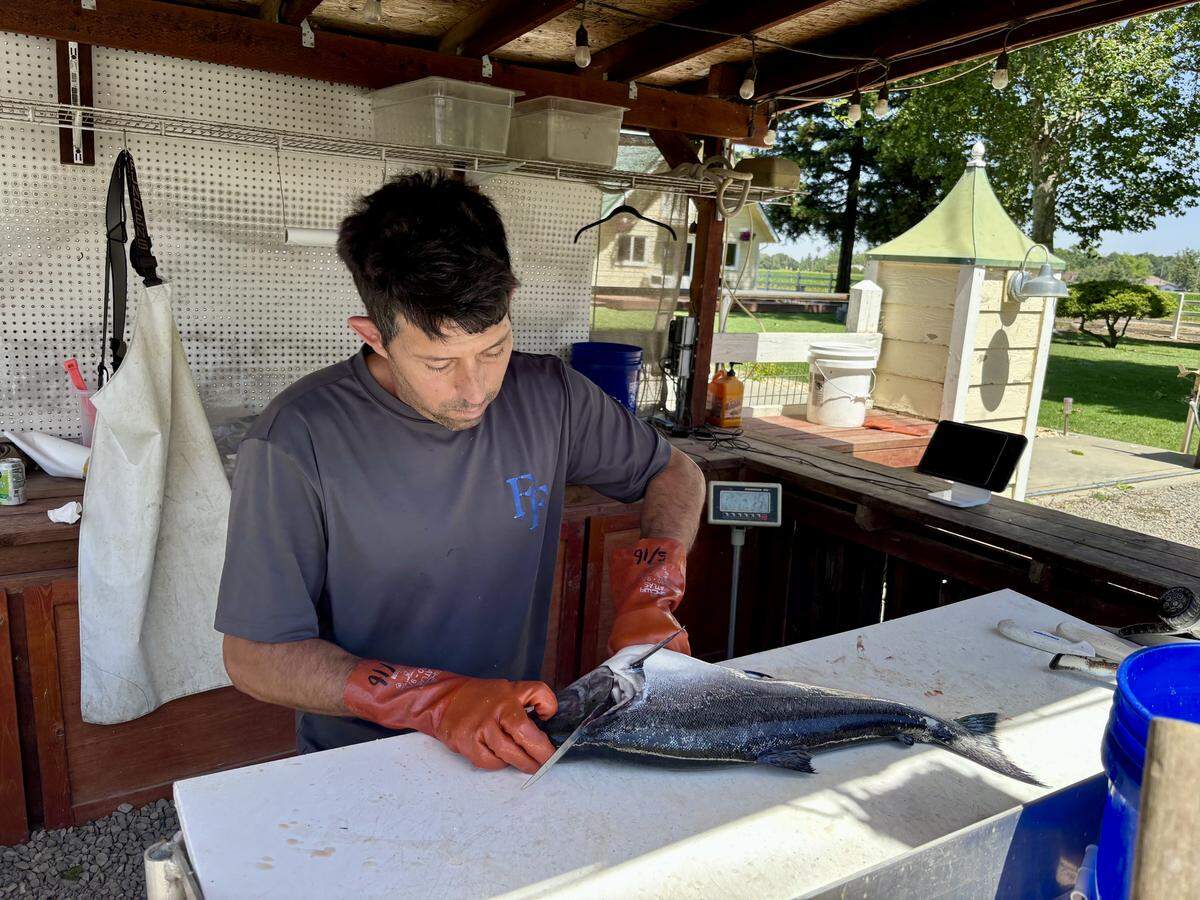
Downtown seafood market Sunh Fish has also been sourcing the salmon from Fort Bragg, according to owner Nguyen “Winn” Pham. Sunh also sells to both restaurants and consumers.
Among its restaurant clients, Hawks Granite Bay bought some, and is pan roasting it and serving it with Twin Peaks baby squash, cannellini beans and yellow pepper cream. Downtown restaurant Aiona is throwing the fish on its live fire grill and serving it with walnut romesco, panzanella and fava beans.
Chef Matt Brown of Husick’s by Forester in Clarksburg is breaking down his fish into six-ounce steaks, which he will marinate with a marinade of huitlacoche, a truffle-like fungus that grows on corn, to be served with a polenta cake with chile morita and a sour plum pico de gallo.
He’s also making a “double-headed rillette” – one rillette each from salmon and pig heads, each with its own accoutrements. Both dishes should hit the menu this week.
Ferrari’s biggest client was Patrick Mulvaney of Mulvaney’s B&L in midtown, who purchased 22 fish. Executive chef John Trujillo prepared them to be grilled over cedar planks, a traditional method from the Pacific Northwest. Grilling on the planks allows the flesh to cook more gently, resulting in a softer, silkier texture.
“We lightly cure it. We put it in a 5% brine for 48 hours, and then we let it dry out for another day, and then we put it in a marinade of ginger, spring onion, brown sugar, and we marinate it in that with black pepper and salt. And then we put it on the open fire,” Trujillo said.
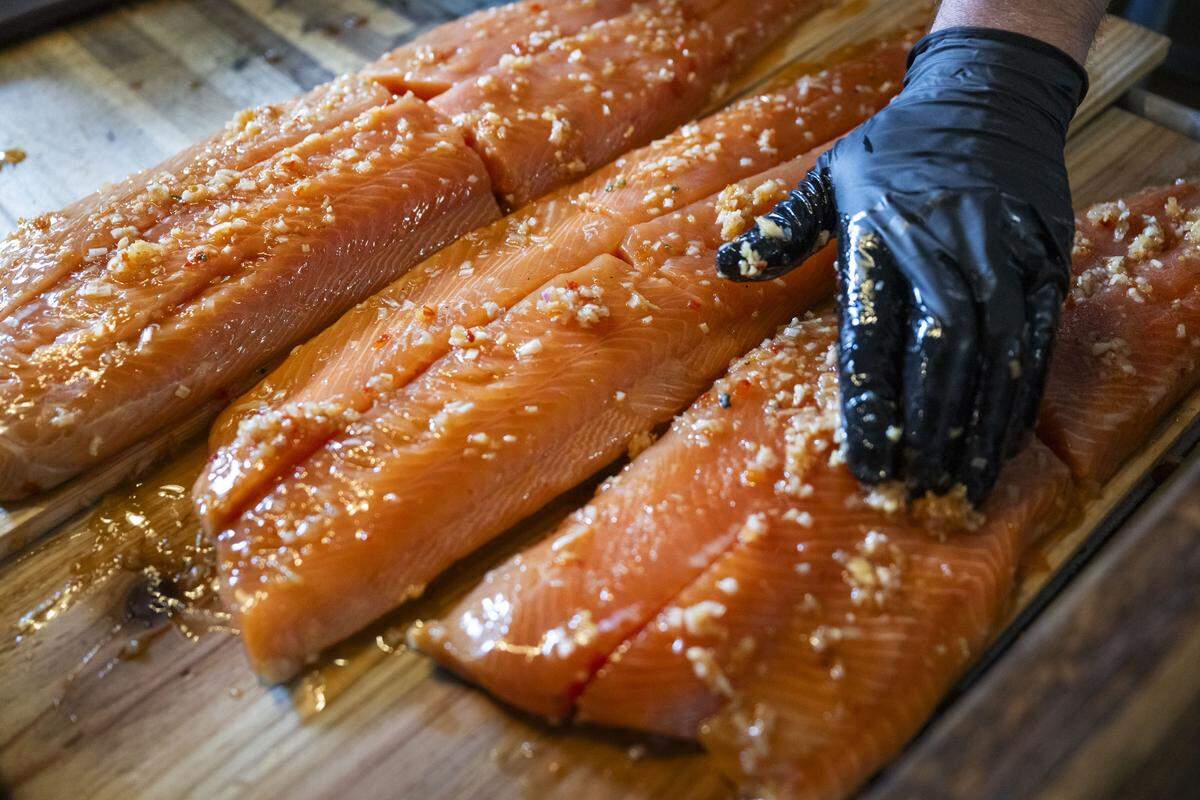
He served the salmon simply alongside locally sourced Bosworth rice from Sutter County, housemade Japanese-style pickles and broccolini from Soil Born Farms.
The salmon’s season is fleeting, and sporadic. With this particular run, fishers can go out in a cycle of five days on and three off, until 83,000 total fish are caught. There is a limit of 160 fish per boat per open time frame.
The commercial fishery closures are designed to protect the salmon populations, allowing them to rebound after challenging conditions impaired spawning. The quality of one year’s fishery depends on how successful the young fish were in getting to the ocean years before, according to UC Davis professor Dr. Nann A. Fangue, who is chair of the Department of Wildlife, Fish and Conservation Biology at the university.
“Salmon have a multi-year life cycle where the baby salmon are born in fresh water, and then they outmigrate to the ocean, and then they spend a couple of years out in the ocean, and then the adults return and start the process all over again,” she said.
“It’s very cyclical, and when we have things like drought conditions, where the conditions for outmigrating juvenile fish aren’t so good, you expect in three years to have kind of a poor fishery, but then when you have conditions that promote lots of outmigration success, then in three or four years you expect to have lots of adults returning, so this is part of that cycle.”
Successful runs depend on how much water flows out to the ocean. In times of drought, water management officials have to make difficult decisions.
“They really do what they can to balance water releases needed for people and also for fish, but in times when water becomes limiting, that conflict becomes more challenging. So, it’s been a very difficult period for salmon. It’s a very difficult thing to ensure that there is an active fishery while making sure that those runs also are safeguarded against extinction,” she said.
Angela Forristall is a staff officer working on the Salmon Fishery Management Plan, which provides scientific advice to inform fishery management decisions. According to Forristall, the decision to extend the closure for the third year in 2025 came from within the industry, based on indications that things were trending in the right direction.
“It really was mostly on the fishing industry and the industry representatives within the council who opted to kind of hang back for one more year in optimism that fish were going to be coming back in larger numbers in 2026, which is what we’ve seen, and has been very exciting,” she said.
According to her, rainier conditions in the past couple years have benefitted the salmon hatcheries by keeping flows high and water temperatures low. With a predicted El Niño this year, we should continue to expect rainy conditions. However, El Niño is also associated with higher ocean temperatures, which can impact their survival.
“The fish are adapting to that by staying close to the bottom of the water, trying to escape those warmer temperatures. That is similar behavior to what we saw last go round of this, so the fish definitely do adapt,” Forristall said.
This story was originally published May 20, 2026 at 6:00 AM.