Why did judge allow Kristin Smart murder case to move forward? 5 key takeaways
On Wednesday, the nearly 2-month-long preliminary hearing in the Kristin Smart murder case came to a close with a San Luis Obispo County judge ordering the case move toward trial.
Superior Court Judge Craig van Rooyen concluded that the the prosecution presented enough evidence that the case against Paul and Ruben Flores should move toward trial.
Paul Flores, 44, was the last person seen with Smart as he walked her toward the campus dorms following a late night party on May 24, 1996.
He is charged with murder for the alleged killing of Smart, which prosecutors say was committed during a a rape in Paul Flores’ Cal Poly dorm room. Ruben, his father, is charged with accessory after the fact, alleged to have concealed Smart’s remains under the deck of his Arroyo Grande home.
Prior to the start of the preliminary hearing, van Rooyen unsealed several court filings, one of which, the prosecution’s statement of the case, offered many details about Smart’s disappearance that was already public record.
Some of the information, such as the alleged discovery of human blood under Ruben Flores’ deck, had never been revealed. Much of the preliminary hearing dealt with re-establishing the older information before leading into the new, more recent evidence.
Here are the five major areas of evidence presented by the prosecution that van Rooyen cited as weighing most on his ruling.
1. Paul Flores’ actions on May 24, 1996, detailed
Van Rooyen said that the prosecutor in the case, Deputy District Attorney Christopher Peuvrelle, called witnesses that showed Paul Flores was in close contact with Smart at a house party on Crandall Way before she disappeared.
Tim Davis and Cheryl Anderson, two former Cal Poly students who attended the party, testified that they saw Smart lying or sitting on the lawn outside the house heavily intoxicated at the end of the night. Davis said Paul Flores “came out of the darkness” and intercepted the trio as they attempted to walk Smart back to her dorm.
Van Rooyen said that it was evident Flores would have known that Smart was incapacitated.
Evidence also showed that Flores was the last person seen with Smart near the dorms, and though no eyewitness saw their ultimate destination, it was clear Smart never returned to her own room.
He added that testimony from former investigators in the case showed Flores then attempted to play down the amount of contact he had with Smart the night of the party, in contradiction with several eyewitnesses.
The judge also noted Flores’ inability to account for where he was until the evening of Sunday, May 26, 1996, also played a role in his ruling.
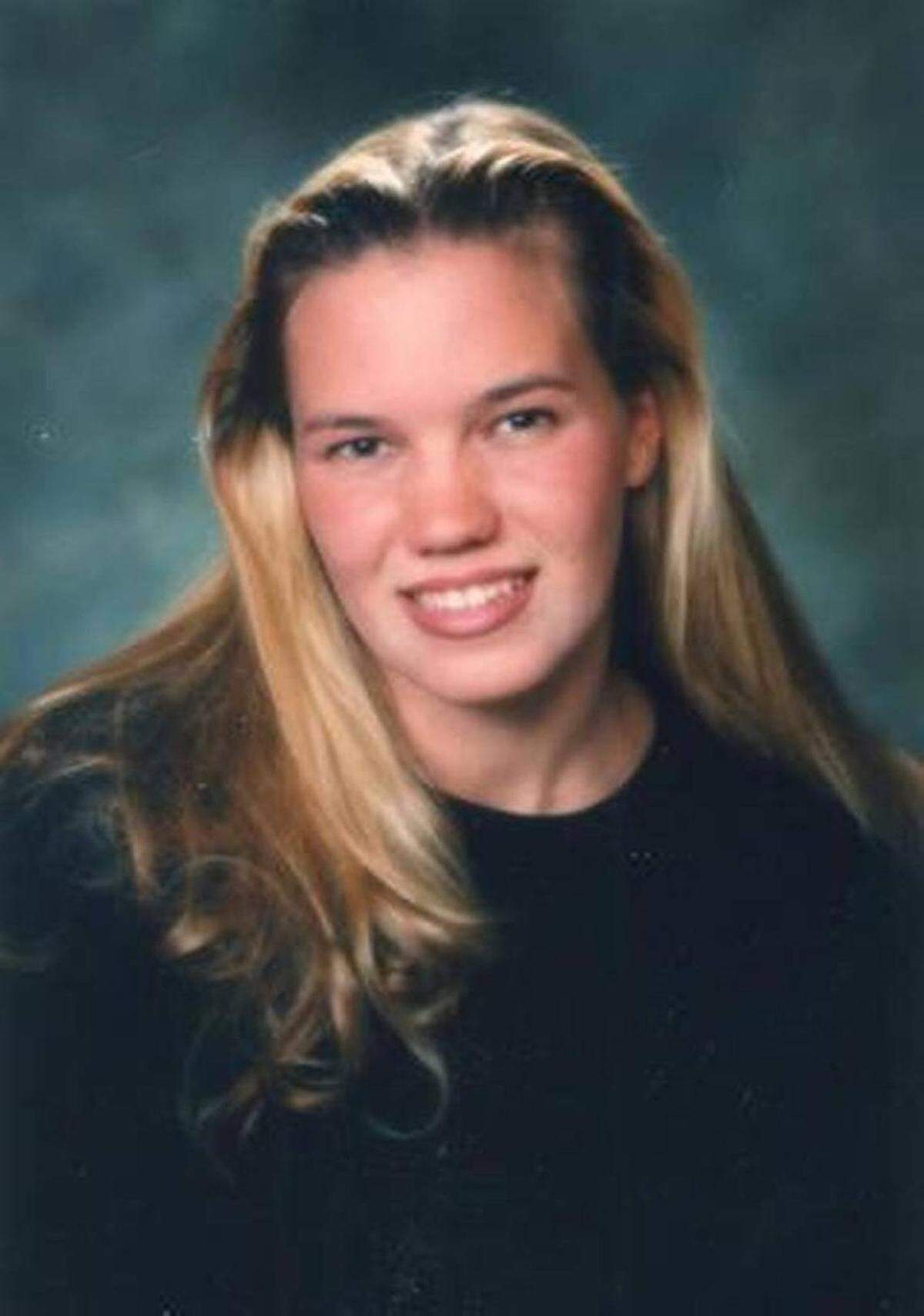
2. Smart never returned to her dorm room
Van Rooyen said evidence presented showed that Smart never made it back to her Muir Hall dorm room that night.
Two people who slept in the room that night told investigators that she never entered the room, nor did they notice any signs that she had returned when they woke up.
Smart’s former roommate testified about several of her possessions, such as a backpack she frequently used, remained in the same place they were when the two left the room the previous day.
The judge said that testimony, along with the lack of any evidence related to credible sightings of Smart after May 24, 1996, raises a strong suspicion that Smart is dead.
The defense had repeatedly asserted throughout the hearing that Smart was troubled and had purposefully disappeared for days at a time in the past.
Van Rooyen said any evidence about past brief periods of time Smart could not be accounted for could not explain her going missing for 25 years.
3. Paul Flores’ suspicious black eye questioned
The judge also noted that a retired Cal Poly detective testified that Flores had a black eye when he was interviewed three days after Smart’s disappearance.
Flores told investigators that he sustained the black eye while playing basketball, but Jeromy Moon, one of Flores’ friends at the time, testified that the defendant didn’t suffer any injuries on the day they played basketball.
Moon noticed the black eye days later, and Paul Flores told him he “woke up with it” and didn’t know how he got it.
Flores would later change his story and tell another investigator he got the black eye working on his truck, former District Attorney’s Office investigator William Hanley testified.
Flores’ inconsistent statements about the black eye showed his “consciousness of guilt,” van Rooyen said.
4. Cadaver dog handler testimony wasn’t refuted
The judge also cited the four cadaver detection dogs that alerted to the outside and interior of Paul Flores’ former Santa Lucia dorm room.
Three different certified handlers of dogs trained to detect human remains — even if they were no longer there — testified about how they independently conducted the search of Santa Lucia Hall with each of the four dogs, honing in on the room, specifically a side that contained the mattress Flores slept on, as well as a desk under the first-floor window and a garbage bin.
Even when the mattress was collected as evidence and removed from the room, the last of the four dogs still alerted to the mattress frame, and was sniffing the air in an attempt to find the source of the scent, that dog’s handler testified.
Van Rooyen said that evidence was strong, and noted that the defense called no expert witnesses to refute the science behind human remains detection.
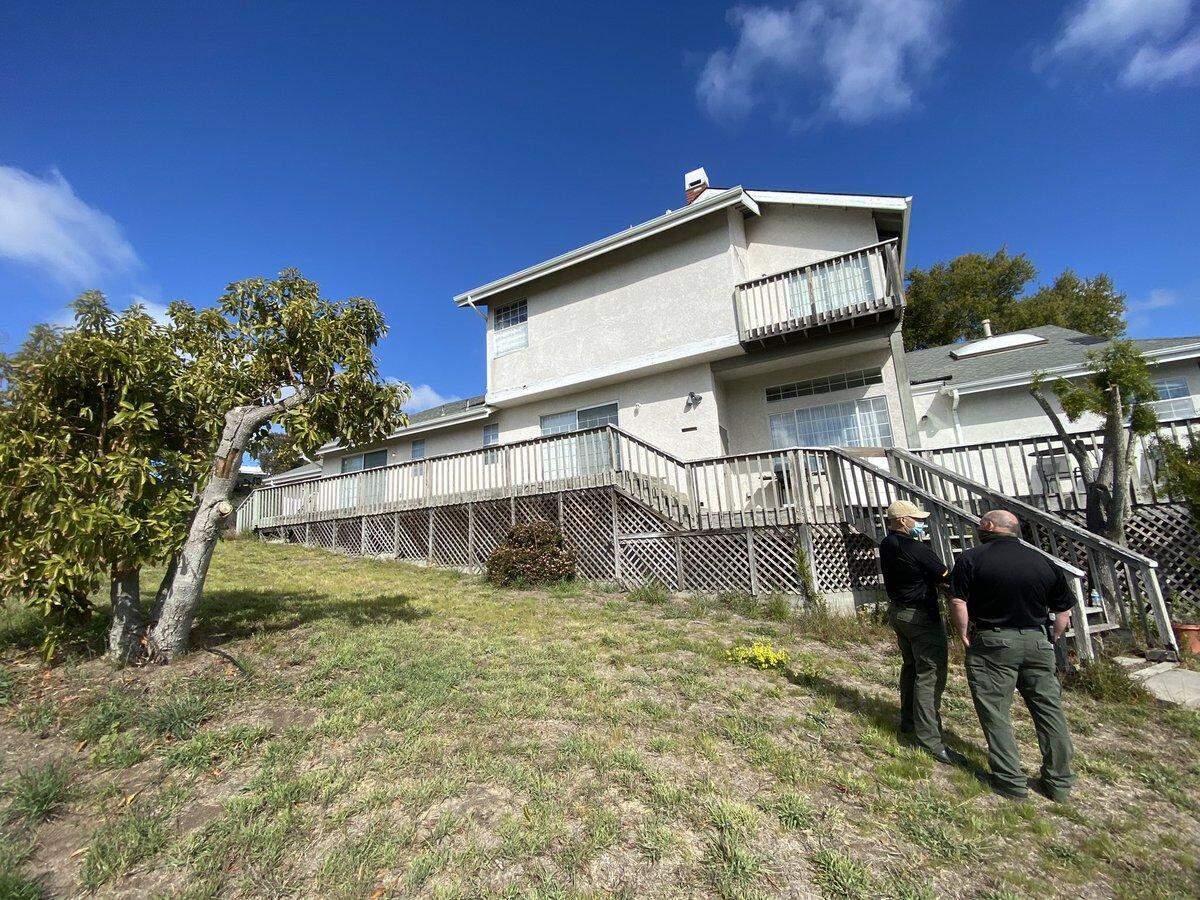
5. Excavations under home revealed blood in disturbed soil
Finally, van Rooyen addressed the digs investigators conducted at Ruben Flores’ house that revealed disturbed soil roughly the size of a human body, as well as staining in the soil and traces of human blood.
He noted that cadaver dogs showed a change in behavior at certain locations in an enclosed area under the deck of Ruben Flores’ Arroyo Grande home in March 2020, though they did not give full alerts that would indicate the presence of remains.
Based on the dogs’ behavior, members of a private firm conducted surveys of the area using ground-penetrating radar and identified an underground disturbance in a roughly 4-foot-by-6-foot patch of soil.
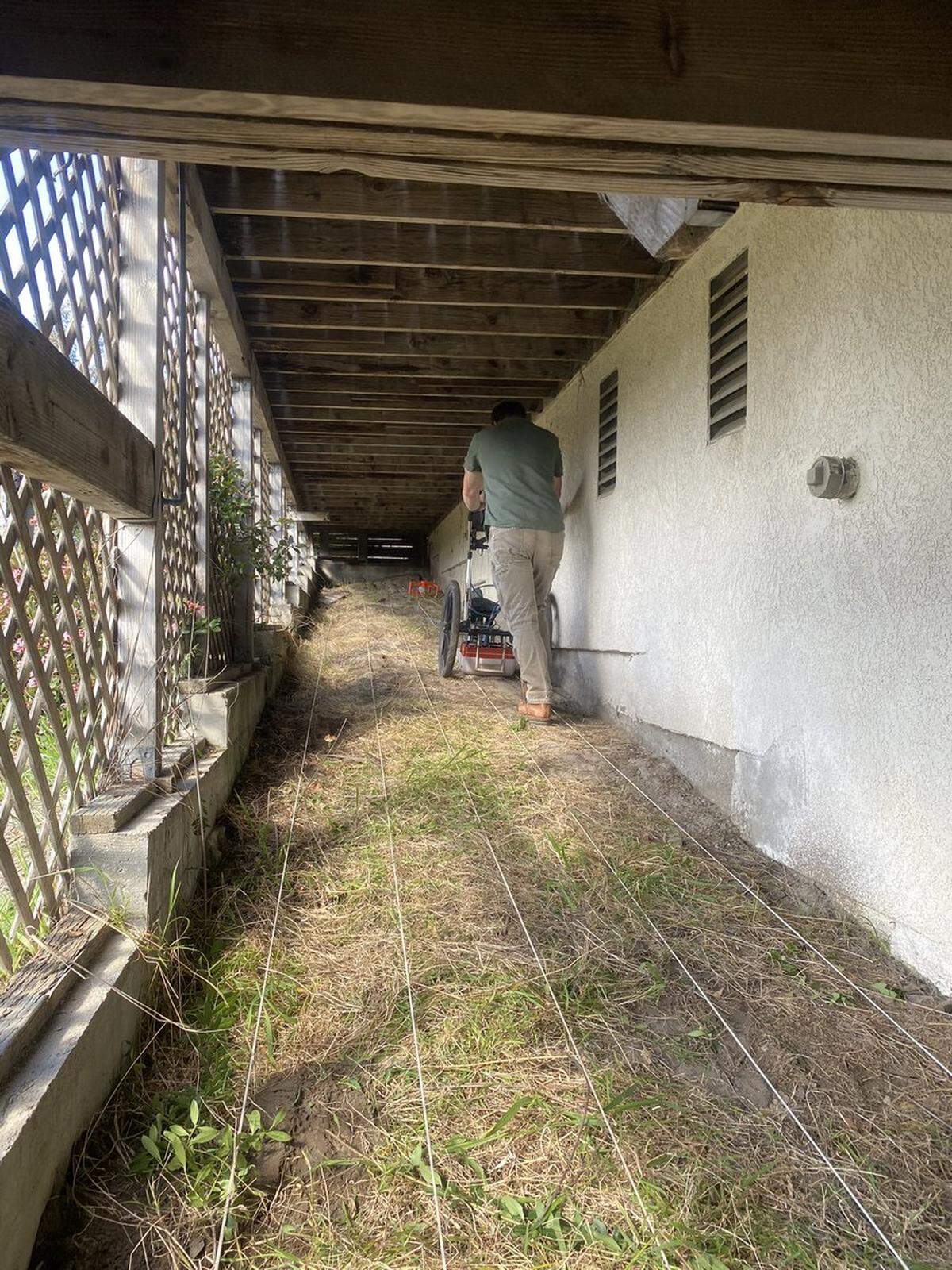
Shelby Liddell, a forensics specialist with the San Luis Obispo County Sheriff’s Department, testified that she and an archaeologist then excavated the patch, discovering odd staining beginning about two feet deep and traversing to the bedrock about four feet below.
The staining was consistent with the soil being dug up previously and refilled, she said on the stand.
Samples of that stained soil was collected and sent to Angela Butler, a laboratory serologist, who testified that the majority of samples tested positive for human blood, though the tests could not rule out primate or ferret blood.
A DNA profile could not be developed from the blood, however, due to its petrification after prolonged exposure to the elements, Butler said.
Although he said that “Nothing links (the blood) definitively to Ms. Smart” due to lack of DNA, the discovery of human blood there combined with other evidence in the case leads to a reasonable suspicion that Smart was buried there, van Rooyen said.
The judge added that Ruben Flores had control of the Arroyo Grande property and was very protective of it, which again leads to “a strong suspicion it was Ms. Smart’s remains” that were at some point under the house.
If convicted, Paul Flores could face life in prison. He will remain in custody at the San Luis Obispo County Jail without bail through the trial.
If convicted of the charge against him, Ruben Flores faces up to three years in jail. He remains out of custody after posting $50,000 bail in April.
Both Paul and Ruben Flores are due back in court Oct. 20 for an in-person arraignment where they may again enter a plea.
This story was originally published September 23, 2021 at 9:00 AM with the headline "Why did judge allow Kristin Smart murder case to move forward? 5 key takeaways."