
Secret tunnels run under the streets of Old Sacramento. When and how did they get there?
As you stroll along downtown Sacramento sidewalks, someone may be doing the same thing more than six feet under you.
Passageways still run underneath parts of the capital city, representing remnants of the region’s history, dating back to the late 1800s.
A Sacramento Bee reader asked Bee Curious, a community-driven series in which reporters answer your questions: “What is the story about the old underground structures that were in downtown Sacramento?”
Why are there underground tunnels in Sacramento?
In the 1860s, city officials started lifting up portions of the Sacramento area to reduce flood risk, according to Aly Kowalski, an experience manager with the Sacramento History Museum.
At the time, Sacramento faced severe flooding.
From 1861 to 1862, an atmospheric river current poured over the city for more than 40 days and nights, Kowalski said.
Record-setting rain doused the region during the meteorological event known as the Great Flood of 1862.
San Francisco and Sacramento recorded 34 and 37 inches of rain, respectively, in two months, according to the National Weather Service. Streets and sidewalks were underwater in the capital city, and at least 4,000 people died, the service said.
To prevent flooding and protect property, livestock and human lives, the city built bigger levees and lifted a large portion of the city, Kowalski said.
How did the city change in response to flooding?
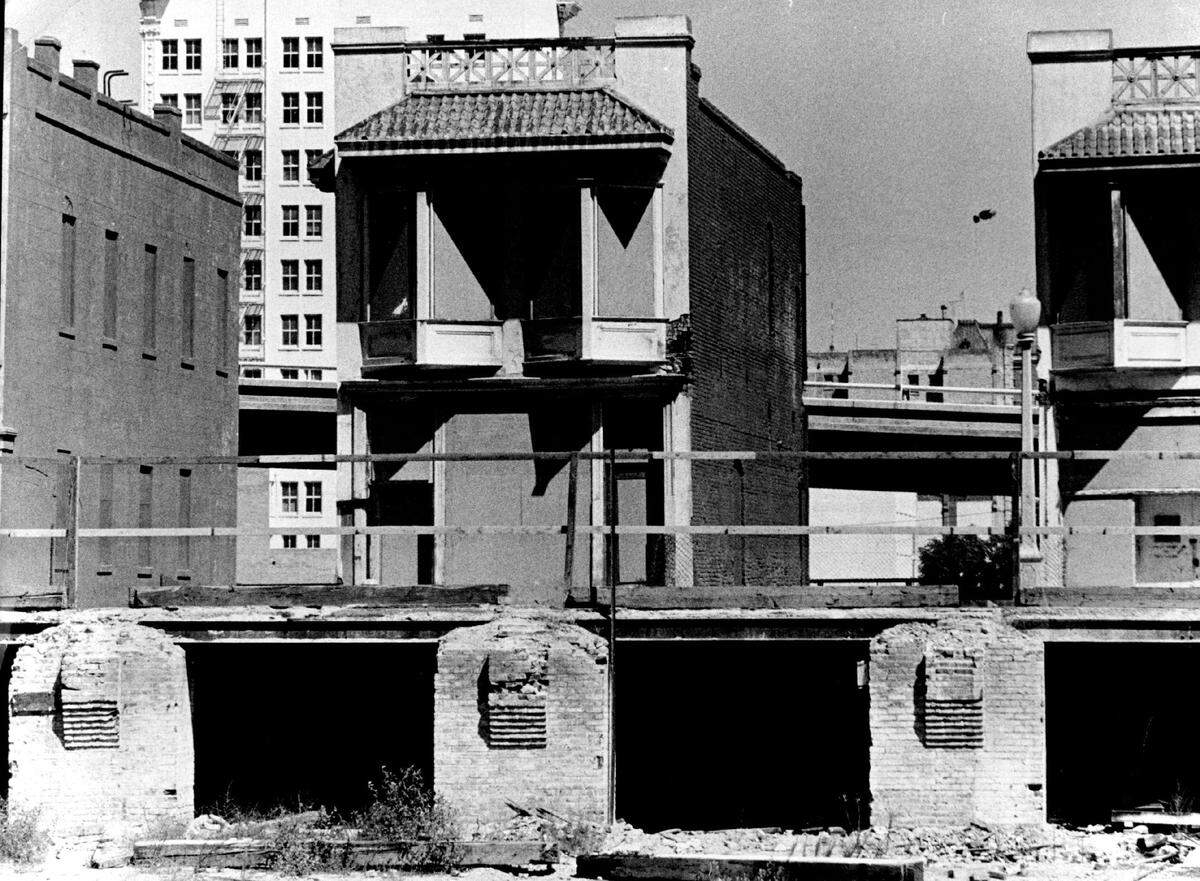
The large effort to raise parts of Sacramento began in 1864 — focusing specifically on downtown streets east of the Sacramento River.
Building owners put up walls against their properties and the city filled the spaces between the barriers at each block with dirt to create new streets, Kowalski said.
The buildings were then lifted on jacks to meet the height of the new streets.
However, some owners of multi-story houses buried the buildings’ first floors underground and either lived on the top story or built another level, Kowalski said.
According to the Historical Marker Database, part of the city was raised as much as 15 feet from its current level.
Overall, the lifting process was very slow, Kowalski said, as most buildings only moved up a few inches a day.
The project was completed by 1877.
Where are Sacramento’s underground spaces?
The enclosed underground areas tunnel under different parts of the city.
“It’s kind of disconnected,” Kowalski said. “The streets were filled in with dirt, so it’s only certain city blocks that have underground spaces.”
Originally, the underground passageways ran from the Sacramento River to 12th Street and from I Street to M Street, which is now Capitol Mall.
Over time, she said, redevelopment, building destruction and new structures left a “piecemeal” system of passageways.
While some of these underground spaces remain empty, others now house businesses, Kowalski said, such as Round Table Pizza in Old Sacramento.
Additionally, some spaces may be hidden and belong to whoever owns the property above it.
How can I explore hidden tunnels beneath city streets?
Those interested in exploring the remnants of Sacramento’s historic tunnels can schedule a tour with the history museum.
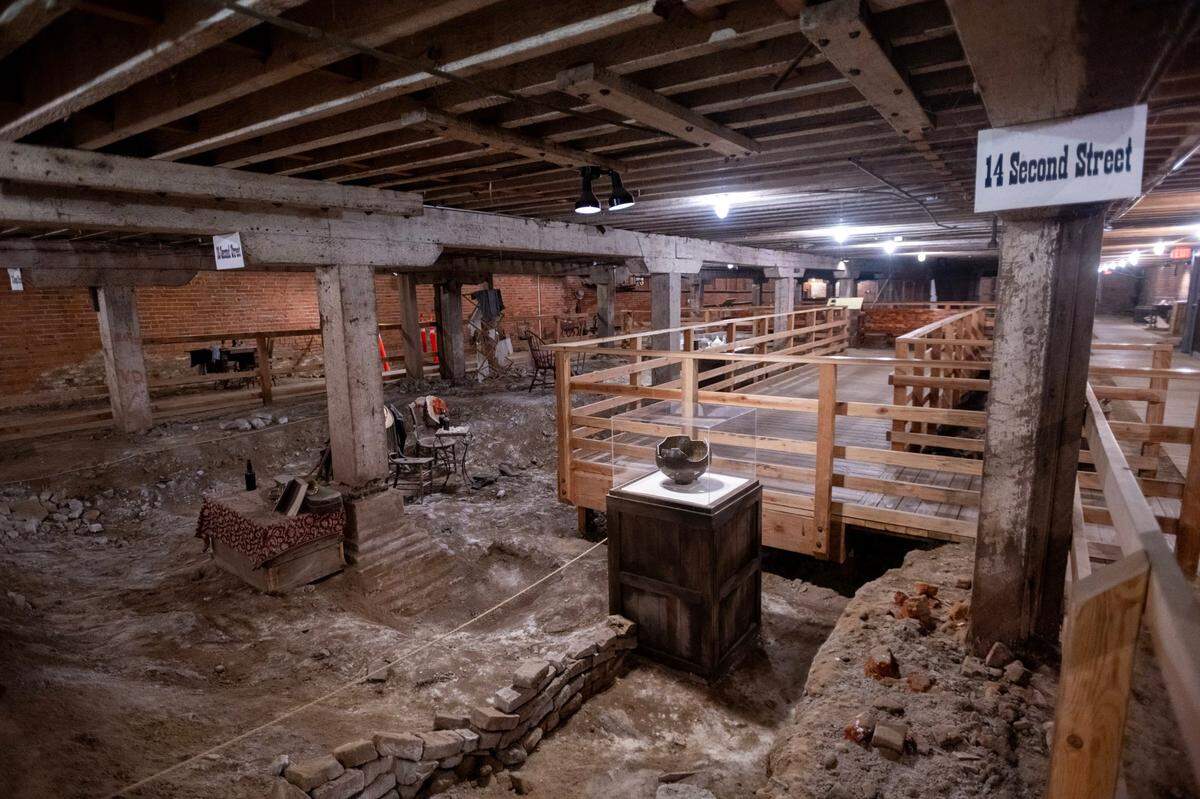
The tour digs into two different underground spaces, one underneath the corner of J and Second Streets and the other further along Second Street, between I and J Streets.
What can you see on Old Sacramento Underground Tour?
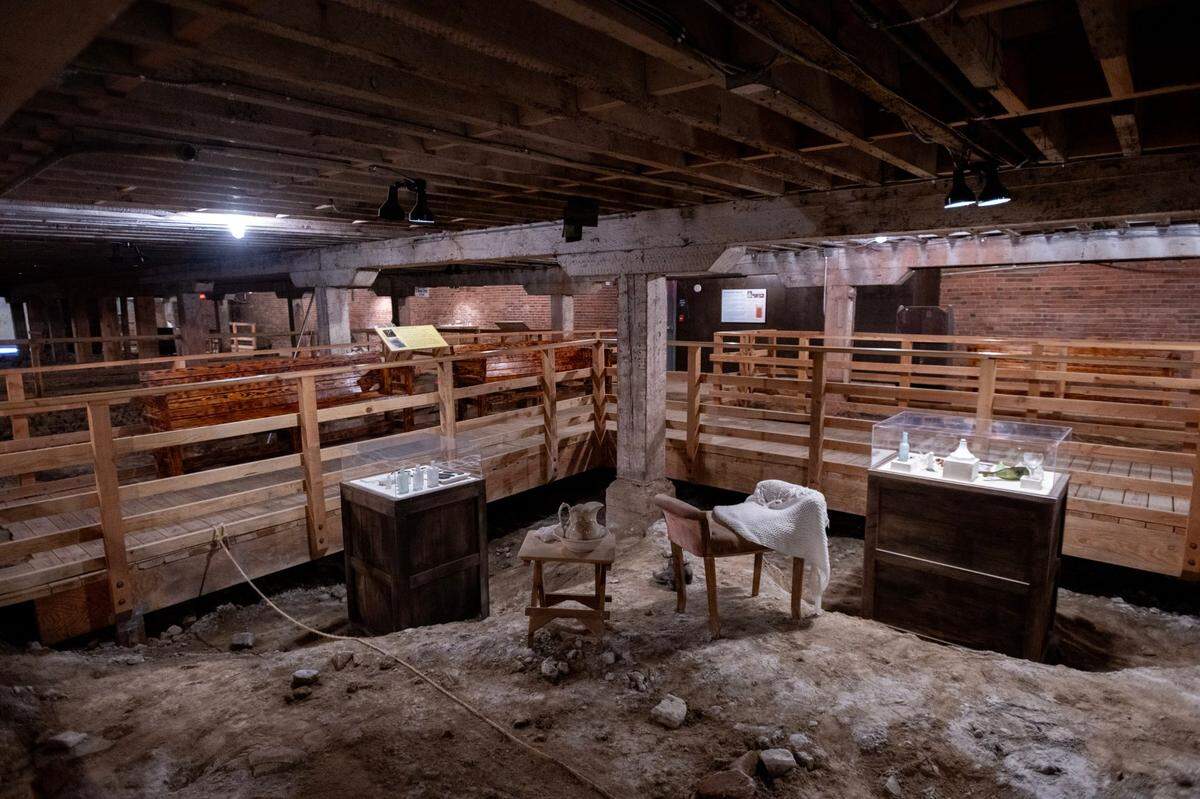
On the Old Sacramento Underground Tour, museum guides will take guests to the underbelly of the B.F. Hastings Building on J Street.
Erected in 1853, the building was key to Sacramento’s historic business center, according to the Library of Congress.
The site was once home to the California State Supreme Court and also served as a banking center and an office for state agencies, Wells Fargo and the Pony Express.
In 1864, the building was lifted, Kowalski said.
More than 170 years later, its basement remains moist with still air filling the dark space.
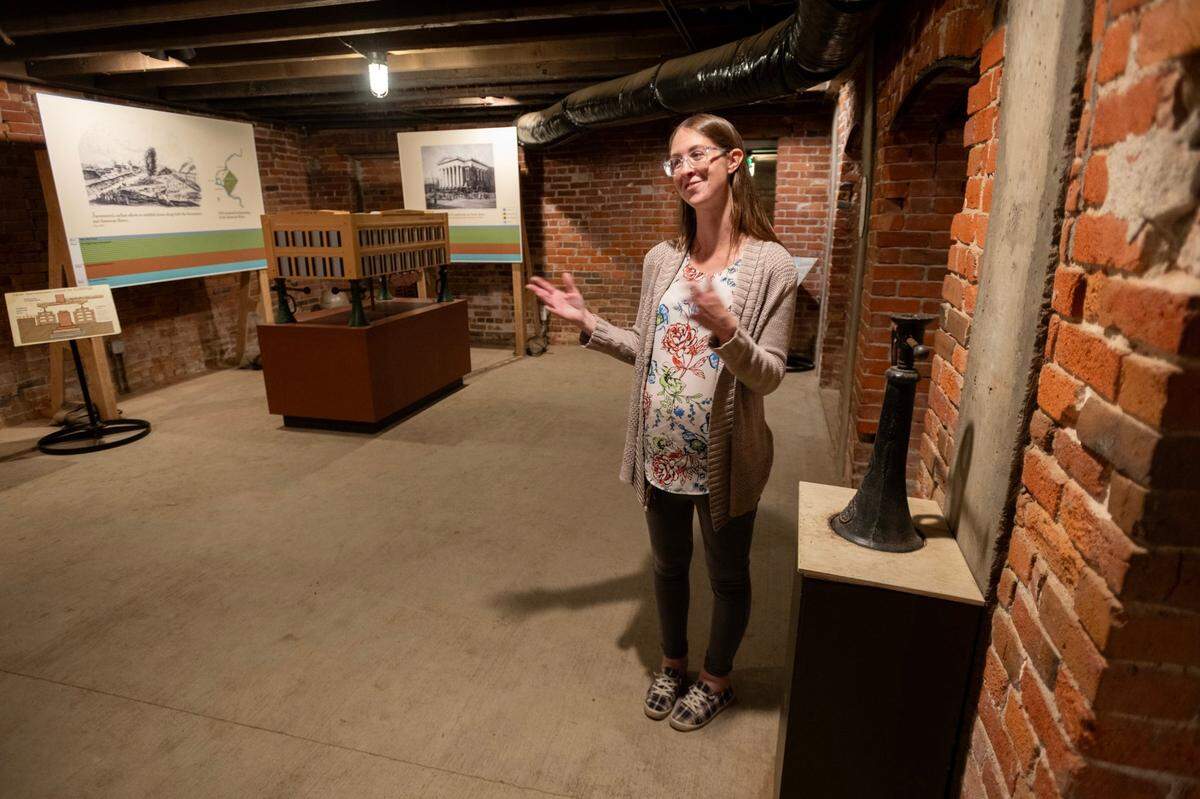
Original brick walls from 1864 enclose the space and floorboards date further back to when the building was constructed.
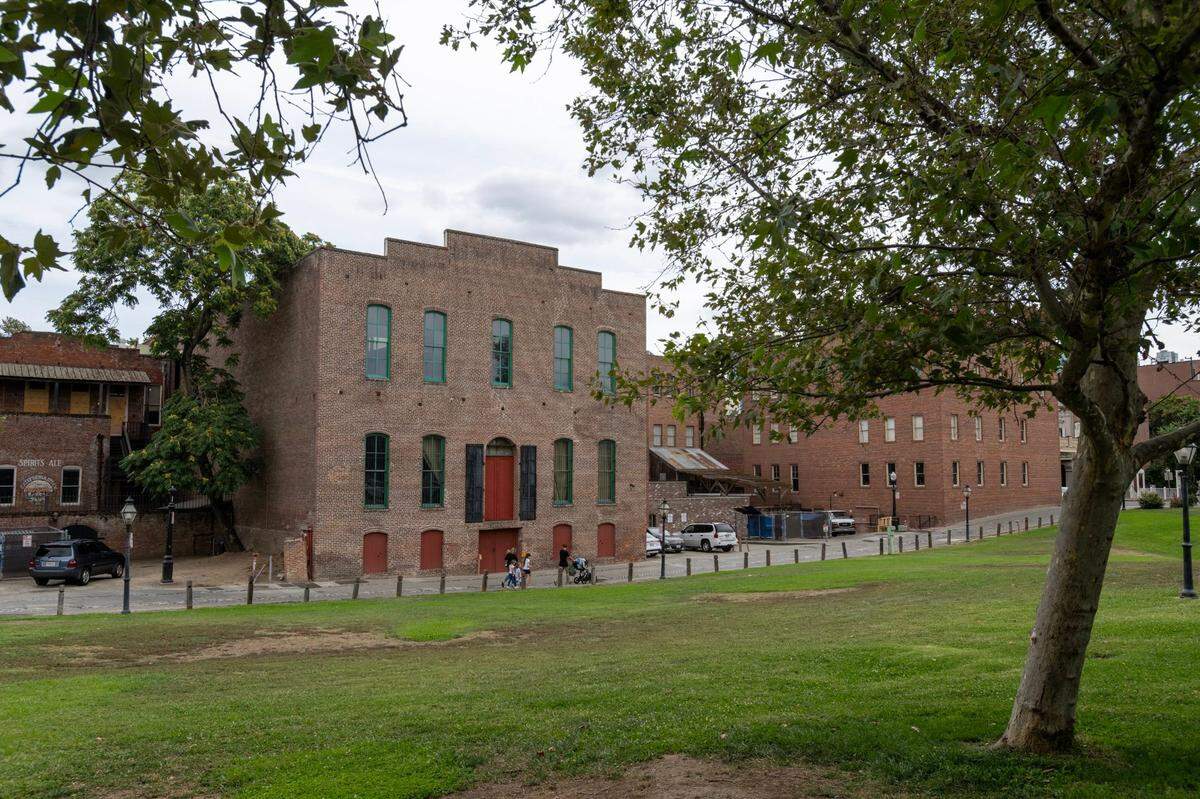
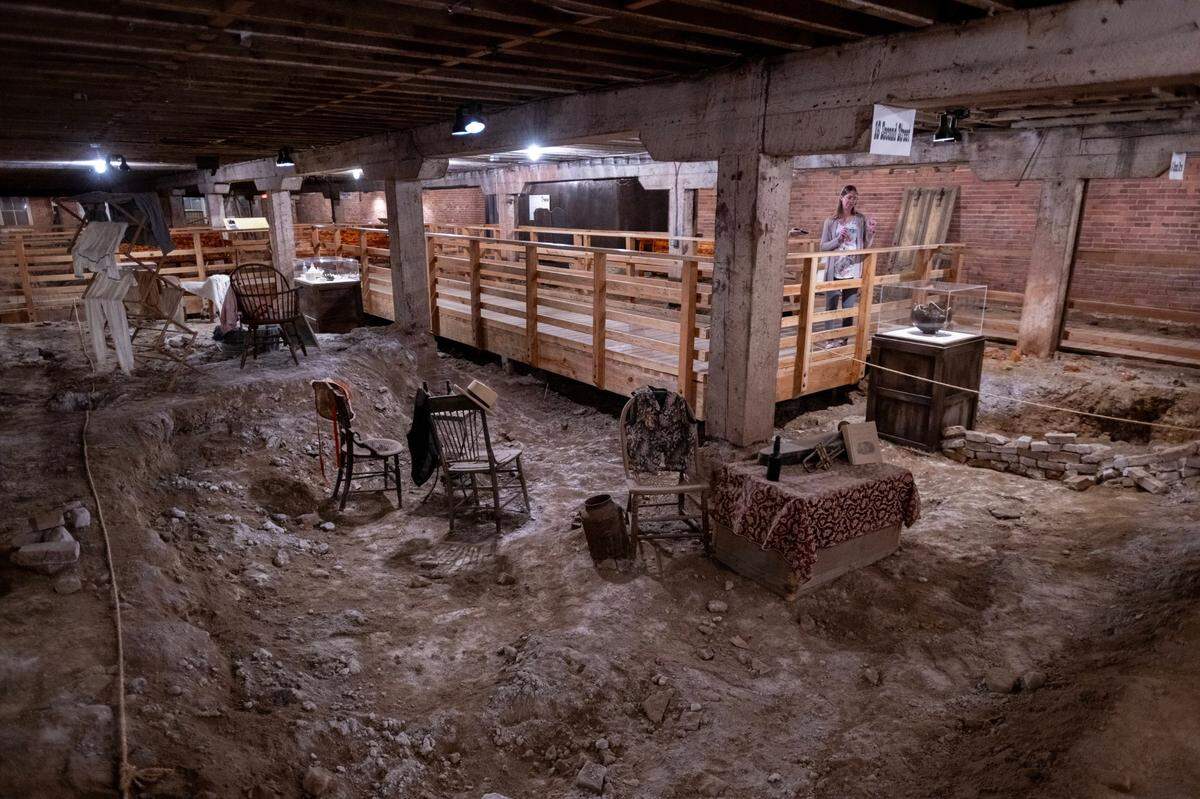
The second spot on the tour is the Hall, Luhrs and Co. building.
Constructed in the late 1880s, it housed a grocery store, Kowalski said.
But before that, the area used to be four buildings — two brothels, a saloon and boarding house and a private residence, she said.
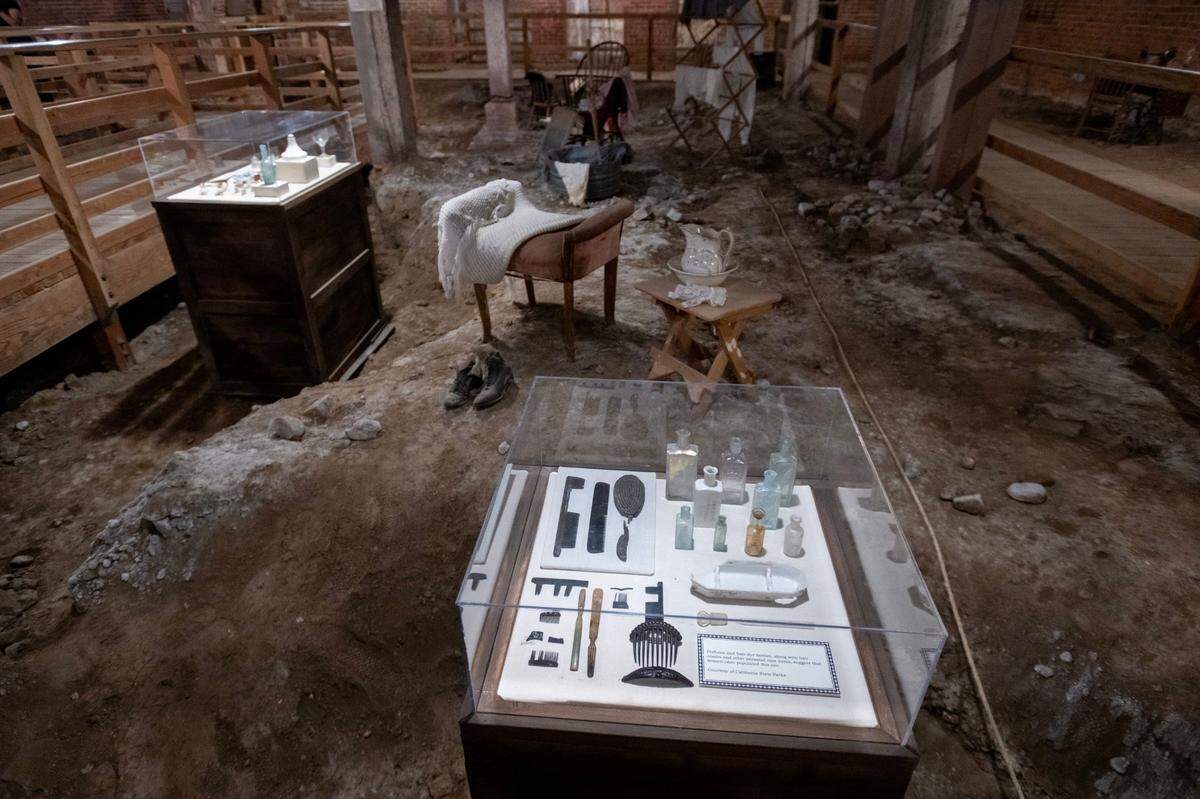
The area is currently undergoing archaeological excavations led by several agencies, including California State Parks and Cosumnes River College.
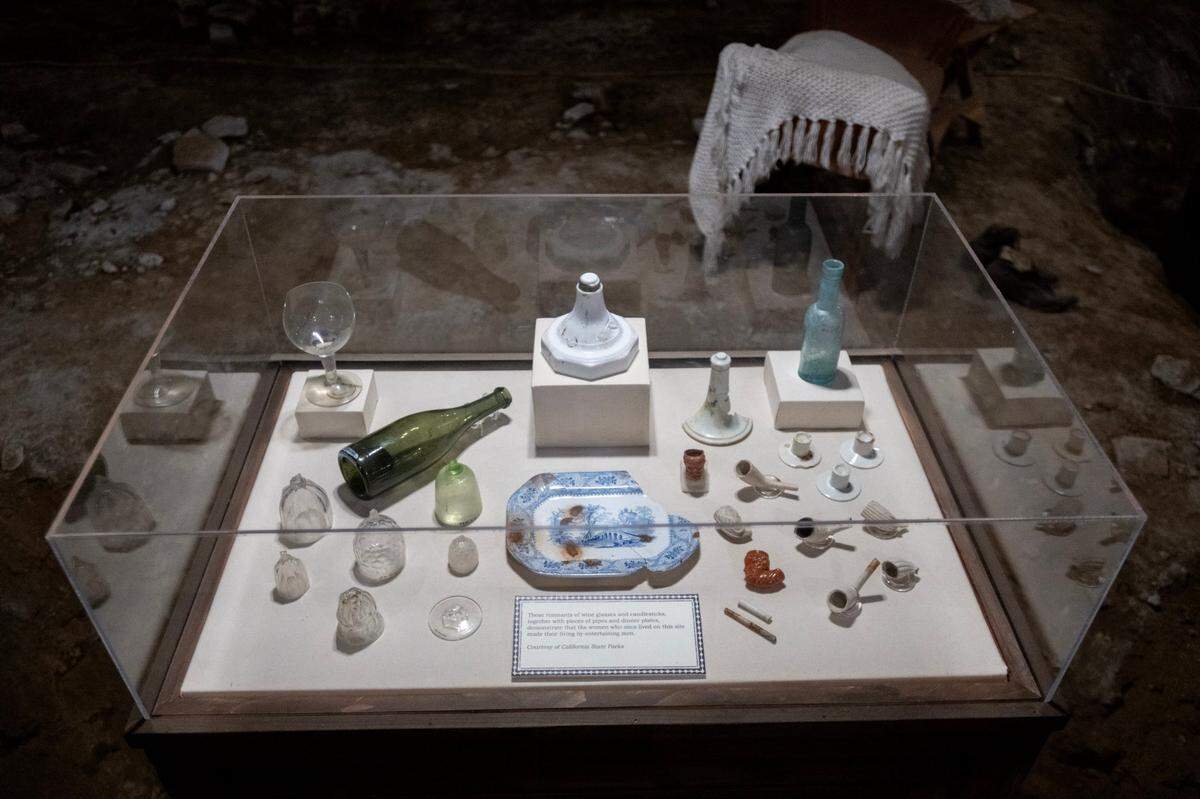
Inside the dark room, guests can see artifacts from the former businesses encased in glass. They include perfume bottles, hair dye containers, combs, brushes and broken wine glasses.
You’ll also see loaded dice, known as “cheater’s dice.”
Archaeologists studied the dice and found they had metal rods inserted under the dots, according to the museum’s placard. The added weight helped them roll certain numbers more often.
“They were found in the privy, which was essentially like a shared outhouse,” Kowalski said. “Our guess is that someone was caught cheating while gambling, and had to get rid of them quickly.”
Are there ghosts underground?
Kowalski said visitors have reported feeling ghostly presences underground.
“I have not seen anything,” she said. “But we do have guests that have brought cameras down here that have picked up orbs and different things that we can’t necessarily explain.”
If you’re on the tour, you might hear footsteps from above.
Rest assured, they’re most likely the footfalls of people walking on the sidewalk on Second Street.
How to go on the tour
The Sacramento History Museum’s Old Sacramento Underground Tour is available daily in Old Sacramento.
Tickets are $25 for adults and $18 for kids 6 to 12 years old. Children 5 and under are free.
You can buy tickets online or call 916-808-7059 to book a tour.
This story was originally published September 1, 2024 at 6:00 AM.