
How Sacramento’s Democratic Tsakopoulos family landed pro-Trump college for campus project
Republican political strategist Karl Rove was delivering a speech about the economy, but Kyriakos Tsakopoulos was preoccupied with a different business concern: His family’s painstaking quest to bring a college campus to the Sacramento suburbs was on the verge of collapsing yet again.
Chief executive of Sacramento’s AKT Development, and son of the region’s most prominent land baron, Tsakopoulos was digesting some dispiriting news as he visited Sonoma in October 2017 for a clients-only economic conference sponsored by Rabobank. He’d just heard that a British university was about to scrap its plan to expand into Placer County, on a swath of land assembled years ago by the Tsakopoulos family and other owners.
It would mark the third time a school had bailed on the project.
After Rove finished his talk, Tsakopoulos and other attendees gathered around the former White House advisor to pepper him with questions. The topic of education came up, and Tsakopoulos blurted out a query: Did Rove know of any colleges interested in building a satellite campus in California? Rove suggested Hillsdale College of Hillsdale, Mich., a small school famous among conservatives but unknown to Tsakopoulos, a member of one of Sacramento’s most well-known Democratic families.
“I went back and Googled it,” Tsakopoulos said.
The search paid off.
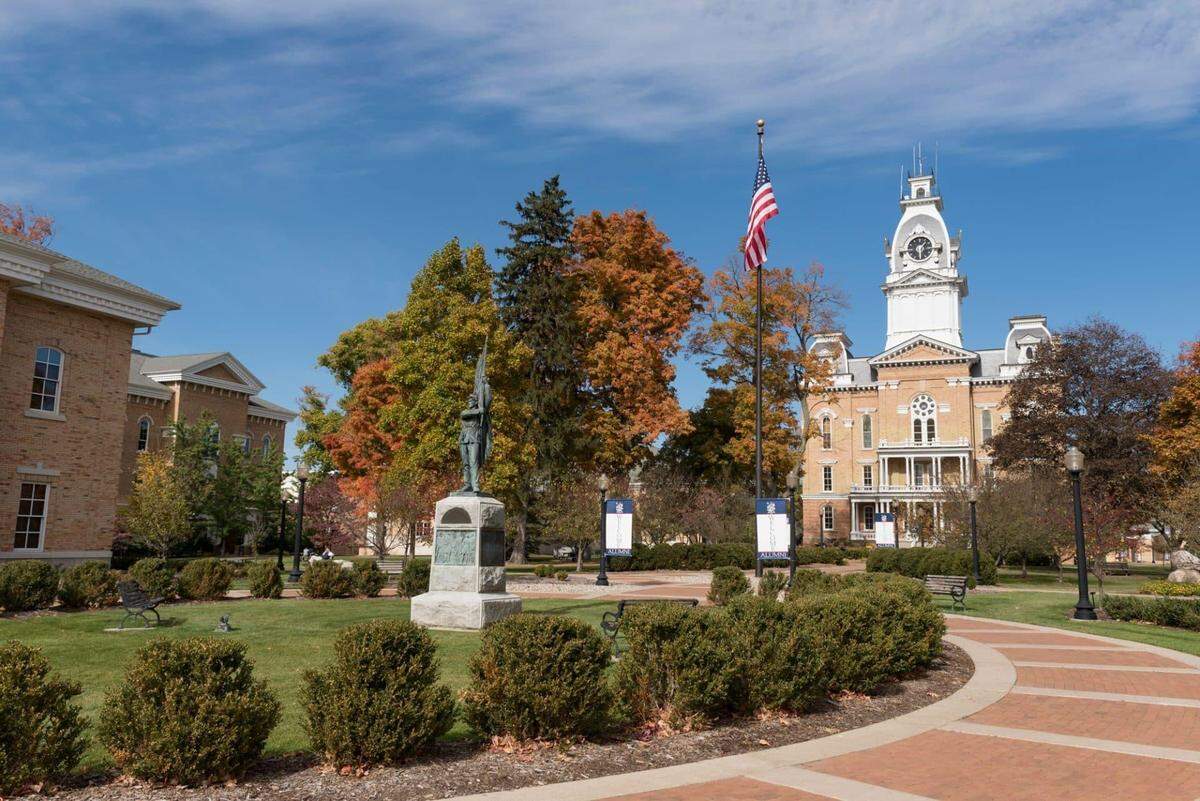
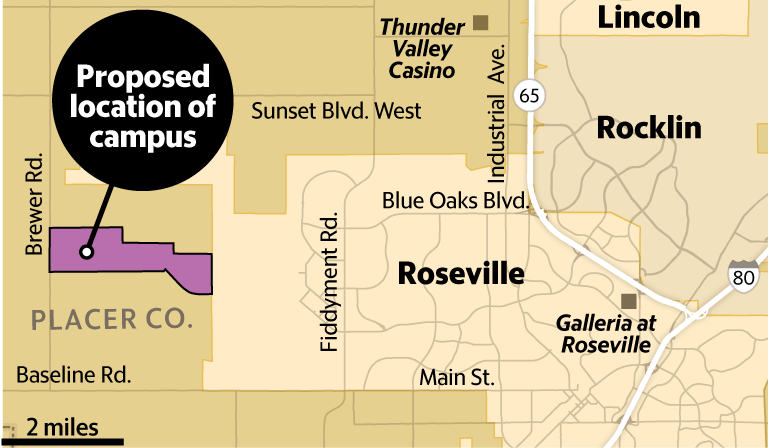
Four years later, Hillsdale is on track to fulfill Tsakopoulos family’s vision of academia in the Placer suburbs. In November the private college paid $5.8 million to acquire 1,100 acres of farmland owned by the University Development Foundation, a nonprofit established by Tsakopoulos and his father Angelo.
Hillsdale’s vice president and general counsel, Robert Norton, said the college is still formulating a timeline and budget for developing the campus. Nonetheless, the land deal is a milestone for a 20-year-old project that’s been stymied by litigation, the death of a college president and even Brexit. Four different schools have negotiated with the Tsakopouloses; Hillsdale is the first to take possession of the property.
“Until it’s done, we don’t know,” said Angelo Tsakopoulos, patriarch of one of Sacramento’s most influential families. “Until they start teaching, we don’t know. But it appears that they are ready to go.”
If all goes according to plan, a developer will some day buy the eastern half of the spread, turning it into a mixed-used community with 2,000 homes and generating cash to build Hillsdale’s campus on the remaining property. Hillsdale wouldn’t say whether it’s identified a developer to take control of the eastern portion of the land.
The residential development has sparked accusations that the entire project was a stalking horse for suburban sprawl. With Hillsdale aboard, the project has taken on an intriguing political dimension as well.
Hillsdale is an ultra-conservative college with ties to former President Donald Trump’s administration. College president Larry Arnn was reportedly a candidate to become Trump’s education secretary. Late in Trump’s term, Arnn chaired a commission that Trump created to counteract what he saw as “left-wing indoctrination in our schools” about American history.
The Tsakopouloses, meanwhile, are true-blue Democrats. Angelo Tsakopoulos slept in the Lincoln bedroom in the White House as a guest of Bill Clinton. His daughter Eleni Tsakopoulos Kounalakis is California’s lieutenant governor and served as Barack Obama’s ambassador to Hungary. Kounalakis and her husband are part owners of a company that donated some land to the project in 2012 but she has said she has no involvement in the development.
.JPG "SAC_RCB_20190107_Newsom441 (1).JPG")
.JPG "2nd_SAC_RCB_20190107_Newsom497 (1).JPG")
As for Hillsdale’s politics, Angelo Tsakopoulos said the college’s approach to learning is what matters. A Greek immigrant, he said he appreciates Hillsdale’s insistence that students learn about ancient Greek philosophers, the U.S. Constitution and the importance of logical thinking.
“Other people, even members of the family, have said, ‘Hey, don’t you understand? These guys are very conservative,’” he said. “OK, they are very conservative … but some of the things that they have done and they do are very important to what we are trying to promote.”
Hillsdale’s politics would likely blend in seamlessly in Placer County, which Trump carried handily in 2016 and 2020. The college, breaking its silence on the project, told The Sacramento Bee that its focus is strictly on education.
“An institution like Hillsdale College, with its emphasis on educating adults on Aristotle and the U.S. Constitution, is not inherently conservative nor liberal,” said Norton in an emailed statement.
Why Hillsdale wants to be in California
Operating a campus thousands of miles from home isn’t easy. Experts say it’s costly and the logistics can be formidable.
But plenty of colleges do it, and the reason has to do with finding new students. The Western Interstate Commission for Higher Education says the number of high school graduates is expected to start dwindling in a few years, leaving colleges straining to find applicants. The COVID-19 pandemic is already shrinking the pool of applicants willing to go far from home, said Jason Lane, an expert on the business of higher education.
“Institutions are scrambling to find ways to bolster enrollment and find sustainability,” said Lane, dean of the College of Education, Health and Society at Miami University of Ohio. For a school in the Midwest, he said “one option would be to build a campus in California.”
Hillsdale already operates a small graduate school in Washington, D.C., and a recently-opened Center for Faith and Freedom in Connecticut. The Placer County campus, Norton said, “will help Hillsdale further radiate its curriculum in the state of California and across the country.”
While he said planning for the campus remains in the early stages, Placer County planning documents say the California campus could accommodate 6,000 students and 800 professors and staff members. Hillsdale would become the third largest college in the metro area, following UC Davis and Sacramento State.
That would be a major leap for Hillsdale, whose enrollment is just 1,500. But the school would start out with an enormous advantage: It’s essentially been handed a bonanza in California real estate — a purchase price so low that Norton referred to it as “a gift.”
Kyriakos Tsakopoulos said the sale price was set at a level — $5.8 million — where the University Development Foundation could settle its debts. But the farmland — sitting next to the bustling western subdivisions of Roseville, one of California’s fastest-growing cities — is worth far more.
“That 1,100 acres was appraised for close to $100 million,” Angelo Tsakopoulos said.
Selling off the eastern half of the property would likely generate tens of millions of dollars, enough to jump-start construction on the campus, although much more would be needed to build a full-fledged campus. (It cost well more than $1 billion to build UC Merced, the newest University of California campus, which serves about 7,300 students).
Map: Sacramento Bee
Norton said the size of the Hillsdale campus will depend on the college securing “further generous donations.”
The Board of Supervisors signed off on the environmental review and other approvals years ago, and board chairman Robert Weygandt said Hillsdale wants to get rolling as quickly as possible.
“They’re small and they’re nimble and they have this tight-knit management team,” said Weygandt, whose district includes the project site.
The connection to Donald Trump
“Wheel of Fortune” host Pat Sajak is chairman of Hillsdale’s board of trustees, but the college’s roots are humbly Midwestern. The college was founded in 1844 in Spring Arbor, Mich., by abolitionists. The great abolitionist Frederick Douglass was a guest speaker on campus.
More than a century later, the college made waves over race again.
In the 1970s the federal government demanded data on the racial composition of Hillsdale’s student body as a condition for making its students eligible for federal loans. Hillsdale refused, and a major legal battle ensued.
In 1984, the U.S. Supreme Court ruled against the college. Hillsdale decided that, “rather than complying with unconstitutional federal regulation, it would instruct its students that they could no longer bring federal taxpayer money to Hillsdale,” the school’s official history says. “Instead, the College would replace that aid with private contributions.”
The private money has poured in. Colleges rely heavily on their endowment funds — dollars set aside to generate investment income — and Hillsdale’s is richer than most. It surpassed $900 million last year, according to its student newspaper. By contrast, the American Council on Education says the median-sized fund at a private four-year college is just $37 million.
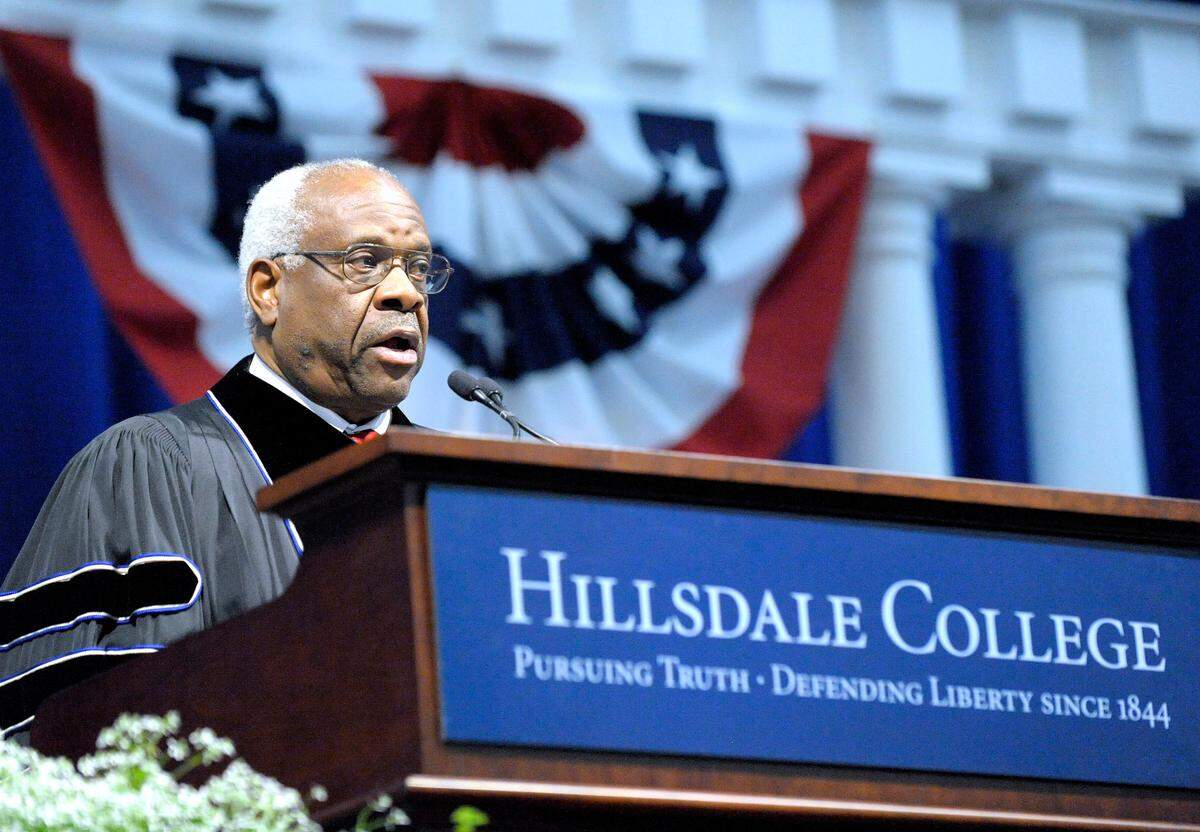
Its conservative tilt became more pronounced during the Trump presidency. Arnn, the college president, endorsed Trump, made appearances on Fox News and was reportedly on the shortlist of candidates for education secretary. He lost out to Betsy DeVos — whose family has been a Hillsdale donor and whose brother Erik Prince, founder of the controversial military security firm Blackwater, is an alumnus. Vice President Mike Pence delivered the 2018 commencement address.
Hillsdale’s Washington campus helped cement ties to conservative politicians. In 2017, when Congress was debating Trump’s tax cut proposal, Republicans proposed taxing investment profits on college’s endowment funds — with an exemption for schools, like Hillsdale, that refuse federal funding. Democrats protested the so-called “Hillsdale carve-out” and the exemption idea died.
Shortly after losing his re-election bid in 2020, Trump put Arnn and Matthew Spalding, who runs Hillsdale’s Washington campus, in charge of his Advisory 1776 Commission — a group designed to promote “patriotic education on the American Revolution and the American founding,” according to his executive order.
The panel’s report, delivered two days before Trump left office, takes aim at “the radicalization of American politics” since the 1960s and how it’s infected education, indoctrinating students into believing there’s nothing noble about the Founding Fathers. The American Historical Association denounced the document as a sham, saying it celebrates “ignorance about the past.”
Although President Joe Biden abolished the commission shortly after being sworn in, the panel has continued to meet at Hillsdale’s Washington campus. The college has created a “1776 curriculum” for K-12 schools that celebrates America and its “extraordinary degrees of freedom, peace, and prosperity.” In a letter to teachers, a Hillsdale official boasts that the curriculum was created by educators, “not bureaucrats, not activists, not journalists.”
Sacramento State eyes separate campus
A few miles north of Hillsdale’s property, Sacramento State is planning a major satellite campus of its own.
California State University, Sacramento, took possession last March of a 300-acre parcel donated by the owners of Placer Ranch, a development site between Roseville and Rocklin. Valued at $27.4 million, it was the largest donation in the university’s history and set the table for a project that would double Sac State’s enrollment.
“The idea is to have to have it up to 20,000, 25,000 (students) in the next ‘X’ number of years,” said Jonathan Bowman, the university’s chief financial officer. “It’s probably going to be 20 years.” At some point the complex would grow so large, it would become a separate CSU campus and no longer part of Sac State, he said.
Sac State sees the area as ripe for expansion. The university turns away several thousand applicants a year, Bowman said. At the same time, many of its current students commute from the Placer area.
“There’s definitely an unmet need in the area for higher education,” he said.
The campus would be built in partnership with Rocklin’s Sierra College, which has raised $30 million through a bond sale to build an education center designed to feed its students into the Sac State system, said Sierra president Willie Duncan. The county has earmarked an additional $30 million for the project — to build a crime lab to be run with Sac State.
Sac State itself still lacks final approval from CSU system trustees to get the project going. At the earliest, Bowman said construction could begin in late 2023.
The prospect of a second big campus has left county officials giddy.
“I just see this potential of a Claremont-type arrangement,” said Weygandt, the county supervisor, referring to the seven colleges clustered together in Claremont, east of Los Angeles. “I think of it like HP coming to town or the railroad coming through town. It’s really historic.”
Angelo Tsakopoulos, meanwhile, says the Sac State project would enhance what he’s trying to do with Hillsdale.
“Why shouldn’t Sacramento be the Athens of the Pacific Rim — where many people from the Pacific Rim come here to be educated?” Angelo Tsakopoulos said.
Years of frustration over college plan
Tsakopoulos’ vision began with a Catholic order called Christian Brothers.
In the early 2000s, he persuaded the order, which built St. Mary’s College in Moraga, to consider a new university on the rectangular-shaped land parcel west of Roseville owned by the Tsakopolouses and other landowners.
But in 2005, the proposed De La Salle University fell apart — a victim of red tape, Tsakopoulos said. The county spent three years studying the project, and the Christian Brothers grew tired of waiting, he said.
The family’s frustration with county officials boiled over a year later, when Weygandt, who was skeptical about the project, ran for re-election. The Tsakopouloses donated $200,000 to Weygandt’s challenger. Weygandt won and has since become an enthusiastic supporter of the college project.
The Tsakopouloses, meanwhile, found another potential partner: Drexel University of Philadelphia.
Drexel’s president, Constantine Papadakis, was a Greek immigrant like Angelo Tsakopoulos and had befriended the Sacramento man years earlier. The county Board of Supervisors approved the project’s environmental reviews, a major step that effectively gave Drexel a green light. In 2009, to establish a foothold in the region, Drexel opened a small campus in an Old Sacramento office building owned by Tsakopoulos’ company, AKT Development.
The Tsakopoulos family also tweaked the project’s business plan, arranging for the landowners to donate the 1,100 acres to a new nonprofit, the University Development Foundation, led by Kyriakos Tsakopoulos. He assembled a board consisting of top Sacramento business leaders, including people such as Julie Teel, whose family didn’t donate any of the land.
But the Placer project was being challenged in court.
Environmentalists had charged for years that the Tsakopoulos family was using the proposed college campus as a way to jump-start suburban sprawl and enhance the value of the family’s other land holdings in the area — which include an investment in a nearby development site called Placer Vineyards.
.JPG "SAC_xm0113placerUniv030611 (1).JPG")
In 2009 the Sierra Club sued the county, Tsakopoulos and another landowner, William Cummings, charging that the project would devour critical open space and animal habitat. The plan “frustrates the Legislature’s efforts to reverse sprawling development patterns that contribute to climate change,” the lawsuit said.
The case was settled in 2014. The plan was reconfigured to retain more open space. Meanwhile, the Tsakopoulos family and others associated with the project continue to dispute any suggestion that the campus is designed to promote sprawl.
“This deal is only about the university,” said Teel, chairwoman of the foundation’s board and a member of the family that owns Raley’s.
Hillsdale ‘wants to get things done’
Even with the lawsuit resolved, Drexel’s enthusiasm was dwindling. Papadakis had died several years earlier, leaving the California campus without a champion in Philadelphia. The school withdrew from the Placer project in 2011, and four years later it announced it would close the Old Sacramento campus.
The Tsakopouloses’ foundation moved onto a third dance partner: England’s Warwick University. Warwick was so excited about the Placer site, it announced it would start offering classes in 2018 at a temporary location in downtown Roseville.
Then the citizens of the United Kingdom voted to leave the European Union. Kyriakos Tsakopoulos said Brexit effectively cut off one of Warwick’s main revenue sources: tuition from students who came from elsewhere in the EU.
“So we lose the Brits and that was very sad for us,” Angelo Tsakopoulos said.
Warwick didn’t announce its decision until December 2017, but the university notified the University Development Foundation in October.
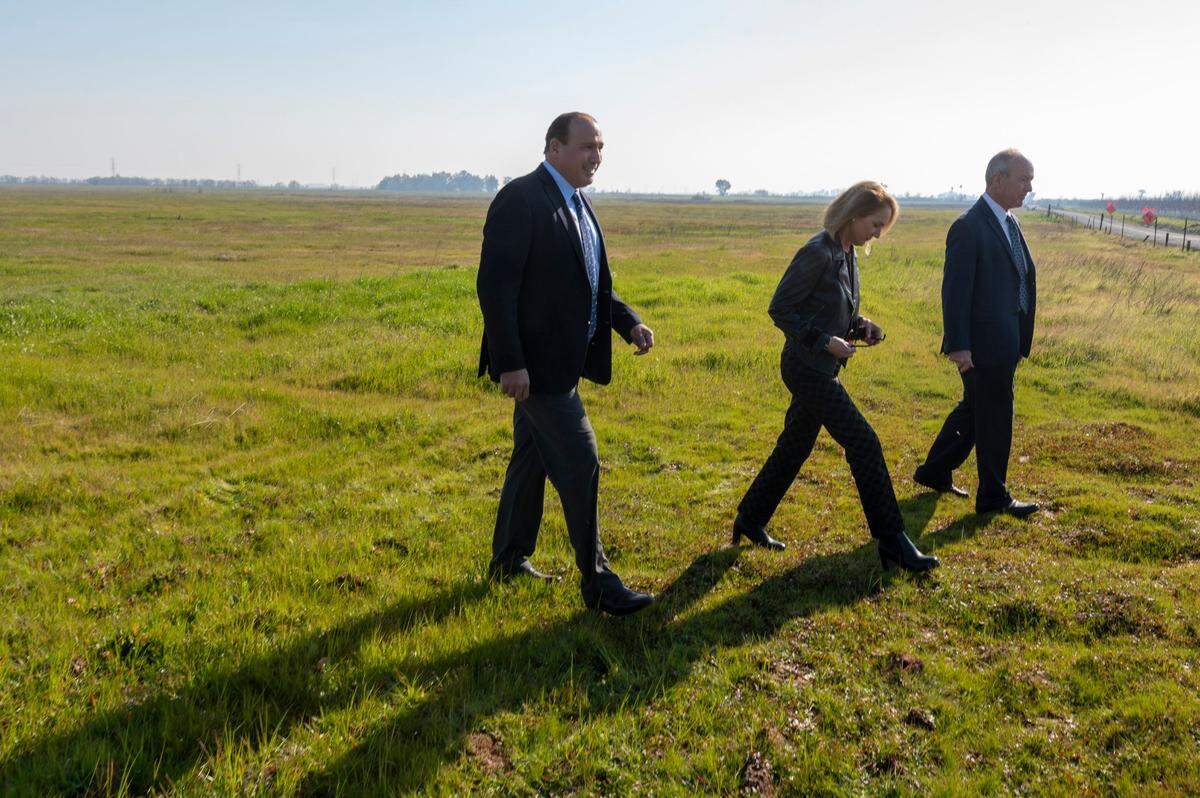
Soon after, Kyriakos Tsakopoulos had his fateful encounter with Karl Rove, and negotiations with Hillsdale started to pick up steam. Officials with the foundation and Placer County visited Hillsdale’s campuses in Michigan and Washington D.C. Arnn, the college president, toured the site in Placer.
The meetings convinced foundation officials that the Hillsdale project will get done.
“They are very organized, very committed, and want to be part of this community,” said Teel, the foundation’s chairwoman. “Hillsdale wants to get things done.
“We’re going to be able to fulfill the Tsakopouloses’ vision and long-time dream of getting a university here.”
This story was originally published January 23, 2022 at 5:00 AM.