Sacramento business owners plan to resurface cannabis tax issue with City Council
Fresh off a win in a yearslong fight to gain city approval for a pilot program for cannabis lounges, the next battle for Sacramento’s cannabis industry will likely involve taxes.
Business owners argue that legal pot growers, manufacturers, distributors and sellers are taxed to the extreme, and that companies struggle to compete with illegal or unregulated products.
“It’s really unfair. It’s unjust,” said Kimberly Cargile, CEO of A Therapeutic Alternative, a dispensary on H Street.
The city levies a 4% tax on gross receipts for cannabis sale. The tax applies anytime cannabis is sold — including, for instance, from a grower to a manufacturer. A single product may change hands, Cargile said, four times as it moves from a grower to a distributor to a manufacturer to a retailer, and then is bought by a customer.
Over the lifespan of a single product, and in addition to the state’s cannabis tax, business owners argue that the dollars can add up quickly.
But in Sacramento, proposed cuts face steep opposition, in no small part because the revenues collected from such taxes are designed to fund youth programs.
Under Measure L, which voters approved in 2022, the equivalent of 40% of the city’s cannabis business operations tax will be allocated to a fund for youth programs like violence prevention, mental health counseling, after-school activities and other services.
“In our view, we need to invest in substance-use prevention for kids and young adults,” said Jim Keddy, executive director of Youth Forward. “It makes sense to us to tax cannabis at a higher rate than you would tax, for example, granola bars.”
Declining sales
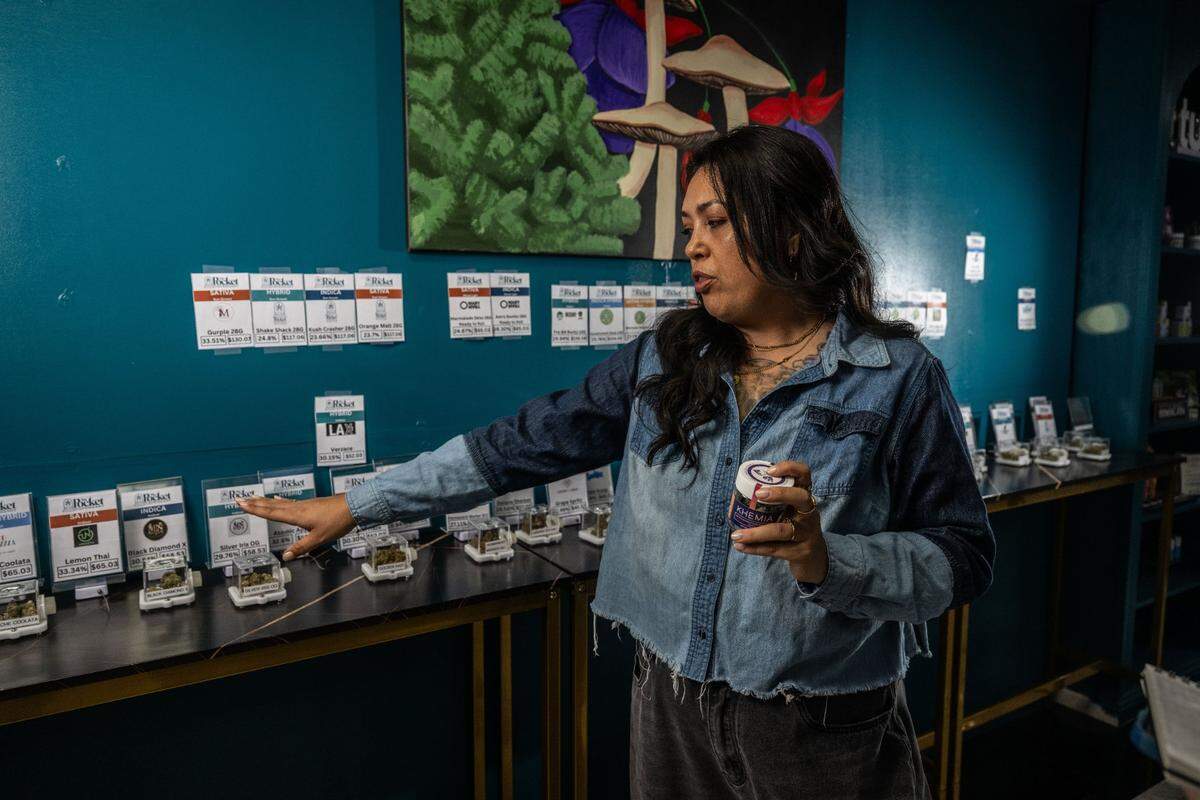
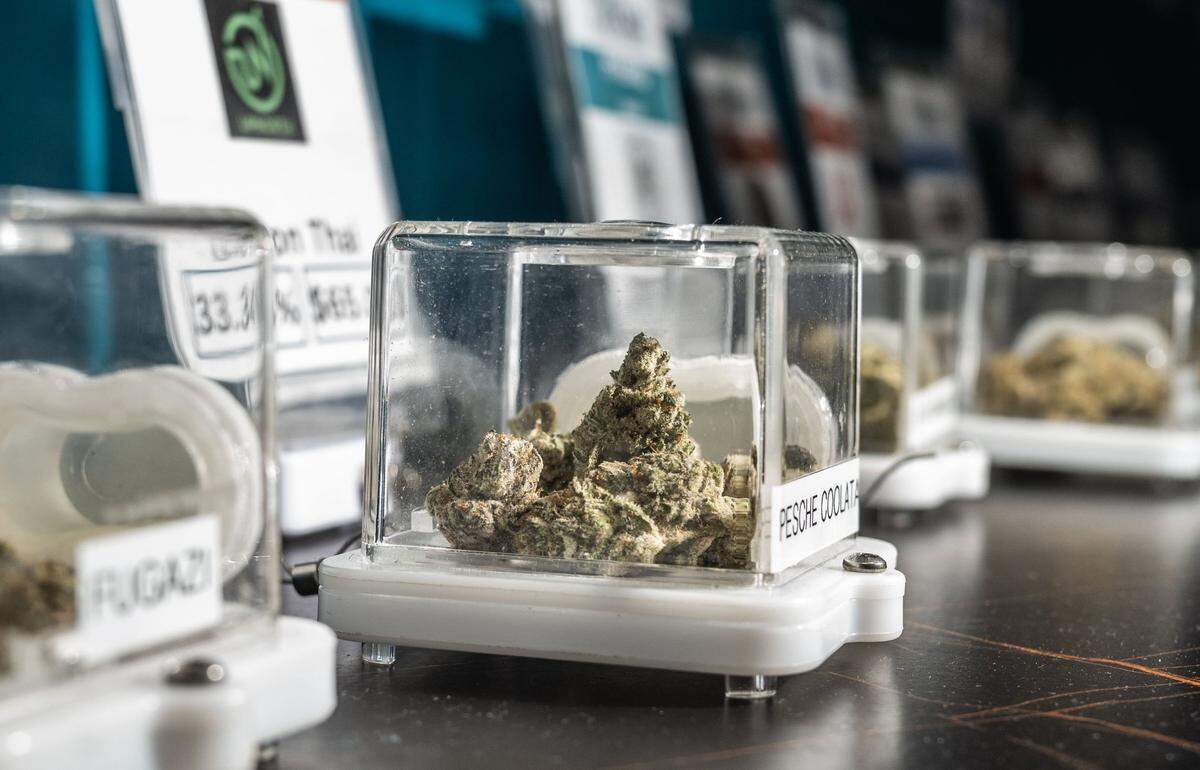
At the Pocket Dispensary on Florin Road, products are displayed with prices before and after taxes. A $50 container of a hybrid indica strain becomes $65.03 after sales tax, state excise tax, and the city’s 4% tax.
At A Therapeutic Alternative on H Street, Cargile said her business brings in $2 million to $3 million in revenues each year. About half pays for the goods she sells, and about 25% goes to payroll. Then there are other expenses: Insurance, rent, advertising, office supplies, utilities, legal fees and financial services.
She said about $600,000 goes to state sales tax each year, and $120,000 to city sales taxes. Another $20,800 annually to renew the city business license.
Some months are profitable, she said. Others aren’t. And sales have, generally, declined for the past four years.
The industry saw a boost during the pandemic: 2020 was the Pocket Dispensary’s best year. At Crystal Nugs in midtown, CEO Maisha Bahati saw a similar trend.
“There was a lot of money being made,” she said. “I remember gaining like 300 customers in one month.”

In late 2021, people realized things had changed. Business slowed.
A recent legislative report in Colorado attributed the slowdown in part to the decline from the pandemic-era surge — along with an oversupply of cannabis that pushed prices lower, and the ongoing saturation of the market as more businesses enter the industry and more states moved to legalize.
Cargile also suspected that with higher living costs, her customers had less to spend on cannabis.
She said she believes some customers find a cheaper alternative in unregulated hemp products, which aren’t subject to the same restrictions around marketing, testing and labeling. State and local officials have raised public health concerns and attempted to crack down: Sacramento County approved penalties for retailers found selling such products in October.
Where will the money go?
City commissions recommended spending a portion of the funding on a guaranteed basic income program for foster youth.
A similar effort recently began as a pilot program on the state level. It enrolled almost 750 youth, half of whom receive $750 each month, and half of whom receive $20 each month to measure the impact of the amount given, said Serita Cox, CEO and cofounder of iFoster, a Truckee-based organization that offers services for youths aging out of foster care and is running the state program.
Each person will receive the payments for 18 months, and the results will be studied by the Urban Institute.
Anecdotally, Cox said, they’ve seen that the youths are using the money for basic needs, like the upfront costs of renting an apartment, utility bills and transportation.
From Cox’s perspective, the concept makes sense on every level: The young people in the program are the taxpayers’ responsibility, and it’s logical to give them runway after aging out of care.
“If they don’t land on their feet we’re going to end up paying for it later,” Cox said. “Whether you take the economic viewpoint or the moral, emotional viewpoint, I think you end up in the same place.”
Monica Ruelas Mares, manager of local children’s policy for Youth Forward and chair of the Sacramento Children’s Fund planning and oversight commission, said community youth organizations obviously don’t want cannabis taxes lowered.
Some applications for the funds were due in early December, and are under review. They could receive council approval in early 2025.
Reulas Mares said she is empathetic to business owners, and has heard how burdensome the taxes can be. She said she welcomes further discussion, and wants to figure out ways to address their concerns. Maybe there are changes that can be made that would leave the Measure L funding untouched.
The growth of local businesses is important, she said. At the same time, voters approved Measure L with the understanding that it would fund youth services.
“Two things can be true,” Ruelas Mares said. “And how do you navigate that?”
Compromises
Some business owners, who intend to raise the issue again in the new year, argue that the city could turn to other funding sources to fill shortfalls created by lower cannabis tax rates. Mindy Galloway, owner and CEO of the Pocket Dispensary, advocated for raising taxes on alcohol to compensate, or raising taxes for large corporations.
Others have floated the idea of lowering the tax specifically for members of the CORE program, a social equity effort to offer dispensary licenses to people harmed by the war on drugs.
Some are pushing for change at the state or federal level, though local movement is viewed as more readily achievable.
There is a push for the federal government to reschedule cannabis from a Schedule I to a Schedule III substance, which would allow legal cannabis businesses to take tax deductions. The proposed federal rule acknowledges the medical uses for cannabis and the lower potential for abuse relative to other Schedule I substances.
And Galloway said the industry has been pushing consistently for change on the state level. But there hasn’t been much progress recently.
“Next year is a really good time,” Galloway said, “to test the waters.”