Sacramento’s downtown has struggled since the pandemic. Business group proposes expansion
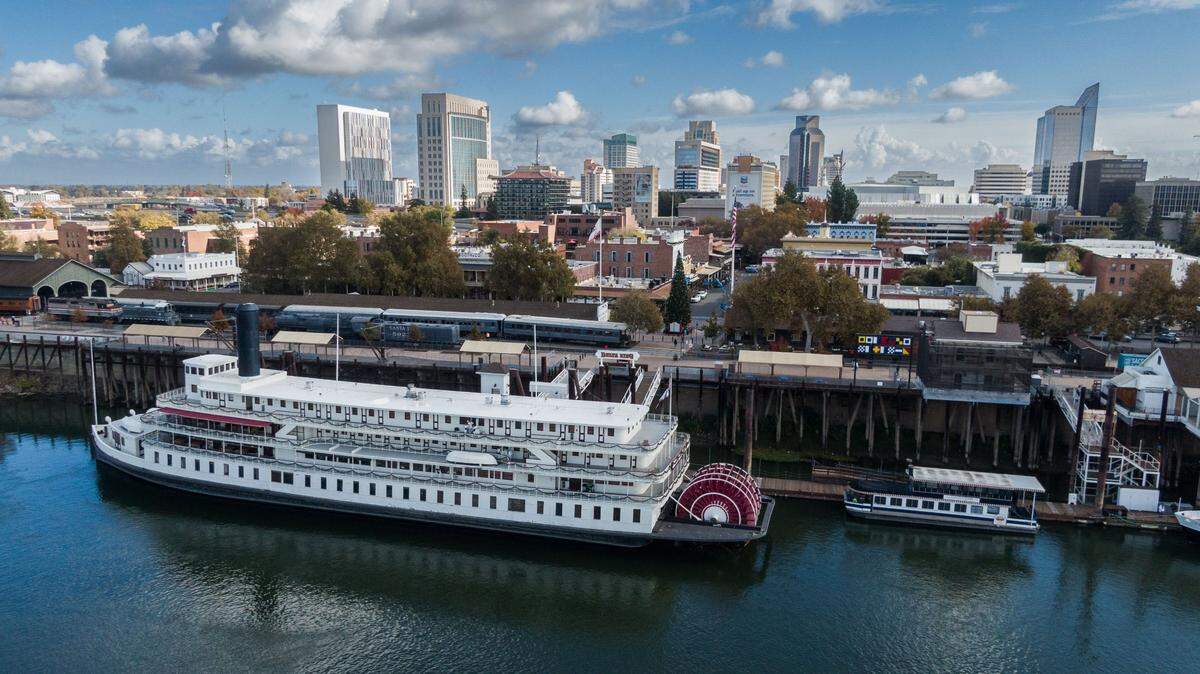
One of Sacramento’s main business groups will spend the coming months campaigning for a 10-year renewal from the downtown property owners who fund the agency through their taxes.
The organization, formed in 1996, seeks such approval every decade. This round comes at a key moment for the city’s urban core where, with a budget around $7 million, the Downtown Sacramento Partnership arranges security and cleaning services, pursues economic development efforts and funds homeless outreach, among other things.
Civic leaders have begun to reimagine the district after the pandemic, which pushed some employers to relinquish large chunks of office space and cut downtown’s monthly visitors to less than 1 million in early 2020, down from roughly 3 million to 4 million in 2019.
Some now believe the district ought to more closely resemble midtown, with a larger supply of housing and retail, less susceptible to large swings in the commercial real estate market.
“We’ve got to change, and we’ve got to adapt and be more entrepreneurial,” said Michael Ault, who has led the organization since 1997. “I think owners are embracing the fact that downtown will be different.”
The partnership’s leaders point to signs that downtown is improving: Foot traffic has rebounded to roughly 80% of pre-pandemic levels. While daytime office employment hasn’t fully recovered, the downtown residential population has increased over the last four to five years, said Scott Ford, deputy director of the Downtown Sacramento Partnership. Meanwhile, long-awaited development projects in the railyard and the waterfront are drawing closer to fruition.
Ault said the partnership is proposing an expansion of its footprint to include a portion of the railyard, Crocker Park and Crocker Art Museum and potentially a few county-owned properties near 8th Street and G Street. It needs support from owners representing more than half of the property tax assessment in the district.
Ault acknowledged that some won’t favor an expansion. But in his view, it’s a critical time for investment in downtowns across the country, and business improvement districts have helped fill gaps when public sector budgets struggle. Sacramento, for instance, faces a projected $77 million budget deficit in the upcoming fiscal year.
“It’s a challenging time for owners, and we want to be respectful,” he said. Still, he added, the partnership doesn’t want to shy away from offering services that make the area cleaner, safer and more vibrant.
In addition to the expanded footprint, the partnership is proposing safety improvements, like additional lighting up and down K Street, and more security cameras around the district.
Ault said the partnership has been discussing the renewal with owners throughout the summer and fall, listening to feedback about what services people want to see in the district. Downtown property owners, he said, seem to be contemplating how the district will evolve.
“I think there’s just a lot of apprehension.” He paused. “Apprehension might not be the right word.”
After a moment, he added: “Uncertainty.”
Downtown has changed. But there’s also ample opportunity. For every setback the area has felt, he said, there have been wins like a proposed soccer stadium and new Kaiser Permanente medical center in the railyard, the temporary presence of a Major League Baseball team nearby and a $40 million plan to revitalize the city’s waterfront, among others.
“These are transformational things,” Ault said.
Ault said the partnership will meet with owners again to seek more formal approval for the renewal plans in January and February. In the spring, the city council will likely hold a hearing to consider approval, which would take effect at the beginning of 2026.
This story was originally published January 2, 2025 at 12:50 PM.