Blue Diamond to close historic midtown Sacramento plant; 600 jobs affected
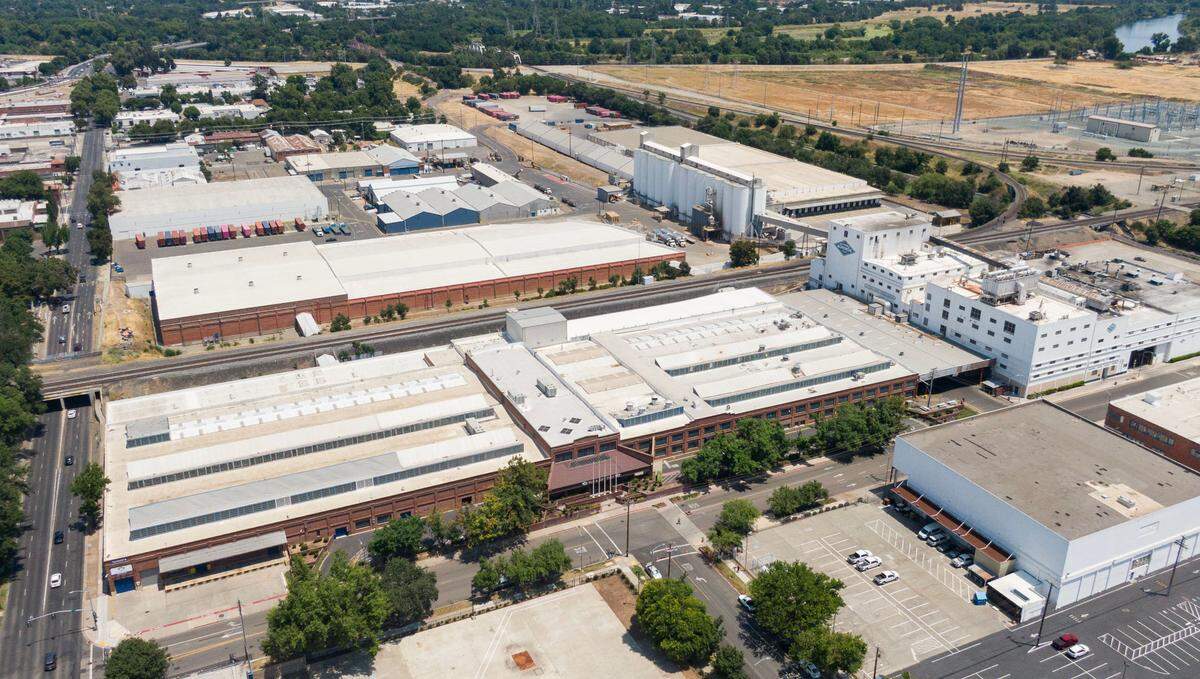
Blue Diamond Growers, the Sacramento-based almond cooperative, plans to wind down operations at its historic midtown plant and transfer most manufacturing to sites in Turlock and Salida over the next two years.
The company said the move would bring manufacturing closer to many of its farmers and members, and running those operations out of the C Street facility — a landmark in Sacramento for more than a century — has become inefficient.
“Our Sacramento team’s work ethic and incredible drive have enabled us to build Blue Diamond into what it is today,” President and CEO Kai Bockmann said in a statement. “However, the challenges of running a plant from these historical buildings has become too costly and inefficient. Streamlining our manufacturing plants is the right business move to further strengthen our market-leading position and bring increased value to our grower members.”
Blue Diamond, one of the state’s most visible agricultural entities, has historically played a central role in the almond industry, a sector deeply intertwined with California’s economy and water use. Its midtown facility has long symbolized Sacramento’s agricultural legacy, anchoring the city’s transition from a rail and river hub to a center for food processing and trade.
The company said Bockmann met with plant workers Friday morning. Around 600 workers will be affected. The reductions will happen in phases over the next 18 to 24 months. Later this year, around 10% of plant employees will be cut.
“Even though most employees will not leave this year, we want to be transparent and tell our people as soon as possible,” Bockmann said in the statement.
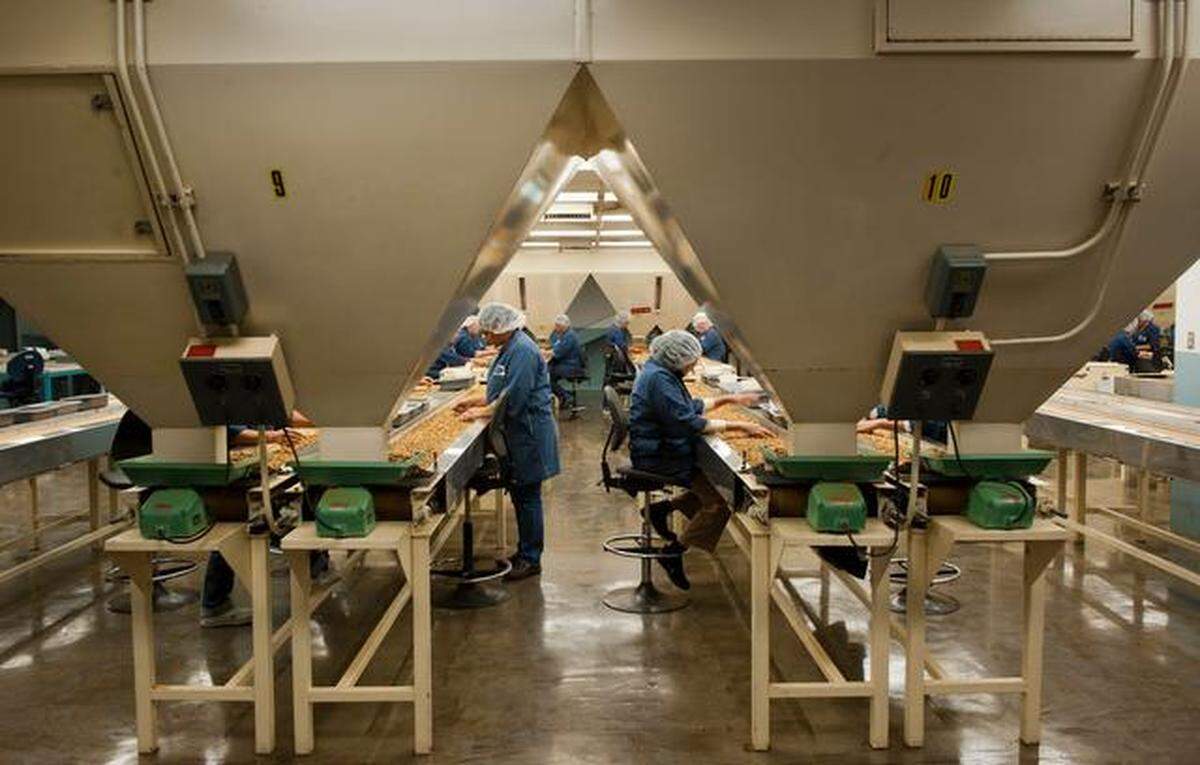
The company will offer incentives for employees who remain during the transition, and provide severance for those whose positions are cut. Some will be offered positions at other sites.
The company’s corporate office will remain in Sacramento, officials said.
Factory closure ‘a hard pill to swallow’
“Thank you, Blue Diamond, for 115 years of partnership,” Sacramento Mayor Kevin McCarty said in a statement Friday. “Blue Diamond has been an iconic symbol of Sacramento’s history in the agricultural manufacturing industry. We wish you well as you relocate to the Central Valley and commend your care in supporting your workers through this transition.”
McCarty also said that the city looks forward to a new chapter for the 53-acre midtown site, not far from the Railyards development.
“The Blue Diamond factory is primed for new life and new opportunity for our city,” he said.
Councilmember Roger Dickinson would like to convince Blue Diamond Growers to stay in midtown and is willing to provide financial incentives to strike a deal. He pointed to their history and presence as a “significant employer” in the capital region.
“We should try to make an effort to keep them,” he said Friday after the announcement. “I would love to see Blue Diamond stay. That would be my first preference.”
“Blue Diamond has such a legacy in Sacramento, that it’s a hard pill to swallow if they end up closing the plant.”
He called Friday’s news “déjà vu,” recalling the early 1990s when city leaders worried the cooperative would relocate. Dickinson, then county supervisor, said he and other civic leaders created a package of incentives to keep the plant in the capital region.
“Here we are, essentially 30 years later, facing the same circumstances.”
“The consensus was that it would be very damaging below both as a substantive matter and as a psychological matter if Blue Diamond, at that point in time, closed their operation and moved.”
He believes Sacramento’s assistant city manager and elected officials representing the area, including Councilmember Phil Pluckebaum, should lead the charge in negotiating a deal. If the city is unable to strike an agreement, Dickinson said it’s important to work with the company to find an “attractive and productive reuse of the property.”
Steve Cohn, who served on the City Council during the previous negotiation with Blue Diamond, has a few ideas for the property.
“I think there should be some thought given to set aside open space, particularly back towards the American River,” Cohn said. “Even though the south side of the American River isn’t technically part of the American River Parkway, we do have a bike path go through there, and there is the long range vision to have the Two Rivers bikeway connect all the way from the Sacramento River to River Park.”
Cohn thinks the property should be preserved for its historical value, but Blue Diamond’s departure does not come as a surprise.
“I don’t think it’s realistic that that would be a major industrial facility at this point,” Cohn said.
Former Mayor Darrell Steinberg, who also served on the City Council from 1992 to 1998, trusts the city’s leadership to navigate the transition.
“I have complete confidence in the mayor and the council to figure out what’s best for that site,” Steinberg said.
Growth overseas, contraction in the Valley
The decision to exit Sacramento almost entirely comes as the 115-year-old cooperative emerges from two consecutive years of financial pressure. Revenues remained flat at $1.3 billion for the fiscal year ending in August 2024, down 17% from 2022. However, the cooperative recently saw a modest rise in income to $711 million, up from $640 million the previous year, driven by cost-cutting efforts that included the elimination of 38 corporate positions in the spring.
Despite financial strain industry-wide — attributed to pandemic-related supply chain disruptions and a prolonged surplus — Blue Diamond has continued to expand internationally. Over the past two years, it has established new distribution in the Middle East, added products in Europe and increased its market share in Canada — a strategic push to stabilize demand and reduce exposure to price volatility.
The international expansion has come as California’s almond acreage has declined in recent years, pressured by rising interest rates and tightening water resources. Late last year, the U.S. Department of Agriculture forecast a stronger harvest this August through October, and global demand remains steady with almond inventories significantly reduced from pandemic highs.
Steve Van Duyn, Blue Diamond’s board chair, said in November the cooperative “fought for its members by tapping into every opportunity to strengthen our portfolio and increase demand,” pointing to the company’s resilience amid economic headwinds.
This story was originally published June 6, 2025 at 11:34 AM.