Silicon Valley biotech company builds manufacturing site in Sacramento County
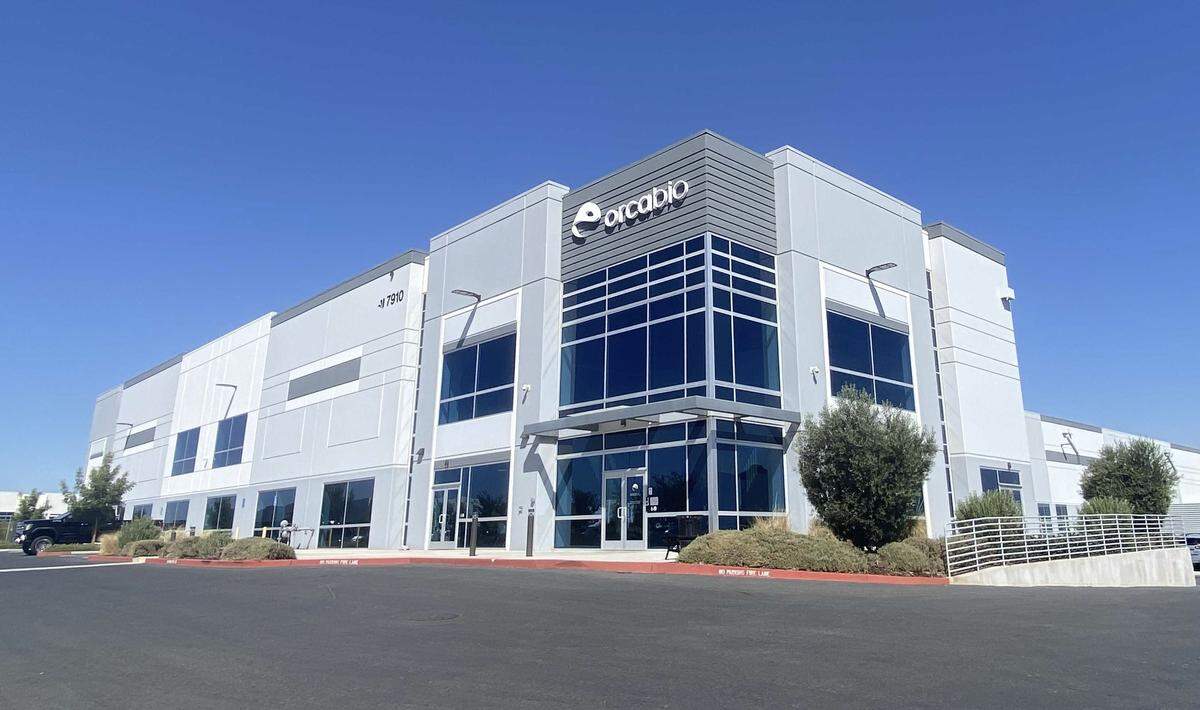
.jpg "Orca Bio’s site near Sacramento International Airport is seen in an undated photo. The Menlo Park-based company is scaling up manufacturing at the facility as it prepares to seek FDA approval for its blood cancer therapy, Orca-T.")
A Silicon Valley biotech company is scaling up its Sacramento County manufacturing footprint, in hopes of offering its blood cancer therapy to patients across the U.S.
Menlo Park-based Orca Bio spent the past few years building out a 100,000-square-foot manufacturing site in Metro Air Park, an industrial area near the Sacramento International Airport.
When patients need cell transplants, company leaders said, blood samples will arrive from the airport, or by car, from donors across the country. Employees — some in full gowns and goggles — will narrow the sample down to a targeted group, less than 1% of the original 100 billion cells. The process, the company claims, reduces the likelihood of future complications.
They have 72 hours to see the sample from the vein of the donor to the vein of the recipient. For a clinical trial, the samples were sent and received from hospitals across the U.S., from UC Davis, to Emory University in Atlanta, to Cornell University in Ithaca, New York.
“It’s multiple acts of logistics,” said Jeroen Bekaert, Orca Bio’s co-founder and president.
The company was founded in 2016, out of a Stanford University lab, Bekaert said. When it came time to plan for larger-scale manufacturing of Orca-T, leadership felt they couldn’t contract that process out, and risk losing control over quality.
“In cell therapy, the product is the process,” Bekaert said. “We felt we couldn’t outsource the manufacturing.”
In 2022, drawn to the area for its proximity to UC Davis and Sacramento’s airport, Orca Bio announced plans to build a facility in Metro Air Park.
“For us, it’s long-term,” Bekaert said. “I think that has been one of the better decisions we’ve made so far.”
Today, about half of the company’s 280 employees are in the Sacramento area, Bekaert said. And as the company prepares to apply for regulatory approval, it’s building up its workforce now.
The company, in March, released results of a Phase 3 study comparing its treatment to the traditional transplant methods, in which it found, among 187 patients, lower rates of graft-versus-host disease and higher rates of survival after one year for those treated with its therapy. The therapy, Orca-T, is intended for three high-risk blood cancers: acute myeloid leukemia, acute lymphocytic leukemia and myelodysplastic syndrome.
They plan to file a Biologics License Application later this year. Bekaert believes they could receive Food and Drug Administration approval in the first half of 2026.
The company is working on a second-generation product, Orca-Q, which they believe will have an improved safety profile.
This story was originally published September 18, 2025 at 11:52 AM.