In reversal, Blue Diamond to continue some operations at Sacramento almond plant
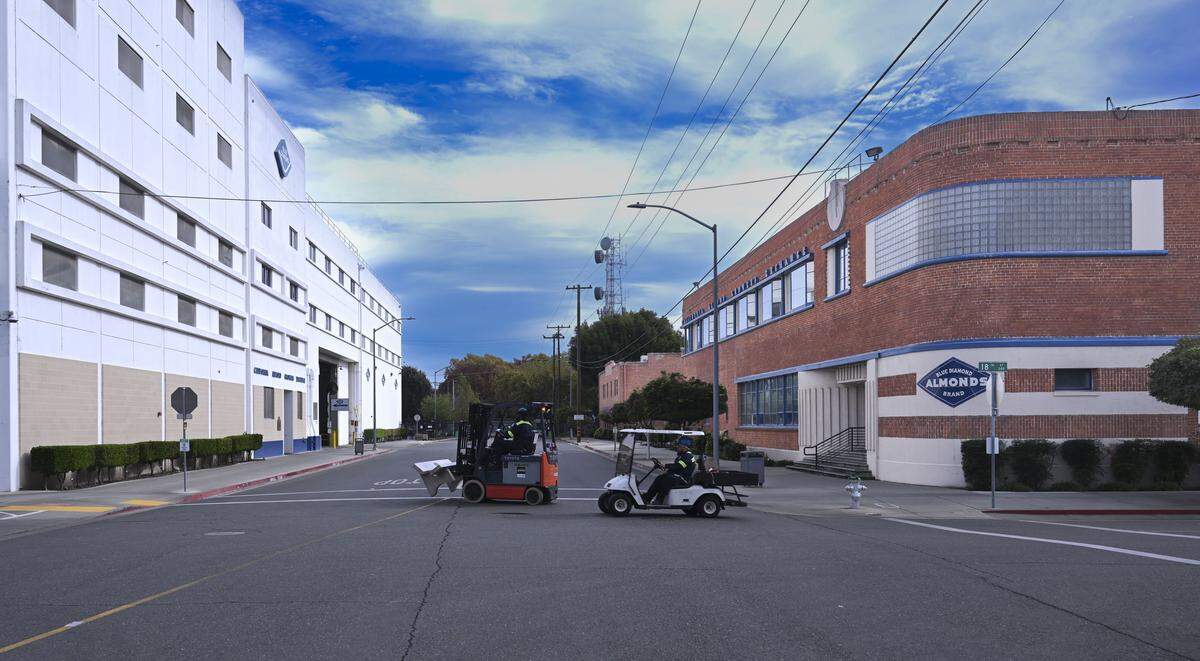
Blue Diamond will continue a portion of its almond-processing operations at the cooperative’s 53-acre midtown Sacramento campus, executives said Wednesday, though a majority of the work and hundreds of jobs are still slated to move south to facilities in Turlock and Salida.
Blue Diamond still plans to sell a large portion of the property, primarily on the south side of the campus, while retaining the processing and storage facilities for in-shell almonds on the north side.
The cooperative announced plans last summer to wind down operations and sell the entire real estate of the sprawling midtown plant, where it has processed almonds for more than a century.
The in-shell almond operations were always expected to wind down last, in 2027, said Jeff Hatfield, Blue Diamond’s chief global supply officer.
“Right now we’re not in any rush to move. We’re going to take advantage of using that space while we have it,” Hatfield said in an interview Wednesday.
The company estimated that the in-shell almond operations will support about 90 jobs. The plant as of last summer employed more than 600 total.
It’s unclear precisely how much of the real estate Blue Diamond will now retain. Hatfield said that will depend on the cooperative’s negotiations with buyers.
“I don’t know that we have an exact number right now,” he said. “It’s a little early for us to predict.”
Since last summer, Blue Diamond leaders have said the aging midtown campus has become difficult to maintain, and the layout is inefficient, with a six-story main processing building and a decentralized layout. Consolidating into other sites, they have said, was viewed as the clear financial choice on behalf of nearly 3,000 almond farmers who collectively own and make their livelihoods through Blue Diamond.
But the in-shell operations, Hatfield said, are largely contained to one area, in a more efficient configuration.
All other parts of the cooperative’s Sacramento manufacturing will close as planned. The remainder of the manufacturing operations are expected to wind down by the end of the year, Hatfield said.
The cooperative has been working with the Sacramento Employment and Training Agency to arrange job fairs and training for employees who work in areas of the plant slated for closure. Some have taken jobs at Blue Diamond’s plants in Turlock and Salida. Others have found jobs elsewhere or retired.
Hatfield said the cooperative aims to lease back its headquarters site, one of the smaller buildings on the campus, from any buyer.
“It may not be there indefinitely, but as a developer acquires the land, it’s going to take them time to kind of get things moving,” Hatfield said. “So our intent is to keep things as normal as we can, to stay in the main office building and keep our Sacramento headquarters right where it’s at.”
The cooperative will likely have to move its headquarters in the future, Hatfield said. Blue Diamond is committed to keeping its headquarters somewhere in Sacramento, said Chief Government and Public Affairs Officer Alicia Rockwell.
The cooperative’s gift shop, a staple among Sacramento locals for 42 years, will close this month. Its last day will be April 24, Rockwell said.
California’s in-shell almonds are largely sold as exports. One of the larger markets is India, Rockwell said, where in-shell almonds from the U.S. are taxed more favorably than shelled almonds because of the jobs supported by shelling operations.
When in-shell almonds arrive at Blue Diamond in shipments from growers, they are cleaned and graded by machines that remove sticks and other stray material, then packed in 50-pound bags for shipment overseas. To keep that portion of the plant running, the cooperative will need warehouse workers, processing line operators, quality assurance employees, maintenance and security.

The Blue Diamond site is a vestige of the food processing industry that dominated in Sacramento through much of the 20th century. The cooperative built its first almond-processing plant at the corner of 19th and C streets in 1914.
Though some of the former canneries and plants across the city were razed, several have been adapted for other uses. The Libby, McNeill & Libby cannery at the corner of Alhambra and Stockton boulevards is now a commercial center. The Globe Mills building at 11th and C streets was converted into apartments.
The Blue Diamond campus is a large swath of real estate in one of the city’s central neighborhoods, New Era Park, where it abuts residential blocks of midtown and the suburb-bound 16th Street corridor.
Local leaders have pondered a wide-ranging possibility of future uses for the property, from textile manufacturing to education to retail.
This story was originally published April 8, 2026 at 4:13 PM.