Why officials want MLB in West Sacramento: The financial and practical arguments
After 26 years as a host to the minor-league River Cats — and now the major-league A’s — West Sacramento aptly markets itself as “the baseball side of the river.” But local officials’ inclination to site a Major League Baseball expansion campaign there is based on more than the city’s track record with the sport.
Due to quirks of history and property tax law, a special tax increment district to fund a major project — like a baseball stadium — would generate more revenue on the west side of the Sacramento River. And with a permanent major-league team in West Sacramento, the cities’ shared riverfront would be bookended by two major sports and entertainment venues, said West Sacramento City Manager Aaron Laurel.
While West Sacramento has grown into a large enough city to pull off major projects, Laurel said, it’s still small enough to be nimble.
“We can make this the top priority,” Laurel said, “and move quickly.”
MLB Commissioner Rob Manfred has said he wants a process in place to expand the league by the time he retires, expected in 2029. Sacramento Mayor Kevin McCarty has previously said that he and West Sacramento’s mayor plan to launch a campaign for an expansion team this spring. McCarty said this week that leaders would launch an official effort in the “near future.”

The region will be competing with cities across the country that have made headlines for years with efforts to court the league.
But local officials were energized by the Athletics’ three-year commitment to the region, believing it could serve as an audition of sorts. And Kings owner Vivek Ranadivé pitched Manfred on Sacramento during a visit to Sutter Health Park ahead of the A’s arrival last year. Manfred responded that he would not “forget the 10 million people,” referring to the population of the greater region, The Bee previously reported.
McCarty has backed West Sacramento as a site for an expansion bid. He said Wednesday that his support was based, in part, on groundwork the city has laid.
“They’ve already been leading on this,” McCarty said. “So it was easy for us to fall in place and support them.”
‘A very different environment’
Cities, Laurel said, typically negotiate their shares of property tax when they are formed. In the 1980s, the early leaders of West Sacramento — what was a historically industrial area, then struggling with disinvestment and infrastructure woes — had reason to negotiate with Yolo County for a higher percentage of the property tax revenues.
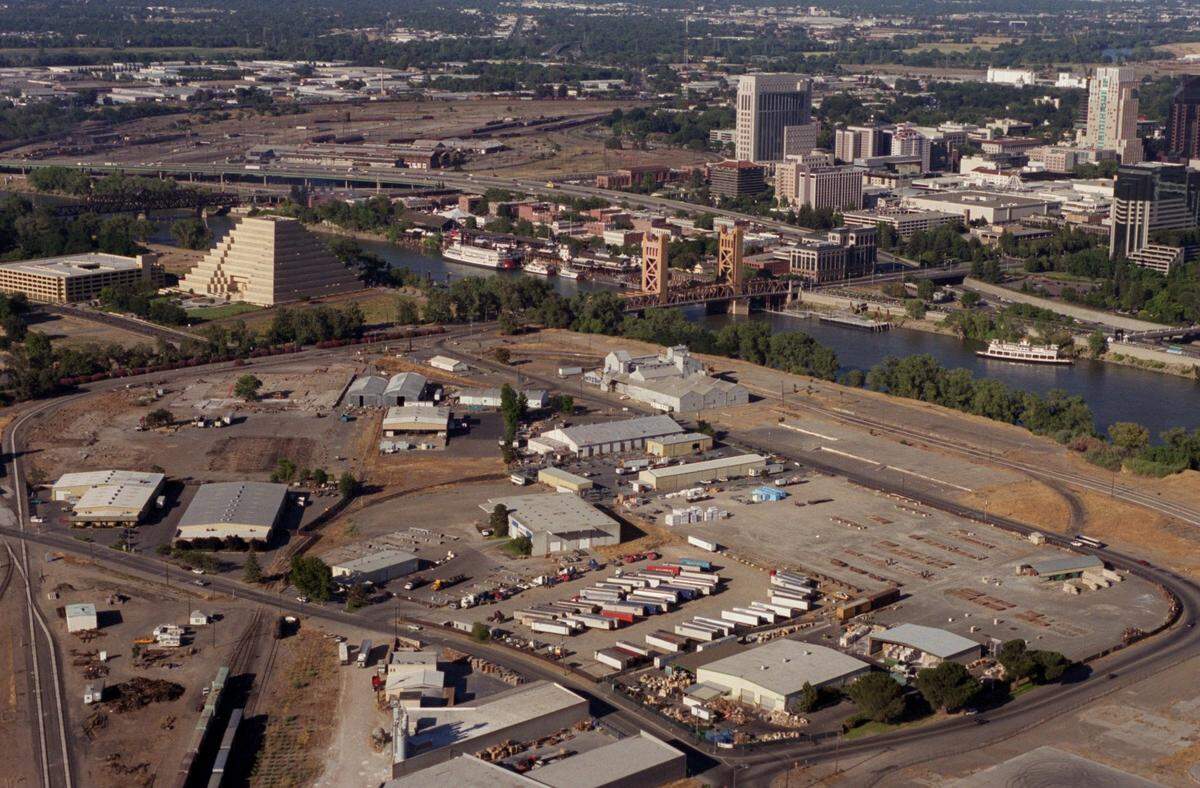
Cities that incorporated after West Sacramento tended to get lower shares of property tax, as those revenues became scarcer in the “post-Prop. 13 environment,” Laurel said, referencing the 1978 initiative that capped annual increases.
“The counties would bargain harder,” Laurel said. “But at our time of incorporation, it was a very different environment.”
Some of the most common mechanisms that California cities use to encourage major developments — for instance, an enhanced infrastructure financing district — use increases in property tax revenues to repay developers’ costs for building infrastructure, such as streets and sewer connections.
So for a city, access to a larger portion of the property tax dollars can lend more powerful incentives.
West Sacramento’s property tax share is more than 40%, Laurel said. Until 2037 the effective rate will be closer to 28%, as the city pays off debts related to a separate, previous set of incentives.
In Sacramento, the average is around 21%, according to a city spokesperson, though the exact rate varies across the city.
The Bridge District’s success
Local leaders also cited the significant work the city has done over the decades to build out once-industrial areas with housing and mixed-use development.
Mayor Martha Guerrero pointed to the transformation of the city’s riverfront as an example.
“I think we have a success story, over the past few years, of making good things happen in West Sacramento,” Guerrero said. “I really think Major League Baseball wants to see a reliable, steady local government who is ready to get to work, and has the experience to do that.”
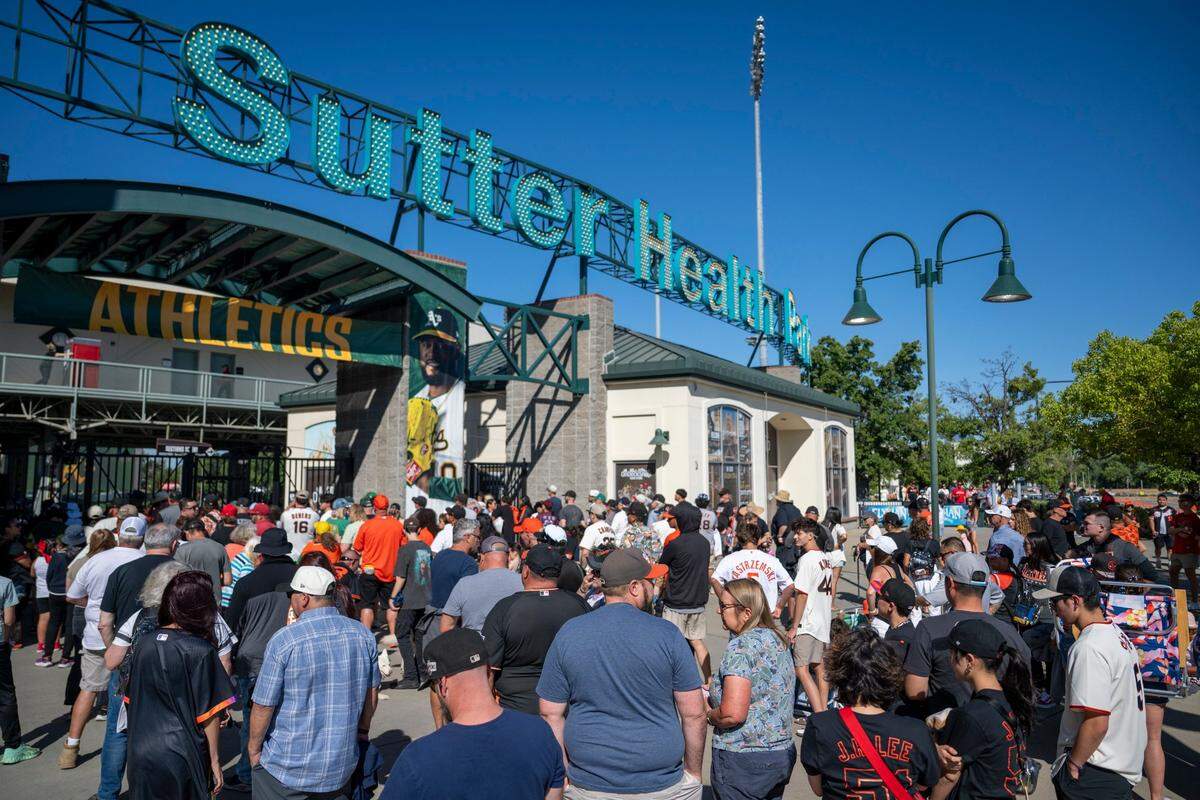
The city has long planned its Bridge District for the types of developments that are built around major sports venues, Laurel said. The area around Sutter Health Park has more flexible entitlements that would allow for the construction of entertainment, housing, hotels, retail and office space. The area could accommodate more than 10 million square feet of development, he said.
In West Sacramento, McCarty said, the combination of interested property owners and existing financing infrastructure, “puts them way ahead, if you’re evaluating the two locations.” The benefits for Sacramento’s downtown restaurants and hotels will be strong, regardless.
“It would be a big boon to both cities,” McCarty said. “We’re in the beginning stages. And we’ll be ready to compete.”