Bosch’s Roseville semiconductor plant begins early stages of manufacturing
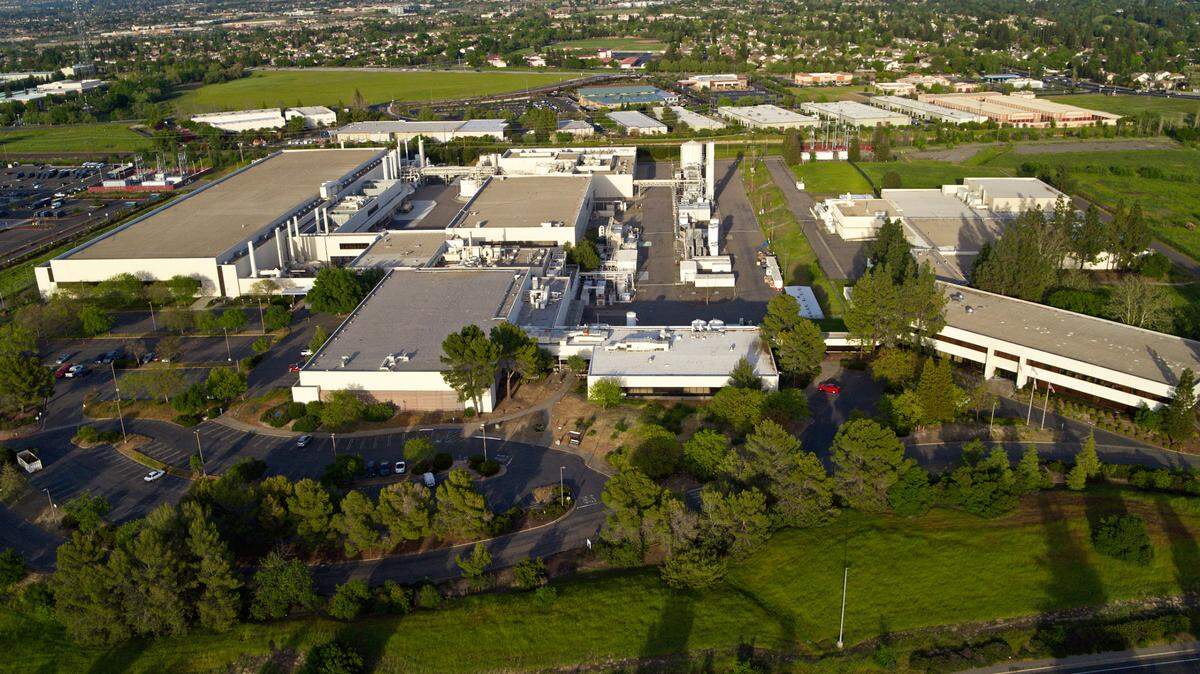
The industrial giant Bosch announced Monday that it has begun producing samples of the company’s semiconductors at its new plant in Roseville, setting up a large, new manufacturing presence in the region and delivering a mark of progress for U.S. leaders’ attempts to onshore chip production.
The plant, which Bosch took over as part of its acquisition of TSI Semiconductors in 2023, required years of renovations, and is bolstered by hundreds of millions of dollars in federal funding. Bosch plans to begin larger commercial production this year, according to a news release.
The company searched globally for a new site, said Christian Foerster, senior vice president and Roseville plant manager, in an interview.
The opportunity to take over an existing chipmaking facility, with hundreds of industry-trained workers, sold the company on the site at 7501 Foothills Blvd.
“Of course, it was a lot of investment. We needed to shut down production,” Foerster said. “But the people are on site.”
The facility will be used to produce silicon carbide chips that are used in electric vehicles, industrial sites and data centers.
Bosch has invested nearly $2 billion in the plant. After the 2023 acquisition, the company offered jobs to the plant’s 222 employees, and nearly all agreed to remain on the payroll and undergo training and perform plant maintenance while waiting for production to resume. The site’s workforce has since grown to more than 300.
Foerster said the company occupies about 80% of the property, leaving room to expand.
Having a manufacturing site close to customers, like the West Coast’s electronic vehicle makers, will serve the company well, Foerster said. That’s not only because of the possibilities to work with customers on development or respond quickly to quality issues, but also in light of the pandemic-era chip shortages that roiled the auto industry.
“We are so close,” Foerster said. “We have the same time zone. This is a big advantage.”
Foerster said that, compared to other semiconductors, silicon carbide chips are more efficient and can increase EV driving distance by up to 10%.
The company said it had reached an agreement for up to $225 million from the Department of Commerce. The Department had announced a non-binding, preliminary deal for that amount in late 2024, but on Monday the company said in a news release that it had reached a final agreement.
The funding came through federal CHIPS Act legislation, which set up incentives for companies to onshore chipmaking to the U.S., which had manufactured a declining portion of the technology in recent decades. Rep. Doris Matsui, who co-authored the initial legislation in 2020, said Bosch’s announcement was “exactly what we had in mind — transformative investments that create lasting economic anchors, reignite domestic manufacturing, and ensure a resilient supply chain.”
Bosch was also awarded a $25 million tax credit from the Governor’s Office of Business and Economic Development, the company said. Bosch plans to invest up to $7.5 billion in its U.S. operations over the next five years, according to the news release.
In the years leading up to Bosch’s acquisition of the site, Barry Broome, president and CEO of the Greater Sacramento Economic Council, said there was speculation that TSI Semiconductor may close, and at the time he feared the region would be tasked with finding an entirely different use for the large manufacturing site.
“We kept an eye on them for a long time,” Broome said.
The acquisition by Bosch was a significant win, he said. The plant will offer good wages and raise the region’s reputation as a home for business — and manufacturing specifically. Given Bosch’s size and position in the industry, he suspected newer, emerging companies would look to its decisions as an example.
“You might not be able to manufacture in some other regions in California,” he said. “But you can in ours.”
This story was originally published July 13, 2026 at 8:31 AM.