Sacramento could ban owners from running Airbnbs in homes they don’t live in
AI-generated summary reviewed by our newsroom.
- Sacramento could bar short-term rentals in homes where owners don't reside.
- Policy aims to reduce party house complaints and boost long-term rental supply.
- New rules may expand ADU use but curb non-owner short-term rentals citywide.
The city of Sacramento could soon ban short-term rentals such as Airbnbs in houses and apartments where the owner does not live.
Of the 547 short-term rental permits the city issued last year, about 60% are for residences where the owner does not live, according to a city staff report. That’s up from 20% in 2019.
City staff recommended the changes in order to decrease neighbor complaints regarding short-term rentals, such as so-called party houses, and also to increase the supply of long-term rentals to alleviate the city’s housing crisis, the report said.
Pete Coletto, the city’s finance director, said he believes the change would help reduce noise complaints.
“If I’m the owner of property and I’m living there, I’m going to be more vigilant about what my short-term rental guests are doing,” Coletto told the council’s Law and Legislation Committee on Tuesday. “If I’m an investor living in San Francisco and operating a short-term rental (in Sacramento), I don’t really care as much about the property as if I lived there and have to interact with my neighbors ... We’re hoping to cut down on people renting out party houses and things like that that disturb the neighborhood.”
Currently, if a homeowner does not primarily live in the residence, or it’s a detached ADU in the backyard, they can only rent it out for a total of 90 days a year. The change would make it so they can rent out ADUs year-round, as long as they live on the same property, in the main house for example.
Staff hope that change would persuade more people to take on the cost burden to build ADUs in the first place, which could eventually turn into long-term rentals and help alleviate the city’s housing crisis, Coletto said.
To keep up with its goal of building 45,580 new housing units by 2029, the city would have had to issue 5,698 new housing permits last year, according to a report the city released in April. It issued 2,387.
In addition, under the change, people would not be able to get a short-term rental permit unless they own the property, not just if they rent it. People would still be able to host short-term rental guests in their primary residences when they are out of town, or rent out rooms in houses they live in.
Councilmember Roger Dickinson said he had concerns about allowing more ADUs to be used for short-term rentals year round.
“The net effect of this proposal, it seems to me, is to enlarge the number of people and places that can be rented out on a short term basis throughout the year without limitation,” Dickinson, who represents North Sacramento, said during the meeting. “My observation of the comments I’ve heard mostly come from neighbors in particular who say, ‘that (residence) is always rented out, they might as well be running a hotel.’”
On the other side of the spectrum, Councilmember Caity Maple wanted to ease the staff’s proposed restrictions a bit. She wants to allow people who own duplexes, triplexes and fourplexes who live in one of the units to use the other three as short-term rentals year-round.
“Things like traveling nurses … if we don’t crate pathways to do that they’re going to be taking up other units of people who are potentially looking for a long-term rental,” Maple, who used to have a short-term rental in North Oak Park, said at the meeting.
What do Airbnb owners say?
Heidie Henriksen, co-founder of the Association of Short-Term Rental Owners and executive director of VRNation, said her organizations support the ADU change but oppose the change regarding primary residence.
“VRNation appreciates the city’s recognition of the value short-term rentals bring, particularly with the proposal to allow ADUs to operate year-round,” Henriksen said in an email. “This is a productive step that supports housing flexibility and creates additional income opportunities for homeowners.
“However, restricting short-term rentals only to primary residences is overly limiting and disregards the many responsible owners and operators who contribute to Sacramento’s tourism economy while maintaining well-managed, professionally operated properties. Sustainable policy should strike a balance that protects housing without unnecessarily eliminating legitimate small business activity that benefits both residents and local businesses.”
Mairin Haley, a real estate agent who owns a short-term rental in midtown, said she is also against the change regarding primary residence. Haley lives in Carmichael and hosts short-term renters in one of three units in her triplex on F Street in midtown, she said. She will no longer be able to do so if council approves the change, though she will still be able to host those looking to rent between 30 days and a year, such as medical professionals, she said.
“You can only do 90 days if you don’t live on site,” Haley said. “That’s already pretty restrictive so I’ve been abiding by that ... I’m always for property rights, so I don’t think they should be enclosing anything further. I used to be a broker in San Francisco ... the more restrictions, the more expensive housing becomes.”
Spokespeople for Airbnb and VRBO did not immediately respond to requests seeking comment.
How many Airbnbs are in Sacramento?
The city started issuing permits to short-term rentals in 2016, the staff report said. In 2019, the city issued 271 short-term rental permits. That’s increased over the years: the city issued 547 in 2024. It has issued 83 permits so far through March 28 of this year.
The city posts addresses of short-term rental permits, along with cellphone numbers for the managers, on a city web page. The map shows many rentals in downtown and midtown, where some tenants say in recent years landlords have been raising rent annually up to 10%, depending on inflation.
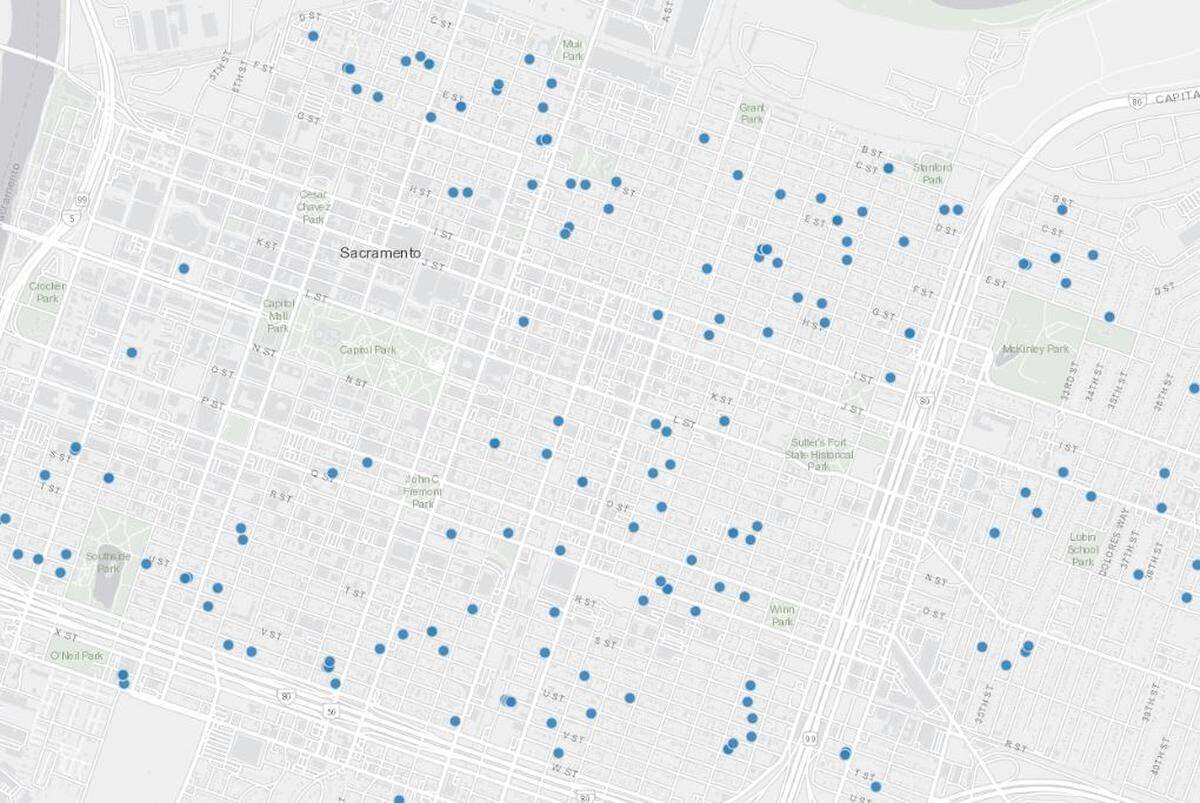
Neighbors of short-term rentals sometimes check the webpage and report to the city that a short-term rental is operating without a permit, the staff report said. Dickinson said he wants the city to investigate that issue further.
If the council approves the changes, current permit holders would not be immediately impacted, Coletto said. However when it comes time to renew their annual permits, they would be subject to the new rules.
The full council will consider the item at a future council meeting.
This story was originally published June 25, 2025 at 11:34 AM.