Inside Sacramento area’s premier French country-style home with Folsom Lake view
AI-generated summary reviewed by our newsroom.
- Estate blends durable materials, craft and art to prioritize long-term value.
- Single-story layout centers on one great room for large family gatherings.
- Listed on 10.8 acres; extra 5 acres owned separately, plus water backup.
The drive onto Ryan Smith’s family estate in the Sacramento foothills begins by crossing a narrow bridge over a creek, and continues winding up a long driveway lined with mature olive trees.
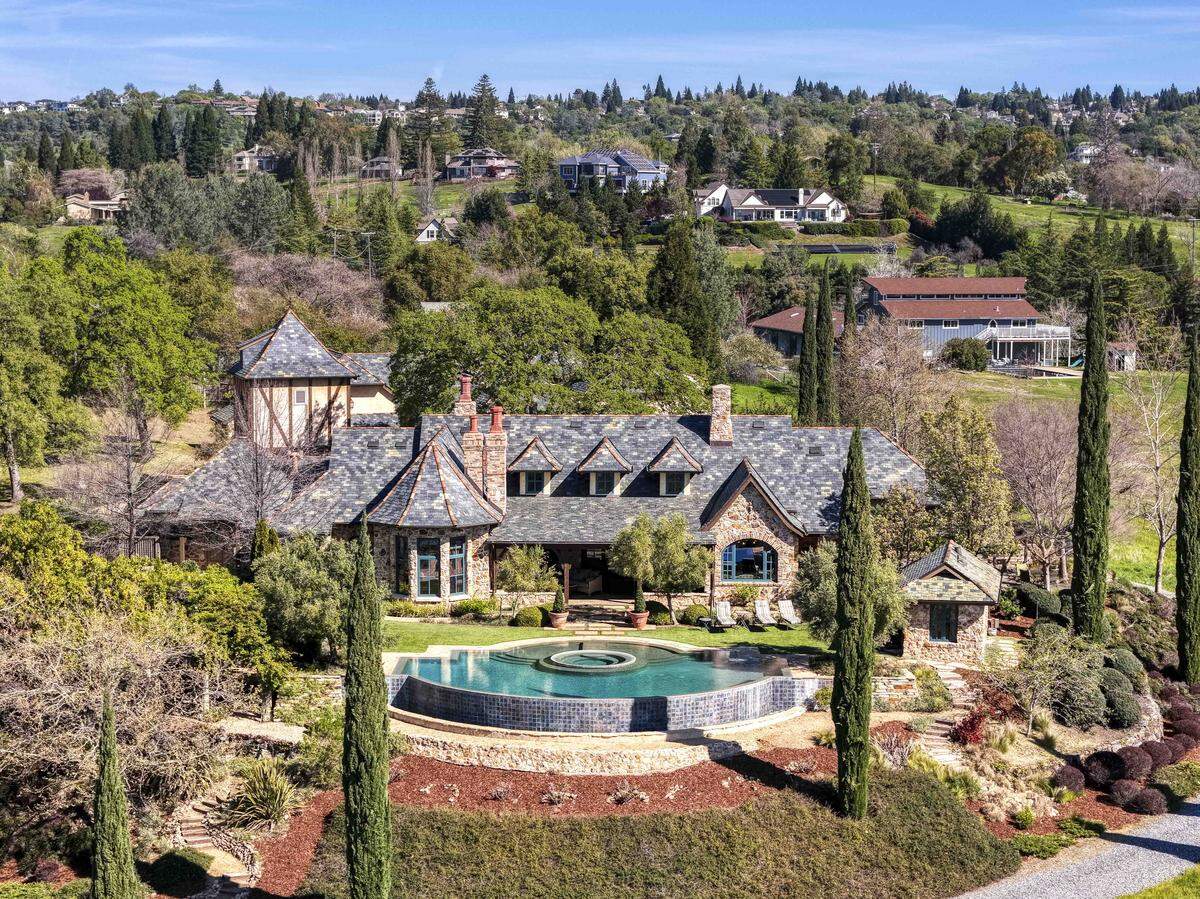
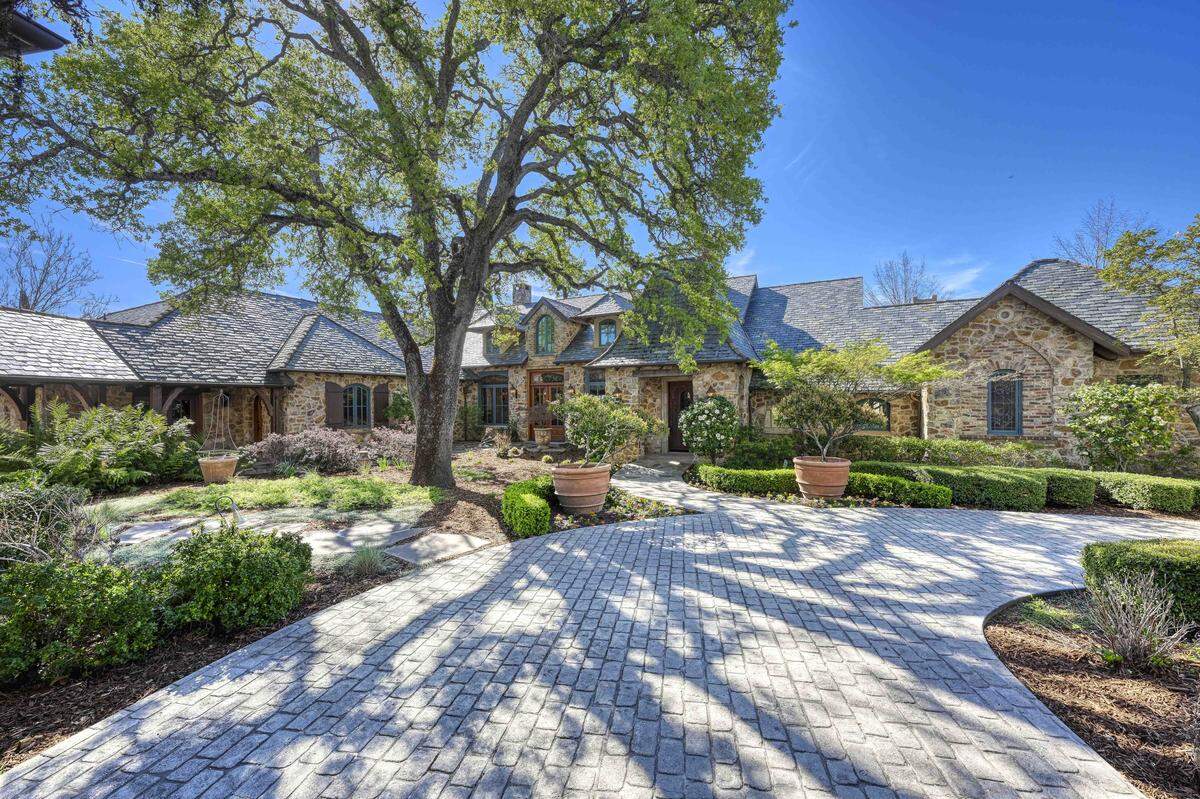
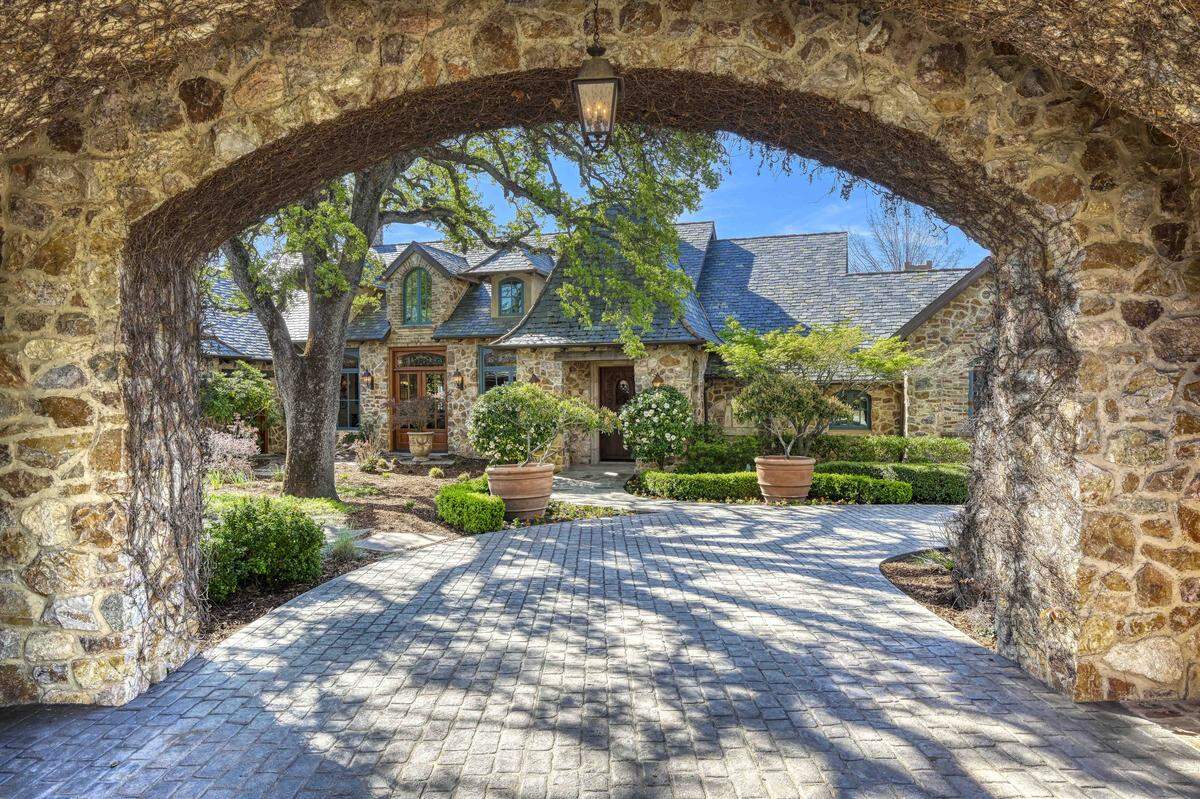
The storybook entrance ends at a brick motor court in front of his French countryside residence perched on a ridge overlooking the North Fork of the American River and Folsom Lake.
The home’s slate roof, copper gutters and rock-solid foundation signal a different kind of luxury — one rooted less in square footage and more in construction, craftsmanship and permanence. The estate was the passion project of Ryan’s father, Auburn builder and developer Tom Smith, who spent years fine-tuning every detail.
“French country homes, they would build them to last forever — like castles,” Ryan Smith said while taking a Sacramento Bee reporter on a recent tour. “His whole life, he wanted a stone house with a slate roof, because he hates maintenance. He’d say, with stucco or wood siding you’re always maintaining. So, here, there’s zero maintenance outside.”
The Smith property at 2581 Shirland Tract Road in South Auburn is tucked behind double gates in a small enclave of five homes. Auburn is a historic Sierra Nevada foothills town about 30 miles northeast of Sacramento, known for its Gold Rush roots, walkable Old Town and outdoor recreation.
Built in 2006, the 4,494-square-foot, single-story manor on 10.8 acres is listed for $4.45 million. It has three bedrooms — including an elegant primary suite with a deep soaking tub overlooking a private garden through picture windows — and five bathrooms. Adjacent to the main house is a 780-square-foot detached studio apartment for guests.
Pool first, oak tree stays
In many luxury builds, outdoor spaces are the final flourish. Here, the dramatic backyard infinity-edge pool and spa came first — and helped determine how everything else would sit on the land.
“The first thing built was the pool,” Smith said. “He said, ‘I’ll put the pool there first.’”
Then came the decision to keep a large, majestic oak tree — an act of preservation that became a design directive.
“He brought the architect and designer in and said, ‘We need to design the house with this oak tree and with the pool,’” Smith said. “That was his starting point, and then he built it around that.”
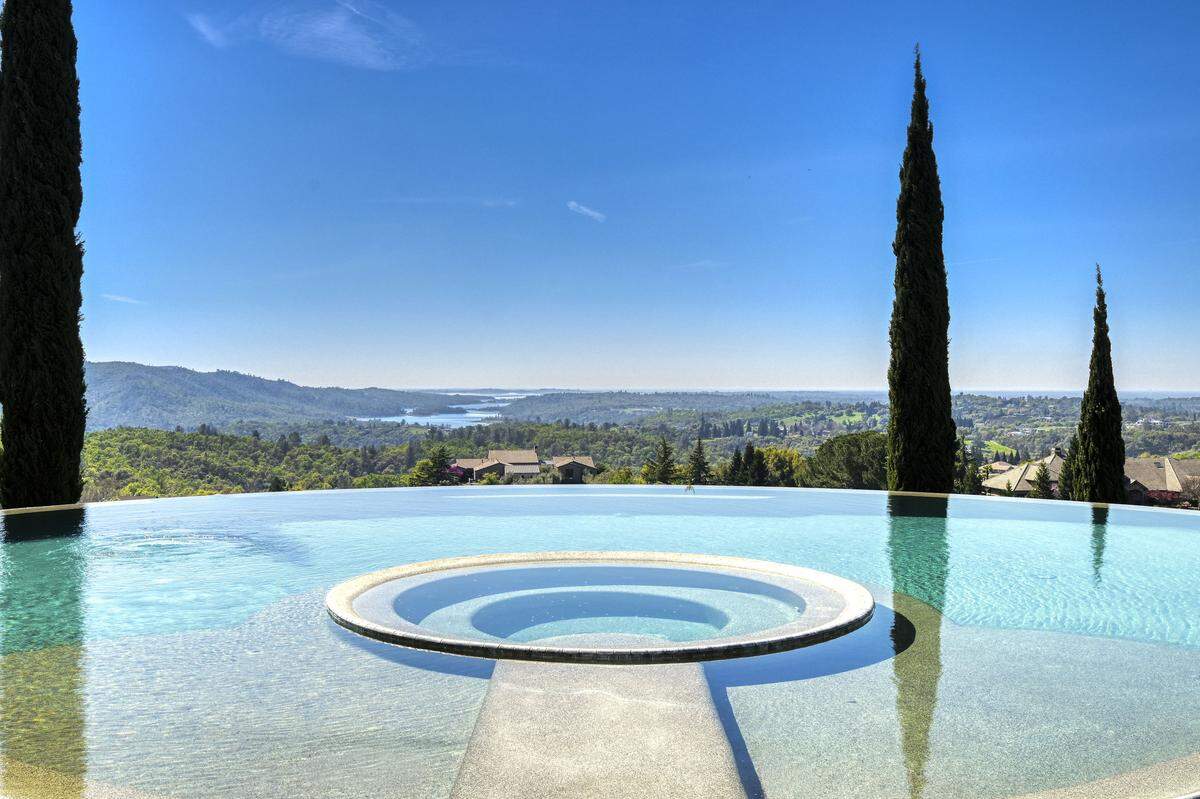
The payoff is immediate: the zero-edge pool, with the spa centered like a jewel, throws a straight horizon line toward the river canyon and out to the lake. On clear days, the Sacramento skyline is visible to the west; to the east, the Sierra Nevada rises beyond the foothills.
A year-round stream runs through the property and feeds a pond, adding another layer of motion and sound to the peaceful setting.
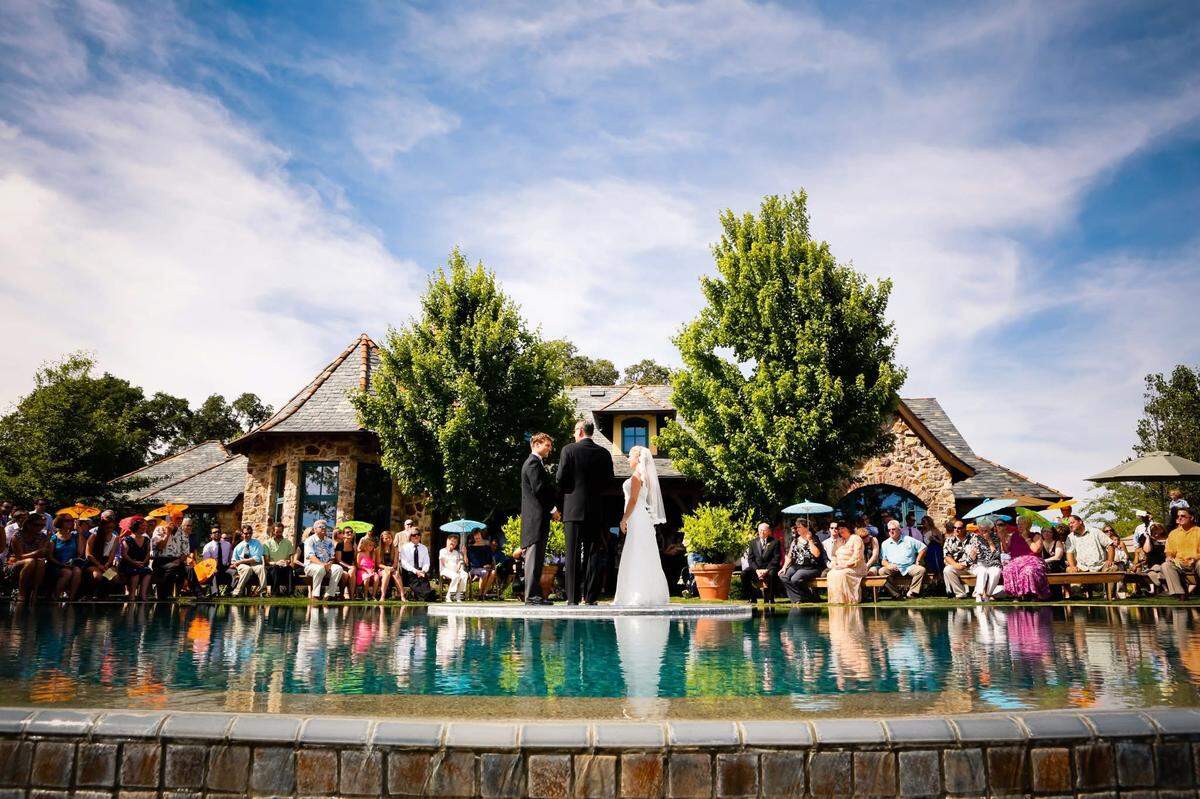
Smith doesn’t tell the story like a seller reciting upgrades. He tells it like a son remembering how a property came together in real time, project by project — and celebration by celebration.
“They bought this property in 2002,” Smith said. “I was actually in college — I was at Long Beach State getting my engineering degree — and I’d come back and help him build it when I was away from college. So I didn’t grow up in the house (but) we lived down the street. Originally, we’re all from Auburn.”
Home built to endure
The estate reads like a long-term commitment — one that started with an idea of what a house should endure. The exterior is a showcase of materials chosen for longevity: massive natural stone, a slate roof, custom beams, fine architectural detailing, and copper gutters and downspouts. The message is clear: This is a home meant to weather decades of sun and seasons, not one designed to be repainted every few years.
In a region where contemporary farmhouses, Tuscan villas and modern glass boxes tend to dominate high-end construction, the home’s French country roots feel intentional rather than trendy.
“(My dad) originally did custom homes down in Newport Beach,” Smith said. “And my mom, she’s French, and they really liked the clean, simple, single‑story lines of a French country house. You just don’t see them around here that much. It was a unique design that he liked, just because it was rare. Nobody ever builds them.”
Listing agent Nick Sadek of Nick Sadek Sotheby’s International Realty said the aesthetic is built to outlast fashion cycles.
“It’s timeless,” he said. “People like French country — they’re going to still do French country. It doesn’t seem like it goes out of style.”
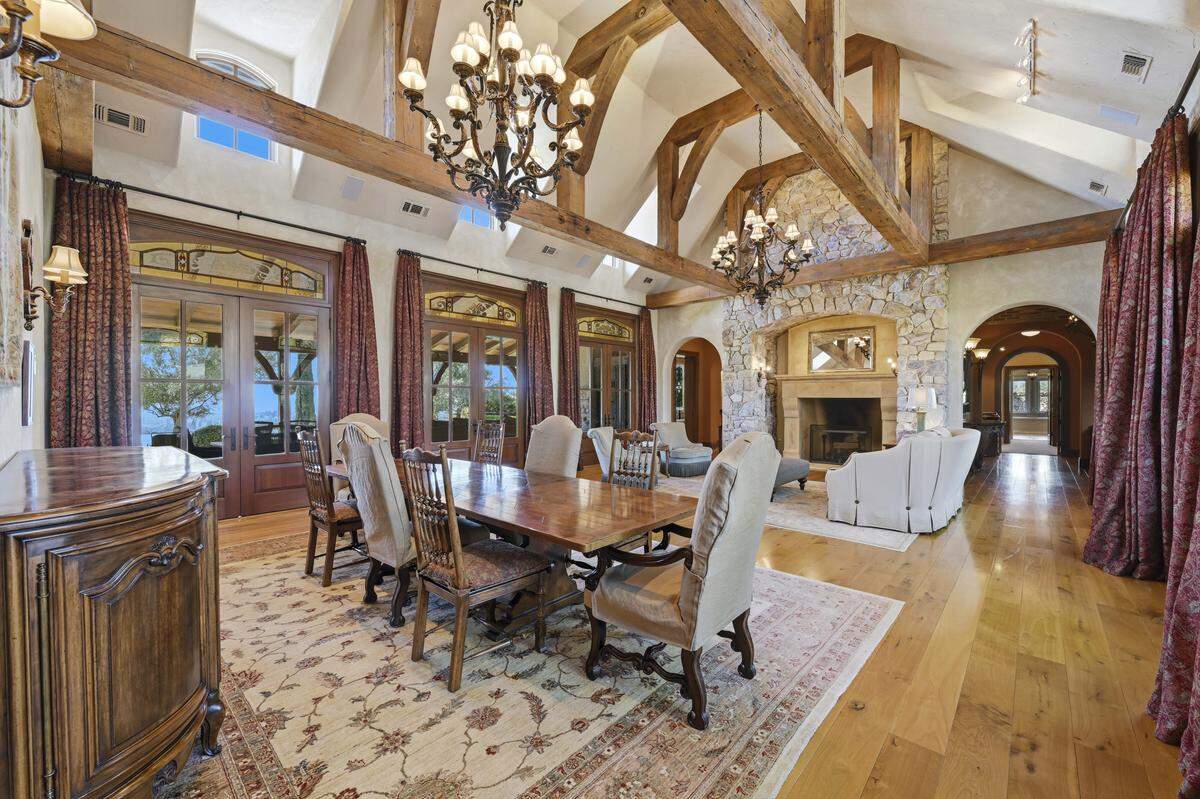
Single-story homes can sometimes feel segmented — rooms strung along a hallway, living areas separated from kitchens, entertaining spaces split into formal and informal zones. Here, the layout funnels life toward one central gathering space. That was the point, Smith said.
“He wanted one room — just one room where everybody gathers,” Smith said. “My mom’s one of eight, so I have like 32 cousins on my mom’s side, so they’d all come up at Christmas time. You got to have a room big enough for everybody.”
The heart of the house is the soaring great room — Ryan calls it the “great hall” — where massive stonework frames a fireplace and salvaged railroad beams span the ceiling. The main living areas all lean into warmth and craft — French white oak floors, Dutch doors, a library or office space, and six fireplaces that spread the glow through the home’s wings.
Massive beams repurposed
Look up in the great hall and the ceiling becomes part of the backstory. Smith said the beams weren’t in the original plan — until a demolition project offered something with history.
“The beams were an afterthought,” he said. “The beams were from an old railroad building… they were demolishing the railroad building, and one of his contractor friends says, ‘Hey, they’ve got these old beams with the original bolts and ties for the railroad. You want to come down and repurpose them?’”
What followed was equal parts scavenger hunt and craftsmanship.
“So we went down there and grabbed them,” Smith said. “All these beams are all one piece; they’re repurposed. You can see all the knots and holes from the nails from the old railroad building. You had to cut everything with a chainsaw, because there’s nothing big enough, tool‑wise, to cut them.”
In the Provencal-inspired kitchen, the French country look is as much about craft as it is about high-end appliances. A Viking range and dual sinks anchor the space, paired with cream-colored marble flooring, but the refrigerator disappears into a hand-painted encasement.
“This is a refrigerator — nobody ever realizes it — but he wanted an encasement for a refrigerator,” Smith said, running a hand along the paneled front. “Usually you just put a panel and call it a day. He goes, ‘No, no, we’re going to bring in an artist.’ They found an artist in Grass Valley and said, ‘Here’s a blank slate. Just do an art piece that you want on it.’
“It took him a little over two weeks,” Smith said. “Same with the (kitchen’s) fireplace — it was originally just plaster. They wanted texture and something artistic, so they brought in a lady from Grass Valley and she did all the vine work.”
The kitchen island is a single, seam-free slab of elm wood — no typical marble counter here — sourced from an unlikely place: a fallen downtown Sacramento tree during a big storm. Smith’s father heard about the fallen trees through arborist friends.
“This is from a tree in downtown Sacramento,” Smith said. “He didn’t want any seams. They went down there and sliced a slab for all one piece.”
Built by contractors and artists
For Smith, the pattern repeats: contractors for the bones, artists for the character.
“For the most part, you obviously have contractors that build stuff, but he wanted to bring in more artists to do all the little pieces around the house,” he said. “That’s what really makes it unique — it’s a combination of using a contractor, but also an artist.”
Co-listing agent Debra Evans of Nick Sadek Sotheby’s International Realty put it simply:
“All of the fixtures and lights in the house are art,” she said. The family found the furnishings in Carmel, Monterey and other California cities.
The front door is a true masterpiece — a five-inch-thick slab of hand-carved oak adorned with vine-and-flower motifs around a beveled window. Weighing nearly 600 pounds, it took six months to build, Smith said, and required four heavy-duty hinges to hang. The cost: $28,000.
Above the heavy wood door, a small flame burns continuously inside an enclosed gas lamp, inspired by a WWI-era French tradition. Families would leave lights in windows or over doors during battles, such as Verdun, as a sign of hope and remembrance — a tradition that later became a lasting tribute to France’s sacrifice and alliance.
Inside the house, Evans pointed to the livability of a true single story.
“It’s really easy to get around — you’re not negotiating any steps,” she said. “A true single‑story like this is hard to find, especially with this level of detail.”
From the ridge, the estate’s views not only stretch to downtown Sacramento but as far as Mount Diablo, too. Smith said his father searched for years for that kind of visual payoff.
“He had been looking for many years, and the biggest thing for him was the view,” Smith said. “He just wanted a view. He said, ‘Once I can find the view, then the house — I know what I want to do.’ And he wanted to stay in Auburn.”
To protect that extraordinary view, the family bought five acres of neighboring land — and they didn’t build on it, simply to keep the horizon open.
That additional acreage isn’t included in the listing price, but Smith said the buyer will get the first chance to buy it.
Double-barrel water tower
In the foothills, luxury often means thinking about infrastructure as much as finishes. This property has a private well and septic, plus a backup water storage-and-treatment setup designed for reliability, and keeping the landscaping alive in a dry year. The water tower’s attractive exterior design appears to be an extension of the other residences.
“This is just a water tower — it’s got two big storage tanks,” Smith said. “There’s a 5,000‑gallon up there and a 2,500, because we’re on a well. When you’re on a well, sometimes it doesn’t produce as much water as you need to use, so he built storage containers so you’d always have water if the well wasn’t keeping up,” he said.
The system includes filtration, UV treatment and a water softener, Smith said, and a separate storage container was meant to ensure the landscaping wouldn’t suffer if the well lagged.
The estate also has access to Placer County Water Agency ditch water for irrigation.
“(With) the PCWA ditch water — you’re allowed an inch and a half of that water for irrigation, farming, or if you actually wanted to put an orchard,” Smith said. “That’s important.”
A 10-acre foothill estate can swallow hobbies — cars, boats, tools, collections. Here, the property’s roughly 3,412-square-foot, seven-car garage complex includes an RV garage, a golf cart bay and custom vertical wood doors. Smith ties that capacity back to his father’s meticulous personality and appreciation of finer unique things.
“My dad was a hot‑rod fanatic,” he said.
At the $4 million to $5 million price point, buyers can shop views, acreage and square footage. What’s harder to recreate — especially with today’s labor and materials costs — is the level of craftsmanship and the sheer weight of the build, Sadek said.
“This is an expensive estate to build,” he said. “If you look at the copper downspouts, copper gutters, even the stone. Ryan was talking about the slate roof — this is a super‑expensive roof. Just the quality and detail that’s in the house, honestly, you don’t see that much. Even the big homes that we sometimes put on the market, they’re not built like this.”