
Congress wants to fix the Central Valley’s doctor shortage. Will these plans work?
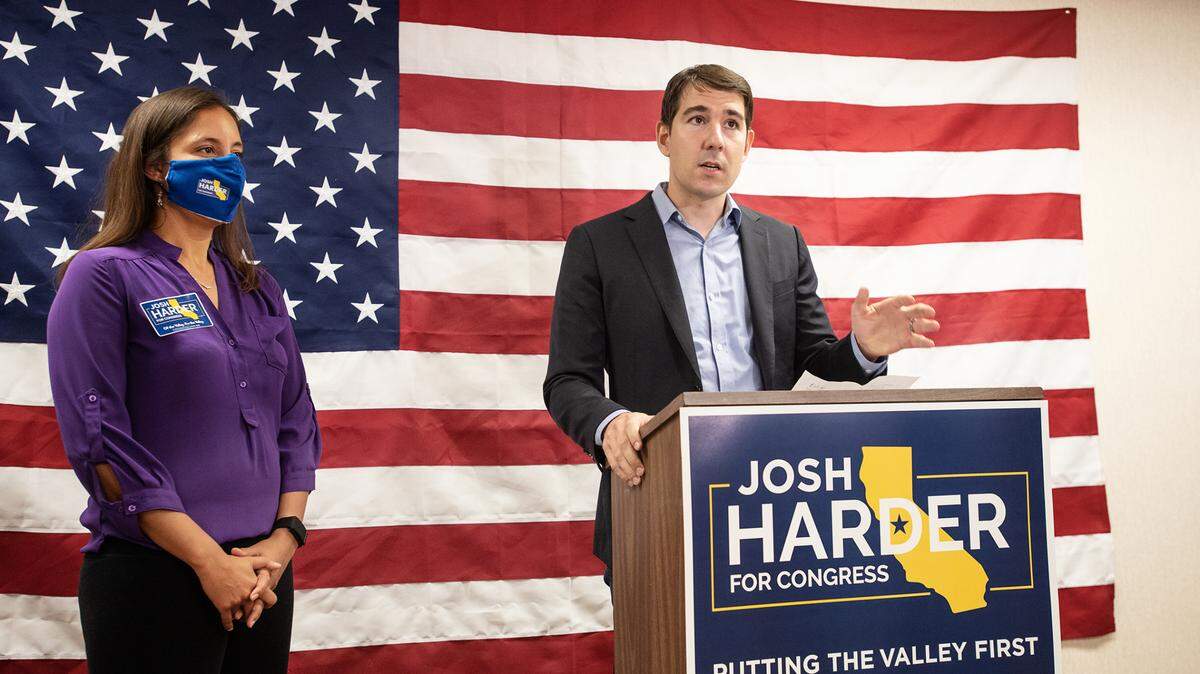
Two San Joaquin Valley lawmakers in the past week put forward new bills that aim to attract more doctors to the region, working to address a shortage of professionals that keeps patients waiting for care.
One proposal from Rep. Josh Harder, D-Turlock, would change a tax rule that lawmakers say tends to drive physicians out of California and Texas, allowing them to qualify for federal loan forgiveness programs.
Another by Rep. Jim Costa, D-Fresno, would provide $1 billion in funding for medical school construction, expansion and training in under-served communities that lack access to quality health care, hopefully encouraging doctors to stay in the area after they finish schooling.
The San Joaquin Valley has the lowest supply of physicians in the state, at a ratio of about 39 doctors per 100,000 residents, 22% lower than the state average. California as a whole faces a shortage of physicians.
Experts say regions typically need about 60 to 80 doctors per 100,000 people, meaning the Valley is significantly behind.
The coronavirus pandemic has further illustrated the problems that come with doctor shortages, including long wait times, higher costs and insufficient care. If any of the Valley’s doctors get sick, it has more severe consequences than in areas that have an adequate supply of doctors.
The bills by Harder and Costa could be incorporated into a future COVID-19 stimulus bill, although probably not the package President Joe Biden is asking lawmakers to pass now.
“This bill has bipartisan support in both chambers and we’re hopeful it we can pass it in an upcoming COVID-19 relief package,” said Andrew Mamo, a spokesman for Harder. “The Central Valley needs more doctors as soon as possible and this legislation gets us there.”
Harder’s bill addresses a California law that inadvertently prevents some doctors from receiving student loan forgiveness.
A 2007 federal law allowed federal loan forgiveness for doctors working for nonprofits who made on-time payments for 10 years. But a California law prevents doctors from being directly employed by nonprofit organizations, meaning they don’t qualify for the federal loan forgiveness program.
Harder is introducing that bill into the House Monday to change the law to require the Department of Education to allow doctors who conduct full-time work for nonprofits to qualify for the program even if they’re not directly employed by the nonprofit organization. His office believes the change would be helpful to physicians in Texas, too.
“If we pass this bill, we’ll see as many as ten thousand new physicians in our state in the next decade alone,” Harder said. “That means more accessible and more affordable care for everyone who needs it.”
The bill is expected to have partner legislation in the Senate, sponsored by Sens. Dianne Feinstein, D-California, and John Cornyn, R-Texas.
Costa’s bill to give grants for training programs is helpful because medical students are significantly more likely to stay in states where they complete their residency, according to the California Health Care Foundation. About 70% of doctors who complete residencies in the state will stay to start their careers.
Studies have also shown that primary care physicians are more likely to practice where they’ve been trained.
Grant money in the bill can be used for recruiting, enrolling and retaining students of disadvantaged backgrounds; developing, implementing and expanding curricula that emphasizes care for rural and under-served populations; and hiring faculty from racial and ethnic groups underrepresented in the health care workforce.
.jpg)