
How would the federal infrastructure bill impact California? A look at the estimates
California stands to gain at least $39.4 billion in federal funding over the next five years to help rebuild roads, expand the state’s electric vehicle network, improve public transportation and more under the infrastructure bill now moving through the Senate.
The estimates are from the White House, which is pushing hard for the legislation negotiated by members of both parties. Final Senate votes are expected within the next few days, and the House is expected to consider the legislation later next month.
Nationally, the bill has a price tag of about $1 trillion. Its chief aim is to repair, improve and expand infrastructure, notably roads, bridges and broadband.
The biggest chunk of money that would go to the state would be used to repair and replace roads and bridges.
In 2020, the Federal Highway Administration reported that of the state’s 24,945 bridges, 1,488 were considered to be in poor condition.
Nineteen of Sacramento County’s 736 bridges were rated poor. Other poor ratings: Fresno County, 43; Stanislaus County, 48; Tulare County, 34; Madera County, 31, Placer County, 8, Yolo County, 12 and San Luis Obispo County, 24.
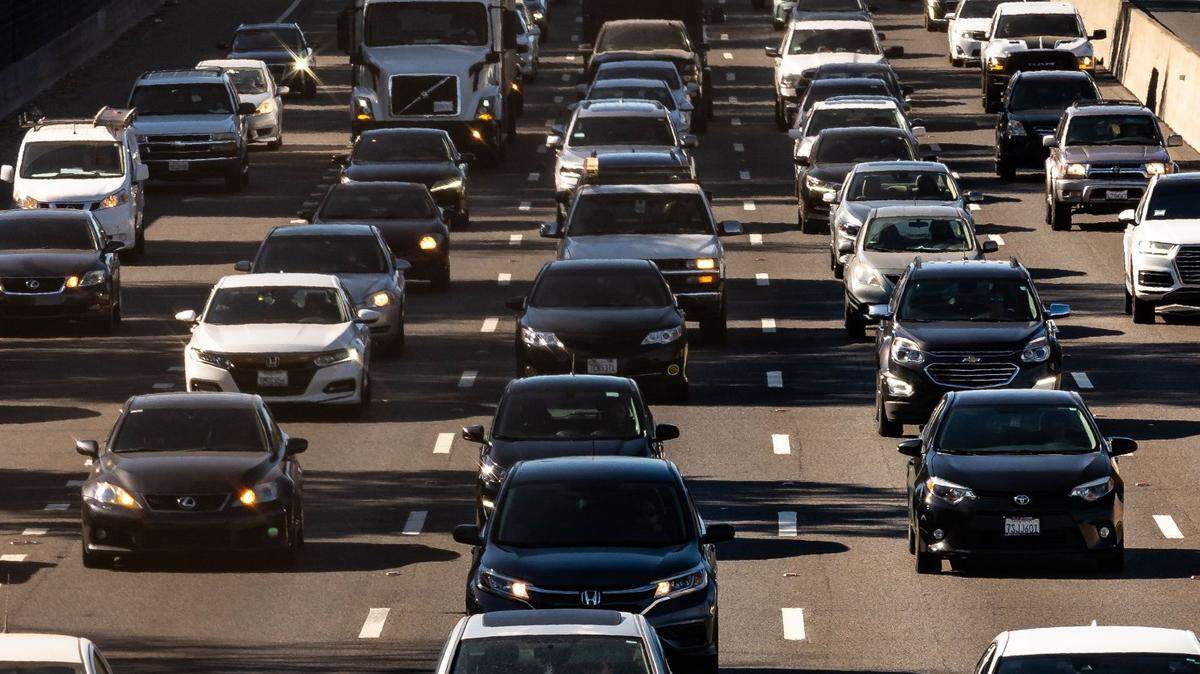
The White House estimated Wednesday that commute times in the state have gone up 14.6% over the last 10 years.
California would stand to get $25.3 billion for highway programs over the next five years, up from about $19.4 billion from fiscal 2016 to 2020, and $4.2 billion for bridge replacement and repair.
It could also compete for money from the Bridge Investment Program, which has $12.5 billion nationally. Eligible would be what the White House calls “economically significant bridges.”
California could also seek money from the $16 billion fund dedicated to “major projects that will deliver substantial economic benefits to communities.”
Other potential benefits from the bill:
▪ Public transportation. The state could get $9.45 billion over five years to improve bus, rail and other forms of public transit.
▪ Electric vehicle charging. The bill aims to “build a network of EV chargers to facilitate long-distance travel and provide convenient charging options.” California’s share of the bill’s $7.5 billion is anticipated to be $384 million.
▪ Broadband. The state would get a minimum of $100 million to help provide broadband access throughout the state. And an estimated 10.6 million people in California would be eligible for the Affordability Connectivity Benefit to help lower income people afford that access.
The new highway and bridge money would be in addition to state funding. In 2017, a California raises gas taxes and other fees became a blueprint for fixing the state’s crumbling roads and bridges.
Taxes were aimed at raising about $5.4 billion a year for the projects. Motor fuel taxes increased and the state gasoline tax this month rose by 0.6 cents a gallon to 51.1 cents a gallon.
The increase is expected to raise an additional $83 million, and the tax is anticipated to raise about $7.1 billion in fiscal 2021-22, up from $6.4 billion last year.
While the Senate infrastructure bill has a variety of ways to pay for the new spending, increasing the federal gas tax is not one of them. There was little support, and the tax will remain 18.4 cents a gallon.
The administration has dispatched members of Biden’s Cabinet, including Commerce Secretary Gina Raimondo and Treasury Secretary Janet Yellen, across the country this week to sell the bill. Other liberal groups allied with the White House have also begun spending millions of dollars in ads promoting the bill.
Alex Roarty from McClatchy’s Washington Bureau contributed
This story was originally published August 4, 2021 at 9:30 AM.
.jpg)