
What should you do if you’re caught in a California avalanche? Expert shares survival tips
If you’re caught in an avalanche, you better act fast.
“You have about 20 minutes to live” before your chances for survival are basically cut in half, according to Simon Trautman, director of the U.S. Forest Service’s National Avalanche Center in Bellingham in Washington state.
After that 20-minute point, he said, about “50% of the people are dead from from suffocation or asphyxiation.”
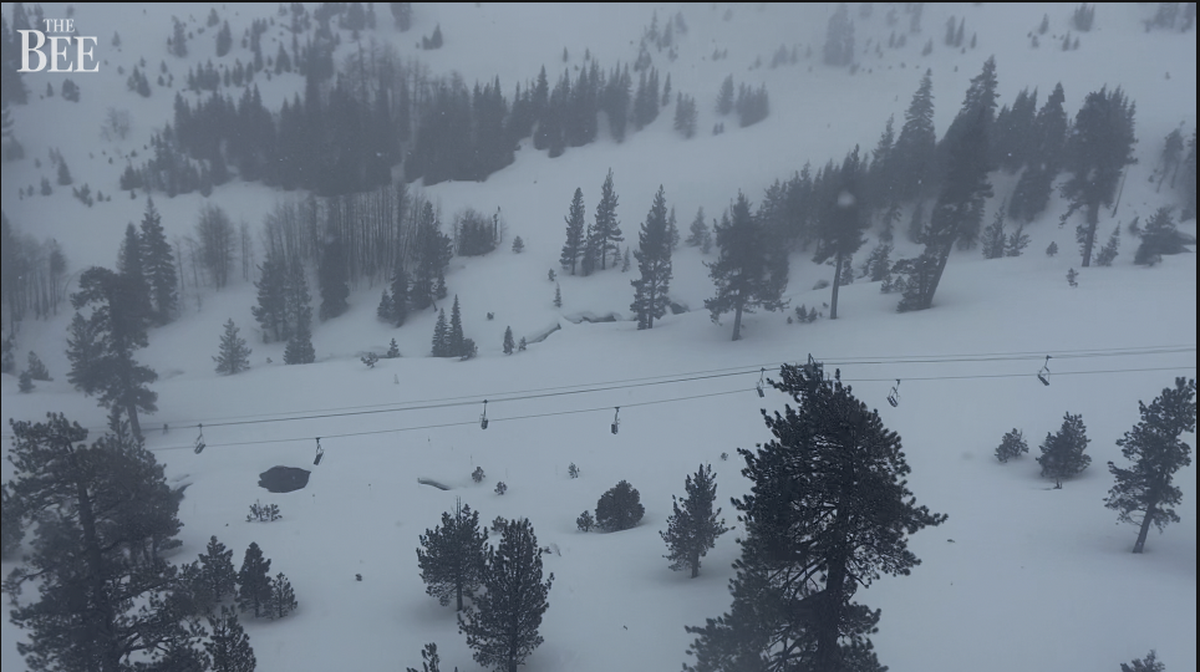
In January 2024, a Truckee man died and three other people were injured in an avalanche that send snow and rocks tumbling at Palisades Tahoe, a popular ski resort in California’s Sierra Nevada.
About 100,00 avalanches cascade down mountains in the United States every year, killing 28 people on average, according to the U.S. Forest Service.
According to the Forest Service, factors that can affect your survival rate after being trapped in an avalanche, include how long you are buried under the snow, how deep you are buried and the injuries you may suffer as you’re swept down the mountain.
“The best way to survive an avalanche is not to get in one in the first place,” Trautman said in a Forest Service news release in 2021.
However, he added, it’s a good idea to be prepared in case you get trapped in the snow.
What is an avalanche?
An avalanche is a “rapid flow of snow down a hill or mountainside,” according to the National Weather Service.
“Although avalanches can occur on any steep slope given the right conditions, certain times of the year and types of locations are naturally more dangerous,” the weather service said.
How should I prepare to go out in the snow?
Trautman offered some tips for how to prepare for and survive an avalanche — ranging from checking the weather forecast for the mountain you’re visiting to packing the right gear.
Before heading to the backcountry for skiing, snowboarding and other winter fun, you should check the snow forecast to determine the risk of an avalanche in the area.
Trautman suggests checking out the website Avalanche.org, a partnership between the American Avalanche Association and the Forest Service’s National Avalanche Center. It serves as a hub for avalanche information and forecasts in the United States, Trautman said.
A color-coded map on the website indicates the avalanche danger at places around the United States based on the North American Public Avalanche Danger Scale, which looks at the likelihood, size and distribution of expected avalanches.
On the map, which is updated every 24 hours, the color red indicates high avalanche danger, while orange indicates considerable danger and yellow indicates moderate danger. Green means low danger.
On Thursday, the Central Sierra Nevada, including the entire greater Lake Tahoe area, was at a “high” risk of avalanches, the Sierra Avalanche Center said.
The avalanche danger for a particular spot is dynamic, meaning that it can change from hour to hour day to day, Trautman said.
“It’s really important to know where on the scale (that location) is,” he said.
What should I pack?
You should pack the appropriate gear before heading out, Trautman said.
He advised bringing an avalanche beacon, a radio transceiver that pinpoints where you are. If someone gets covered with snow, you can switch on the transceiver and find the person’s signal.
You should also bring a probe, described in the release as “a collapsible fiberglass pole like a tent rod,” to show where the person is and how deeply they’re buried.
Finally, you need a shovel to dig the person out of the snow.
“The reason you need that type of gear, and should know how to use it, is that if you get buried in an avalanche, you can’t get out without it,” Trautman said.
The most important thing to remember, he said, is “you’re not going to get yourself out.”
That means whoever you’re traveling with will need to find you and dig you out, Trautman said.
How to survive an avalanche
If you do find yourself faced with a fast-moving wall of snow, try to get out of the way, according to Trautman.
“Do everything you can not to get caught in the slide,” Trautman said in the 2021 Forest Service news release.
“Being in an avalanche is like being caught in a fast-flowing river,” he explained. “The most common advice is to move diagonal to the avalanche or try to make your way to the edge, where the slide is not moving as fast and where you’re not likely to be buried as deep.”
If you can’t get out of the path of the avalanche, you should try to orient your feet downhill or curl into a tight ball to protect your head, the release said.
“Once you finally come to rest, you should relax because you know your partners are trained, and they are coming to get you,” Trautman said in the release.
This story was originally published January 10, 2024 at 4:42 PM.