
‘High’ avalanche danger prompts warning for Tahoe region. Which areas are at risk?
If you’re planning a trip to the Sierra Nevada backcountry, you may want to reconsider.
The Sierra Avalanche Center issued an avalanche warning for the Central Sierra Nevada early Thursday morning in response to a series of storms that have brought multiple feet of snow to mountain areas.
According to the avalanche center, the risk of harm to people passing through the backcountry was “high” on Thursday.
Here’s what you need to know:
How long will avalanche warning be in effect?
The Sierra Avalanche Center’s avalanche warning went into effect at 5 a.m. Thursday, Feb. 13, and runs through 5 a.m. Friday, Feb. 14.
Which areas are at risk of avalanches?
The area affected by the avalanche warning spans from Yuba Pass at Highway 49 to Ebbetts Pass at Highway 4.
The includes the entire greater Lake Tahoe area, the Sierra Avalanche Center said.
What is danger of avalanches in Sierra Nevada?
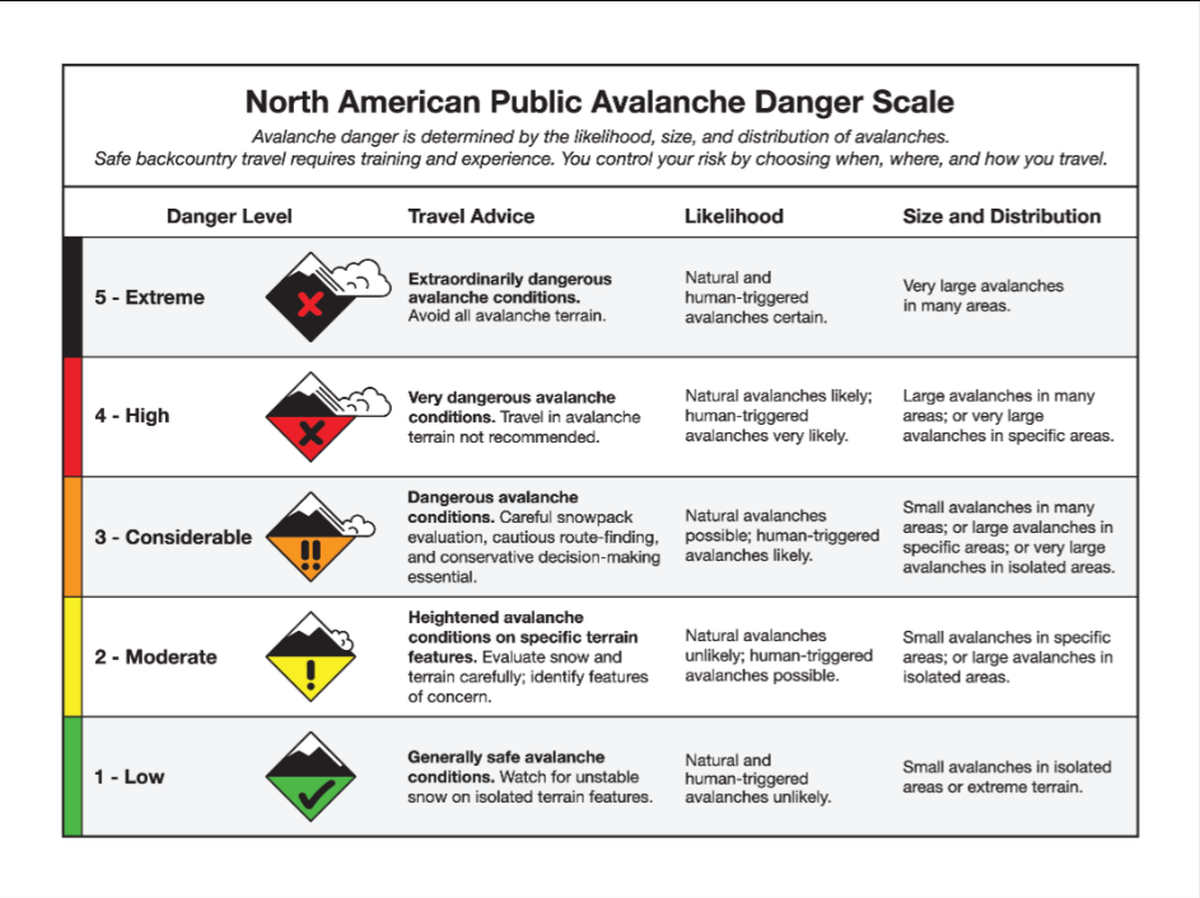
The Sierra Avalanche Center measures the risk of danger to humans in the backcountry on a scale of one to five, with one representing a “low” risk and five presenting an “extreme” risk.
Thursday’s avalanche warning was rated at a level four.
At this level, the conditions are considered “very dangerous” and travel in avalanche-prone terrain is not recommended.
Large avalanches are expected to be widespread, while very large avalanches could be seen in more localized parts of the backcountry.
Sierra Avalanche Center forecaster Andy Anderson said large avalanches can bury or kill humans, and very large avalanches could be powerful enough to knock over trees or bury cars.
Anderson said natural avalanches are likely and human-triggered avalanches are very likely on Thursday.
Where were recent snow flows?
As of Thursday, the avalanche center had reported 14 avalanches in the Central Sierra Nevada since the winter storms began at the end of January.
The avalanches were reported in the Carpenter Valley area, near Upper Blue Lake, on the Elephants Back peak, near Ebbetts Pass and on the east ridge of Tamarack Peak in Nevada.
The avalanches ranged from small to very large, and there were no injuries reported.
According to Anderson, the combination of gale force winds and heavy snow from recent storms can cause weaker snow surfaces to collapse.
How can I stay safe during an avalanche warning?
Anderson said the best way to avoid being caught in dangerous conditions is to avoid avalanche-prone areas.
On Thursday, travelers in the backcountry should stay on slopes less than 30 degrees that are not at the end of a steeper slope, Anderson said.
“You don’t want to be in or below or really even near avalanche terrain,” he said. “Our recommendation is that people pull back, and if they have to get out in the snow today, to enjoy slopes that are less steep.”
Anderson said the risk of avalanches won’t necessarily be gone once the warning is lifted.
He recommended checking the local avalanche forecast and to stay aware that there are still avalanche hazards even when the weather clears up.
When going out in risky conditions, it is important to pack accordingly.
You should bring these pieces of gear, The Sacramento Bee reported previously:
- An avalanche beacon
- A radio transceiver that can pinpoint your location
- A probe to help find someone stuck under snow
- A shovel
What should I do if I’m caught in an avalanche?
Getting out of the way of fast-moving snow is crucial, The Bee previously reported.
Here are some tips The Bee shared for staying safe in an avalanche:
- Try to move diagonal to the avalanche or go to the edge of the rushing snow.
- Orient your feet downhill or curl into a tight ball to protect your head.
- Relax once you come to a stop.
This story was originally published February 13, 2025 at 11:02 AM.
.jpg)