
Sandhill cranes have arrived in Sacramento area. Where to see the winter visitors
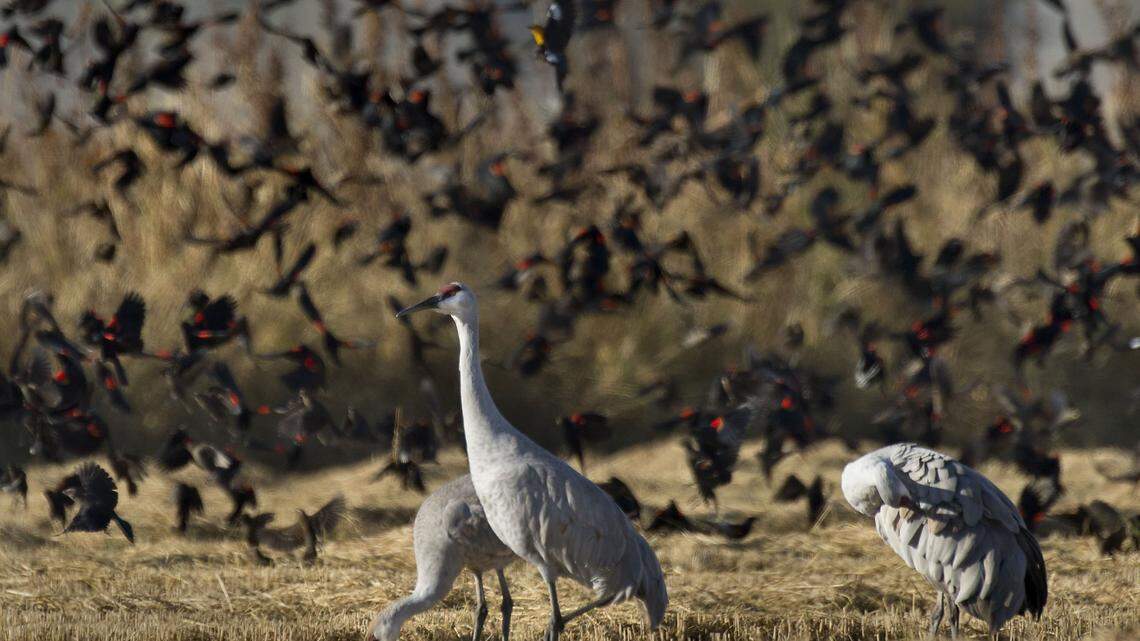
It’s that time of year in the Sacramento area — when everyone’s favorite winter visitors arrive by the thousands.
A wildlife enthusiast who recently spotted sandhill cranes at the Llano Seco Unit Wildlife Viewing Area in Chico posted several photos of the birds to the Friends of the Sacramento National Wildlife Refuge Facebook page on Oct. 19.
“The Flyover is underway, the ponds are still filling, but the birds are happening,” Guy Corrie wrote in the post. “Here are some photos of Sandhill Cranes taken at the Llano Seco Unit. They are amazing: Little flying dinosaurs with so much personality!”
You won’t want to miss the sandhill cranes in southern Sacramento and northern San Joaquin counties. But where are the best places to see them?
Where to see sandhill cranes in California
Your best bet to spot the iconic water birds will be the Cosumnes River Preserve, where sandhill cranes are already in the area, wildlife and conservation organizations said on the preserve’s website.
The cranes arrive each year by the thousands, though this year data won’t be available because the federal counts, which typically take place twice a month, were canceled in October due to the government shutdown, the Sacramento Bee reported.
The preserve consists of 50,000 acres of habitat and agricultural lands that support wildlife, “including birds that migrate throughout the Pacific Flyway” like sandhill cranes, the website says.
The “cranes and other migratory birds are attracted to the flooded crop lands on Staten Island,” and “thousands of birds can be seen flying over Staten Island during the fall, winter, and spring.”
Visitors can spot them along the Preserve’s Wetlands Walk trail and adjoining boardwalk, or from the car along Desmond Road.
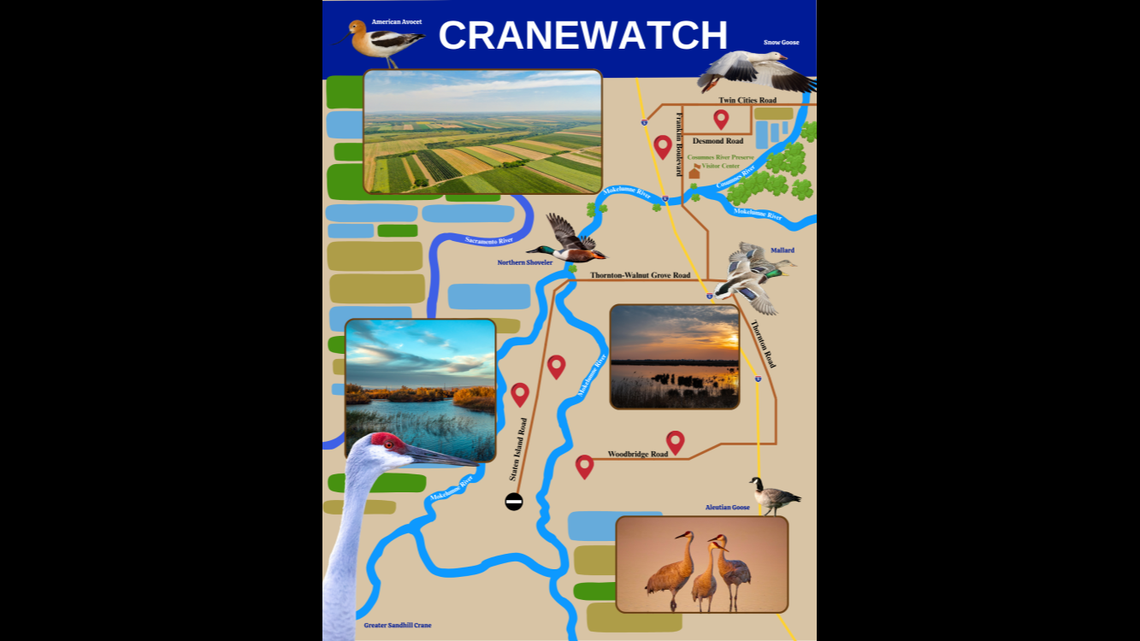
Visitors can also drive or walk on Staten Island Road, the main road in the preserve. It transitions to gravel about two miles in and a sign will let you know where the public road ends.
Signs reading “NO PUBLIC ACCESS” are posted throughout the preserve “to make visitors aware that all levees, farm roads, and fields are private,” the website says.
In addition, you can visit the Woodbridge Ecological Reserve near Lodi, also known as the Isenberg Sandhill Crane Reserve, to see sandhill cranes.
The California Department of Fish and Wildlife manages the fields, which “regularly attract large numbers of Sandhill Cranes during the fall and winter,” the website says.
“There are several turnouts along Woodbridge Road, allowing the public to safely park vehicles for bird viewing,” the website says. “CDFW offers fall, docent-led tours of the Reserve.”
The team will also be at the Lodi Sandhill Crane Festival Nov. 7, 8, and 9, the preserve said on Instagram.
Some other places to see sandhill cranes are: Sacramento National Wildlife Refuge, Yolo County Bypass Wildlife Area and the Llano Seco Unit Wildlife Viewing Area.
The state department of fish and wildlife has a webpage with 15 of the best places to find sandhill cranes.
When is the best time to see sandhill cranes?
The best time to see Sandhill Cranes is dawn and dusk from October to about February.
The birds start to arrive in the preserve late in September, and the peak of their season lands in mid-December before they start taking off in February, officials said. They’re usually all gone by mid-March.
Because “the cranes roost (sleep) in certain ponds at night and then wade and feed in other ponds during the day…. Sunrise and sunset are great times to see the cranes flying out/in for the day,” the website says.
“During the day, you’ll see many of them in various ponds around the Preserve,” officials said. “So, if you’d like to see them in flight, come during sunrise or sunset. If you’d like to see them hanging around the ponds, come during the day!”
How to identify sandhill cranes
There are six subspecies of Sandhill cranes in North America, and all three migratory populations (Greater, Lesser, and Canadian) are found in California.
It can be tough to tell the subspecies apart in the wild, though Lesser sandhill cranes are “noticeably smaller” — about 3-4 feet tall and about 7 to 8 pounds.
Greater sandhill cranes, the largest subspecies, are about 4-5 feet tall with a 7-foot wingspan. Males are about 12 pounds, and females are about 9.5 pounds.
All sandhill cranes “are long-legged, long-necked, tall, upright, stately birds with sharp pointed beaks, heavy bodies, and long sturdy toes,” the website says.
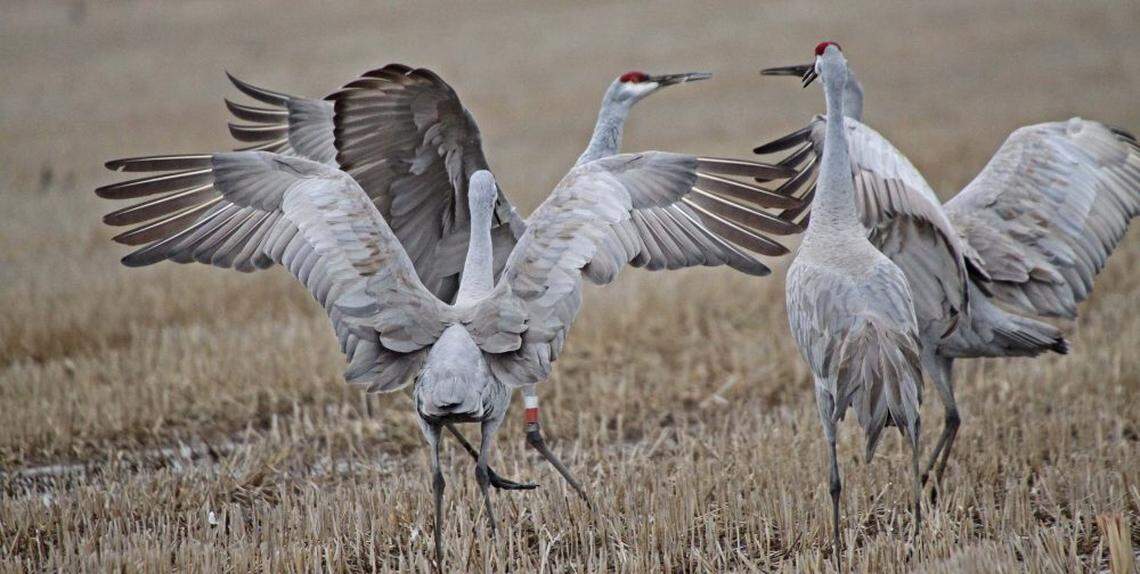
Adult sandhill cranes have a distinctive red patch on the crown of their head that’s bare of feathers. It “stretches from the base of the bill, under the eyes, over the forehead and top of the head, and ends at mid-crown.”
