
‘A rumble and a roar.’ Explosion of steamboat Pearl in 1855 rocked Sacramento
One passenger blamed it on a wager over cigars.
The steamboat Pearl — reportedly engaged in an impromptu race with another vessel on the Sacramento River — suffered a cataclysmic boiler explosion 171 years ago on Jan. 27, 1855, according to the Sacramento History Museum.
The blast near the confluence with the American River killed about 55 of the estimated 100 people aboard, including 18 Chinese citizens, the museum said.
“The noise of the explosion was heard all over the city and crowds rushed from all directions to the scene of the disaster,” reported the Daily Alta California newspaper.
“The water was covered with splinters and remnants of the wreck, human bodies, dead, dying and mangled, jammed in among them,” the newspaper said.
Onlookers on smaller boats picked up survivors from the river while the sinking remains of the Pearl were pulled to shore so the injured passengers still aboard could be treated.
The first steamboat to traverse the Sacramento River, the Little Sitka, did so in 1847, although it only made one round trip, the Sacramento History Museum said.
But during the Gold Rush, steamboats became the main way to transport goods and passengers between San Francisco and Sacramento, the museum said.
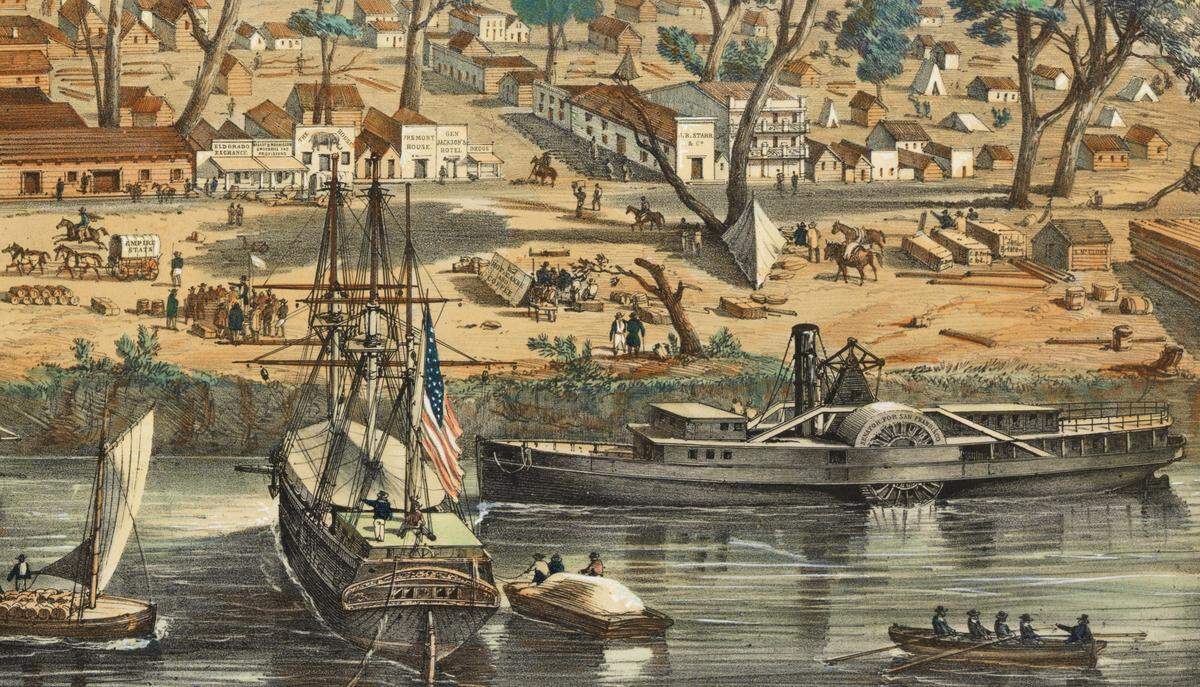
The Delta King, now a hotel and restaurant docked in Old Sacramento, later traveled between the two cities from 1927 to 1940.
Here’s the story of the fatal explosion that doomed the Pearl:
Did a race cause the Pearl’s deadly explosion?
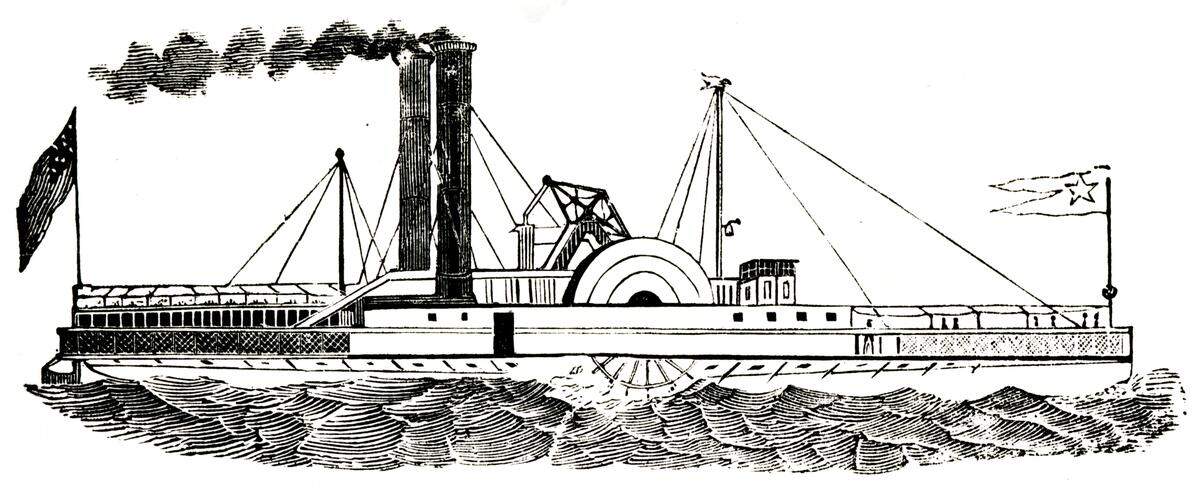
The Pearl, a paddlewheel riverboat powered by steam boilers, departed Marysville for Sacramento via the Feather, Yuba and Sacramento rivers as usual on Jan. 27, 1855.
The manifest showed 95 passengers aboard, though other estimates put the number aboard as high as 140 people, including numerous Chinese and Chinese Americans.
Newspaper accounts collected by the Deadliest American Disasters site say the Pearl departed at about 7 a.m.
Passenger George Hoy, a wigmaker from San Francisco, told a coroner’s inquest after the blast that the steamboat Enterprise came into sight about an hour after the Pearl left Marysville, the Daily Alta California reported.
Another passenger told the boat’s clerk “you will not let her pass us,” and a wager for some cigars was made over the speeds of the two boats, Hoy said. After that, the Pearl picked up speed.
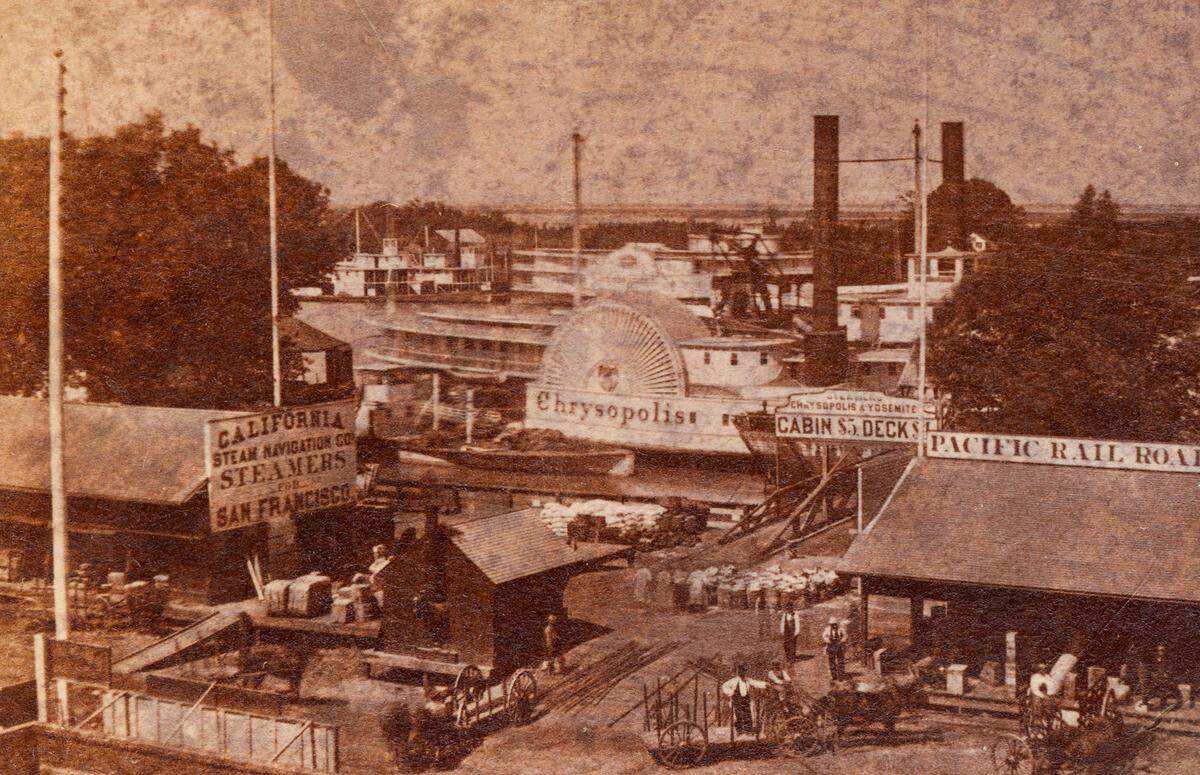
Other passengers, however, testified that they knew nothing about any race between the steamboats, the Daily Alta California reported.
The captain of the Enterprise told the inquest that his vessel traveled downriver at its normal speed.
But such impromptu races weren’t unknown at the time.
“It was common for masters to compete on the river and the high seas, it was ‘officially’ discouraged but ‘unofficially’ encouraged by ship owners,” Maritime Quest said.
Competition between the various steamboats operating on the river led to races to establish “the fastest boat on the river,” leading to “excitement, gambling and accidents,” according to a report compiled by the California State Lands Commission.
A merciless explosion rocks the Pearl
As the Pearl neared its intended berth at about 1 p.m., a devastating explosion tore through the steamboat.
“There was a rumble and a roar; a boiler, kicking loose from its foundations, ripped through the crowd, filling the air with steam, splinters and mangled humanity,” wrote Jerry MacMullen in “Paddle-wheel days in California,” according to Deadliest American Disasters.
The blast hurled a dozen people into the air, one or two as high as 60 or 70 feet, the Nevada City Journal reported.
The ship had “burst her boilers, carrying death and destruction in every direction,” the Daily Alta California said.
One onlooker told the newspaper the blast hurled bodies and wreckage up to 300 yards.
The captain of the Pearl, E.G. Davis, died in the blast, the Sacramento History Museum said.
But some passengers reported seeing the engineer, who was later blamed for the explosion, escaping the wreckage.
“I saw a person jump overboard just after the explosion, somewhere near the wheel,” miner Jackson Tompkins told the inquest, the Daily Alta California said. “I think it was the engineer.”
A black dog owned by one of the crew jumped into the water and pulled a man in the water to shore, but the man was dead, the newspaper said.
Aftermath of the Pearl explosion
The explosion could be heard all over the city, bringing residents running to shore, the Daily Alta California said.
“Immediately after the explosion, skiffs were manned by strong arms and were hurried to the rescue of the wounded and struggling victims,” the Nevada City Journal reported.
The New York Times, citing the Placer Times, reported that mangled bodies could be seen on both sides of the river.
Bodies of the dead were brought to city hall and a water works building for identification, the Sacramento History Museum said.
“The shock fell upon this city as suddenly as would that of an earthquake and the excitement which immediately followed has been scarcely in the slightest degree allayed up to the present hour,” The Daily Union newspaper reported, according to an excerpt posted by the museum.
More than 2,500 people attended a public funeral at the Sacramento City Cemetery.
“Much indignation is expressed, and a determination to bring the guilty to punishment,” the Georgetown News reported.
Why did the Pearl explode?
A coroner’s inquest blamed the explosion on the “recklessness” of Andrew Wadleigh, the Pearl’s engineer reportedly seen fleeing the boat at the time of the blast, the Sacramento History Museum said.
“My belief is that steam is generated so fast that it cannot escape, and when that is the case, there must be an explosion,” machinist Allen Goss testified, the Daily Alta California said.
In answer to a question, Goss said that a defect in the boilers would have caused the affected part to give way but not the entire boiler to explode.
The captain of the Enterprise told the inquest that he had heard Wadleigh was not a qualified ship’s engineer, the newspaper said.
Wadleigh, who was arrested a few days later, was later found not guilty of criminal negligence in the blast, the Sacramento History Museum said.
Other steamboat accidents
But the Pearl was not the first nor the last steamboat to explode in Northern California.
The steamboat Fawn blew up on the Feather River as it neared Marysville on Aug. 16, 1851, The Appeal Democrat reported. It also was reportedly racing another steamship.
On Feb. 5, 1856, the steamboat Belle exploded while heading upriver from Sacramento to modern-day Red Bluff, Read the Plaque reported. A monument along the river remembers Leonidas Taylor, the ship’s clerk, who was among those killed.
A blast destroyed the steamboat Washoe near Steamboat Slough about 10 miles north of Rio Vista on Sept. 5, 1864, Deadliest American Disasters said. Fifty-four people were reported dead with another 67 missing.
On Oct. 12, 1865, the steamboat Yosemite exploded on the Sacramento River near Rio Vista, killing 43 people, the Sacramento History Museum said. The blast was later blamed on defective boilers.
Debris from hydraulic mining, using water cannons to blast away dirt in search of gold, built up in Northern California rivers, precluding larger steamboats from traveling on them, the California State Lands Commission report said.
Elsewhere in the United States, the advent of railroads as a less expensive and less dangerous way to ship cargo brought about the demise of steamboats.
In California, however, the Central Pacific Railroad acquired a steamboat company and continued running the boats, the report said.
But modern roads and trucks, along with construction of bridges and causeways, brought an end to the steamboats in Northern California, SF Gate said.