Ants are invading California homes. Experts share tips to keep out pests
Every now and then, unwanted pests — big and small — make their way into our homes, becoming a frustrating nuisance.
From flies to cockroaches, these intruders can be hard to ignore.
Winter weather often drives ants indoors in search of shelter and food. However, if you’re seeing swarming or foraging ants marching through your California home this time of year, it could signal something more serious.
It can mean an ant colony is already living somewhere inside your home, according to pest expert Stephen Tahija, owner of Next Generation Pest Control in Manteca.
“Ants never just show up,” he said. “They’ve already been there, whether deeper underground or inside your walls.”
How do ants get into your home? What’s the best way to get rid of the insects?
Here’s what to know:
How did ants get into my California home?
Ants are teeny-tiny critters that can squeeze into any nook and cranny.
Ants enter homes in search of three things: food, water and shelter, according to pest company Orkin.
“Ants have scouts in their colony,” Tahija said. “Those scouts will go out to find food and moisture. They will signal back to their colony once they have found that.”
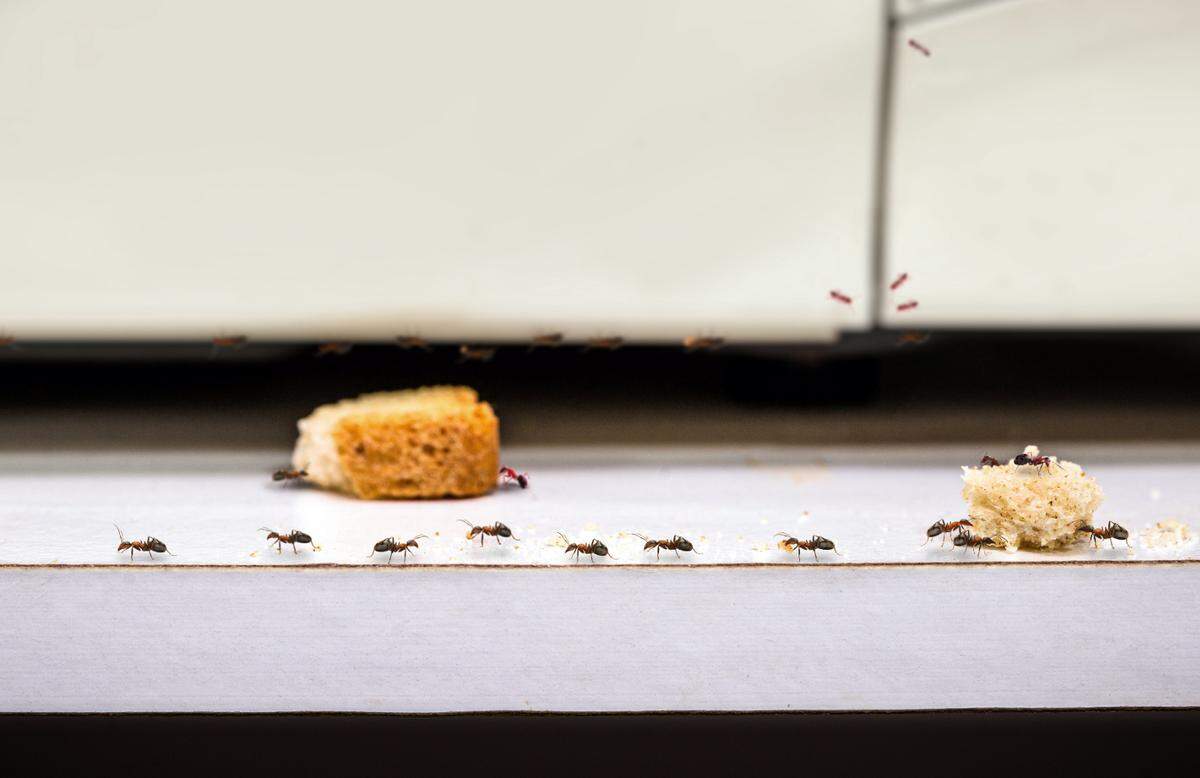
This is what causes a trail of ants to start marching across your kitchen counter or floor.
“Food and water are the two big things that drive ants inside,” Tahija said. “Even a couple drops of water around your sink from doing dishes will attract them.”
Common entry points include small cracks in stucco, gaps around pipes, leaks near outdoor faucets and openings near the base of exterior walls. Trees, plants or overgrown branches touching your home can also give ants an easy path indoors.
How can I stop ants from getting indoors?
There are several simple steps you can take to reduce the chances of ants moving indoors, Tahija said.
One of the most effective solutions is sealing cracks and gaps around your home, which can block ants from getting inside in the first place.
“A lot of it has to do with environmental factors around your home,” he said. “A big one is not having mulch or leaves on the ground around your home. That produces a lot of ant nesting sites.”
Tahija also recommended keeping trees and plants trimmed and away from your home.
Overgrown branches — especially from fruit trees — can act like bridges, giving ants easy access inside.
Pet food can also attract ants, Tahija said. Feeding pets outdoors or leaving food bowls outside can draw ants closer to your home in search of a food source.
In some cases, the pest problem starts before you even move in. Some homes are “built directly on top of ant colonies,” which can make infestations harder to fully eliminate, he explained.
“This is why it can feel like you’re constantly fighting them but never getting rid of them,” Tahija said.
What’s the best way to get rid of ants?
The most effective way to get rid of ants is to remove what’s attracting them in the first place.
Simple steps such as wiping down countertops, sweeping up crumbs and keeping floors clean can make a big difference, according to Orkin.
You should also avoid leaving pet food sitting out and clean up food residue in kitchen appliances, such as toasters and microwaves. Even small crumbs in living rooms can attract ants.
Keeping things clean will cause ants to “not survive or go elsewhere if they have no food to provide life-sustaining energy,” Orkin said on its website.
Can I use Raid to solve my pest problem?
“If you use the right thing,” Tahija said, you can use chemicals to get rid of ants.
“With ants, you never want to use a repellant chemical,” he said.
Common store-bought chemical sprays, such as Raid, or household cleaners such as bleach or Lysol, might kill the ants you see — but they don’t solve the root problem.
“If you spray them with Lysol, you will kill those ants you see right there,” Tahija said.
However, you cover the pheromone scent left by the scouts by doing that.
“This means the ants are going to be rerouted to another area of your house. This spreads the ants,” he said. “Now, you’re chasing ants around your home.”
Instead, Tahija recommends using a nonrepellent ant treatment or ant bait.
“(The ants) can’t detect it and take it back to their colony,” Tahija said. “It kills the colony, which is the actual problem.”
Visible ants “are a symptom, not the problem,” he said.
If cleaning, sealing entry points and using nonrepellent treatments don’t resolve the issue, Tahija said, it might be time to contact a licensed pest control professional.