This ‘hungry’ CA snake eats rattlesnakes. What it looks like and where it lives
Rattlesnakes can be found all over California, especially in hotspots such as Lake Berryessa, Carrizo Plain National Monument and the San Joaquin Valley.
In California, a number of animals hunt and kill rattlesnakes — including a particularly ravenous kind of reptile.
Certain snakes “will eat anything,” Cal Poly professor Emily Taylor, director of the Physiological Ecology of Reptiles Lab, told The Sacramento Bee. “They are immune to rattlesnake venom so they’ll eat rattlesnakes.”
Here’s what to know about rattlesnakes’ natural predators, including how to identify them and where to find them:
When are rattlesnakes most active in California?
Rattlesnakes are most active from April to October, according to the U.S. Forest Service.
“Rattlesnakes are sensitive to ambient temperature and adjust their behavior accordingly,” the California Department of Fish and Wildlife said on its website.
During the spring and summer, the snakes are “most active at dawn, dusk and night to avoid overheating,” the state wildlife agency explained.
Where will I encounter rattlesnakes in California?
California is home to seven species of rattlesnakes.
The most common, the western rattlesnake, can be found from sea level to elevations of 7,000 feet, according to the California Department of Fish and Wildlife.
Rattlesnakes typically hang out under rocks, logs and woodpiles, the National Park Service said.
You might also spot rattlers near boulders, stumps and fallen trees, according to Michael Starkey, founder and executive director of Save the Snakes in Sacramento.
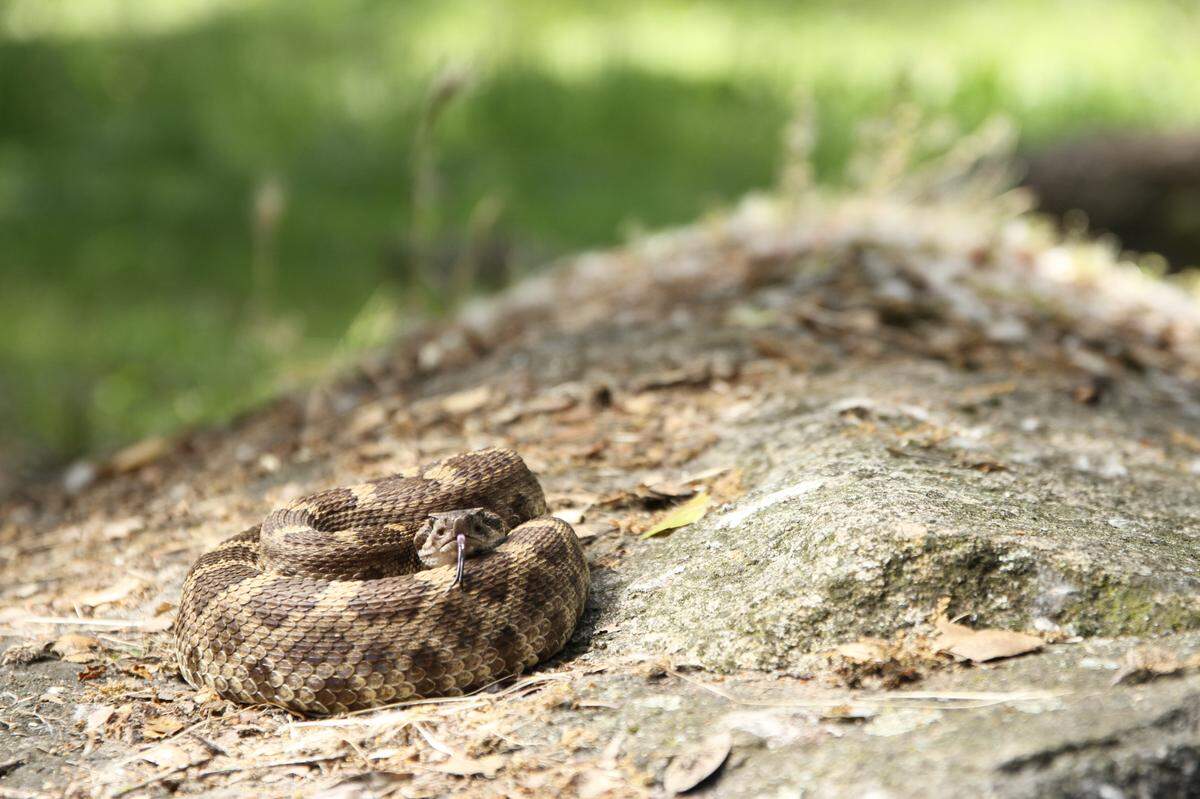
Rattlesnakes can be recognized by the distinct sound their rattles make. You can also identify the venomous reptiles by their gray or light brown banded markings and triangular-shaped heads.
Which snakes eat rattlesnakes in California?
California kingsnakes have big appetites — devouring lizards, snakes, mice, birds and bird eggs — but they’re particularly “famous for eating rattlesnakes,” Sacramento Splash in Mather said.
“When a hungry kingsnake finds a rattlesnake, it will bite the rattlesnake behind the head and coil itself around the body,” said the nonprofit organization, which provides water and wildlife education for children. “The kingsnake is nearly immune to rattlesnake venom and does not worry about being bitten.”
California kingsnakes can be recognized by their striped scales, with bands of black or brown alternating with white or light yellow.
The nonvenomous snakes can be found throughout most of California in a “wide variety of habitats,” including forests, grasslands, marshes and deserts, according to nature education website California Herps.
Like rattlesnakes, kingsnakes are “active whenever temperatures are favorable,” the California Department of Fish and Wildlife said. “When summer days are hot most activity is restricted to early morning, and late afternoon and early evening.”
Do any other snakes prey on rattlesnakes?
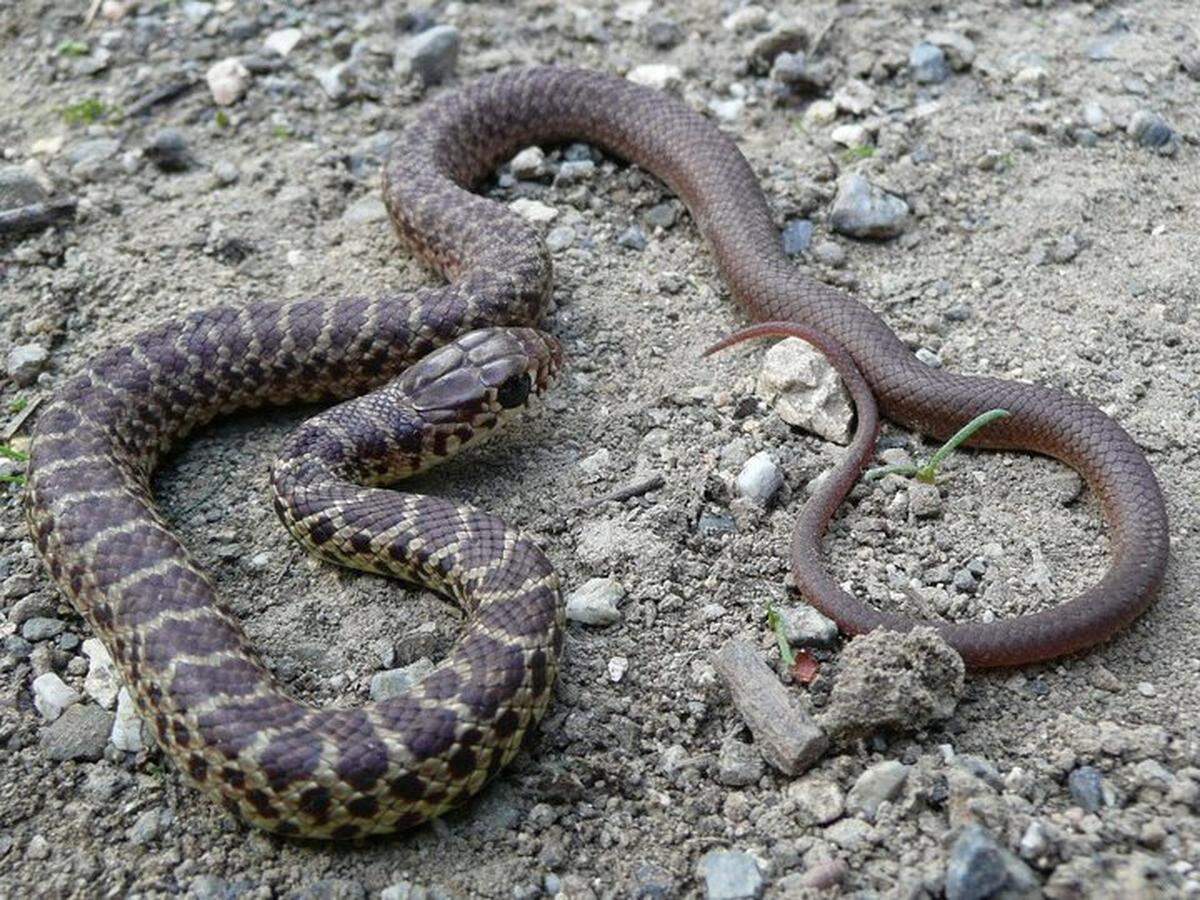
Racer snakes such as Western yellow-bellied racers and red coachwhips are also known to eat rattlesnakes, according to California Herps.
“All of these snakes eat all sorts of food,” Taylor said. “Most people for that reason love having kingsnakes (and racers) around.”
What are rattlesnakes’ natural predators?
In addition to reptiles, other predators in California attack and eat rattlesnakes.
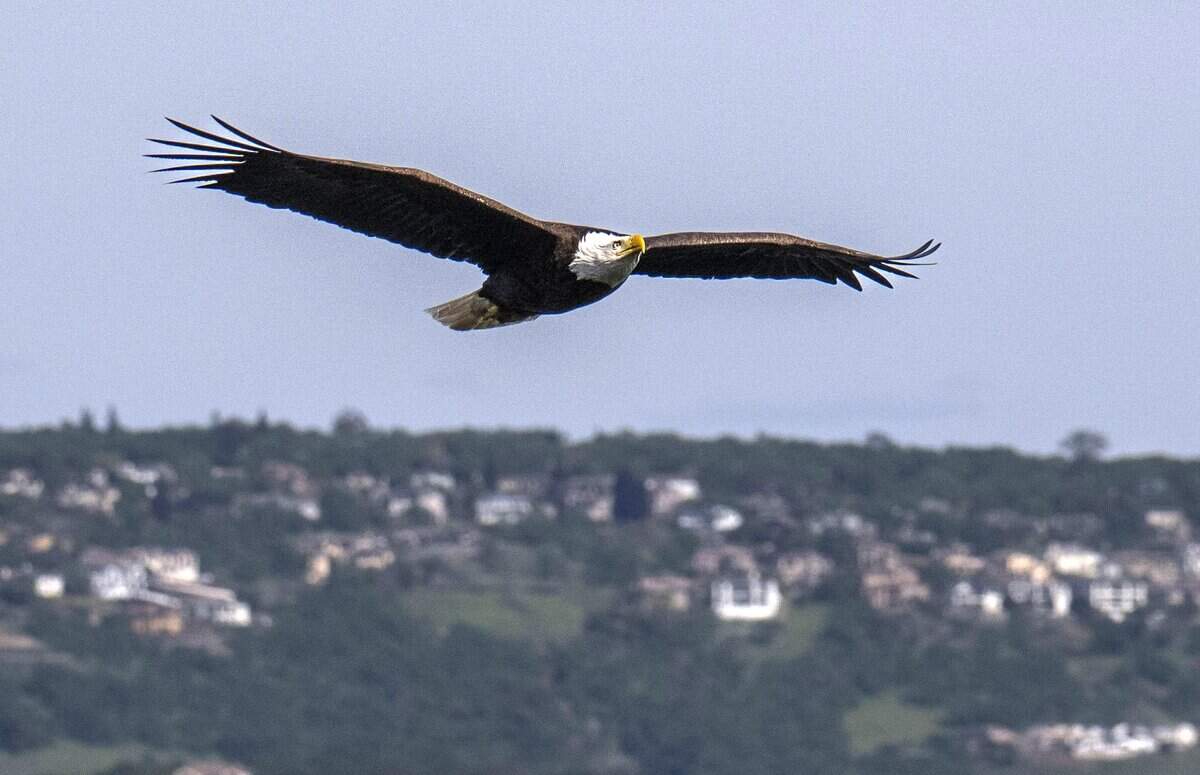
A to Z Animals said eagles are a primary hunter of snakes.
Although eagles are not immune to rattlesnake venom, “They don’t bat an eye when it comes time to consume a highly venomous rattlesnake,” the animal encyclopedia website said.
Bald eagles and golden eagles are native to California.
Bald eagles live near lakes, reservoirs, rivers and coastal wetlands in the Golden State, the California Department of Fish and Wildlife said, while golden eagles can be found in forests, canyons and grasslands.
Red-tailed hawks and roadrunners also favor rattlesnakes as a snack, although the hawks only eat sections of the snakes to avoid venom, according to A to Z Animals.
Known for their impressive sprinting speed, roadrunners typically hunt down rattlesnakes in pairs.
While one bird distracts the snake, another will continuously peck at the back of the rattlesnake’s head before slamming it into the ground, the Oklahoma Department of Wildlife Conservation said.
Roadrunners are found in deserts, grasslands and shrublands in California, while red-tailed hawks live in all habitats in California.
According to A to Z Animals, other natural predators of rattlesnakes include owls, turkeys, coyotes, badgers and bobcats.
In addition, “Some people have animals in their yards that are predators” of rattlesnakes, Taylor said, noting that outdoor cats, guinea fowl and chickens often eat rattlers.
How to avoid rattlesnakes on a California hike
Before you head outside, you should know how to avoid rattlesnakes and what to do if you encounter one in the wild.
According to the National Park Service and the California Poison Control System, here’s how to stay safe in rattlesnake country and minimize your chances of being bitten:
- Walk or hike in areas where the ground is clear.
- Wear protective clothing such as long heavy pants and high boots.
- Pay attention to your surroundings.
- Carefully inspect logs or rocks before sitting on them.
- Carry a fully charged phone, and let people know where you plan to hike and how long you will be gone.
- Look after children and keep dogs and other pets on a leash.
- Stay on trails, away from underbrush and tall weeds.
- Watch where you step, and never put your hands in areas where you cannot see.
“If you spot a rattlesnake, stay away,” the California Poison Control Network said.
Do not touch or disturb the snake, even it appears to be dead.
“If you think you hear a rattlesnake, stand still until you’ve located the snake, then move away,” the National Park Service said.