The River Fire is pumping smoke into the Valley’s air. What does it mean for your health?
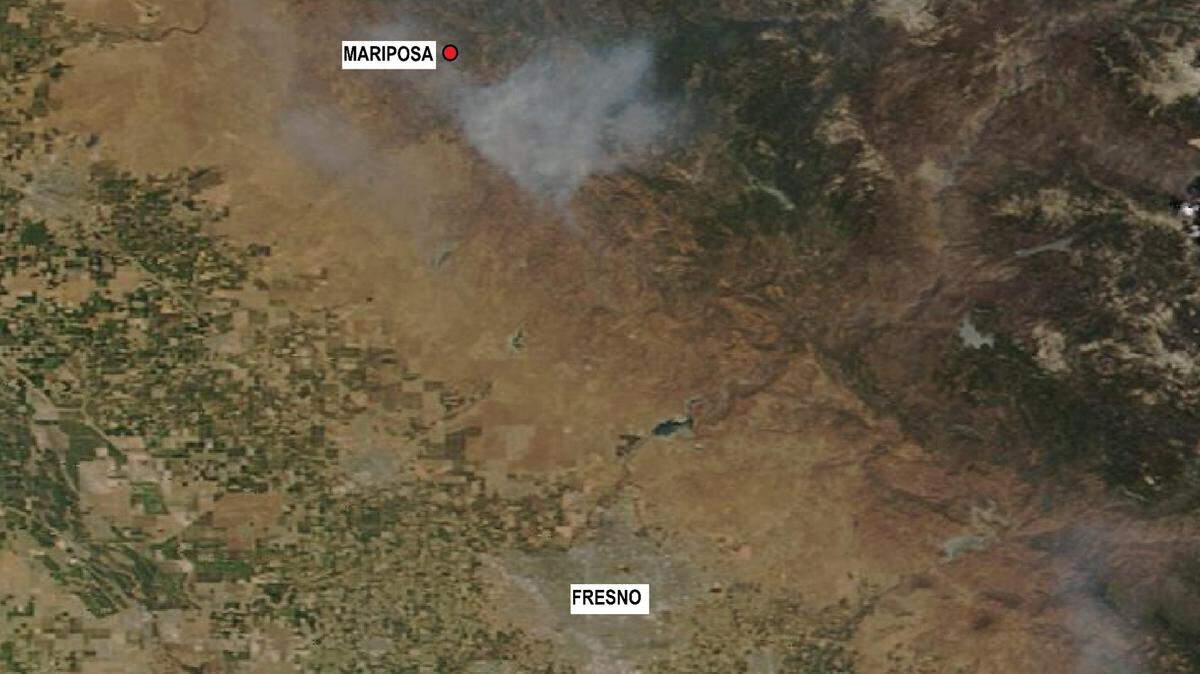
The River Fire burning in the Sierra Nevada foothills north of Fresno is pumping out a plume of smoke that’s visible from satellites in orbit around the Earth – and creating concerns over the effects of residents breathing in the gunk.
Smoke from the River Fire prompted the San Joaquin Valley Air Pollution Control District to issue a health caution warning residents to stay indoors to reduce their exposure to microscopic particles that can work their way deep into the lungs and cause breathing troubles and other health problems.
The amount of smoke so far is much less than that generated last fall by the massive Creek Fire, which burned in eastern Fresno and Madera counties and became the largest single wildfire in California history in records dating to the 1930s. Not only could smoke from the Creek Fire be smelled by residents, it fouled the skies over Fresno County and much of the Valley and deposited a layer of fine ash on cars, roofs and patio furniture.
“If you can smell smoke and see ash, that is an indication that you are being affected by poor air quality,” the air district states on its wildfire web page. The health caution for Valley residents from San Joaquin County in the north to Kern County in the south will remain in place until the River Fire is extinguished, the air district reported.
According to the district, air quality in Fresno County on Tuesday was forecast to be “moderate,” based on levels of PM 2.5 – fine particulate matter that measure 2.5 microns in diameter – in the air. There are about 24,500 microns in an inch. The PM 2.5 level on Tuesday was expected to reach 23 micrograms per cubic meter of air.
“Particulate matter can trigger asthma attacks, aggravate chronic bronchitis, and increase the risk of heart attack and stroke,” the district noted in a statement. “Those with existing respiratory conditions (including COVID-19), young children and the elderly, are especially susceptible to the health effects from this form of pollution.”
In Oakhurst, not far from the fire, the air district’s Real-time Air Advisory Network monitoring system detected 7 micrograms of PM 2.5 at midnight Tuesday morning. That rose as high as 17 micrograms by 11 a.m.
Fresno, in the meantime, saw its PM 2.5 level rise from 10 micrograms at midnight to 20 micrograms at 11 a.m.
To limit exposure, the district encourages people who smell smoke or see ash to move indoors with filtered, air-conditioned air with windows closed.
This story was originally published July 13, 2021 at 1:58 PM with the headline "The River Fire is pumping smoke into the Valley’s air. What does it mean for your health?."