
Here are steps you can take to make the air quality cleaner during a California fire
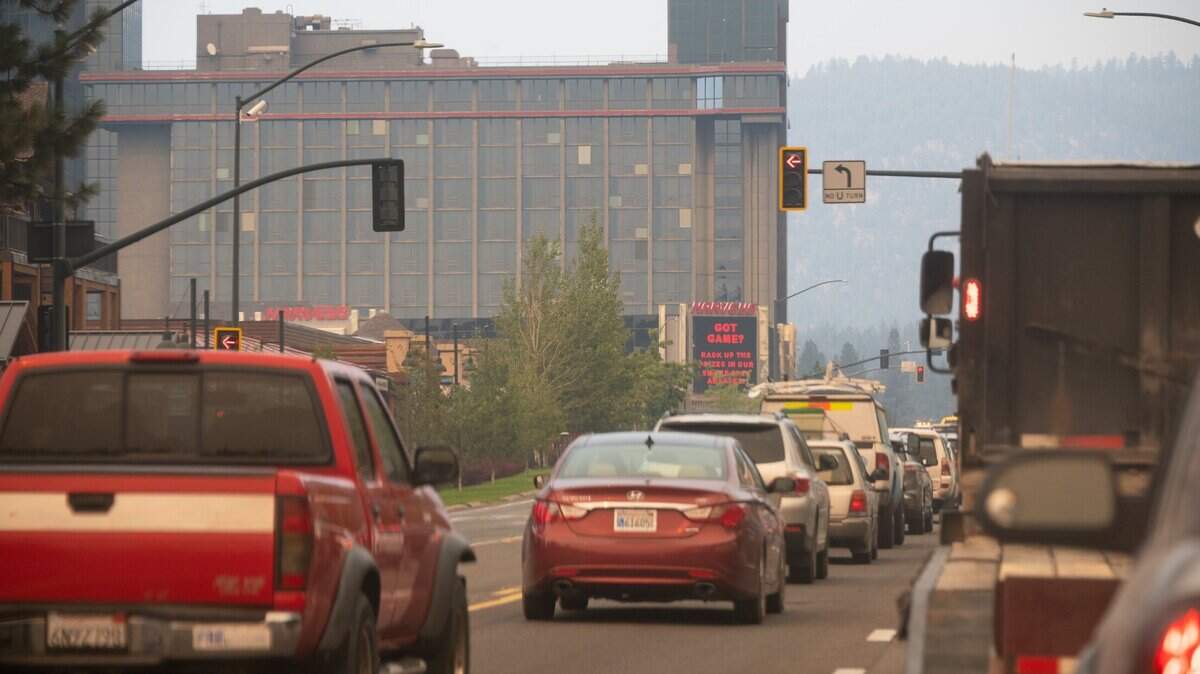
Residents of El Dorado and Placer counties, as well as surrounding areas throughout Northern California are experiencing air quality readings in the unhealthy zone, as the Caldor Fire continues to blaze through the Lake Tahoe region.
While wind gusts will inevitably blow smoke, ashes and dust into the air, everyone can still take steps to reduce pollution during a wildfire. The Sacramento Metropolitan Air Quality Management District and California Air Resources Board (CARB) highlight day-to-day activities and things that people should consider avoiding to help prevent adding particulate matter into the air.
Avoid driving
Sam Pournazeri, Mobile Source Analysis Branch Chief at CARB, said people should drive less during wildfire events. He said passenger vehicles are significant contributors to emissions, which can further worsen local air quality.
Additionally, driving high speeds down dirt roads can increase the amount of dust in the air, according to a flier from the management district.
Landscaping affects air quality
Lawn and gardening equipment can produce pollutants, similar to cars.
Pournazeri equates operating a leaf blower for about one hour to driving a passenger vehicle for about 1,100 miles. When operating these tools during a wildfire, Pournazeri said it “not only can contribute to more emissions, but also dust and PM 2.5,” which are small inhalable particles that can cause health issues.
Diesel Trucks emit pollution
When burned, diesel fuel from trucks can emit harmful pollutants, such as hydrocarbons and carbon monoxide, as reported by the U.S. Environmental Protection Agency. It also produces oxides of nitrogen — a gas mixture responsible for the formation of smog.
Pournazeri said people should consider avoiding one-day deliveries for their online purchases, as most delivery trucks are powered by diesel. Doing so will “reduce the travel of these delivery trucks in neighborhoods” and prevent the local air quality from increasing.
Fire pits, recreational Burning
Cooking outdoors and using fireplaces and wood-burning stoves will increase the amount of smoke and particulate matter in the air. Burning dry wood in outdoor fire pits is also cautioned by the management district during events of high air pollution and wildfires because it can produce “harmful smoke.”
This story was originally published September 2, 2021 at 9:20 AM.