
Gold Rush town burns as lightning-sparked wildfires rage in CA foothills
A wave of lightning-sparked wildfires burned across the Sierra Nevada foothills of Central California on Wednesday, torching dry hillsides and threatening historic Gold Rush-era towns as fire crews worked through a second day to contain the blazes.
The wildfires ignited Tuesday as a monsoonal storm crept north across the state, unleashing more than 9,000 lightning strikes, according to Cal Fire.
Many of the fires concentrated in the Mother Lode region southeast of Sacramento were grouped into the TCU September Lightning Complex. Together, the complex grew to 13,371 acres by Wednesday afternoon, forcing continued evacuations across parts of Tuolumne and Calaveras counties.
“This series of fires within Cal Fire Tuolumne-Calaveras Unit contains 22 distinct fires that occurred around the time of a lightning storm that passed through the area,” Cal Fire TCU said. “Multiple ground and air resources have arrived, totaling 634 personnel. Additional ground and air resources are on order and will be engaged on the fire lines as soon as they arrive.”
No fatalities or injuries had been reported, but many of the fires remained uncontained.
The largest blaze, known as the 6-5 Fire, had burned more than 6,838 acres by Wednesday afternoon. The fire was centered north of Don Pedro Reservoir, with active fire behavior and no containment. The fire forced mandatory evacuations in the town of Chinese Camp, a 19th-century mining settlement and a registered California Historical Landmark. The town contains significant structures dating back to the 1800s, when Chinese miners first settled the area during the Gold Rush.
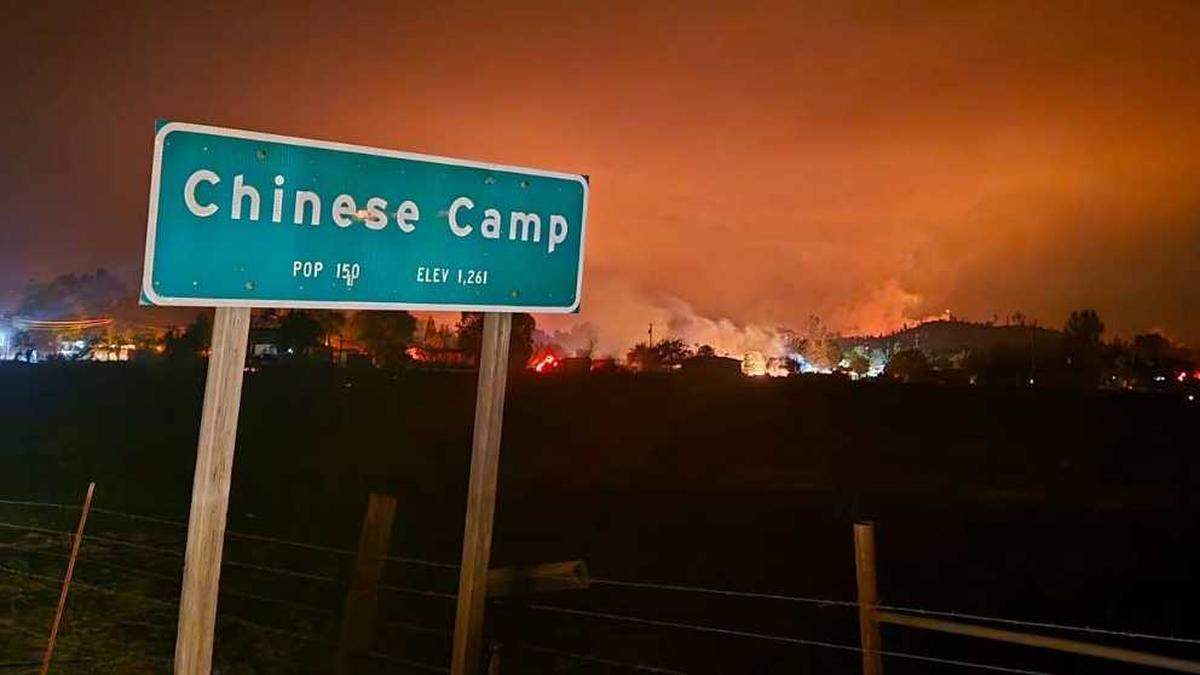
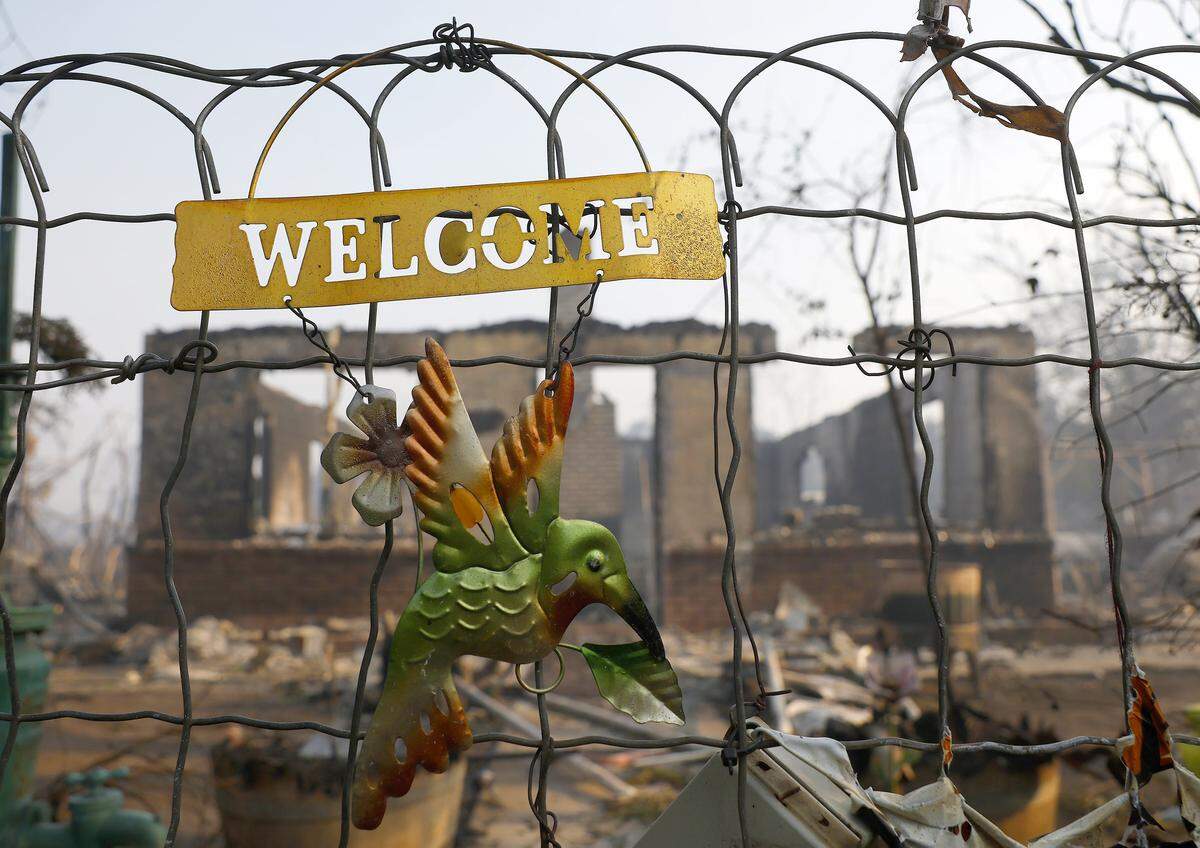
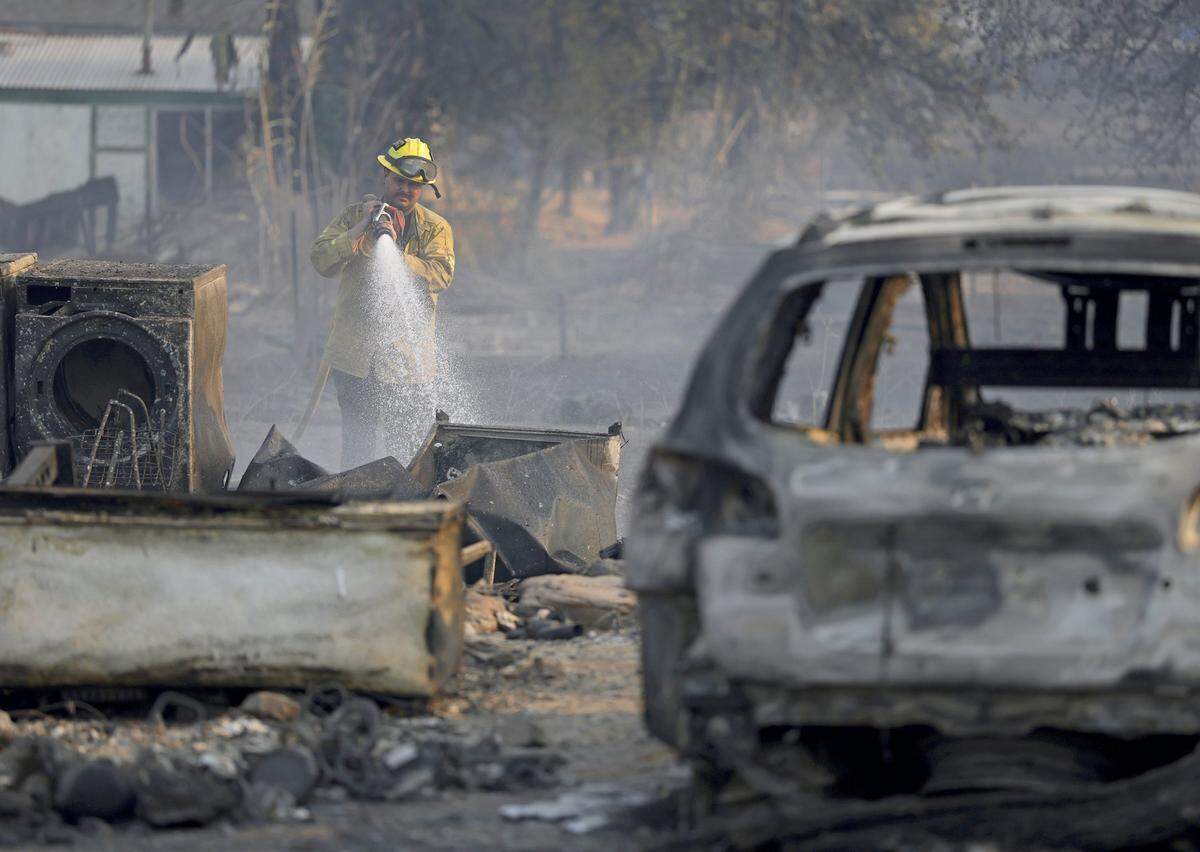
Several structures in the historic town of Chinese Camp were destroyed by fire, Cal Fire officials told the San Francisco Chronicle. The extent of the damage remained unclear Wednesday morning, but a Cal Fire spokesperson confirmed that multiple buildings had burned. KCRA reported that the historic post office was among those structures destroyed.
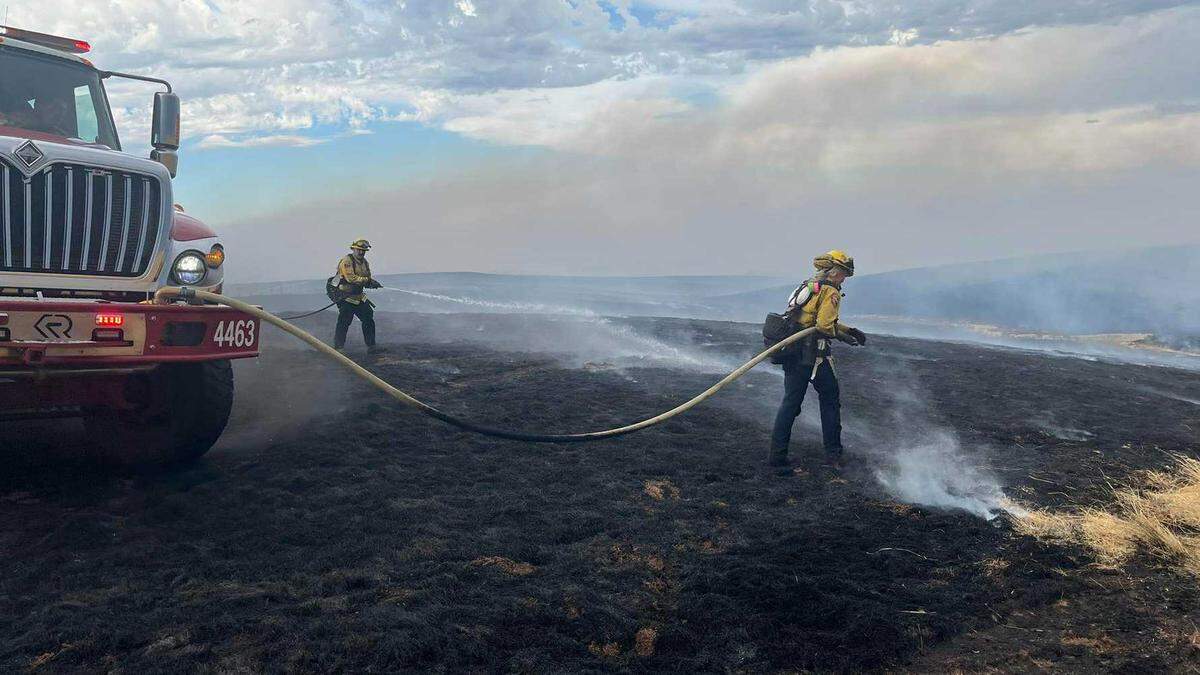
Firefighters reported Wednesday that the fire had “exhibited active runs in critically dry tall grass, brush, and timber fuels.” Crews continue to face gusty winds from lingering thunderstorms.
“The terrain is challenging to access, requiring fire crews to hike in by foot to many remote locations,” firefighters said. “A number of structures have been damaged or destroyed, and a damage inspection team is on order. Weather conditions continue to be a challenge to crews as gusty winds remain in the area from nearby thunderstorm cells.”
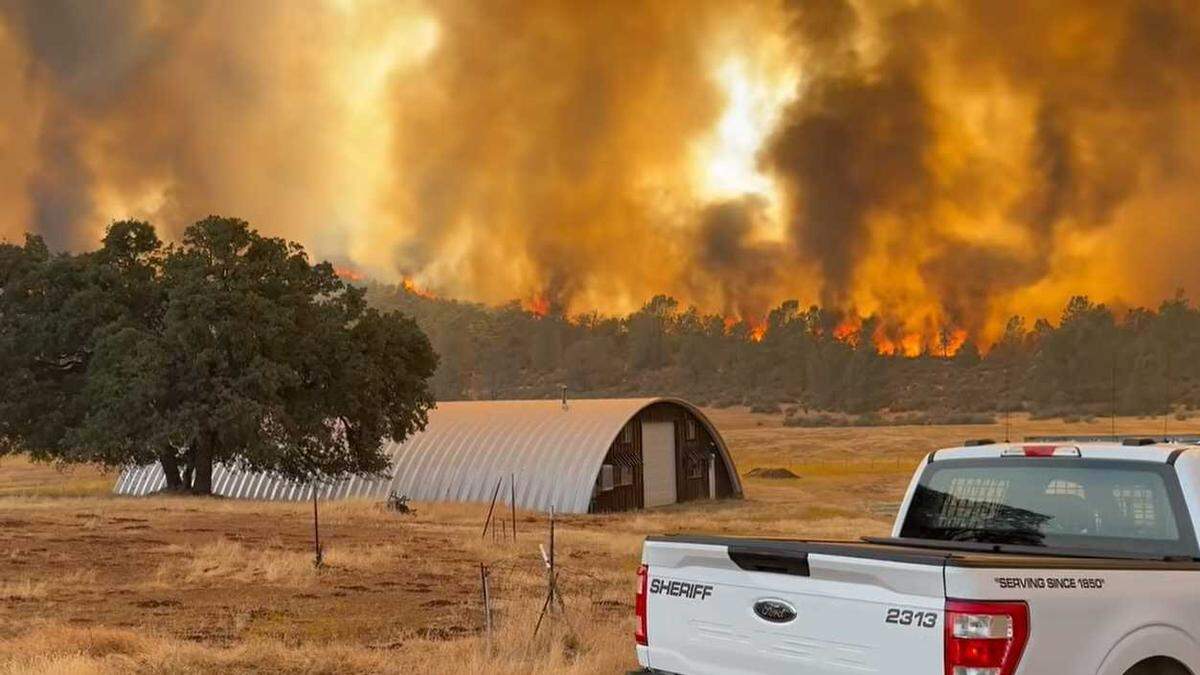
A surge of monsoonal moisture from the Southwest, not uncommon during California summers, helped trigger the lightning and wind events. Thunderstorms of this type can also produce dust storms and intense downpours that lead to flash flooding, forecasters said.
Residents in several nearby corridors along Highways 108 and 120 were also ordered to evacuate. An estimated 300 residents were under mandatory evacuation, with an additional 1,400 under evacuation warnings.
Cal Fire, formally known as the California Department of Forestry and Fire Protection, activated Incident Management Team 6 Tuesday night to lead the firefighting response across the complex, which has burned a combined 19 square miles in less than 24 hours.
The storm and resulting fires drew comparisons to the devastating lightning siege of August 2020, when a summer lightning storm ignited the North Complex, LNU Lightning Complex and CZU Lightning Complex fires. Together, those burned more than 800,000 acres and killed at least 22 people, according to Cal Fire.
Other large active fires in the TCU September Lightning Complex:
2-2 Fire: 3,462 acres near Highway 4 and Milton Road in eastern Stanislaus County
2-3 Fire: 150 acres near Copper Cove Court and O’Byrnes Ferry Road in Copperopolis in Calaveras County
2-7 Fire: 591 acres near Milton Road and Sonora Road in Calaveras County, continued to threaten communities along Highway 4. Evacuation orders were issued for parts of Vallecito, Douglas Flat and Murphys.
2-8 Fire: 1,326 acres south of Copper Cove near Tulloch Lake in Calaveras County
6-2 Fire: 951 acres near Old Don Pedro Road, west of Jamestown and south of the 6-5 Fire in Tuolumne County.
Officials from Cal Fire’s Tuolumne Calaveras unit said that “firefighters worked diligently overnight” in a morning update but warned that residents should “remain prepared to evacuate and do so when requested. If you feel unsafe at anytime, you don’t have to wait to be instructed to leave, leave early.”
Deputies with the Calaveras County Sheriff’s Office remained on scene overnight assisting crews and residents. Deputies said additional patrols would continue in threatened areas.
The agencies said that non-emergency fire-related questions can be directed to the Lightning Fire Complex Hotline at 209-754-6777.
Gov. Gavin Newsom’s office on Wednesday said that the state had secured a fire management assistance grant from FEMA. The federal request will help cover emergency response costs for the 2-7 Fire and other blazes within the TCU complex. The FMAG allows federal funds to flow into firefighting and evacuation operations, including shelter, logistics and cost recovery, the Governor’s Office said.
Other wildfires in Northern California
• The 1-4 Fire that sparked Tuesday in Mariposa County, northwest of Chowchilla, has charred 3,802 acres as of Wednesday. Cal Fire reported that the blaze was 15% contained but mandatory evacuations remained in effect along the Mariposa-Madera county line.
• The Garnet Fire in Fresno County, which sparked Aug. 24, was nearly 30,000 acres and 12% contained, the U.S. Forest Service said. Firefighters reported that “as anticipated, (Tuesday’s) strong outflow winds caused considerable fire spread. However, the good preparation of previous days helped hold the fire within containment lines.” Evacuations remain in effect for areas around Balch Camp and the John Muir Wilderness.
• The Rock Fire, likely sparked by lightning in eastern Sacramento County on Tuesday, was 85% contained after burning 143 acres, according to Cal Fire’s Amador-El Dorado unit.
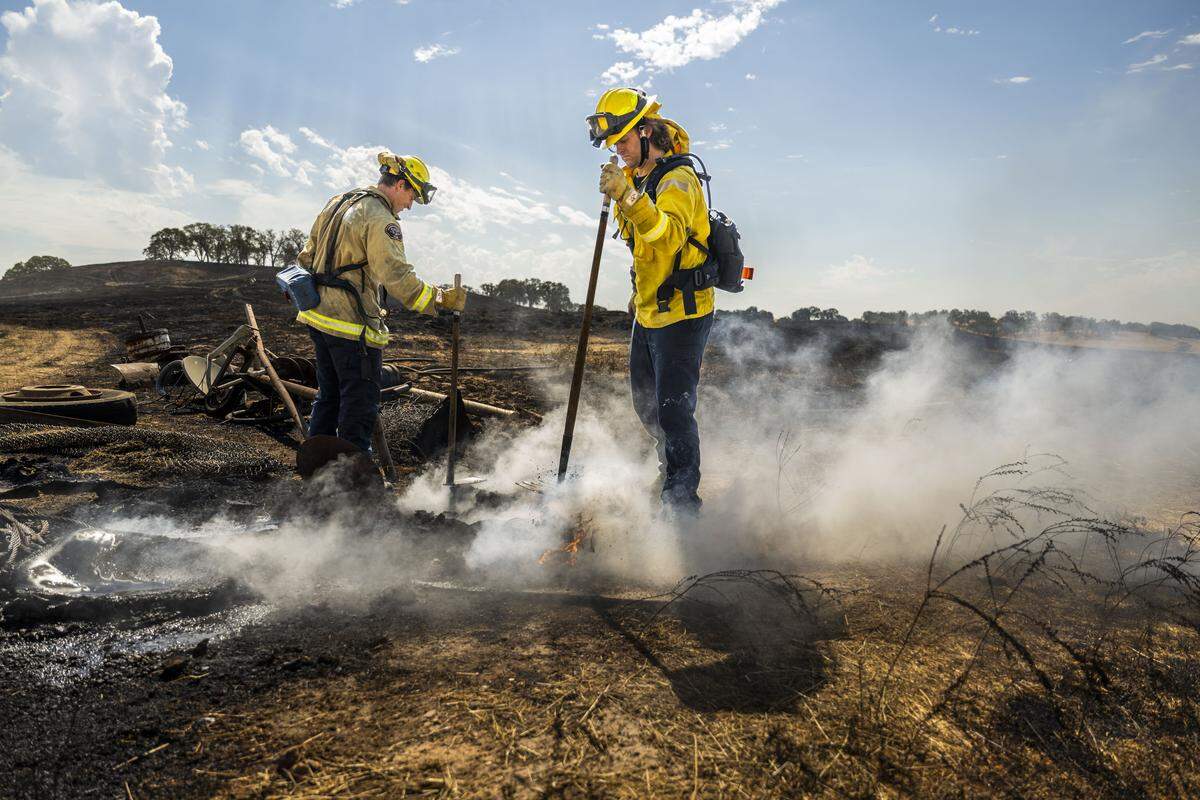
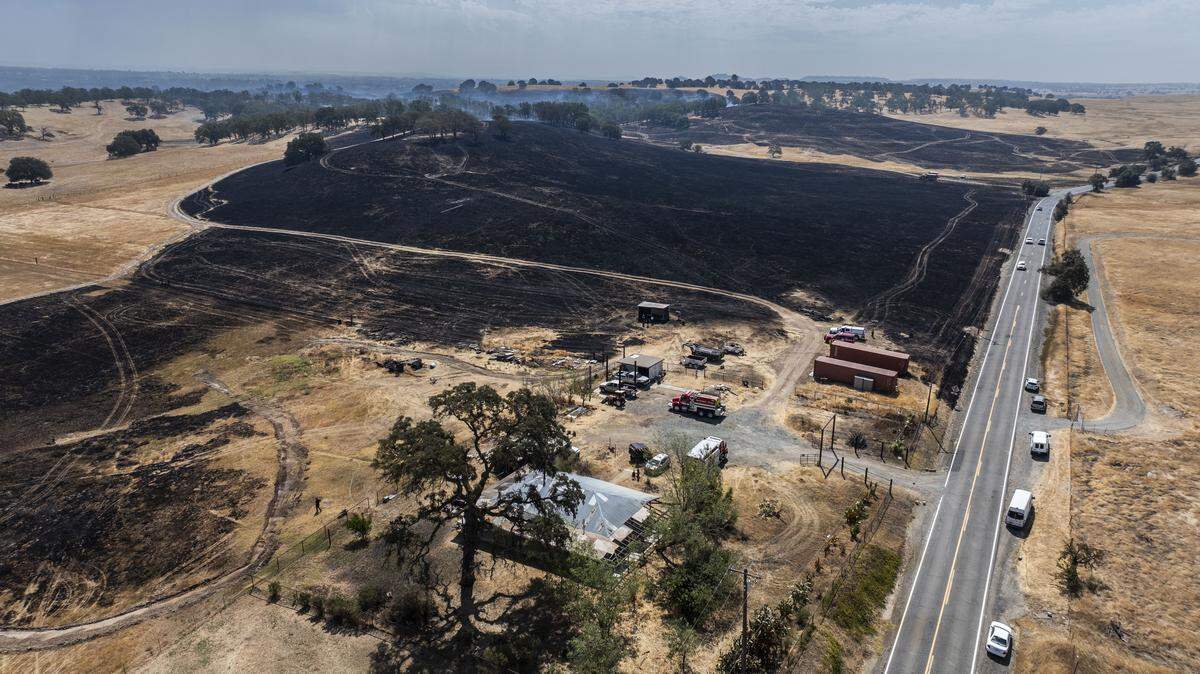
• The Brown Fire several miles south, and along the Sacramento-Amador county line, neared full containment after sparking Tuesday and charring 60 acres. Smaller neighboring fires including the 4-1 Fire and Copper Fire were fully contained.
• In El Dorado County, the Valley Fire near El Dorado Hills, which sparked Sunday, and the Coyote Fire, which started Aug. 20, were nearing full containment, Cal Fire AEU said. Acreage was 15.2 and 624, respectively.
• The Pickett Fire, which threatened wineries near Calistoga in Napa County, inched up to 91% containment. Since its start on Aug. 21, the fire has burned 6,819 acres, Cal Fire’s Sonoma-Lake-Napa unit reported.
• Multiple fires believed to have been started by the weather Tuesday afternoon and evening in Butte County remained small and under control, firefighters said. Cal Fire’s Butte County unit quickly tamped down the Forbestown Fire after it sparked around 7 p.m. and briefly prompted evacuations. It burned less than an acre.
• Tahoe National Forest officials said fire crews were actively battling more than a dozen lightning-sparked wildfires across it’s U.S. Forest Service territory in Sierra, Placer and Nevada counties following more than 1,200 strikes Tuesday into Wednesday morning. Most of the fires remain small, with crews reporting progress on containment lines around several — including the Goodyears, Lavezzola, and Loch fires. Remote blazes near the Pacific Crest Trail and in the Granite Chief Wilderness have required smokejumpers or difficult handline construction due to steep terrain, Forest Service officials said.
Severe winds in Carmichael
In Sacramento County, Tuesday’s powerful straight-line winds were confirmed as downbursts, with gusts reaching up to 70 mph, according to the National Weather Service. The damaging winds uprooted trees and tore roof shingles in neighborhoods around Carmichael, knocking out power to more than 13,000 SMUD customers in Sacramento’s northeast suburbs.
The Modesto Bee, the Bay Area News Group, the Los Angeles Times and The Sacramento Bee’s Darrell Smith and Daniel Hunt contributed to this story.
This story was originally published September 3, 2025 at 11:15 AM.