
‘Sacred’ elk: How California’s drought is altering the debate over Point Reyes herds
Inspired by the Black Lives Matter protests, Jack Gescheidt led a single-file line of about 70 fellow activists in early July. They walked up the twisting road at the Tule Elk Reserve at Tomales Point on the Northern California coast.
Some activists wore orange jumpsuits from Florida State Penitentiary and poked their arms through the Tomales Point fence line, pretending to be trapped elk. The number “406” was ironed onto the suits, the conservative estimate for the number of tule elk that have died at the reserve in the past decade, Gescheidt said.
The reserve places elk in an “unnatural zoo-like condition,” Gescheidt said. As he marched, he held a sign that read, “Tule Elk Penitentiary, the freedom of elk is strictly prohibited.”
The activists moved mostly in silence, per Gescheidt’s request, out of respect for the elk dotting the surrounding browned hills. His eyes scanned the landscape and he pointed to the small elk peeking over the grasses against the gray and blue sky.
“I could be moved to tears by what we’re doing to this beautiful place,” Gescheidt said.
California has big environmental problems to address — extreme drought, wildfires, species extinction — but the fate of a few herds of tule elk also invokes raw emotions more than four decades after they were reintroduced to Point Reyes National Seashore, about 100 miles from Sacramento.
Now, climate change and extreme drought have added urgency to the dispute between environmentalists, the National Park Service, ranchers and indigenous tribal interests in this stunning part of the Northern California coast.
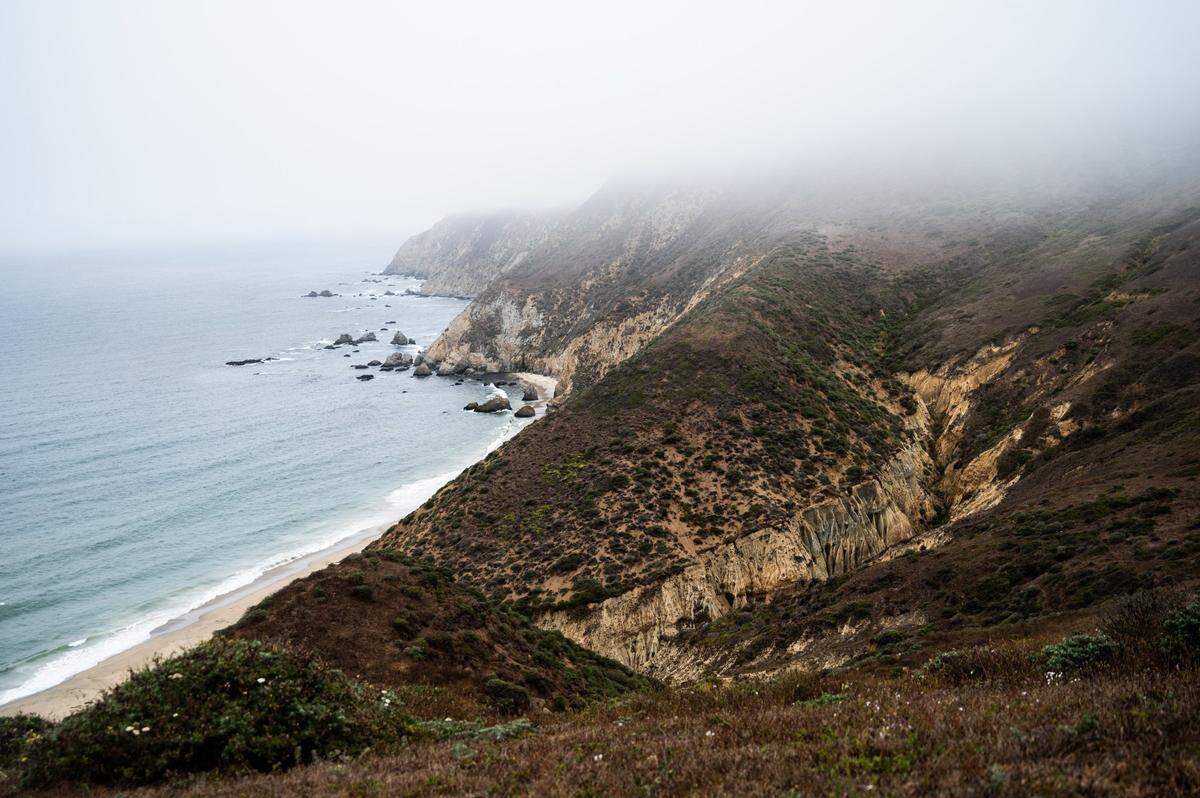
This national seashore, jutting into the Pacific Ocean, in Marin County and 30 miles north of San Francisco, provides a 71,000-acre sanctuary for about 1,500 different species of plants and animals. What’s at stake for this public land is at stake for all of California.
“The reason I’m involved in this is I want to do something when I see the world being destroyed, and this is the climate crisis right here taking place in this little park with these elk,” Gescheidt said. ”This is where it’s happening in microcosm: destruction of the land, poisoning the water, greenhouse gas emissions (and) bigger than all of that, 2 million annual visitor vehicles come to the park every year — all to raise cattle for human consumption and to drink their milk.”
Going to court for the elk
Named after the marshy plant of their original habitat range, tule elk are the smallest elk species in North America and are found only in California. With beige bodies, white rumps and chocolate scruffy manes, tule elk can be easily spotted by visitors to Point Reyes. As highly social animals, they usually graze in herds. Branched antlers help distinguish the males, but only for part of the year as they shed and regrow their pair annually.
Three tule elk populations live at the national seashore: a fenced herd at the Tomales Point Elk Reserve and two free-ranging herds beyond the fence line in the Limantour and Drakes Beach areas. Activists are calling for the protection of these elk, the removal of the fence at Tomales Point and ultimately, the end of ranching at the seashore.
The future of the tule elk offers a glimpse into how California manages its wildlife with fewer resources, such as water. To limit the populations, the park service may get permission to shoot and kill tule elk at the seashore, outside of the Tomales Point reserve.
Point Reyes herds

Map: Nathaniel Levine • Source: Point Reyes National Seashore General Management Plan
Many activists at July’s elk demonstration are involved with a lawsuit against the park service regarding the health of tule elk. In June, Harvard Law School’s Animal Law and Policy Clinic sued the park service for “its negligence in allowing tule elk to die slow and preventable deaths as a result of starvation and dehydration” at the seashore, according to a news release from the Animal Legal Defense Fund.
The lawsuit was filed in the United States District Court for the Northern District of California. Gescheidt, the lead plaintiff, is among three California residents and the Animal Legal Defense Fund who brought forth this case. Many activists call for the removal of the fence, but the park service has not considered taking it down.
“We sued the park service to force them to provide food and water for the elk in the short term, and then to even consider taking the fence down in the long term so that the elk can freely roam and forage and have access to water,” said Cristina Stella, the managing attorney at the Animal Legal Defense Fund.
Laura Cunningham, the California director at Western Watershed Project, said it is “like animal cruelty” to keep animals behind the fence at Tomales Point and inhibit their natural roaming.
Tule elk are crucial to the Point Reyes ecosystem with only 5,700 left in the world. “Every animal has great value,” said plaintiff Laura Chariton, the president of the Watershed Alliance of Marin and former volunteer at the park.
One of the plaintiffs reported finding at least 15 tule elk carcasses either stuck in mud pits in search of water, or tangled in fencing in attempts to clear the fence and look for food or water, according to Kate Barnekow, a clinical fellow at the Harvard Animal Law and Policy Clinic.
Because of drought and extreme heat, Stella said the situation for tule elk has “only gotten worse.” In the past year, more than a third of the population at Tomales Point has died.
Cattle on the seashore also have led to land degradation. Retired tule elk biologist Julie Phillips said it is some of the worst she has seen.
“If these tule elk aren’t safe in a national park, where are they safe?” Phillips said.
On July 29, Gescheidt and Chariton took photos of low water levels in one pond and of emaciated elk with protruding bones. Despite this footage, the judge denied the plaintiffs’ request for emergency relief at a July 30 hearing. An Aug. 17 conference call has been set to “move the case forward as expeditiously as possible,” according to the law clinic’s news release.
Natural tule elk herd fluctuations
All three elk populations at the seashore are experiencing population fluctuations as a result of the drought, according to the annual population count completed in March 2021. With fewer birth rates and higher death rates, the Tomales Point and Limantour herds are declining.
“One of our plaintiffs realized that over the last year she hasn’t seen a single baby tule elk,” Barnekow said.
For both herds, the park service believes poor food quality is causing the decline. After working with wildlife managers and veterinarians from the California Department of Fish and Wildlife, park rangers believe overpopulation also is causing the recent decline for the elk at Tomales Point.
Yet, elk herds in Point Reyes have declined in the past due to drought, including between 2013 and 2015. The herd’s decline at Tomales Point this year is “within normal and predicted population fluctuations,” according to the park service.
Wildlife populations naturally shift as a result of their environment all across the West.
Extreme heat and drought cause mass die-offs and stress for many animals, including hooved animals such as elk. A harsh winter can wipe out a deer or elk herd. The same occurs when watering holes dry up.
In a drought this severe, elk possibly could be faring worse if they were not in a bottled-up ecosystem such as Point Reyes National Seashore. Fluctuations in populations are not as noticeable for wildlife in remote areas. Point Reyes sits at the northern end of the Bay Area, a hub for animal activists and environmentalists, and many have noticed changes in elk populations.
To understand better the population declines, six elk carcasses from the Tomales Point and the Drakes Beach herds were necropsied. All six were extremely emaciated with no remaining fat reserves and chronically deficient in copper and selenium, according to the park service.
While the park service reports no evidence of limited food quantity at Tomales Point, the elk likely are experiencing “inadequate food quality.” Despite these findings, the park service does not plan to provide supplemental food.
Although the elk population declines at Tomales Point are drought-related, the park service found no evidence of death by dehydration in the necropsies.
Dr. Amy Allen, a veterinarian who reviewed the necropsies of eight elk that lived in Tomales Point, found other evidence. In her declaration, she reports that all eight elk were starving, but of the two tested for dehydration, at least one showed severe dehydration.
Water for a ‘dying animal’
As a result, Gescheidt and other activists brought in drinking troughs and gallons of water for elk on four occasions after the park service reportedly declined to provide water. One time was in a public demonstration, but three of these occasions were in secret — in defiance of National Park Service closure orders.
Gescheidt admitted he brought in the water secretly, but he said his actions were legal. He was cited by the park service for disorderly conduct and “creating a hazardous situation.”
“There is no park regulation saying you can’t put down water for a dying animal to drink,” Gescheidt said.
Park rangers removed the water jugs and troughs because the activists did not work with the park service, follow necessary safety precautions or put them in areas where elk would typically seek water, according to the park service.
In June, the park service changed course and began providing water to the elk herds. Park rangers will continue to do so, at least until it rains next winter.
Gescheidt said the park service’s actions are just bandages that will not fix the overall problem. He said not all of the elk at the reserve can access the water troughs.
Due to pending litigation, the park declined to comment on questions related to the lawsuit about the tule elk at Tomales Point, according to Melanie Gunn, the outreach coordinator for Point Reyes National Seashore.
Tule elk are not considered endangered or protected under the Endangered Species Act. There is no “protection on a federal level” for tule elk — they are a game species managed by lethal removal and hunting, according to Gunn.
Across California, tule elk are hunted to maintain healthy population levels. Hunting is the main source of funding for CDFW’s Elk Management Program.
Chariton said tule elk should be moved to the Endangered Species List. As a result of the population decline, Gescheidt, Chariton and many other activists said the park service is not fulfilling its duty to protect the wildlife at the seashore.
“The National Park Service is supposed to be protecting the wildlife and they’re doing the opposite of that — they’re harming the wildlife and polluting the ecosystem,” Gescheidt said.
A new plan for cattle ranching in Point Reyes
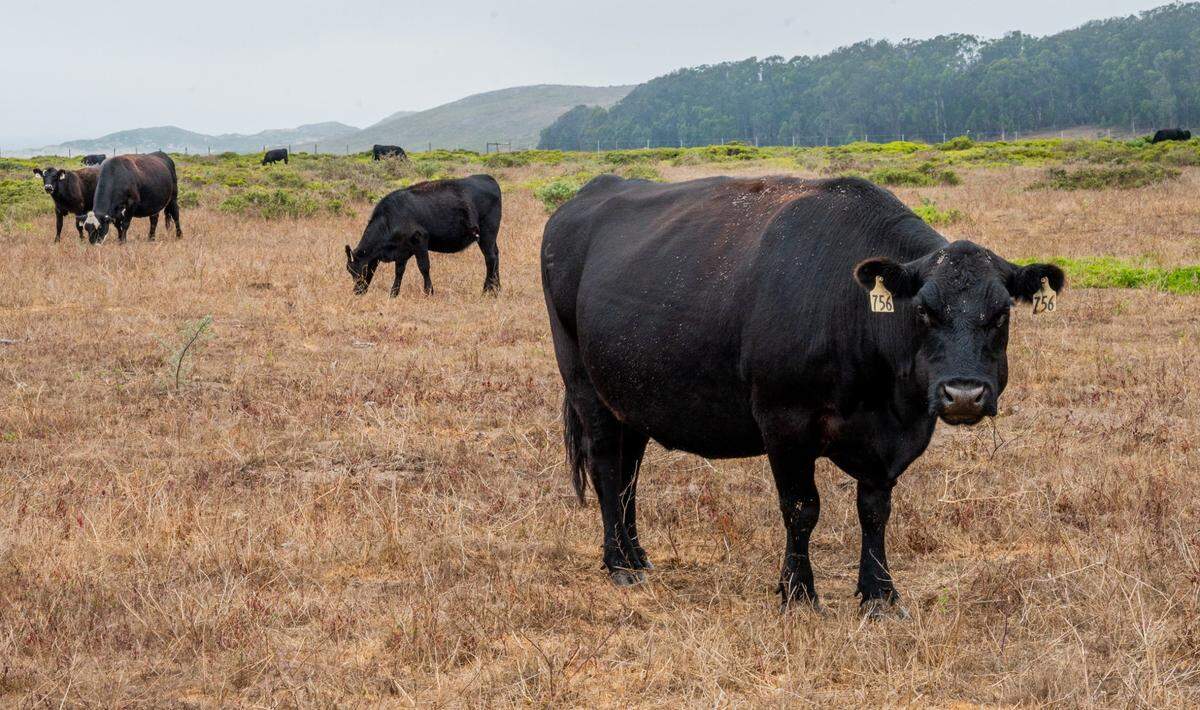
Since the 1800s, long before Point Reyes National Seashore was established, families have operated dairy and beef ranches along the coast. Farmhouses, barns and fields span the seashore with cattle dotting the hilly grasslands.
Twenty-four ranching families are managed by Point Reyes National Seashore. These ranches produce about 20% of Marin County’s agricultural products, supplying locally sourced cheese, milk and meat to the surrounding areas.
Congress recognized the cultural and historical significance of the ranches by creating the Pastoral Zone. Today, the ranching families lease the land within the national seashore instead of owning it.
Rep. Jared Huffman, a Democrat who represents the district, said ranchers are “fixtures in the community.” He said the families “are not big industrial, agricultural barons who are getting rich off of this lifestyle.” Instead, Huffman said “they’re struggling” as a result of economic pressures.
“They make a modest living and they work incredibly hard to do it,” Huffman said. “Mainly they do it because they’re passionate about what their family’s been doing since the 1800s.”
Kevin Lunny’s family has owned Lunny Ranch at the Historic G Ranch within Point Reyes National Seashore since just after World War II. The farm started as a dairy and in the 1970s switched to beef cattle production. Currently, it has 90 pairs of cows and calves.
Lunny said he wished elk advocates would speak to the ranchers about the seashore’s future.
“It’s disappointing because we really think we could sit down and educate each other,” Lunny said.
Huffman said he supports ranchers and dairies in continuing what has been done historically. He said he also loves the elk and respects the activists opposed to ranching.
“I want to push back against this false choice that you can’t have thriving elk herds and agriculture coexisting,” Huffman said.
Huffman does not want to see ranches removed, but he expects fewer in the future — a trend already occurring because of economic and public pressures on the seashore. In May, McClure Dairy, the largest and oldest dairy ranch at the seashore, closed.
“I disagree with those who think now is the time to just kick them all out of the seashore,” Huffman said.
Biologist Phillips thinks otherwise. Cattle have severely degraded the pasture lands, making coexistence between cattle and elk no longer possible, Phillips said.
“We should let the natural processes work in Point Reyes,” Philips said.
The parks service is working on the General Management Plan Amendment for Point Reyes that will replace the old plan from 1980. The park service was required by a 2017 court-approved settlement agreement to finalize the plan by July 14, but no decision has been announced yet.
The plan would extend leases for dairy and beef cattle ranches from five years to 20 years and will also allow the park service to shoot the free-ranging elk herds to limit their population numbers outside of the Tomales Point reserve.
“That’s causing a big uproar … native wildlife would be shot inside of a national park unit to help livestock, which are everywhere in California on private land,” said Western Watershed Project’s Cunningham.
The Point Reyes Ranchers Association currently has no comment on the issue.
Lunny said his ranch is on “pins and needles” waiting to hear if it has a future on the seashore.
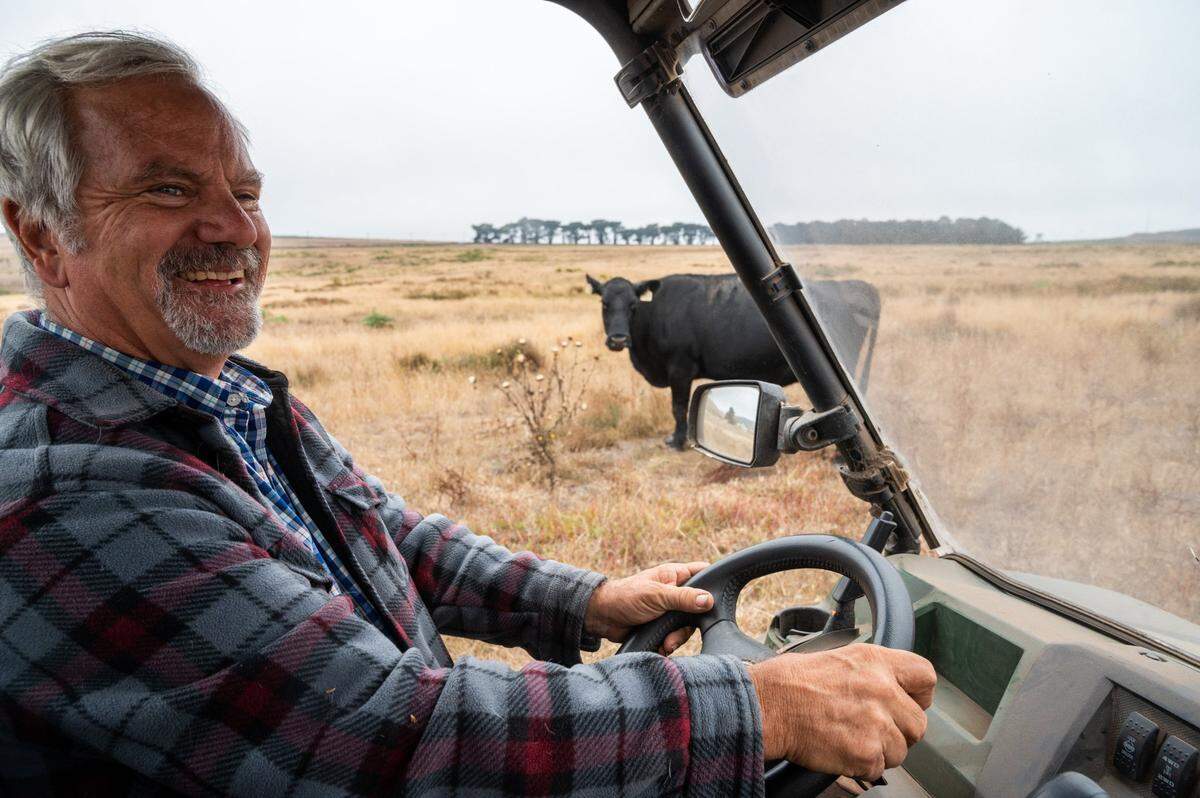
“The bank won’t work with us because we are on thin ice,” Lunny said.
Lunny acknowledged that much of the seashore’s land is degraded and is implementing management practices to keep the non-native plants at bay.
“We do know that there are people out there that don’t see it our way; they would rather see us gone,” Lunny said.
Native tribes in Point Reyes and their rights
Before ranchers kept cattle on the seashore, the Coast Miwok lived on what is now Point Reyes National Seashore. The Coast Miwok recognize the seashore as their ancestral land and, today, the Federated Indians of Graton Rancheria, a federation of Coast Miwok and Southern Pomo groups, works with the park service to manage the seashore.
The National Park Service is required to work with federally recognized tribes on issues of land management and the discovery of culturally significant items. At Point Reyes National Seashore, the Federated Indians of Graton Rancheria is the only federally recognized tribe in the area. The park service has worked with them in creating the General Management Plan Amendment, Gunn said.
The Federated Indians of Graton Rancheria will announce an updated partnership with the National Park Service in which the tribe will become more involved in the management of Point Reyes National Seashore, according to the chairman of the Federated Indians of Graton Rancheria, Greg Sarris.
“The tribe will partner with the National Park Service, using tribal ecological knowledge and science, to protect and preserve the elk,” Sarris said.
Similar to how the park is required to protect human remains, cultural artifacts and other significant materials to the Federated Indians of Graton Rancheria, they have plans to take care of the sacred elk, Sarris said.
The new partnership is one reason why Sarris and the Federated Indians of Graton Rancheria have stayed out of the lawsuit and remained neutral on the amendment plan.
The Coast Miwok Tribal Council of Marin, made up of lineal descendants of the original inhabitants of Point Reyes, have a different perspective. The tribe has publicly come forth objecting to the prioritization of cattle ranching and killing of tule elk at the seashore.
“What do people come to Marin County for in the first place, to see the freakin’ dairy ranches?” said Jason Deschler, the cultural preservation officer of the Coast Miwok Tribal Council of Marin.
Deschler supports the protection of elk herds and the restoration of grasslands without ranching. Deschler has issues with the current General Management Plan — as the leases were originally meant to be temporary.
“We have an issue with following through and being a man of your word,” Deschler said. “If that’s not going to happen, well then guess what? Intergenerational trauma kicks in.”
While the Coast Miwok Tribal Council of Marin and the Federated Indians of Graton Rancheria have different perspectives on who should manage the seashore, they both see the restoration of the native landscape as the ultimate goal.
“We know that Point Reyes needs to heal,” Sarris said.
The elk activists know that as well.
Gescheidt and his fellow activists await the next step in the lawsuit. If it goes in their favor, future visitors to Point Reyes National Seashore could see the Tomales Point fence removed, ranching outlawed at the seashore and free-ranging elk dotting the former cattle pastures.
Cunningham said these changes would even benefit visitors to Point Reyes, creating more recreational opportunities.
“Whatever I can do about it — raise my voice, work with other activists who are in this coming from all different directions, I’m thrilled to do,” Gescheidt said. “It gives me a feeling of purpose and importance and that my life is not for nothing.”
This story was originally published August 8, 2021 at 5:00 AM.