California reservoirs and snowpack see big boosts as storms ease drought conditions
California’s drought is not over, but a cavalcade of atmospheric river storms over the past three weeks has brought substantial relief to the state’s water crisis in at least the short term, with big recent boosts to snowpack and reservoir levels.
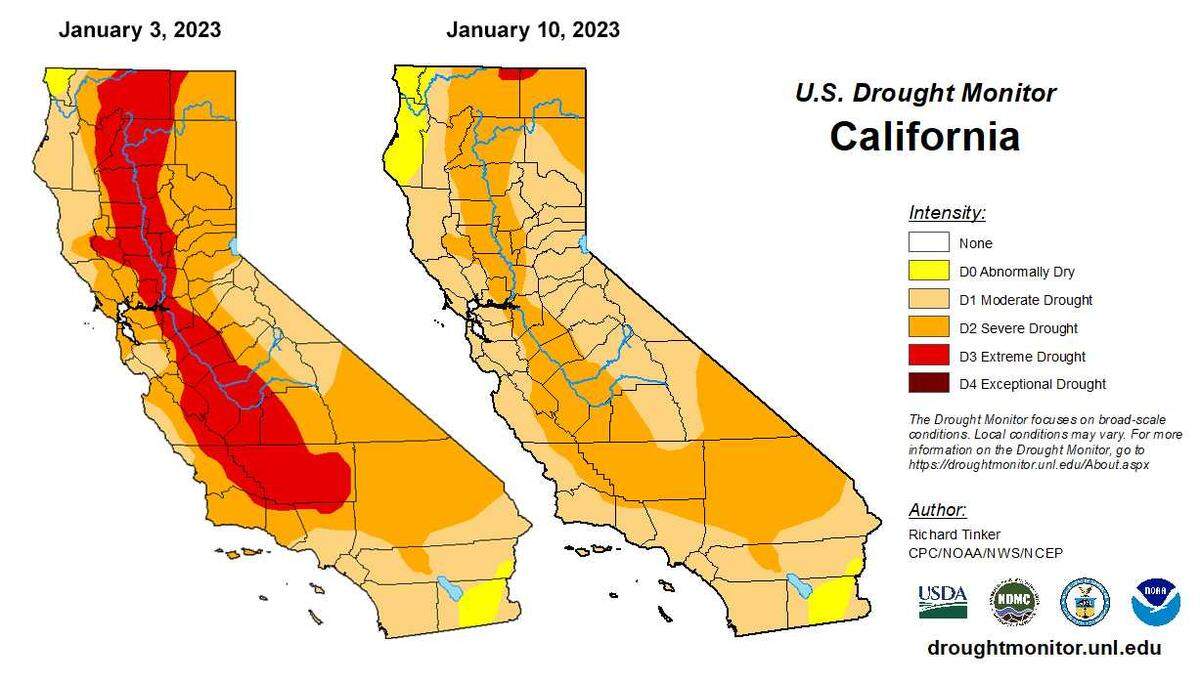
Less than half of 1% of California is now classified in either “extreme” or “exceptional” drought conditions, according to a weekly update Thursday from the U.S. Drought Monitor – down from 27% just one week earlier and from 41% at the start of the current water year on Oct. 1.
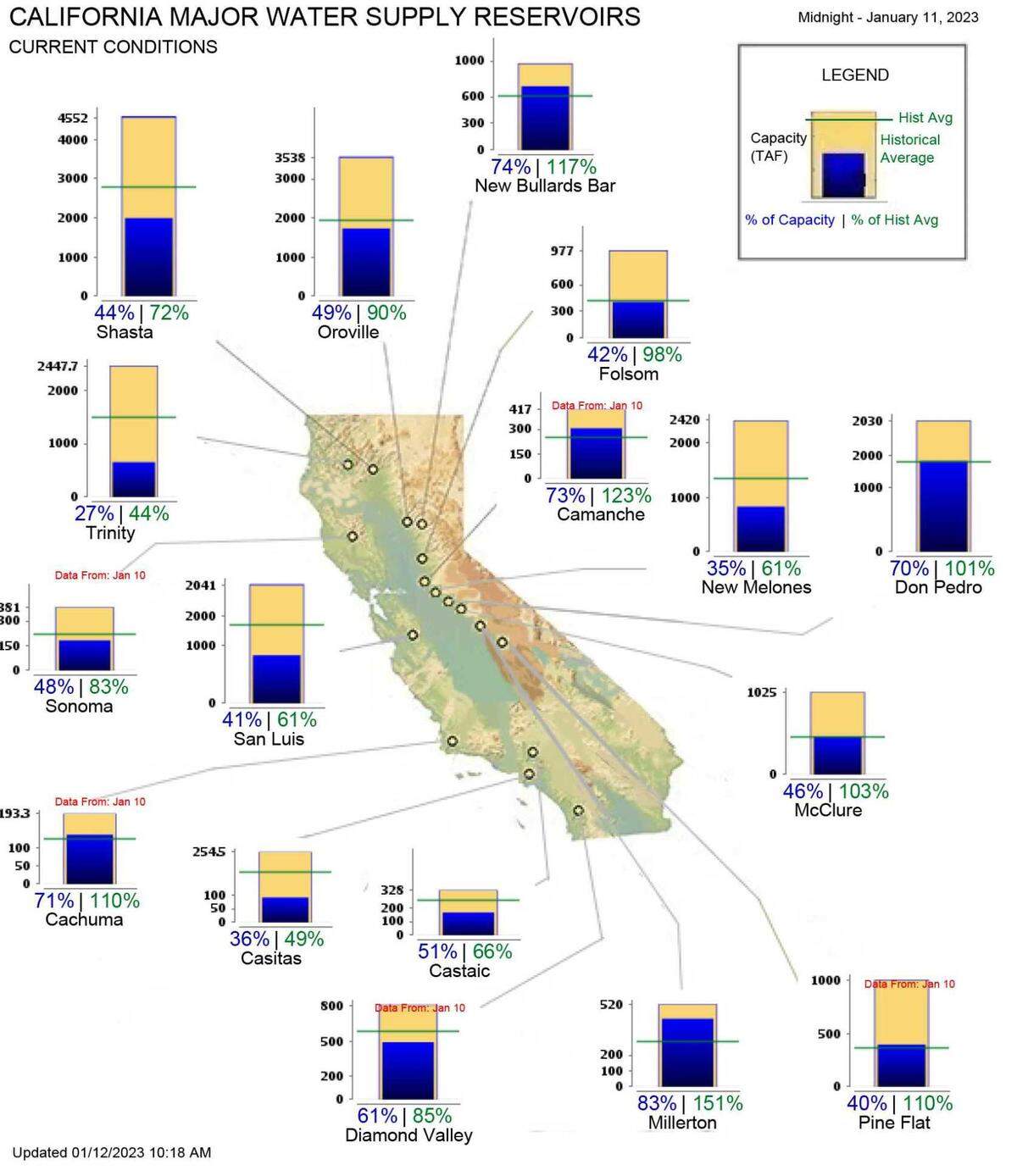
After the recent downpours, seven of California’s 17 major reservoirs are now above their historic average, up from only one reservoir above average to start December, according to the California Department of Water Resources. Folsom Lake is close to its average at 98%, compared to 64% on Dec. 1.
The state’s two largest reservoirs, Shasta Lake and Lake Oroville, are still below average but have also seen solid increases. Shasta Lake is now at 72% of its average for the date, up from 57% on Dec. 1; and Lake Oroville is at 90%, up from 55%.
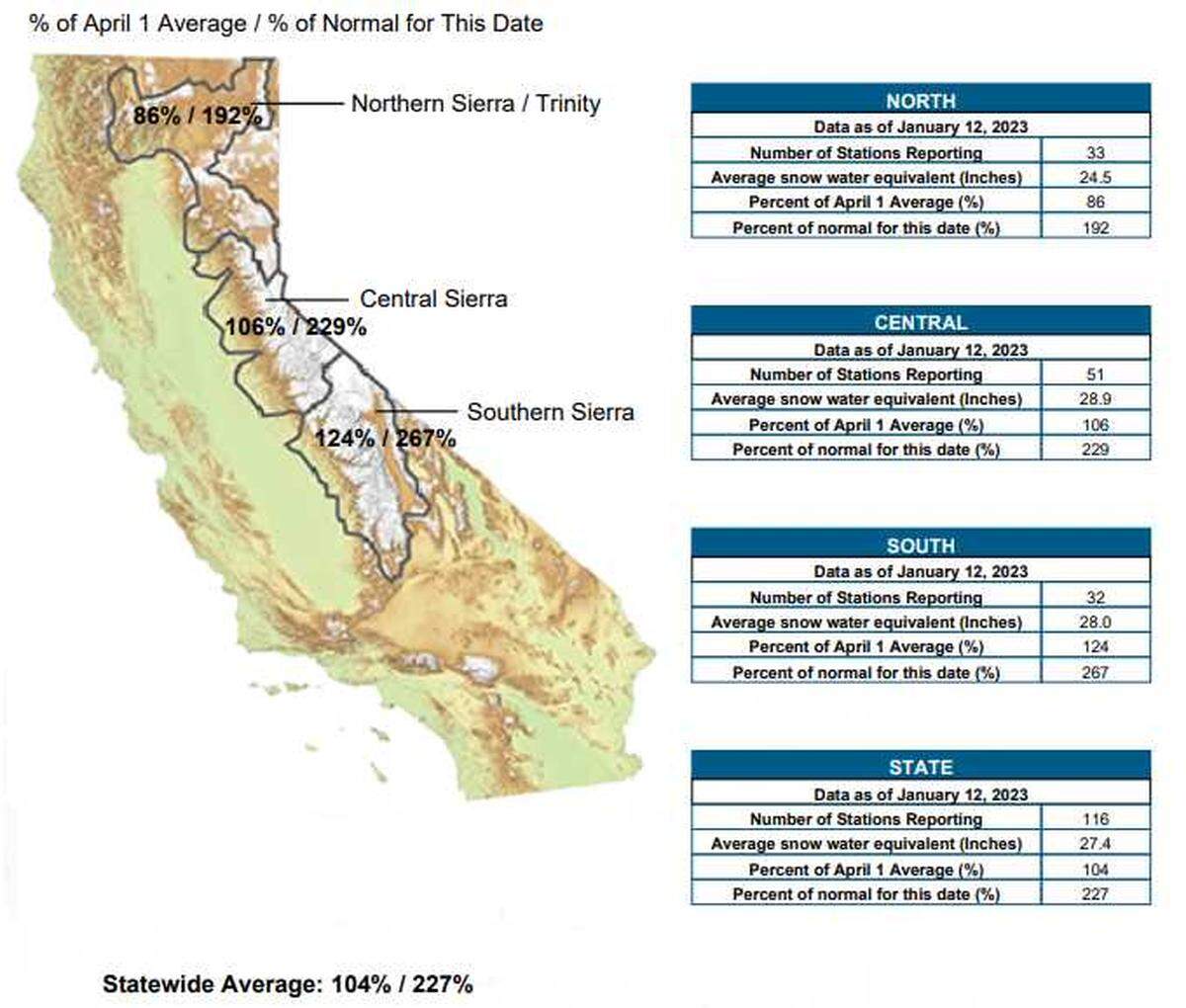
Storms have dumped feet of snow in the Sierra Nevada mountains, whiting out highways at times. Statewide snowpack stood at 227% of normal for this point in the year, state water officials reported Thursday, with the central Sierra range at 229% of normal.
California’s drought relief comes with deadly consequences
Karla Nemeth, director of the Department of Water Resources, said earlier this week that California “is experiencing coincidentally both a drought emergency and a flood emergency.”
Vast improvements to statewide drought conditions come as a string of six atmospheric river systems have rolled through California since late December, battering the state with howling wind gusts, widespread power outages and deadly flooding.
Gov. Gavin Newsom said Tuesday that at least 17 people have died in the storms and ensuing flooding. That total includes at least five killed in Sacramento County: three in floodwaters from a New Year’s Eve storm, as well as a homeless man and woman killed in two separate incidents this past weekend, after trees fell atop their tents.
Gusts in the Sacramento area topped 70 mph at one point early Sunday morning, and nearly 350,000 homes and businesses across the county lost power.
Short-term precipitation totals have been astonishing: more rain fell in downtown Sacramento during the 16-day stretch of Dec. 26 to Wednesday than fell in the calendar years of 2020, 2015 or 2013, according to the weather service. The city recorded 9.58 inches in just over two weeks – more than half the city’s historic average for a full year, which is 18.3 inches.
At least two more strong storms are in the forecast between this Friday and next Monday, according to the National Weather Service.
When might California’s drought finally end?
Ending the state’s ongoing drought, which is now in its third year, will take even more sustained wet weather.
Last winter demonstrated that a wet start to the water year is not always enough. A torrential storm in October 2021 brought the rainiest day in Sacramento history, and another powerful system in December brought record snowfall to the central Sierra. But record-low precipitation followed from January through March for both Sacramento and the central Sierra, leaving the drought to linger.
“Should we have continued reservoir refill and healthy snowpack numbers come spring, we should be looking at adequate surface water supplies for this summer and drought relief for many sectors,” John Abatzoglou, a climate and weather expert at the University of California, Merced, said last week.