What’s TID doing with storm runoff? Two of Newsom’s Cabinet members visit to see
Top state officials gathered on a canal bank near Keyes to witness the possible future of flood management.
The Turlock Irrigation District is testing the idea of spreading city storm runoff across farm fields. The water could help build back Central Valley aquifers as it seeps far beneath the soil.
TID hosted the demonstration Wednesday at an almond orchard owned by Christine Gemperle and her brother, Erich Gemperle. Two members of Gov. Gavin Newsom’s Cabinet were on hand, as were other state and local leaders.
They agreed that managing floods should involve not just dams and levees but letting excess flows recharge groundwater on farms and other lands. Over-pumping and drought have shrunk aquifers in many parts of the Valley.
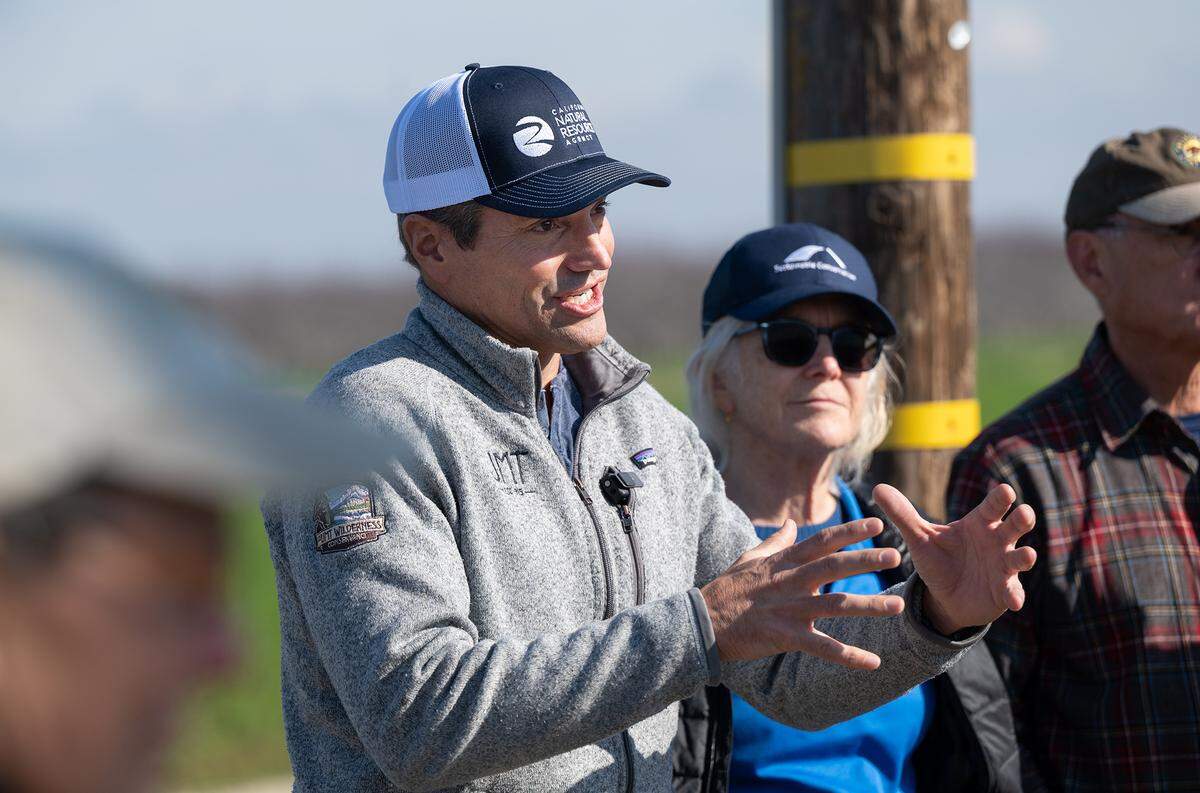
“We’re protecting down-river communities,” Resources Secretary Wade Crowfoot said. “We’re recharging basins and taking pressure off the surface reservoirs. We’re helping our agricultural industry that’s facing more and more uncertainty.”
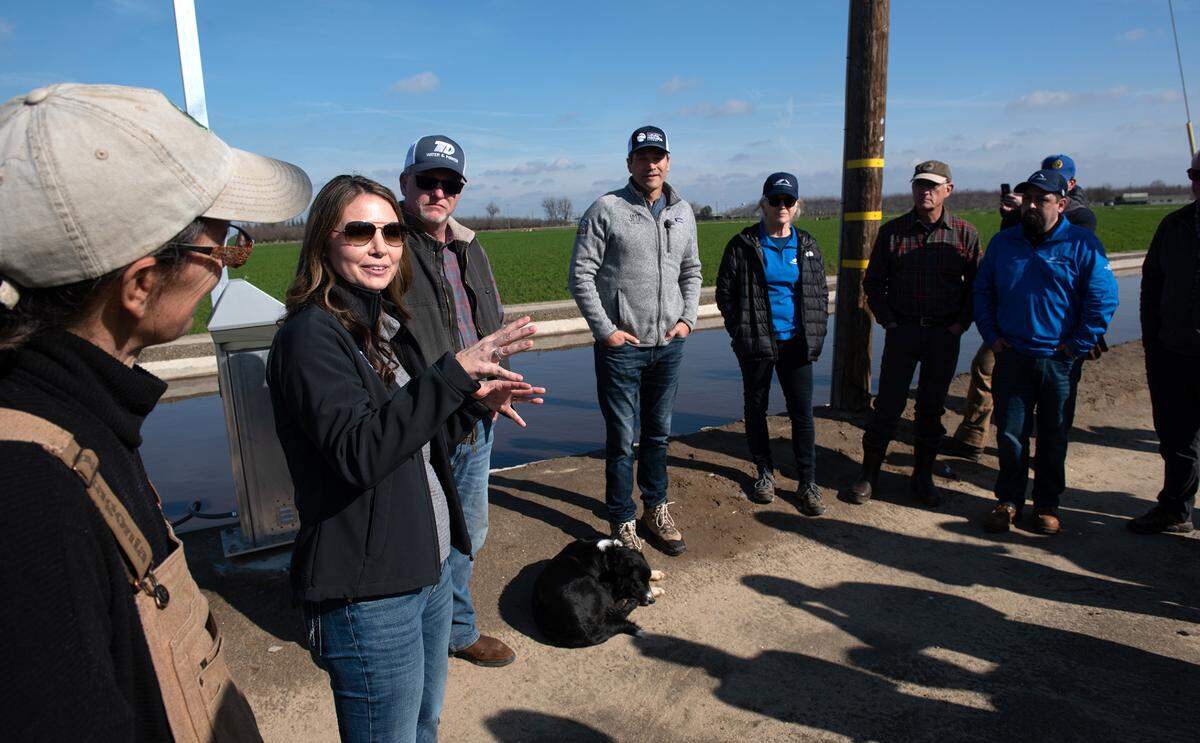
TID launched the recharge project in October with Sustainable Conservation, a nonprofit based in San Francisco, and the California Department of Water Resources.
It started with two almond orchards in the Ballico area of Merced County. The Gemperle orchard was added this month, amid a spate of rainstorms pummeling the state.
Recharge through farm soil is nothing new, TID General Manager Michelle Reimers said. Her district and the adjacent Modesto Irrigation District have long allowed extra deliveries of Tuolumne River water at season’s end, if it’s available.
The pilot project involves concentrating storm runoff on farms with sandy or other well-draining soil. The partners are assessing whether the practice would harm the trees.
TID shuts down its canals for maintenance each winter, but they still can carry storm runoff from Turlock, Ceres and other cities. Normally, this water discharges into the Merced and San Joaquin rivers, where it could add to the flood threat in years like this.
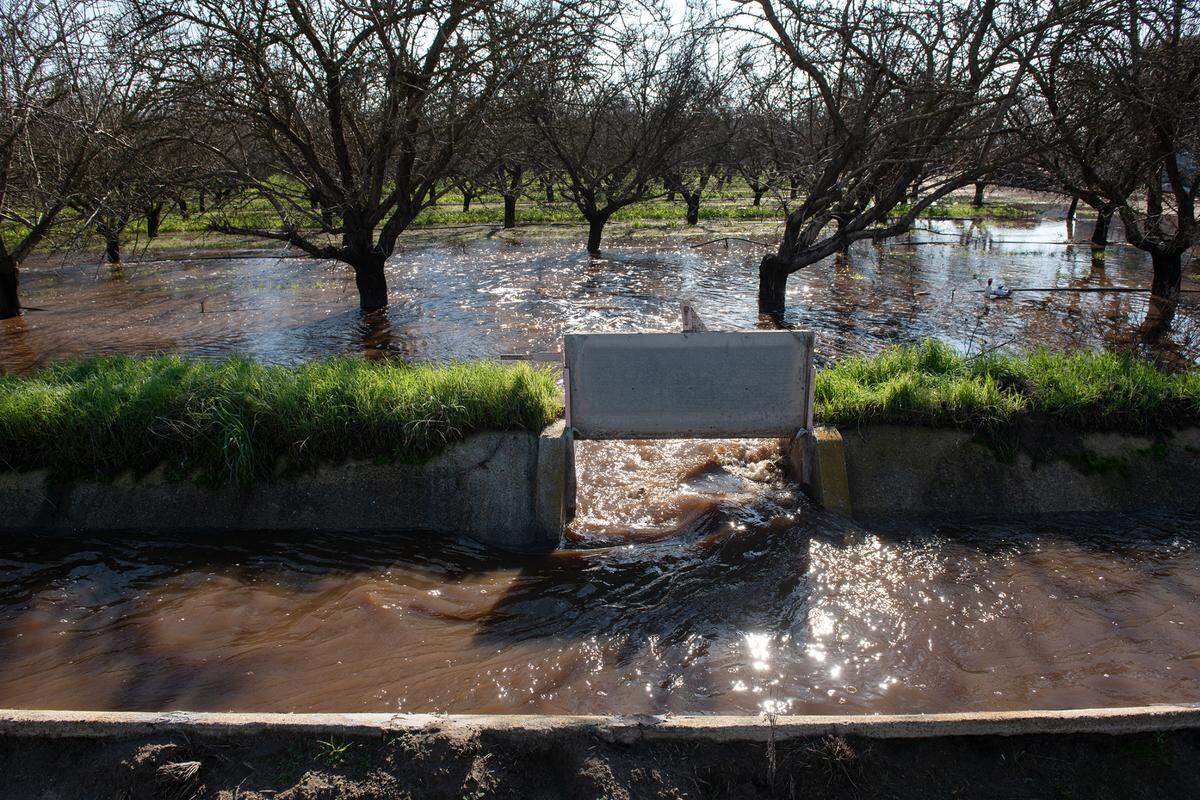
At the 40-acre Gemperle place on Faith Home Road, the water got as deep as 4 inches as it was delivered Jan. 12 through 14. The next two days brought rain, and it too drained into the ground, Christine Gemperle said.
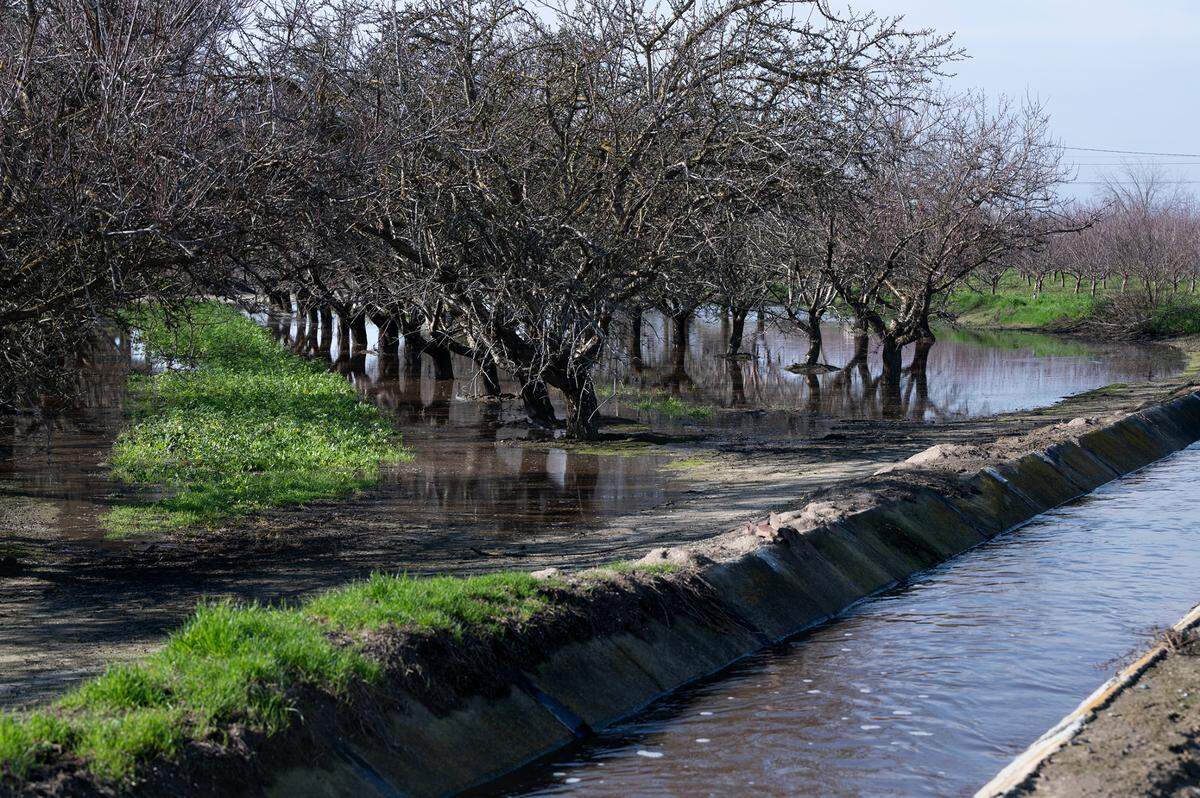
Wednesday’s visitors watched as Gemperle cranked a valve on the canal that released another shot of storm runoff toward her orchard. It would run for about 12 hours after they departed.
Gemperle is among the pioneers in planting varied flowers amid almond trees to help sustain pollinating bees each winter. She said the intentional flooding did not damage these plants but did have the benefit of reducing gophers, which can gnaw on the trees.
On-farm recharge meshes with efforts to restore natural floodplains on Valley rivers, said Charlton Bonham, director of the California Department of Fish and Wildlife.
He cited Dos Rios Ranch at the confluence of the Tuolumne and San Joaquin. The nonprofit River Partners and its supporters have planted native trees, brush and grass on about 2,100 former farm acres over a decade.
Crowfoot oversees water, wildlife, parks and several other functions for Newsom. The secretary helped secure money to add part of Dos Rios to the state park system, with the first public access possibly by year’s end.
Karen Ross, secretary of food and agriculture for Newsom, also watched the TID demonstration.
“If we can use our natural landscapes, our working landscapes, to protect communities from the devastation of floods, that’s very compelling,” she said.
Sustainable Conservation, which has a branch office in Modesto, has worked with farmers on water issues since 1993. On-farm recharge is an especially helpful way to deal with the more erratic rain expected with climate change, said Daniel Mountjoy, director of resource stewardship.
He noted a Merced County study suggesting that recharge could handle 65% of the increased flood flows expected in the future.
Mountjoy said asking farmers to flood their fields seems to conflict with the need to increase efficiency through drip lines that deliver only what each plant needs. He said pilot projects like TID’s can show that the overall supply is better thanks to recharge.
Advocates say groundwater recharge is cheaper and faster than new reservoirs, and less controversial. Crowfoot praised TID for how “nimbly” it can switch its canals to this purpose.
The secretary also said he would work to streamline the water rights process to assure that it does not hamper storm runoff capture.
“We work for a guy, the governor, who has lit a fire under us, particularly on recharge here after these storms,” he said.
This story was originally published January 20, 2023 at 5:00 AM with the headline "What’s TID doing with storm runoff? Two of Newsom’s Cabinet members visit to see."