
About 75,000 people work in Sacramento restaurants and bars. They face economic disaster
Sacramento bars and restaurants should have been packed with revelers. But on this St. Patrick’s Day, hardly anyone was out wearing the green.
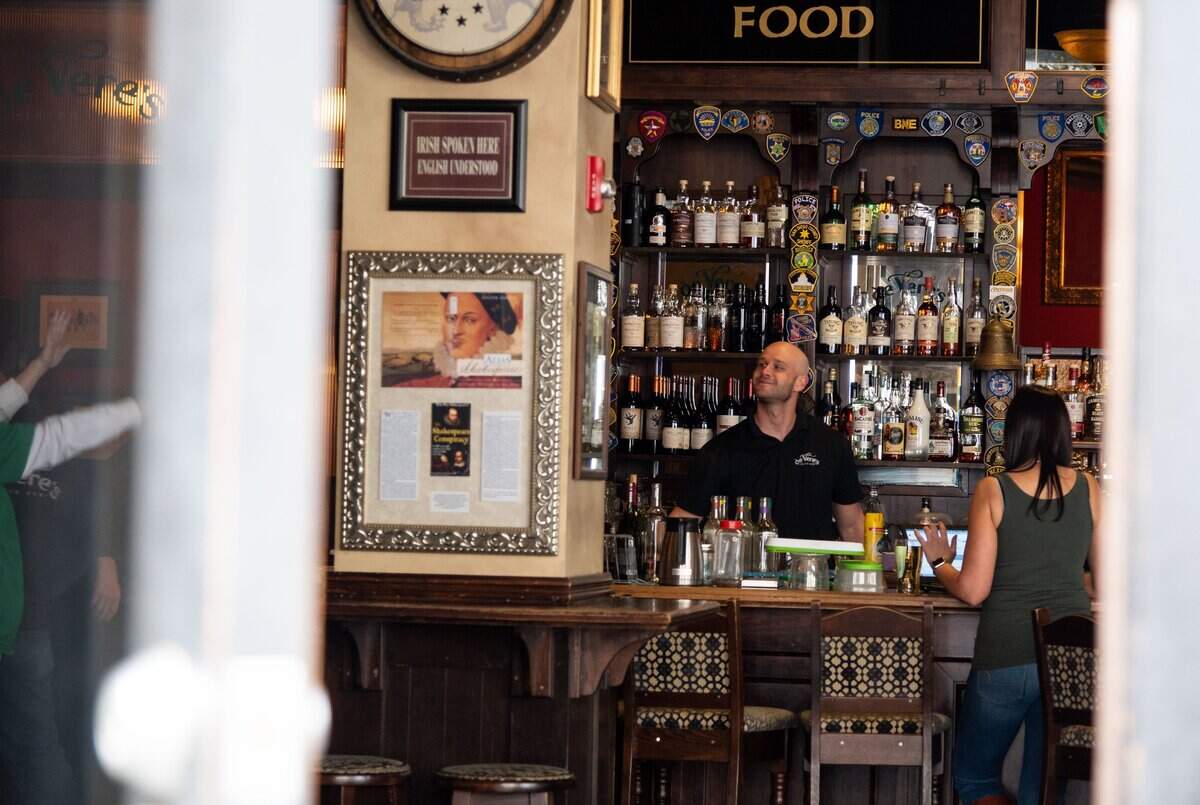
“It’ll be corned beef and cabbage to go, and tonight we raise a glass of whiskey ... and then we’re going to put our pub to sleep until this is all over,” said Henry de Vere White, owner of de Vere’s Irish pub on L Street in Sacramento, as he stood outside his shuttered restaurant. He planned to offer takeout service all day and then close altogether at nightfall.
Three blocks away, Broderick Roadhouse remained open as owner Chris Jarosz tried to squeeze out whatever revenue he could before a seemingly inevitable shelter-in-place order was issued. The city issued the order Tuesday afternoon, by which time Broderick was already focusing on how to sell reheatable, take-home family meals.
Even though Broderick stayed open, St. Patrick’s Day wasn’t exactly a party, Jarosz said. Introducing specials felt inappropriate, he said, and half the restaurant and bar’s tables had been removed to fit social distancing guidelines. Add in front-of-house staff’s concerns about how long they’d be without work — some have offered to be delivery drivers, Jarosz said — and the mood wasn’t particularly festive.
“I actually feel like we probably should be closed, but we’re just trying to get our payroll covered before we have to close in the next 24 hours or so,” Jarosz said. “There are no lucky charms on this St. Patrick’s Day, that’s for sure. It’s just ‘How do we survive this?’”
The coronavirus pandemic closed down practically the entire restaurant industry Tuesday. The livelihoods of more than 75,000 area residents were thrown into jeopardy, representing 7 percent of the Sacramento job market and putting more dead weight on an economy that, experts said, had already entered a steep recession.
“Margins are thin in the restaurant industry already,” said economist Jeff Michael of the University of the Pacific. “If you’re set up as a full-service in particular, it’s going to be very difficult. .... We’ll see some permanent shutdowns.”
The industry found itself struggling to keep up with the breathtaking pace of directives issued by state leaders. On Sunday Gov. Gavin Newsom urged bars to close and restaurants to limit the number of customers they served. Late Monday, Newsom ratcheted up his guidance, declaring that restaurants should suspend all dine-in service and limit themselves to pickup or delivery business.
Fewer than a dozen pedestrians were walking around Old Sacramento during lunchtime Tuesday, as O’Mally’s Irish Pub shut its doors.
Although Mayor Darrell Steinberg on Tuesday joined Newsom in urging bars to close and restaurants to halt in-person service, a few establishments were open. An employee said Ma Jong’s Asian Diner on L Street would serve customers inside but would resort to takeout-only meals after 3 p.m.
Club Raven stayed open as well but was significantly slower than a normal St. Patrick’s Day, bartender Craig Dougherty said. He didn’t expect the East Sacramento bar to pick up much more traffic as the day went on, though he conceded that St. Patrick’s days that fall during the middle of the week are typically a little less busy.
Asked about the cleanliness of the facility, Dougherty said, “We’re keeping it clean like normal.”
Staggering list of restaurant closures
Within hours, the farm-to-fork business had gone hand-to-mouth. Many restaurants chose to close down completely rather than try their hand at take-out. The list of complete closures was staggering and included some of the region’s iconic restaurant names.
Tower Cafe. The Waterboy. Mulvaney’s B&L. Canon. Paragary’s. Ella Dining Room & Bar.
Of those attempting to serve takeout meals, the early returns weren’t encouraging. Shortly before noon, a manager at Joe’s Crab Shack, normally a bustling spot on the Old Sacramento waterfront, said the restaurant had served one takeout customer.
Others offering takeout included Mikuni’s (all nine locations), Woodlake Tavern, Red Rabbit and Selland’s Market Cafe’s three locations in the region.
Perhaps the hardest hit restaurants are those that have barely established themselves. Jim’s Good Food, a recently opened restaurant in midtown, started a GoFundMe page for its employees. The effort raised $3,541 by lunchtime Tuesday.
In Roseville, Ausaf Ahmed held a grand opening for Falafel Corner over the weekend even as the pandemic was turning increasingly serious.
“We had all the arrangements and everything,” Ahmed said. “We ended up with a limited crowd, family and friends.” He said the takeout business has been reasonably strong so far.
As concern spread throughout the business community, the Sacramento Metro Chamber announced its president, Amanda Blackwood, would hold a “virtual town hall” Wednesday with Mayor Steinberg to discuss the state of the area economy. The chamber urged restaurant owners and other small business people to seek disaster loans that have been made available by the U.S. Small Business Administration.
The suddenness of the downturn brought back sour memories of the 2008 financial crash. “The steepness of the contraction right now is more than 2008, or comparable to 2008,” Michael said.
But the UOP economist said there’s a major difference now. The last recession was marked by a slow and painful recovery. This time, it’s possible the economy could rebound fairly quickly once the pandemic subsides and stir-crazy consumers return in droves to restaurants, sports arenas and other venues that have gone dark.
“This could be a V-shaped downturn,” he said. Stimulus packages being discussed by the Trump administration would help with a quick recovery, he said.
In the meantime, though, restaurant owners were struggling to deal with the here-and-now. And even if relief is available, restaurateurs whose native language isn’t English may have difficulty navigating the necessary avenues to retrieve it, Jarosz said.
“This is going to flatten a lot of small businesses,” de Vere said in front of his empty pub. “Landlords are going to have to forgive rents. (Food) purveyors are going to have to (temporarily) forego payments.”
He said he was planning to furlough employees at his downtown pub, the sister pub in Davis and The Snug bar on R Street, while he was attempting to learn about the full range of benefits.
“It’s hard to not know what to tell your staff,” he said. “You want to tell them the truth but it keeps changing, every 15 minutes.”
This story was originally published March 17, 2020 at 2:18 PM.