Coronavirus updates: ‘Deadliest day’ as 115 die in California; unemployment still soaring
Death tolls are still climbing worldwide and the coronavirus pandemic continues to devastate the U.S. economy.
The United States has reported more than 866,000 confirmed cases of COVID-19, the disease caused by the highly contagious virus, and over 49,000 people have died nationwide, according to data maintained by Johns Hopkins University.
“Yesterday was the deadliest day for this virus” in California, Gov. Gavin Newsom said during Thursday’s daily news conference.
Between noon Wednesday and noon Thursday, at least 115 people died of COVID-19, the governor said. That represented an 8.5 percent increase from Tuesday’s fatal statistics.
“It’s a reminder we’re not out of the woods yet,” he said in announcing the latest figures.
California, which has recorded at least 1,514 deaths according to a Sacramento Bee survey of counties’ health departments, has been been shut down for five weeks as of Thursday.
Newsom on March 19 issued a statewide stay-at-home order telling Californians they may only leave their residence for essential purposes, an unprecedented measure designed to slow the spread of the virus and “bend” the pandemic’s growth curve to manageable levels.
Speaking at a daily news conference Wednesday, Newsom said “there is no date” for when sectors of the economy that have shuttered can be reopened, maintaining that despite calls from local leaders in several parts of the state, the stay-at-home order cannot be significantly loosened until California improves in six key areas. More widespread testing and the ability to contact-trace confirmed cases represent the top item on that list.
The pandemic’s economic impact has been enormous across the state and the nation, reflected in the weekly unemployment figures released by the U.S. Department of Labor early Thursday.
Americans filed 4.4 million new claims for unemployment insurance last week, a slight decrease from 5.2 million the week before, but nonetheless bringing the five-week total to a massive 26 million unemployed.
California reported more than 530,000 new unemployment claims for the week ending April 18, according to the Department of Labor. The nationwide figures are seasonally adjusted; the state numbers are not. Newsom at the start of Thursday’s daily news conference said more than 3.3 million Californians have filed for unemployment since March 12.
5 more deaths in Sacramento County, 61 dead in region
Five new deaths from the coronavirus were reported in Sacramento County on Thursday morning, the second-largest day-to-day increase in fatalities since the pandemic began.
The county has now reported 41 total deaths among 987 confirmed cases of COVID-19, the disease caused by the highly contagious virus, according to an update shortly before 9 a.m. The infection total increased by 16 from the previous day.
There have been a total of 1,318 lab-confirmed coronavirus cases and 61 COVID-19 deaths across Sacramento, El Dorado, Placer and Yolo counties as of Wednesday afternoon.
Sacramento County reports 41 deaths among 987 confirmed cases, as of about 9 a.m. Thursday. Of the fatalities, 22 have come in the capital city, four in Citrus Heights, three in Elk Grove, two in Rancho Cordova and 10 in unincorporated parts of the county, according to the county public health department website.
El Dorado County has reported 40 cases of COVID-19 so far with no deaths, as of Thursday afternoon, according to its public health department. There was one new case reported Thursday; a man from the Lake Tahoe area. El Dorado Hills area has the highest concentration of cases, with a total of 15 infected there. Fourteen tested positive in the Lake Tahoe area, five in the greater Placerville area and the rest are scattered throughout the foothills.
Placer County reports 136 confirmed coronavirus cases and eight total COVID-19 deaths, last updated 10:45 a.m. Thursday. Just three new cases were reported between Wednesday and Thursday’s updates. More than 110 of the cases have come in South Placer, which includes Roseville, Rocklin and Lincoln, according to the county’s public health website.
Yolo County reported 155 cases and 12 fatalities as of Thursday afternoon, including four new cases since Wednesday. One of those new cases occurred in Woodland, which accounts for about half of all confirmed cases at 79; followed by West Sacramento with two new cases reported Thursday for a total of 48; one new case in Davis for a total of 17; and 11 in Winters and unincorporated Yolo County.
L.A. County makes up about half of state’s deaths
Los Angeles County now has more COVID-19 hospitalizations than the rest of the state combined, and almost as many deaths, according to the latest California Department of Public Health figures.
The county — home to about 25 percent of the state’s population — accounted for about 56 percent of its hospitalized COVID-19 patients as of Wednesday. Exactly half of the state’s COVID-19 ICU patients were in Los Angeles as of then.
Almost 730 Los Angeles County residents had died from COVID-19 as of Wednesday, or 49.6 percent of the state’s deaths.
COVID-19 death rates have been high in several large cities nationwide, including New York City, Chicago, Detroit and New Orleans. It may be harder to avoid the disease in densely-populated areas.
However, Los Angeles County has a much higher rate of deaths per capita than San Francisco County and San Diego County, two other urban hubs in California.
Some cities and counties recently asked Newsom to let them reopen parts of their economy, arguing that their COVID-19 rates are not as high as in places like Los Angeles.
Newsom’s latest updates on testing, surgeries and more
In a daily news briefing Thursday afternoon, California Gov. Gavin Newsom announced Thursday that 21 of the 24 largest student loan servicers have agreed to a 90-day forebearance of loan repayment collection. This comes about as an effort led by Illinois Gov. J. B. Pritzker, Newsom said.
The governor also announced that many Californians who had their federal stimulus checks garnished by debt collectors can expect to get them back. Newsom said that he signed an executive order prohibiting most debt collectors from garnishing such checks, and that the order is effective immediately and retroactive.
On Wednesday, Newsom announced hospitals “can begin to schedule surgeries,” such as elective tumor removals or other preventive care, the first formal loosening of the governor’s stay-at-home order since it was issued. Hospitals and health systems have remained unburdened enough for those types of procedures to resume, the governor said.
On Thursday, Newsom said the number of hospitalizations declined 0.4 percent, while the number of ICU patients fall by 1.2 percent.
Newsom and state health officials also said California is currently performing 16,000 diagnostic tests for the coronavirus per day. The goal remains to reach 25,000 daily tests by the end of April, a week from now.
Eight days before Wednesday, on April 14, the state was at 10,000 tests a day. About two weeks earlier, at the end of March, only about 2,000 tests were being conducted each day.
Beyond April, the “Phase One, short-term” goal for daily testing ranges from 60,000 to 80,000 tests, Newsom said, having previously described Phase One as the time period extending roughly through mid or late May.
He also said that 86 new sites will soon open across the state with an emphasis on “testing deserts,” which include rural areas and “black and brown communities.”
Renters across California struggle to pay
A Sacramento Bee analysis suggests that more than 300,000 California renters, many of them out of work, will be unable to pay rent until the economy reopens. In Sacramento County, 12,000 to 19,000 renters may end up not paying rent in the next three months, putting them in aggregate debt of $50 million to $90 million.
A number of renters report they used their one-time federal $1,200 stimulus check to pay the April rent, or plan to use it for the May rent. But many renters have no savings, and are already faced with other debt.
By June, California renters could be $2 billion in the hole on unpaid rent. Landlords will fall into greater debt and could risk losing their properties if they can’t make the mortgage. Sacramento rental housing industry consultant Jim Lofgren said some landlords, notably smaller operators, may be overwhelmed. He’s telling those landlords to contact their lenders, even if they don’t think their lender will be flexible.
Everyone in the rental ecosystem — from renters and landlords to mortgage companies, banks, investors and state and local governments — face a financial crisis, the extent of which could depend on when California’s economy is able to reopen.
Resorts, restaurants, small businesses hope for relief by summer
Resort towns and vacation hubs like the Lake Tahoe area have been urging tourists to keep away for the past month, fearing visitors would spread the coronavirus to the local population and overwhelm small-town health care networks.
But with those regional economies depending heavily on things that have been suspended indefinitely across the state — large gatherings, recreational travel, etc. — the hit to some businesses has been a death blow.
The Lakeside Inn and Casino in Stateline, near Tahoe, recently announced it wasn’t going to survive the coronavirus shutdown and closed permanently just shy of its 36th anniversary.
There’s an itch within the business community to reopen and “salvage” this summer, the peak season at the lake.
The four major south shore casinos remain closed, with no timetable for reopening, but industry consultant Ken Adams said casino executives across Reno and Tahoe “are starting to talk more about, ‘What’s the plan for reopening?’ ” The answer may some combination of reduced capacity on the casino floor as well as staffers wearing masks.
On the north side of Tahoe, 70 percent of the housing stock consists of vacation homes and about 60 percent of the workforce depends on tourism, according Liz Bowling, spokeswoman for the North Lake Tahoe Resort Association.
The business impact of the shutdown is by no means confined to Tahoe casinos or vacation spots.
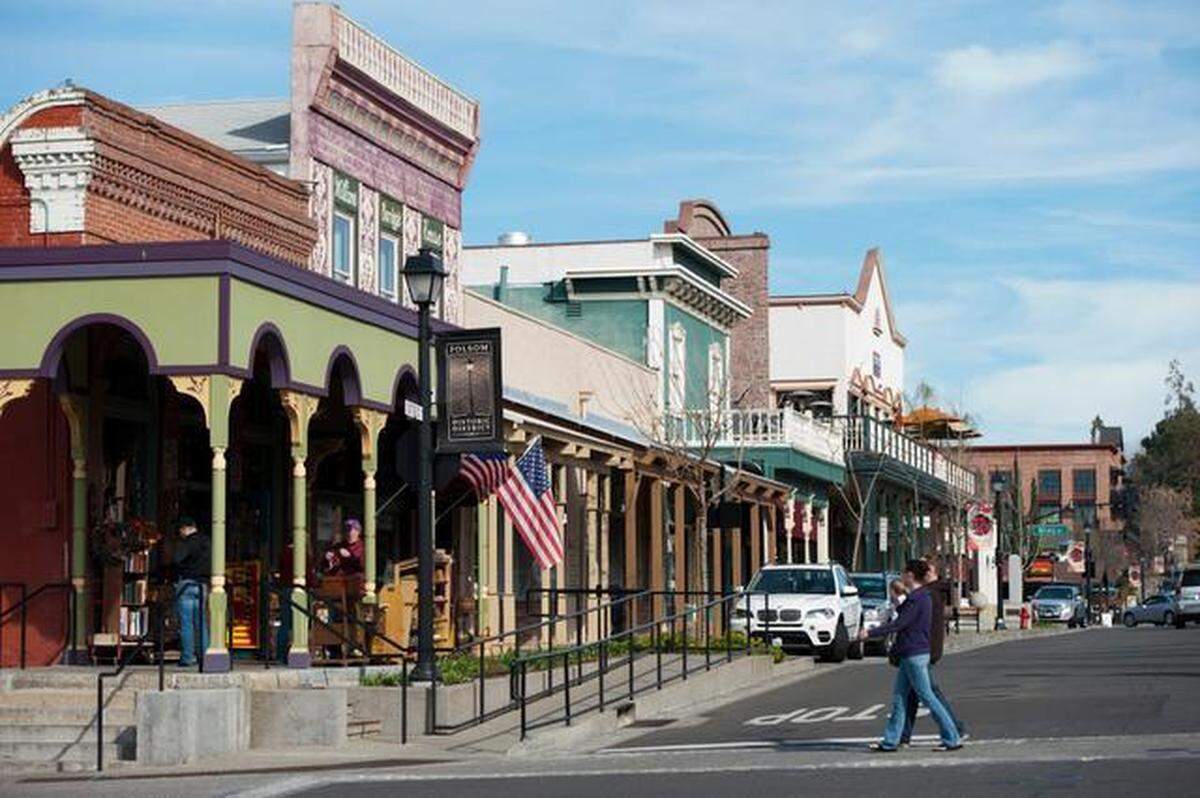
Popular restaurants and small businesses in the Sacramento area have been ravaged for the past month, forced to either adapt their business models drastically, shut their doors indefinitely or close permanently. The latter happened to Sutter Street Grill, a mainstay of Folsom’s Historic District that has stood for more than 20 years but on Wednesday announced it will not reopen.
World numbers: More than 190,000 dead, highest toll in US
More than 2.7 million people have been infected by the coronavirus worldwide, according to the Johns Hopkins data map, and over 190,000 of those have died.
The United States has reported by far the most confirmed cases (more than 866,000) and fatalities (over 49,000) of any nation. New York state was approaching 21,000 deaths as of Thursday afternoon, more than 16,000 of which have come in New York City. New Jersey has eclipsed 5,000 dead, Michigan is approaching 3,000 and Massachusetts has over 2,300.
California, Pennsylvania, Illinois, Louisiana and Connecticut all have reported between 1,500 and 2,000 COVID-19 fatalities as of Thursday afternoon.
Worldwide, Italy and Spain follow the U.S. at about 25,500 and 22,000 confirmed coronavirus deaths so far, respectively. Nearly 22,000 have died in France, according to Johns Hopkins. The United Kingdom has surpassed 18,000, Belgium is near 6,500, about 5,500 have died in Iran and more than 5,400 have died in Germany.
What is COVID-19? How is the coronavirus spread?
Coronavirus is spread through contact between people within 6 feet of each other, especially through coughing and sneezing that expels respiratory droplets that land in the mouths or noses of people nearby. The CDC says it’s possible to catch the disease COVID-19 by touching something that has the virus on it, and then touching your own face, “but this is not thought to be the main way the virus spreads.”
Symptoms of the virus that causes COVID-19 include fever, cough and shortness of breath, which may occur two days to two weeks after exposure. Most develop only mild symptoms, but some people develop more severe symptoms, including pneumonia, which can be fatal. The disease is especially dangerous to the elderly and others with weaker immune systems.
This story was originally published April 23, 2020 at 7:58 AM.