
Here’s what we know about the COVID vaccine for children ages 12 and up
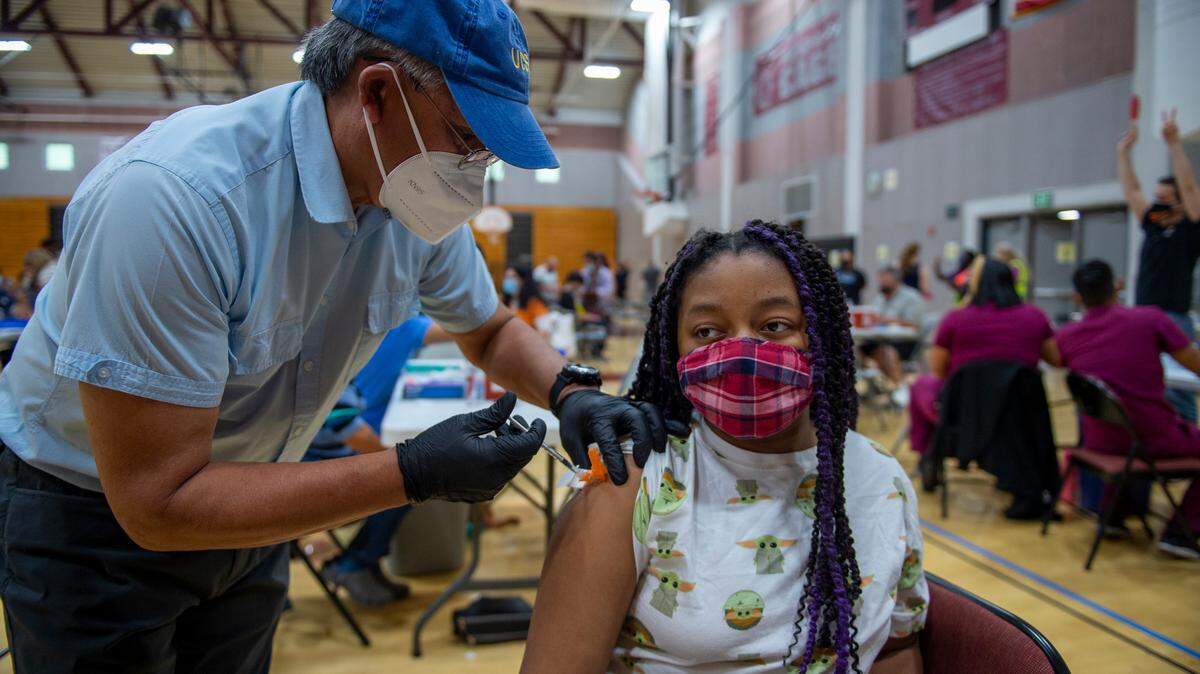
Gov. Gavin Newsom announced Friday that children in grades 7 to 12 eventually will need to be vaccinated to attend in-person school in California, pending full approval from the Food and Drug Administration.
Currently, 55% of adolescents ages 12 to 17 are fully vaccinated, according to the California Department of Public Health vaccine progress dashboard.
Many parents are still holding off on vaccinating their children, despite the FDA’s interim approval of the Pfizer vaccine for those 12 and up. Most are citing concerns over the uncertainty of long-term effects and the possibility that their young ones may experience serious side effects, a poll from the Kaiser Family Foundation shows.
With how quickly the novel coronavirus is developing, research is constantly being done to learn more about the virus and the vaccine and their effects on young people. Here is what we do know about the vaccine for children ages 12 years old and older.
Efficacy of the Pfizer vaccine for children
The FDA assessed the effectiveness and safety of the Pfizer COVID vaccine for young people by reviewing a study of over 2,200 children in the U.S. ages 12 through 15. About half of the participants were given the vaccine, while the other half received a placebo. The vaccine contains the same dosage and ingredients as the one authorized for people 16 years and older.
Seven days after the second dose, the study showed that there were no cases of COVID-19 among those that got the vaccine. There were 16 cases of COVID-19 in the group that got the placebo, however. These results indicated to researchers that the vaccine is 100% effective in preventing the virus.
This is considered a boost in protection from COVID-19, in comparison to the 95% efficacy that people 16 to 25 years old get from their second dose.
A recent study by Pfizer shows that their vaccine also works for children ages 5 to 11, however, at a lower dose. The company submitted data to the FDA this week for review.
Side effects
In the same study, researchers monitored over half of the participants for at least two months after their second dose of the Pfizer vaccine. Side effects that were reported were similar to what people 16 and older experienced. They include pain at the site of injection, joint pain, fatigue, headache, chills, fever and muscle pain.
Most of these side effects occurred after the second shot and usually lasted from one to three days.
Generally, side effects do vary for each individual, and some people may not experience any at all. Some may also encounter adverse reactions to the vaccine; however, the Centers for Disease Control and Prevention states on their website that this is rare.
The COVID vaccine’s effect on the heart
There have been reports that some young adults and adolescents experienced myocarditis, inflammation of the heart muscle, and pericarditis, inflammation on the lining outside the heart, according to the Vaccine Adverse Event Reporting System (VAERS) and the CDC.
As of September, there were over 1,500 cases reported on VAERS, with the CDC and FDA confirming more than 890 cases after conducting follow-ups and medical record reviews.
These side effects were mostly seen in male adolescents and people 16 years and older.
“CDC and its partners are actively monitoring reports of myocarditis and pericarditis after COVID-19 vaccination,” the agency said in a statement from September. They said this includes reviewing data and medical records to assess the symptoms’ relationship to the vaccine.
“Considering the hundreds of millions of COVID-19 vaccine doses that have been administered, these reports are very rare,” medical experts from John Hopkins said in an article. They add that almost all cases of myocarditis and pericarditis were mild.
Among the reported cases, the symptoms of inflammation arose more often after the second dose, within several days. They include chest pain, shortness of breath and feelings of having a fast, fluttering or pounding heartbeat.
Most of the people who experienced inflammation “felt better” after they received care quickly, rested and got medicine, the Mayo Clinic reported.
The CDC still recommends that parents get their children ages 12 years and up vaccinated because the risks of illness, hospitalization and death “far outweigh” rare vaccine reactions, such as myocarditis and pericarditis.
Long-term side effects
Due to the quick turnaround of the COVID-19 vaccines, in which Pfizer vaccine trials for children began last year, there is no information yet on any long-term side effects.
For the vaccine study on young people ages 12 through 15, researchers monitored some of the participants for at least two months after their second dose. This is because side effects typically occur within six weeks, as seen with most vaccines.
Participants will continue to be monitored and will have their blood drawn for the next two years, until the trial ends. They will also report any symptoms and record any other adverse effects.
This story was originally published October 2, 2021 at 5:00 AM.